Article I, §4: Congress prescribes federal election procedures. House passed SAVE Act. Senate GOP wants to strengthen it w/ voter ID at polls. Put it to a vote. Voters deserve to know where every senator stands.
Senate Democrats want to block DHS funding to protect violent criminal aliens!
Schumer is holding up $91.8B in DHS funding over Minneapolis. The result? ICE, Border Patrol, TSA, FEMA, and counterterrorism units work unpaid while convicted murderers and rapists remain at large.
Shutdown brinksmanship has failed every time—2013, 2018-2019, 2025. Zero concessions. But Democrats want to run the same play again.
https://t.co/ynMoJ0rBJo
@realDonaldTrump@SenSchumer@KristiNoem
"Inflation has been defeated,... and the United States is in the midst of the fastest and most dramatic economic turnaround in our country's history."
One year into his second term, President @realDonaldTrump returns to the World Economic Forum in Davos to deliver a masterclass on the American economic resurgence. From slashing core inflation to 1.6% to presiding over 52 all-time stock market highs, the President details how his policies added $9 trillion in value to retirement accounts and 401(k)s in just 12 months.
Tennessee CD-7 Victory Best GOP Special House Election
Performance In Years As 2026 Midterms Loom
https://t.co/0fSU9m57oK
In a 20-plus percentage point Republican district in 2024, U.S Representative-elect Matt Van Epps won Tennessee's 7th Congressional District by a mere 9 points, 53.9 percent to 45 percent. It being a special election, turnout is much lower and with a Republican in the White House, the candidate running in the same party, in this case Van Epps, always underperforms. The question with every special election under these circumstances is by how much. In 2024, former Republican U.S. Rep. Mark Green won the same seat with 59.5 percent of the vote. So, Van Epps — just like every special election with his party’s president in the White House — underperformed, but only by 5.6 percentage points. In fact, Van Epps’ was the best performance by a Republican in a special election under these circumstances in recent cycles. In 2017, while there were no special House elections in Tennessee, nationally there were five races in seats Republicans held: Kansas’ 4th Congressional District, Montana’s At-Large Congressional District, Georgia's 6th Congressional District, South Carolina’s 5th Congressional District and Utah’s 3rd Congressional District. There were drop-offs of 8.5 points, 6.25 points, 9.9 points, 8.16 points and 15.5 points, respectively, from the presidential election year performance in those same districts. In 2016, Republicans for those seats averaged 62.26 percent of the vote for those districts, but in the 2017 special House elections, they only averaged 52.6 percent, almost a 10-point drop-off with the Republican president in the White House compared to the prior presidential election. And in 2025, there have been two special House elections in Republican-held seats in Florida’s 1st and 6th Congressional districts. In 2024, Republicans averaged 66.2 percent of the vote for both seats, and in the special elections averaged 56.8 percent. Almost another 10-point drop-off — 9 points and 9.8 points, respectively. Meaning, there was some combination of Republicans overperforming in the Tennessee special election environment and Democrats underperforming.
Lessons From The Tennessee CD-7 Congressional Special Election
https://t.co/B7oXXcm6Z1
While there was a little drama in the early counting of the votes, in the end the results in the special election to fill Tennessee’s 7th Congressional District were predictable, with Matt Van Epps winning with 53.9 percent of the vote. While the hard-Left Democrat came closer that any other similar candidate in the past, it was never going to be enough. No amount of “dark” billionaire money, union operatives and neo-Marxist NGOs (Non-Governmental Organizations) were going to overcome the natural ethic of the people of Tennessee. But to listen to the corporate media and the paid propagandists, this was supposed to be very close, but then it wasn’t. The truth is that the base of the Democrat Party is depressed, near suicidal. All they can do is feed a bunch of lawyers to file endless lawsuits that eventually fail. They do not have the votes and they do not have the vision to counter President Donald Trump and his Make America Great Again (MAGA) team. So, to keep the peasants down on the plantation, the Democrat-Media Complex are looking for anything to give their base hope. Just look at the situation. The Democratic National Committee is broke, no money, no manpower and no plan. The so-called leadership in Congress borders on a joke. The feckless leaders in both the House and Senate cannot command their own members or the agenda. Their efforts at narrative control are laughable. The President’s team always seems to come up with something more interesting and attractive. All of that said, the Republicans should pay attention to the results and learn a few valuable lessons.
Going Nuclear: Democrats Are Hoping Republicans Will Irreversibly Abolish The Filibuster
https://t.co/jvyFVPCEMu
Democrats are openly hoping Republicans will go nuclear to pass their continuing resolution. Congressional Democrats keep lying to the American people and anyone else who will listen that Senate Republicans somehow “have the votes” to pass their continuing resolution — they keep saying it. That is, Republicans would have the votes to pass the continuing resolution (or anything else) if only they would just abolish (i.e. break) Senate filibuster rules requiring three-fifths of the Senate to advance legislation. A version of the argument was published by Bloomberg columnist Matthew Ygeslias on Oct. 5, “Republicans Can Easily End the Shutdown If They Want To,” who urged, “the filibuster itself can be overcome… When the majority party wants to pass something and ‘can’t’ because of the filibuster, it changes the rules… If Republicans want to reopen the government, nothing is stopping them.” Here’s Senate Democrats’ game: Either Senate Republicans just let the minority write the continuing resolution — and permanently expand Obamacare tax credits and gut the One Big Beautiful Bill's prohibitions on illegal aliens receiving Medicaid and Obamacare insurance subsidies — or the only other way they can expect to get the government reopened is by ending the filibuster. Those are the options Senate Democrats are leaving with Senate Majority Leader John Thune (R-S.D.). Either way suits Democrats.
Fed Resumes Cutting Interest Rates As Labor Markets Slow—Just Like It Always Does
https://t.co/bmrb6tZEg6
After three interest rate cuts at the end of 2024 amid weakening labor markets, the Federal Reserve resumed cutting the federal funds rate on Sept. 17, this time to 4 percent to 4.25 percent. The federal funds rate had peaked at 5.25 percent to 5.5 percent from August 2023 to September 2024, albeit belatedly, in response to the recent high of consumer inflation that peaked at 9.1 percent in June 2022. In the middle of the 2024 presidential election, President Joe Biden got a scary unemployment report for the month of July, jumping to then 4.3 percent — where it is today — which was a surprise and rattled markets that saw a temporary spike in volatility. The Fed responded with an interest rate cut right before the election at its Sept. 18, 2024 meeting. Two more cuts would come in November and December, respectively, before pausing through much of 2025. At 4.3 percent, the unemployment rate is pretty low on an historical basis, but still 0.9 percent above its prior low of 3.4 percent, now accounting for 1.63 million more unemployed since January 2023 to its current level of 7.38 million. That’s usually what happens as inflation cools, now at 2.9 percent. The Bureau of Labor Statistics has also downwardly revised jobs data from March 2024 to March 2025 by almost 1 million out of the establishment survey of employers. This is why the Fed is again leaning towards the full employment side of its dual mandate, albeit belatedly, as it usually does towards the end of the economic cycle, post-peak inflation as consumer credit gets maxed out, demand cools and the layoffs begin. Fortunately, with interest rates now falling and as inflation continues cooling, relief is on the way — but it could still get a bit bumpy.
With Southern Border Closed, Trump Shifts To Immigration Enforcement As D.C. Tests Federal Authority
https://t.co/kLj5jpTQFy
During former President Joe Biden’s single term of office, there were more than 10 million encounters on the southern border, most of whom were let into the country, never to be seen again, moving into our cities and everywhere else. In August, the Justice Department published a list of cities, counties and states that that it stated “having policies, laws, or regulations that impede enforcement of federal immigration laws.” The sanctuary states and territories include California, Colorado, Connecticut, Delaware, District of Columbia, Illinois, Minnesota, Nevada, New York, Oregon, Rhode Island, Vermont and Washington. All refusing to follow federal authority. Most recently, in Washington, D.C., upon expiration of the President’s 30-day crime emergency, D.C. Democratic Mayor Muriel Bowser, who cooperated with the emergency, says that now D.C. police will no longer work with federal immigration authorities. On Sept. 10 at an event Bowser stated, “Immigration enforcement is not what MPD does. And with the end of the emergency, it won't be what MPD does in the future.” Now, President Trump says it might be time to formalize the emergency in the district — and maybe everywhere else — to ensure federal laws are being enforced. Right now, in Washington, D.C. by Mayor Bowser’s own words it sounds “impracticable to enforce the laws of the United States…” to expedite the deportation of illegal aliens in America’s lawless cities and the President, whether he invokes the Insurrection Act or not, says he is going to do something about it.
The U.S.-Intel Partnership Is Not Unprecedented And Could Help Bolster U.S. Fiscal Outlook
https://t.co/lSgt6x0okc
President Donald Trump raised many eyebrows with his recent deal with Intel to accept on behalf of the U.S. a 10 percent equity stake in Intel, the publicly traded chip maker worth $108 billion. According to an Aug. 22 statement by Intel, the investment was worth about $8.9 billion and was funded using monies from the $280 billion CHIPS Act already passed by Congress. In other words, it was monies that Congress had already spent and obligated to the chipmaker. Now, Trump was asking what the U.S. got in return, with the answer being stock that has the potential to grow in value. While definitely different than previous government-sponsored enterprises — entities like Federal Home Loan Mortgage Corporation (Freddie Mac), Federal National Mortgage Association (Fannie Mae), the Federal Deposit Insurance Corporation (FDIC), the U.S. Postal Service and so forth were created by acts of Congress — taking a public stake in private companies might still raise similar concerns about government ownership and the direction of companies. Shareholders usually get voting rights and therefore influence in board decisions. In the great scheme of things, it’s a small amount of money, $8.9 billion out of $60 trillion of U.S. publicly traded companies. If every publicly traded corporation were to offer 10 percent equity stakes, it would be worth approximately $6 trillion — with the potential to grow. Care should be taken to remove the government from any decision-making at companies it has stakes in so they do not become politicized. The fact is, both the Social Security and Medicare trust funds will be exhausted by 2033 according to the trustees, at which point there might only be enough revenue to pay 80 percent of benefits. Which is worse, the government having a stake in some publicly traded companies — which it already has — or a sovereign debt crisis?
President Trump’s America First Economic Priorities Are Winning Over Voters
https://t.co/f4RDXNnMfX
As inflation slows and Americans begin to reap the benefits of President Donald Trump’s America First approach to creating jobs for native-born workers, voters are rallying behind the president’s approach. A new survey shows a majority of voters, including a majority of Hispanics, Blacks, young people, and independents, favor the Trump Administration’s focus on raising employment among native-born Americans even if there are losses for foreign-born workers. Voters also trust Republicans over Democrats to handle the economy, and swing voters are moving toward the right compared to midterm elections in 2022 and 2018. The survey, conducted by Quantus Insights Aug. 11-14 among 1,000 registered voters finds strong support for President Trump’s approach to adding jobs for native-born citizens. Americans say by 33-points — 51 percent to 18 percent — they support the president’s policies that prioritize jobs for native-born Americans. 32 percent say they are neutral on the issue. According to a Jul. 3 White House press release, native-born employment has risen by over 2 million jobs since January, while foreign-born employment has dropped by half a million. The White House noted that during the same period in 2024, foreign-born workers were securing as many as 48 percent of new jobs created under the Biden Administration. Now, due to President Trump’s crackdown on illegal immigration, virtually all of the job gains this year have gone to native-born citizens.
Off-duty Border Protection Officer Shot In N.Y.C Amid Growing Violence Against ICE In ‘Sanctuary Cities’ As U.S. Sues
https://t.co/TIfFMNSp1G
A 42-year-old border patrol agent who was off-duty was shot June 19 in a park in upper Manhattan in an alleged robbery attempt by two Dominican men according to multiple reports. Video of the incident released by the Department of Homeland Security shows one of the suspects approaching the off-duty officer on the evening of June 19. According to President Donald Trump’s Homeland Security Secretary Kristi Noem, the two suspects who carried out the attempted robbery were Dominican nationals with criminal records and in the country illegally. “Our officer was off duty on Saturday evening when him and his friend were attacked”, Noem said Monday in a statement. “They were attacked by two individuals that were set on robbing them, and thankfully he had his service weapon and was able to defend himself and his friend.” According to the Department of Homeland Security (DHS) statistics released July 15, Immigration and Customs Enforcement officials are facing an 830 percent increase in assaults from January 21st to July 14th compared with the same period in 2024. The Trump Administration’s response to the tragedy in New York City has been swift. President Donald Trump’s efforts to secure the border and improve safety in U.S. cities will now include sending more Immigration and Customs agents into these so-called “sanctuary cities” to clean them up. Now, the U.S. is suing New York City and challenging the city’s sanctuary policies as a violation of the Constitution’s Article VI supremacy clause making the Constitution and all laws made pursuant to it, including immigration laws, the “supreme law of the land”. New York City has been one of the cities least willing to work with the Department of Homeland security and ICE to detain criminals. DHS reported on X that in the last six months under President Trump and Secretary Noem, ICE has issued over 6,000 detainer requests in N.Y.C., a more than 400 percent increase compared to the Biden administration. However, DHS reports that N.Y.C. politicians have honored only a handful of these requests, allowing criminals to continue roaming the streets, many with violent records.
Globalists Propose Radical Idea To Leave WTO: Trump Should Call their Bluff
https://t.co/CmcGGPxusN
Recently two Professors with deep ties to the WTO and the entire globalist scheme wrote a petulant article, Why the US and the WTO Should Part Ways.
Young, Upwardly Mobile Middle Class Hispanics Could Spell the End for Democrats
https://t.co/4SoUiTyi05
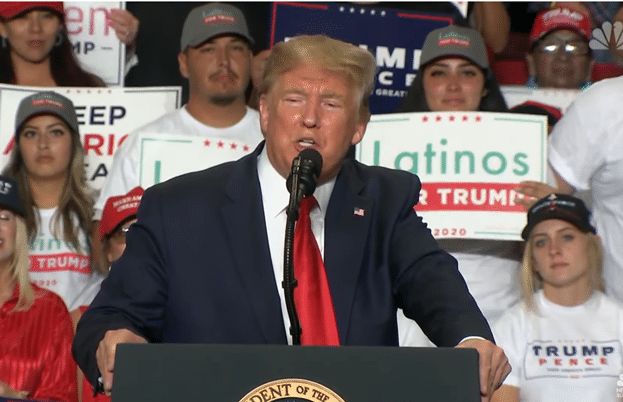
As both parties scramble for the Hispanic vote ahead of the 2026 midterms, which constitutes an estimated 36 million eligible voters nationwide, new polling from a Hispanic advocacy group reveals that younger, educated, upwardly mobile, and bilingual Hispanics could be the largest obstacle for Democrats next fall. A comprehensive survey from UnidosUS of 1,002 Hispanic Americans found that the primary concerns Hispanics face are issues the GOP is seen as better equipped to handle, such as the economy and jobs, inflation, and immigration. According to the UnidosUS survey, higher-income Hispanics hold a substantially more favorable view of Republicans and Trump (@realDonaldTrump) than lower-income Hispanics. 51 percent of Hispanics with income exceeding $100K hold a positive view of the Congressional Republicans — and 48 percent hold a positive view of President Trump. Among middle-income Hispanics, 38 percent hold a favorable view of Congressional Republicans, and 40 percent hold a favorable view of President Trump. However, among Hispanics earning less than $39K annually, 29 percent hold a favorable view of Congressional Republicans and 33 percent hold a favorable of President Trump. This translates to a 13-point gap in favorability for Congressional Republicans between middle-income and higher-income Hispanics, and a 22-point gap in favorability between lower-income and higher-income Hispanics. Education also plays a role, with Hispanic college graduates holding a more favorable view of Republicans. 46 percent of Hispanic college graduates hold a favorable view of Congressional Republicans. However, 31 percent of Hispanics with some college hold a favorable view of Republicans, and 32 percent of Hispanics with a high school diploma or less hold a favorable view of Congressional Republicans. Another key factor is age. According to the survey, there is a wide bridge between how older Hispanics feel about Congressional Republicans compared to how younger Hispanics feel. Congressional Republicans enjoy their highest favorability among Hispanics in the young professional cohort.