CIA Officer Busted With $40 Million in Gold Bars
Apple Podcasts ⬇️
https://t.co/rxCSfpoG3t
Spotify ⬇️
https://t.co/Ud1WUYctTX
YouTube ⬇️
https://t.co/ncD9DPufUR
@MickMulroy@Mpolymer@jonathanhackett
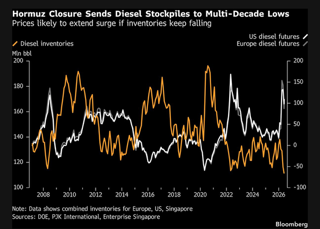
This chart from Bloomberg highlights an important issue facing the global economy and markets: the depletion of buffers.
As detailed in a forthcoming column, this issue extends well beyond energy reserves. It also involves the simultaneous erosion of the balance sheets of households, corporations, governments, central banks, and investors.
And while the impact is widespread, it's far from evenly shared.
#economy #markets
My Dad was one of those 0.1% intellects that has made contributions we all get to benefit from. How a small few impact all of us. Reading through his old technical documents, writings and books really shows the power of science/engineering what a time to be alive #NASA#Science
I see so many looking for something to be angry about or blame their problems on. Successful people realize to be in the improve yourself mindset not blame other or complain endlessly.
Rock bottom isn’t the end. It’s the moment you finally get your power back.
Jocko Willink on Diary of a CEO:
When the excuses vanish and you admit “this is all because of me,” it hurts like hell… but it’s also liberating. Because if you’re the cause of your problems, you’re also the solution. Extreme ownership gives you control over your fate.
The Stoics understood this deeply. Epictetus taught that it’s not events that disturb us, but our judgment of them. True freedom begins the second you stop blaming externals and take full ownership. Painful? Yes. But it turns you from a victim of circumstance into the master of your destiny.
In a culture that rewards blame and victimhood, this mindset is revolutionary. It transforms suffering into fuel and rock bottom into a launchpad.
What’s one “rock bottom” moment that ultimately became the turning point in your life?
Yup living in a clutter free organized home helps us have a nice peaceful habitat and a much better state of mind. I can feel the difference in my mind not relaxed when I go to people’s homes that are dirty and cluttered.
New research shows clutter dramatically spikes women’s cortisol—while men’s stress barely budges.
Household clutter extends far beyond mere aesthetics—it's deeply intertwined with stress physiology and cognitive burden, impacting women in particular.
Drawing from studies on dual-income married couples, therapist Elizabeth Earnshaw explains that women who view their homes as cluttered often see their cortisol levels rise throughout the day, unlike those who feel at ease, whose levels naturally decline. This heightened effect in women stems largely from bearing the disproportionate invisible mental load—the constant cycle of noticing, recalling, planning, and orchestrating household tasks.
Earnshaw suggests a realistic, three-part approach to reducing the stress–clutter spiral.
First, “shedding” involves intentionally minimizing possessions, including doing the emotional work required to let things go, in order to create more mental and physical space. Second, “preventing” focuses on systems: giving items clear “homes” so that decisions about where things go become automatic rather than mentally taxing. This may start with listing common types of clutter and designing dedicated spots for each (for example, a single, consistent place for receipts). Third, “adapting” asks families to accept that some clutter is inevitable in busy seasons of life and to concentrate on emotional regulation and co-regulation with partners, keeping stress and cortisol lower by adjusting expectations rather than striving for a perpetually picture-perfect home.
[Earnshaw, E., "Clutter, Cortisol, and Mental Load". Psychology Today, 2024]
[Saxbe, D. E., & Repetti, R. , "No place like home: Home tours correlate with daily patterns of mood and cortisol", Personality and Social Psychology Bulletin, 36(1), 71–81, 2010, DOI: 10.1177/0146167209352864]
Big progress vs cancer, folks.
The kind of event curves from randomized trials that we've not seen before for a couple of the most deadly cancers. Congrats to the oncology research community for getting these trial done. #ASCO26, @ASCO
Rock bottom isn’t the end. It’s the moment you finally get your power back.
Jocko Willink on Diary of a CEO:
When the excuses vanish and you admit “this is all because of me,” it hurts like hell… but it’s also liberating. Because if you’re the cause of your problems, you’re also the solution. Extreme ownership gives you control over your fate.
The Stoics understood this deeply. Epictetus taught that it’s not events that disturb us, but our judgment of them. True freedom begins the second you stop blaming externals and take full ownership. Painful? Yes. But it turns you from a victim of circumstance into the master of your destiny.
In a culture that rewards blame and victimhood, this mindset is revolutionary. It transforms suffering into fuel and rock bottom into a launchpad.
What’s one “rock bottom” moment that ultimately became the turning point in your life?
Also from the @WSJ:
"Worker compensation—wages and benefits—grew 0.8% in the first quarter from the fourth, while domestic corporate profits jumped 2.7%.
As a result, labor’s share of gross domestic income (conceptually similar to GDP) sank to 51%, the lowest since records began in 1947. "
#economy #Inequality
@JackMurphyRGR@TheTeamHousePod Agree. Weird to me these types but I guess these men aren’t used to being around high IQ, successful, strong, confident females so struggle to handle it.
@Jkylebass@lukasczinger@Divergent3D@PeteHegseth I understand why these things exist and appreciate why we need to stay ahead, but man it’s too bad so much human intellect, time, and resources go into this stuff as a species. Sometimes this makes me sad from a species perspective that we could adv so much further but we tribal.
Japanese actor Hiroyuki Sanada spoke about the contradictions of human nature:
“Some people dream of having a swimming pool at home, while those who have one hardly ever use it. Those who have lost a loved one feel a profound sense of loss, while others often complain about their living relatives. Those without a partner long for one, while those who have one often don't appreciate it. The hungry would give anything for a meal, while the satiated complain about the taste of their food. Those without a car dream of owning one, while those who have a car are always looking for a better one.”
The key to happiness is gratitude: truly seeing and appreciating what we already have, and understanding that somewhere, someone would give anything for what we take for granted.






![Rainmaker1973's tweet photo. New research shows clutter dramatically spikes women’s cortisol—while men’s stress barely budges.
Household clutter extends far beyond mere aesthetics—it's deeply intertwined with stress physiology and cognitive burden, impacting women in particular.
Drawing from studies on dual-income married couples, therapist Elizabeth Earnshaw explains that women who view their homes as cluttered often see their cortisol levels rise throughout the day, unlike those who feel at ease, whose levels naturally decline. This heightened effect in women stems largely from bearing the disproportionate invisible mental load—the constant cycle of noticing, recalling, planning, and orchestrating household tasks.
Earnshaw suggests a realistic, three-part approach to reducing the stress–clutter spiral.
First, “shedding” involves intentionally minimizing possessions, including doing the emotional work required to let things go, in order to create more mental and physical space. Second, “preventing” focuses on systems: giving items clear “homes” so that decisions about where things go become automatic rather than mentally taxing. This may start with listing common types of clutter and designing dedicated spots for each (for example, a single, consistent place for receipts). Third, “adapting” asks families to accept that some clutter is inevitable in busy seasons of life and to concentrate on emotional regulation and co-regulation with partners, keeping stress and cortisol lower by adjusting expectations rather than striving for a perpetually picture-perfect home.
[Earnshaw, E., "Clutter, Cortisol, and Mental Load". Psychology Today, 2024]
[Saxbe, D. E., & Repetti, R. , "No place like home: Home tours correlate with daily patterns of mood and cortisol", Personality and Social Psychology Bulletin, 36(1), 71–81, 2010, DOI: 10.1177/0146167209352864]](https://pbs.twimg.com/media/HJtuiMZWMAA13ak.png)





