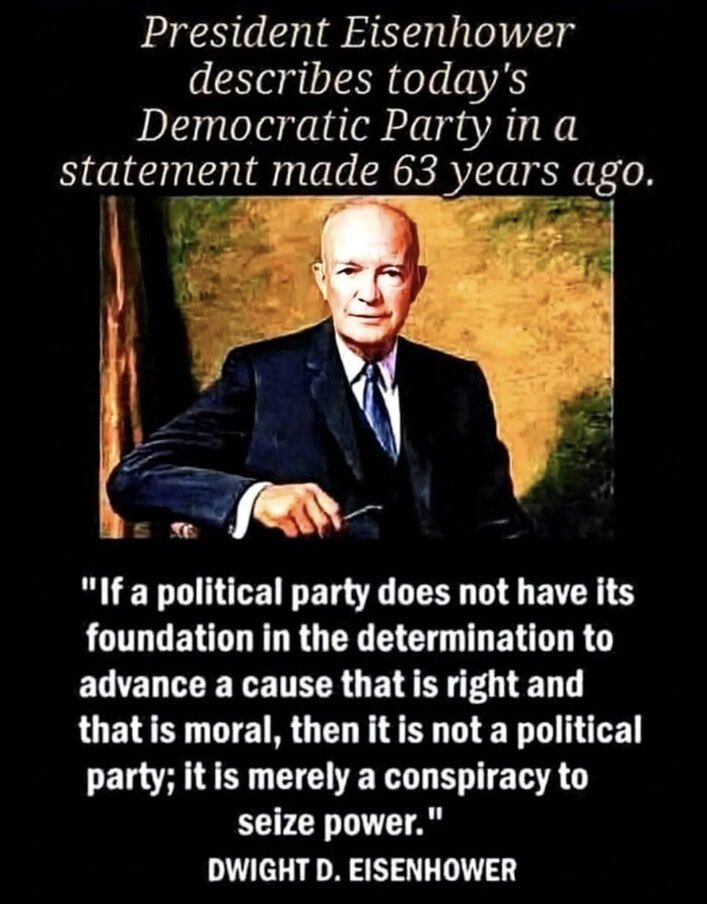
@GadSaad If the goal is to make everyone equal in men’s eyes, than 100%, and everyone will be equally miserable. If the goal is to create opportunity for all and let God sort the details, than as little as possible.
A Model Y driver started experiencing a medical emergency with chest pain mid-drive & called his son.
His son then remotely rerouted the car – which had FSD Supervised enabled – to the nearest hospital & let them know the vehicle was en route. ER staff were standing by on arrival.
Doctors later confirmed the quick reroute likely saved his life.
They told you Obamacare would discipline the insurance giants. Force them to compete. Drive down premiums through the magic of an online marketplace with a clean government website.
Then you watched the website crash in October 2013, and you watched UnitedHealth, Aetna, and Anthem post record profits while your deductible climbed past $6,000.
Here is what the exchanges actually built. The law forced you to buy a product under penalty of the individual mandate, then handed the insurers a fountain of taxpayer cash to make the product look affordable. Premium tax credits flowed straight to the carriers, not to you. In 2017 the federal government paid roughly $42 billion in subsidies, and that money landed in corporate accounts. The cost-sharing reduction payments did the same thing. The risk corridor program promised to backstop insurer losses outright, which is to say it socialized the downside while the executives kept the upside. Guaranteed customers. Guaranteed revenue. A captive market created by statute. Any cartel in history would have killed for terms like that.
Free market economists have a plain name for this arrangement: rent-seeking. When a firm earns its money by extracting subsidies through political channels instead of by serving customers who choose freely, it stops being a business and becomes a tax farmer. The insurers lobbied for the mandate because they understood the arithmetic better than the voters did. America's Health Insurance Plans spent millions backing the bill, then acted shocked when premiums on the individual market more than doubled between 2013 and 2017 in many states. They were not the victims of the law. They wrote the parts that mattered.
Strip away the subsidy and the whole structure collapses, because the prices were never real prices. A real price emerges when a buyer who can walk away meets a seller who can lose the sale. The exchange killed both conditions. You could not walk away without a penalty, and the seller could not lose because Washington covered the gap. This is not a market. The people who keep calling it one are counting on you not noticing who cashes the check.
Elon Musk got rejected by Netscape. He walked into the lobby, was too shy to talk to anyone, and walked out. Never got the job.
At his first company Zip2, the board demoted him. Twice. They refused to let him be CEO.
He got fired from PayPal as CEO while flying to his own honeymoon. The board voted him out mid air.
He almost died of malaria in 2000. Ten days in intensive care. Lost 45 pounds. A day from death.
His first child died at 10 weeks old.
His first rocket exploded. Falcon 1, flight one. Burned on the pad.
His second rocket exploded.
His third rocket exploded. The last of his money was nearly gone.
Tesla nearly went bankrupt in 2008. The closest he ever came to a nervous breakdown.
Both companies almost died on the same Christmas Eve.
He was sued by investors. Mocked by the people who built cars before him.
His childhood heroes, the astronauts who inspired him, testified against his company to Congress.
The Cybertruck window shattered on live stage in front of the world.
He overpaid for Twitter by his own admission and watched its value collapse.
He was beaten unconscious as a child and thrown down a flight of stairs.
He has said he goes to sleep alone and it kills him.
He failed in public, over and over, for thirty years.
He is the richest man in the history of the world.
The difference was never the absence of failure. It was the refusal to stop after it.
Central banking operates as a legalized monopoly that would make John D. Rockefeller green with envy. When you grant one institution exclusive control over the money supply, you create the most powerful cartel in human history. The Federal Reserve doesn't compete for customers; it simply prints their purchasing power away.
Free banking systems operated successfully across multiple countries and time periods before governments monopolized money creation. Scotland from 1716 to 1845 experienced remarkable monetary stability under competitive note issuance. Canadian banks weathered the 1930s depression far better than their American counterparts, partly due to fewer regulatory restrictions. These were real markets serving real people.
Competition forces private banks to maintain reserves and honor their commitments. Your local bank can't just conjure money from thin air without consequences. Other banks will demand redemption in specie, creating natural market discipline. When Chase issues too many notes relative to its reserves, Wells Fargo will present those notes for payment. This clearing process keeps everyone honest.
Central banks face no such constraints. The Fed creates trillions of dollars without backing, because who exactly will demand redemption? Congress? The Treasury? They're all part of the same wealth extraction scheme. When private banks fail, depositors lose money and investors learn painful lessons. When central banks fail, taxpayers absorb the losses while bureaucrats collect pensions.
You live under a monetary system where twelve unelected officials determine interest rates for 330 million Americans. They meet eight times per year in marble halls, adjusting the price of money like Soviet planners setting wheat quotas. Every boom and bust cycle flows from this central planning apparatus that free market thinkers recognized as fundamentally unsustainable over a century ago.
Your savings account loses value by design, not accident.
@ElihuWho@FoxNews Nuclear program different than nuclear materials. Nuclear programs may be temporarily destroyed, nuclear materials remain under the rubble and conceivably can be utilized in future nuclear programs.
Marco Rubio just dropped the truth bomb — Americans grind 40+ years, pay into the system, follow every rule… and retire broke on $800-$1,000 a month.
Meanwhile, new arrivals who never paid a dime allegedly get MORE from the same system? This isn’t compassion. It’s a slap in the face to every taxpayer who built this country.
@Handre How much more will you allow to be taken from you before you object? Remember that it’s not just about what is taken from you (and everyone else including the less fortunate), but how much is being diverted to the fraud, waste, and abuse you allow to continue.
Milton Friedman's greatest regret.
The federal government discovered the perfect crime in 1943: make employers collect taxes before workers ever see their paychecks. You think you earn $60,000 per year, but you actually earn $75,000 and hand over $15,000 to politicians without ever touching it. The psychological difference is enormous.
Before payroll withholding, Americans wrote quarterly checks directly to the Treasury. Picture yourself sitting at your kitchen table, writing a $3,750 check to the IRS every three months. The pain was immediate and visceral. Politicians faced constant pressure to justify every dollar because citizens felt the extraction in real time.
Withholding transforms this concrete loss into an abstract accounting entry. Your employer becomes an unpaid tax collector, and you never experience the actual cost of government. Worse, most people celebrate their tax refunds as government generosity rather than recognizing them as interest-free loans they provided to politicians. The Treasury collects your money throughout the year, spends it immediately, then returns your own cash and receives gratitude.
This system enables the explosion in government spending you witness today. Defense contractors billing $640 for toilet seats, agricultural subsidies for corn syrup, and congressional salaries for 535 people who rarely show up to work. When taxation feels painless, voters stop demanding accountability for how their money gets spent.
Milton Friedman helped design withholding as a wartime emergency measure and later called it his greatest regret. Free market economists recognized that the psychological pain of direct taxation creates political pressure for fiscal restraint. The temporary always becomes permanent in government hands, and the emergency justification disappears while the extraction mechanism remains forever.
This June, let’s celebrate Nuclear Family Month — or Life Month.
The loving union of mother, father, and children has built stable societies for generations.
Every new life is a profound gift worth cherishing.
These timeless values strengthen our communities, nurture our children, and give us hope for the future.
Proud to honor what truly sustains humanity.
Now, this is something worth celebrating for. How about you?
As a young socialist, Hayek read Ludwig von Mises’ 1920 paper “Economic Calculation in the Socialist Commonwealth.”
Mises showed that socialist central planning isn’t merely inefficient, it’s impossible.
Without private property and genuine market prices, planners lack any rational way to allocate scarce resources or determine real costs and needs.
Even Oskar Lange, a leading socialist in the calculation debate, effectively conceded the point.
While he promoted “market socialism” with trial-and-error pricing by a central board, real-world socialist planners in Eastern Europe quietly relied on world capitalist market prices as a guide.
Without external free-market price signals, pure socialism would be economically blind and coordination would collapse.
Mises went further, arguing that interventionism, the “middle way” of government meddling, is inherently unstable.
Each intervention creates problems that invite more interventions, eventually leading to full socialization.
Price controls cause shortages, subsidies distort production, and the cycle continues until the economy is fully planned.
The lesson is clear.
Rational economics requires genuine market prices emerging from voluntary exchange and private property.
Half-measures don’t stabilize the system. They accelerate the drift into central planning.
The Austrian School understood this decades before the collapse of the Soviet bloc proved it in practice.