Some of the best advice I ever received was that, once you get beyond medical school, most of your learning is self-directed.
People will teach you. They’ll answer questions, supervise you, and create opportunities for you to learn. But by the time you’re an intern, resident, or fellow, there’s an expectation that you’ll do your part to seek out the experiences and knowledge you need. There won’t always be formal lectures or someone telling you exactly what to read next. A lot of learning comes from paying attention, asking questions, reading on your own, and making the most of the patients you take care of.
I remember a fellow apologizing because they needed to miss a day on service. They were worried it would leave me shorthanded.
I told them something I’ve said to other trainees over the years: I don’t need you to be there. I mean that in the kindest possible way. I can manage the service and take care of the patients.
The reason I want you there is because you’re learning.
Every patient, every family meeting, every procedure, every conversation with a consultant, every note you write is part of becoming the physician you’ll eventually be. My role is to help create that environment, but I can’t do the learning for you.
I think that’s one of the biggest transitions in medical training. At some point, your education becomes less about what someone teaches you and more about what you choose to learn from the opportunities in front of you.
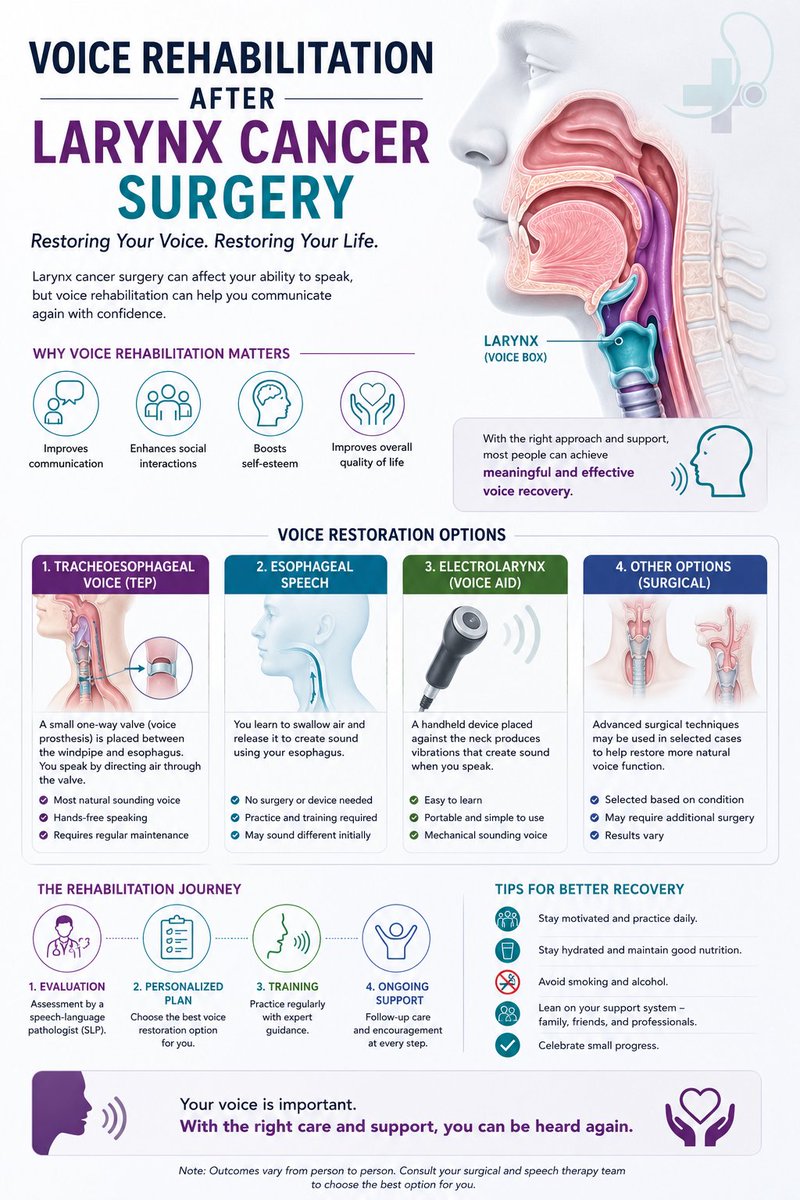
Can you speak again after larynx cancer surgery?
Yes. With modern voice rehabilitation techniques and speech therapy, many patients regain effective communication and improve their quality of life.
Learn more:🔗 https://t.co/dy5wULQDp8
#LarynxCancer#VoiceRehabilitation
Meta-analysis: Subjective #smell#loss strongly correlates with #depression; objective deficits show association mainly in older adults, suggesting different underlying pathways.
https://t.co/K7gAts3EQi
In a cohort study of patients undergoing #TransoralRoboticSurgery, subjective swallowing worsened at 6 weeks for many patients, but objective studies showed preserved function and most were tolerating a soft to regular diet. https://t.co/s9yzsafFVm
In patients with #HPV-associated #OropharyngealCancer, definitive treatment with deintensified 60‑Gy #Radiotherapy, with or without chemotherapy, was associated with low long-term locoregional recurrence and favorable survival outcomes.
https://t.co/xhtcnhfjuV
Más allá del implante coclear ➡️Un programa para desarrollar un sistema auditivo mínimamente invasivo que trabaje directamente con los centros cerebrales de la audición y permita mejorar la comprensión del habla en entornos reales.👇🏿
https://t.co/6Du4h7SI7O vía @Servimedia
Among survivors of #Oropharyngeal#Cancer, higher MD Anderson Symptom Inventory–Head and Neck symptom scores were associated with later risk of #HypoglossalNeuropathy, supporting early patient-reported symptom surveillance.
https://t.co/5L7tip0iBv
In a qualitative study of rural cancer clinics, patients, caregivers, and providers identified communication, care coordination, dental access, transportation, and emotional burden as barriers to timely postoperative radiotherapy for #HeadAndNeckCancer. https://t.co/Bf0k82gMTv
In cognitively normal older adults, poorer speech-in-noise ability was associated with faster cortical thinning in speech-processing networks, suggesting value in central auditory assessment for early risk detection.
https://t.co/WE15CbDIN5
In patients with #HPV-associated #OropharyngealCancer, definitive treatment with deintensified 60‑Gy #Radiotherapy, with or without chemotherapy, was associated with low long-term locoregional recurrence and favorable survival outcomes.
https://t.co/Uoj8RFir4L
Y todas las noches bajo la Vía Láctea. 🎶
Después de su exitoso sobrevuelo lunar, los astronautas de la misión @NASAArtemis II capturaron esta impresionante fotografía de nuestra galaxia, la Vía Láctea, el 7 de abril de 2026.
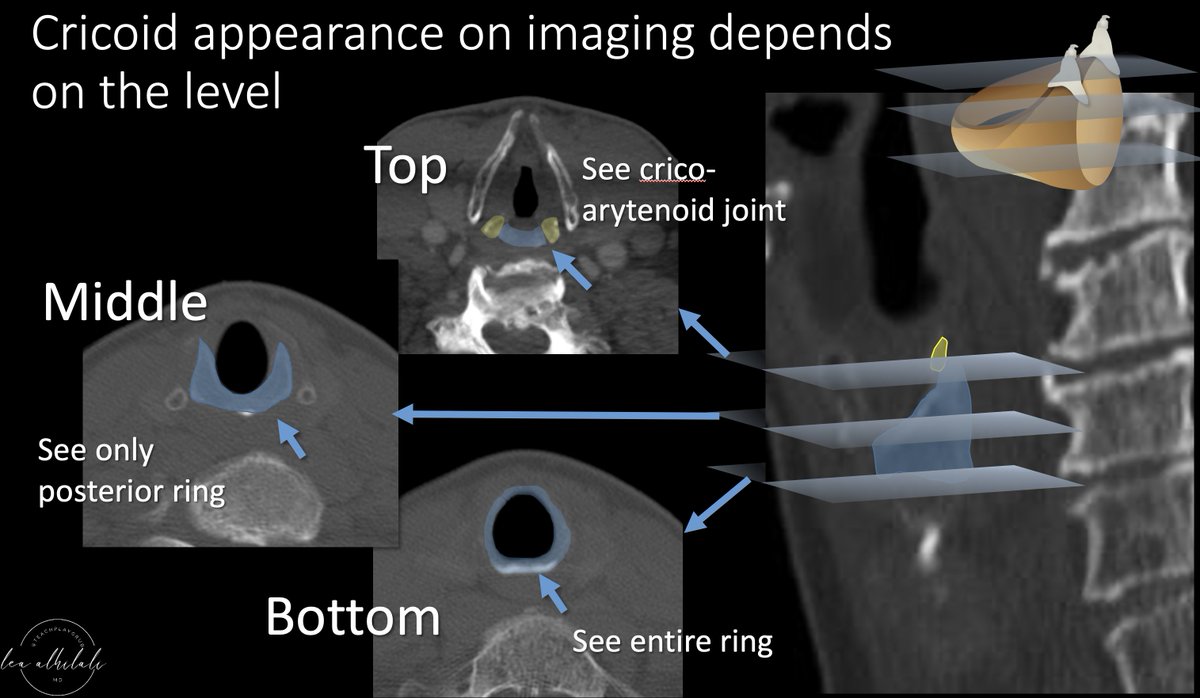
7/How the cricoid & arytenoids look on imaging depends on the level!
Higher up, you're at the articulation of the arytenoids w/the signet ring & you see the crico-arytenoid joint
Lower down, you only see the posterior signet ring
Only at the bottom is the entire ring visible!
In a cohort of more than 570 000 adults aged 50 years and older, #HearingLoss was linked to an increased risk of incident #Dementia, most notably among those not using hearing aids.
🎥 Watch the video and read the full article: https://t.co/zOenYtO1NU
Internet-based cognitive behavior therapy (#ICBT) for patients with tinnitus demonstrated sustained reductions in tinnitus distress over a 6-year follow-up period in a nonrandomized clinical trial.
https://t.co/GyteYcHXlW
➡️ Marcelo Chorny, primer laringectomizado en correr 42 km para visibilizar el cáncer de cabeza y cuello.
El exentrenador de rugby correrá la Maratón de Madrid para concienciar sobre el cáncer de cabeza y cuello, una enfermedad poco conocida. 👇🏿
https://t.co/DzQDxXkObI