Muchos van a aprender en este ciclo que el mercado también puede caer cuando cortan tasas de interés. Echarle gasolina al fuego no lo apaga. Este no es un recorte preventivo, sino reaccionario (‘downside risks to employment’).
Con la inflacion subiendo y la incertidumbre mundial cada dia mas complicada...
Vengo diciendo lo mismo por meses: si los bonos dicen NO y la Fed corta, el resultado es lo contrario a lo que muchos esperan. Las hipotecas subirán y los préstamos se encarecerán, destrozando aún más el ya deteriorado mercado inmobiliario. Tic, Tac...
$Circle acuñó un récord de $2.5B en $USDC en solo 2 días, llevando su market cap por encima de $70B por primera vez.
Quien no entienda lo que está pasando quedará fuera de una de las mayores revoluciones económicas de la historia: #ETH y las stablecoins legales.
DeFi, tokenización, pagos en línea, inversiones, crowdfunding y mucho más. 👀
#Crypto #USDC #Stablecoins
Despite criticism, @Polkadot remains one of the best-performing blockchains when evaluated across global metrics.
Polkadot achieves transaction finality in just ~30 seconds, far faster than Bitcoin (~10 min), Ethereum (~6–12 min), Cardano (~2 min), or Polygon (~30 min).
Faster finality means transactions are confirmed and irreversible almost instantly, which is essential for DeFi, gaming, and real-time applications.
When it comes to decentralization, Polkadot is also the best. The Nakamoto Coefficient is ~149, it far surpasses Bitcoin (~3), Ethereum (~2), Solana (~21), and Cardano (~25–58).
A higher coefficient makes it significantly harder for any small group to attack or censor the network, making Polkadot one of the most decentralized blockchains.
In terms of governance, Polkadot also leads. It uses full on-chain governance (OpenGov), where DOT holders vote directly on upgrades, treasury allocations, and proposals.
By contrast, Ethereum, Bitcoin, and Solana still rely on off-chain governance, while Cardano has only partial on-chain mechanisms.
On fees, Polkadot is highly cost-efficient. Transaction costs range from $0.0001 to $0.0005, much lower than Ethereum ($5–$50+ during congestion) and competitive with BSC (~$0.20) and Bitcoin ($1–$5).
Solana may be cheaper (<$0.05), but it comes with far greater centralization.
Polkadot also maintains an extremely low slashing rate (<0.002% of blocks), highlighting robust validator discipline and strong network security.
By comparison, Ethereum’s rate is ~0.004%, Cosmos is similarly low, while Bitcoin and Cardano use models where slashing is minimal or not applied.
Summary:
Polkadot consistently outperforms or rivals other top blockchains across the most critical metrics:
+ Ultra-fast finality (~30s)
+ Highest decentralization (Nakamoto coeff. ~149)
+ On-chain democratic governance
+ Ultra-low fees with strong security
+ Native interoperability & shared security
+ Stable operations with almost no slashing events
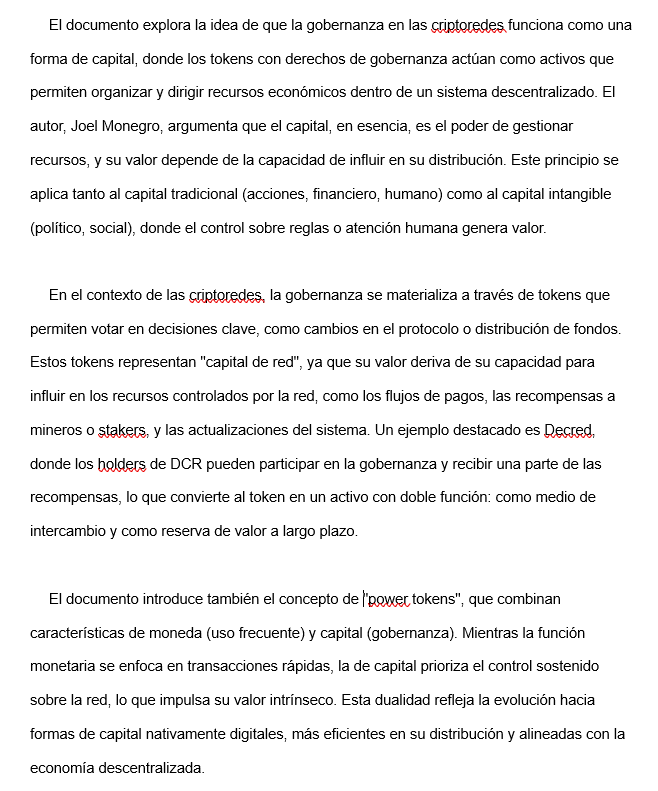
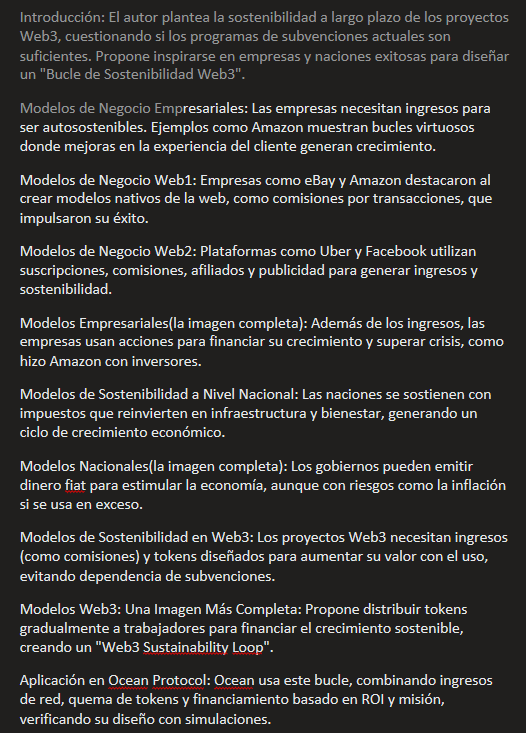
“The Web3 Sustainability Loop: A system design for long-term growth of Web3 projects, with application to Ocean Protocol”
New blog post, and a thread 👇
https://t.co/57OvYuCaui
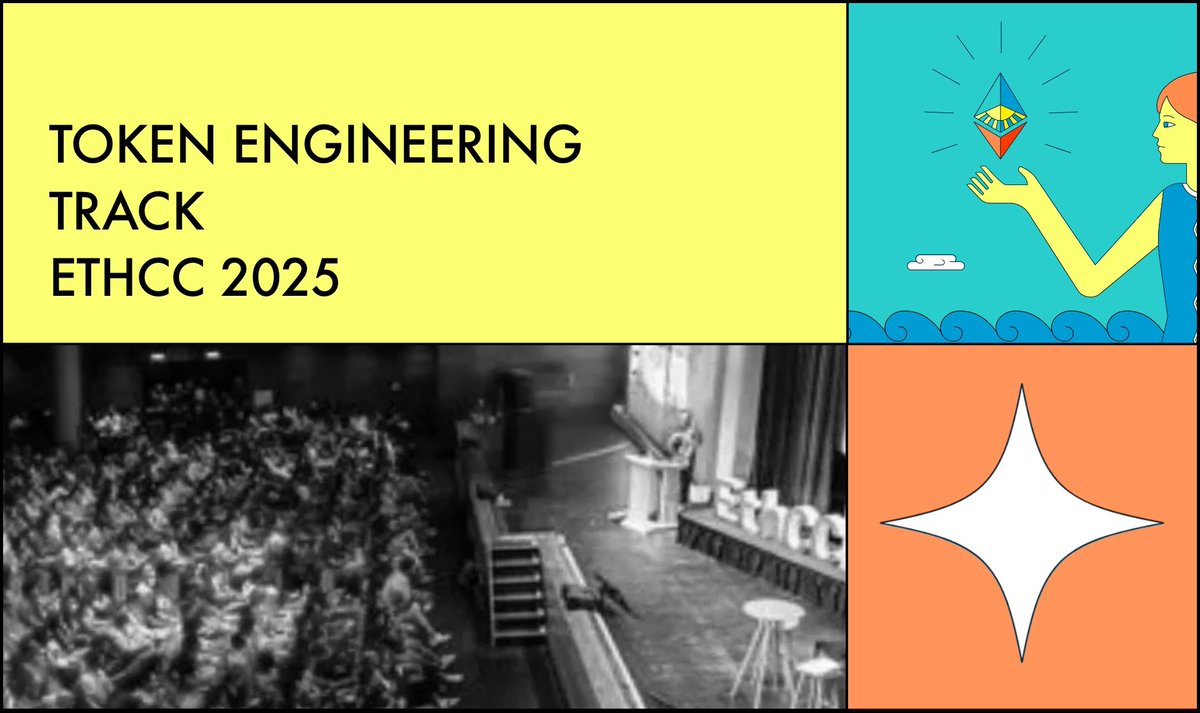
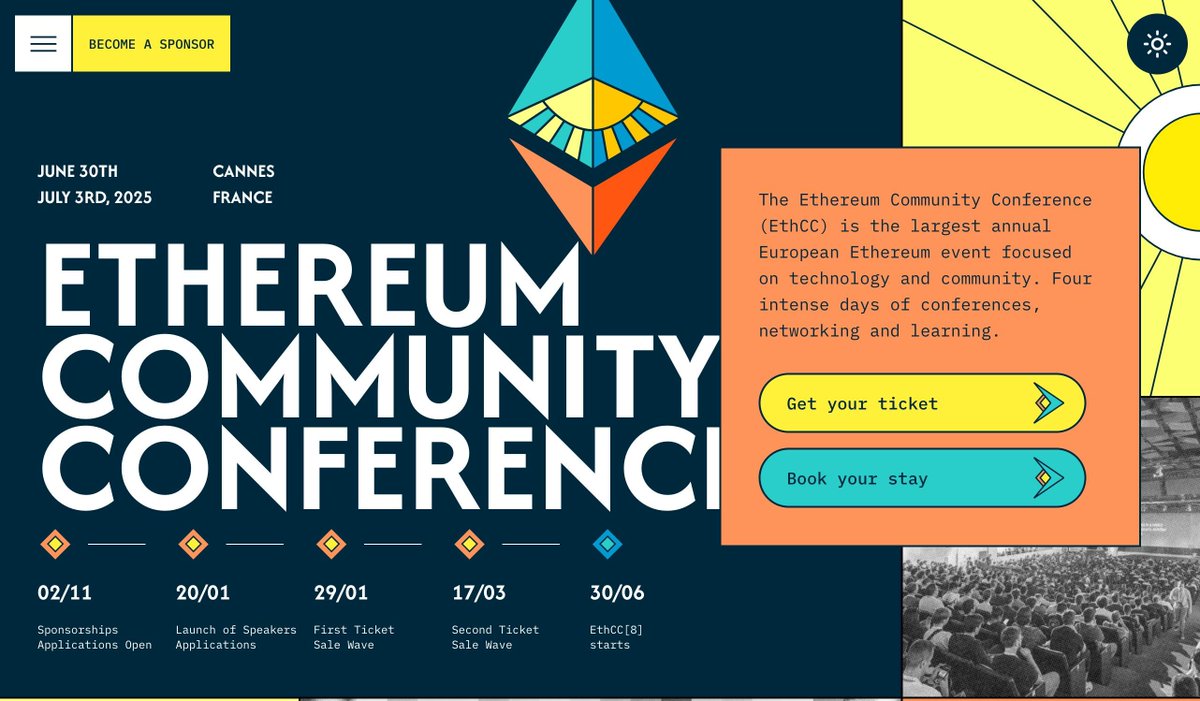
@EthCC has become the annual gathering of the token engineering community—and in 2025, we’re showing up stronger than ever with not just one, but two dedicated # tokenengineering events.
🛠️ EthCC Token Engineering Track – June 30
🎓 Governance & DAO Breakout Sessions – July 1
Over the past few months, we’ve been working closely with builders, researchers, and reviewers from across our community to craft an agenda we’re incredibly proud of. From real-world crypto systems to frontier governance experiments, this year’s sessions will dive into the mechanisms, tools, and teams that make crypto work.
Here’s what we’ve got planned for EthCC 2025 in Cannes 🎉!
Check out the program below, and make sure to secure your ticket via https://t.co/HuZyihmvMP
🎙️¿Dudas sobre cómo funcionan los nodos validadores en NEAR?
Este miércoles a las 10 pm UTC abrimos espacio
📢 Conoce el nodo web3edu.pool.near!
Además exploramos:
-¿Qué es un nodo validador?
-¿Por qué validar en @NEARProtocol?
-¿Qué es Node Studio?
🧠 ¡Trae tus preguntas!
Client Development
Brief overview:
Firedancer ▶️ Second validator client on Solana written in C assembly, which only requires a consumer level hardware, and “1,000,000” TPS.
- Tinydancer ▶️ A light client on Solana that uses DAS (Data Availability Sampling), which should allow cheap verification without requiring crazy specs.
17/
Sé voluntario y crece en el ecosistema de tecnología y blockchain🚀
🔷 ETH Lima busca 25 talentos
📅 Cierre: 20 de agosto
De la mano con líderes de proyectos globales: Conecta, aprende y transforma tu camino.
👉 Regístrate: https://t.co/i2HbJEnyxa
#Ethereum#EthereumLima
We’ve officially moved from https://t.co/DNaHY50HGb to https://t.co/fKFTt4dthj.
Same mission, simpler name.
The old domain will still work and redirect automatically.