Puszczają im nerwy. Skandaliczna próba ograniczania wypowiedzi naukowców na komisji w czasie dyskusji o antyrozwojowym budżecie państwa. Brawa za odwagę dla prof. Agaty Starosty @MissAgataStar , która wróciła do Polski rozwijać naukę, a tu taki bałagan.
Science and art offer complementary approaches to achieving a deeper understanding of life, and the exchange between the two can be very fruitful. Check out the fantastic work of Maximilian Prüfer, who lets insects express themselves in his art: https://t.co/dWQauJZGKS
New preprint 🚨🚨 This time about the effect of #alcohol on flight performance, body condition, and survivorship in #honeybees 🐝
Great teamwork led by @ChecOstap and @KrzysMiler
(3/12) Here are Megaponera analis workers returning from a successful raid of a termite colony, their mandibles stuffed with bounty. The largest workers assemble and carry balls of up to twelve termites at a time. That’s also the number of beers an Oktoberfest waitress carries.
(2/12) Here is a refuse pile of Megaponera a few centimeters from the nest entrance. The dark purple things in the back are discarded pupal cocoons. The orange stuff in the front are hollowed-out termite skulls. A macabre scene! Megaponera are specialized termite hunters.
Here is a particularly elegant-looking ponerine ant, the termite hunter Ophthalmopone berthoudi. Colonies of this species don’t have queens, but instead, some of the workers mate and become reproductively active “gamergates”. Mpala Research Center, Kenya.
Over the next days I’ll post pictures of my favorite (!) ponerine, the singing ant, aka Matabele ant (Megaponera analis). Here you see them excavating their nest at Mpala Research Centre in Kenya after rain. But excavation is not what they’re most famous for. More soon… (1/12)
Rove beetles of the genus Tetradonia patrol the periphery of army ant columns, snatch weak or injured ants off the trail, and pull them into the leaf litter to consume them. These predators are one of the many myrmecophiles, or ant guests, associated with army ant colonies.
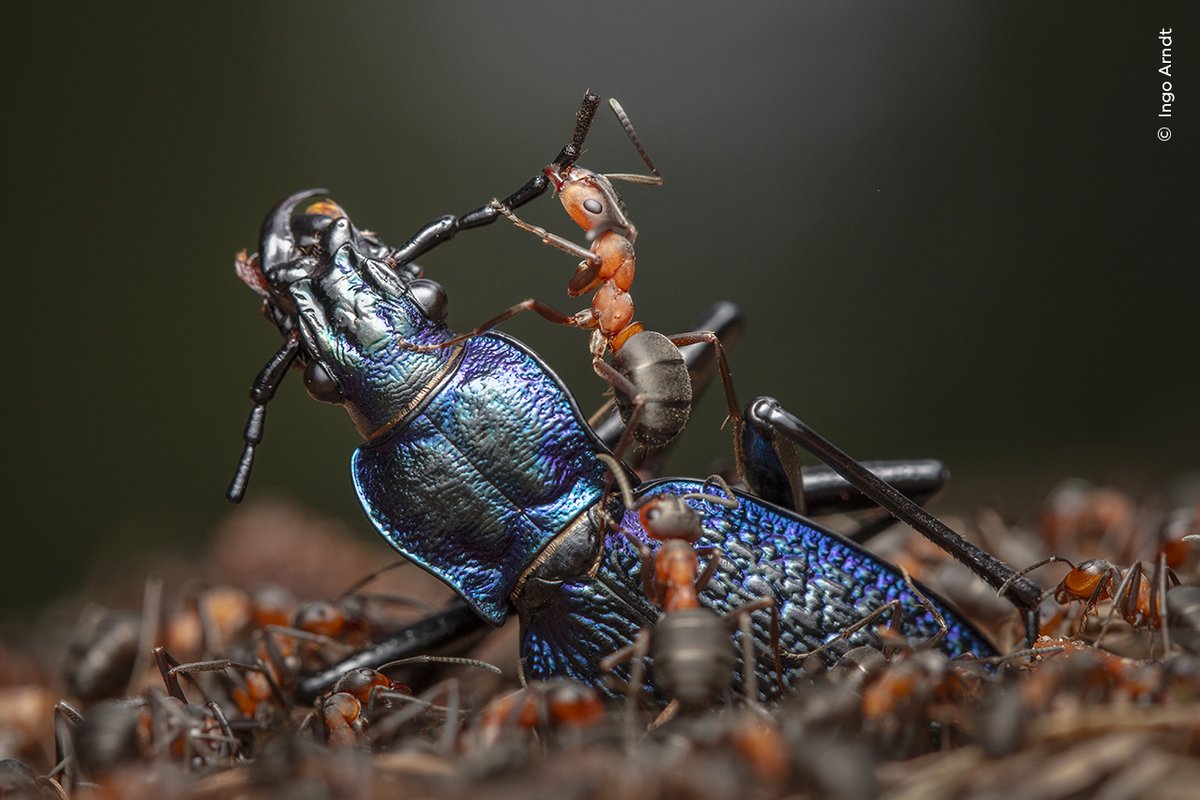
Congratulations to #WPY60's Behaviour: Invertebrates winner! 🐜
Ingo Arndt (Germany) watched as red wood ants carved an already dead blue ground beetle into pieces small enough to fit through the entrance to their nest.
Some Colobopsis ants not only block nest entrances with their heads but also explode for defense. The Colobopsis cylindrica group employs a self-sacrificial mechanism, bursting to release sticky substances from their mandibular glands to deter predators. Sumatra, Indonesia
I named this bee's paradise. But as we delve deeper, the scene shows immense competition. It charms me how focused those insects are, completely ignoring my presence.
I named this bee's paradise. But as we delve deeper, the scene shows immense competition. It charms me how focused those insects are, completely ignoring my presence.
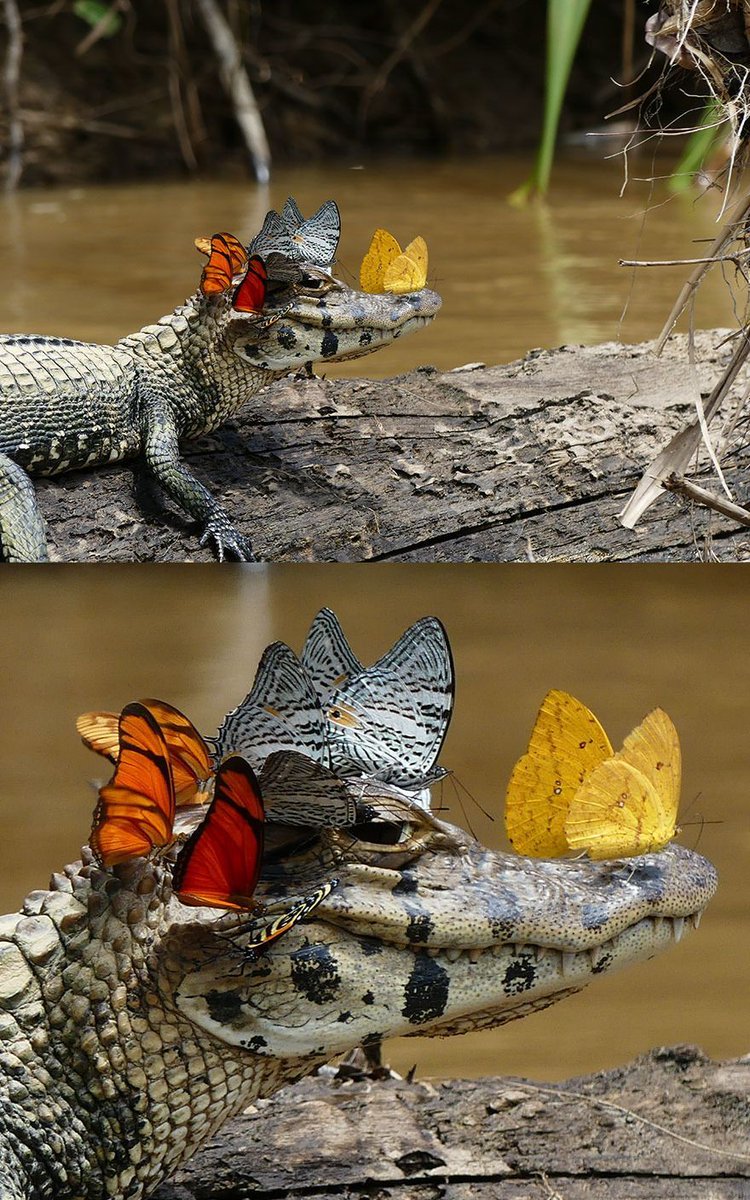
Butterflies will sometimes land on a Caiman and drink its salty, crocodile tears to in order to survive. This helps the Caiman to feel both less sad and more fabulous.