Periodista. Curioso por defecto
𝑩𝒖𝒔𝒄𝒐
No lo quiero todo.
No descarto nada.
No aprendo que lo mejor
es enemigo de lo bueno.
No acabo de encontrar del todo.
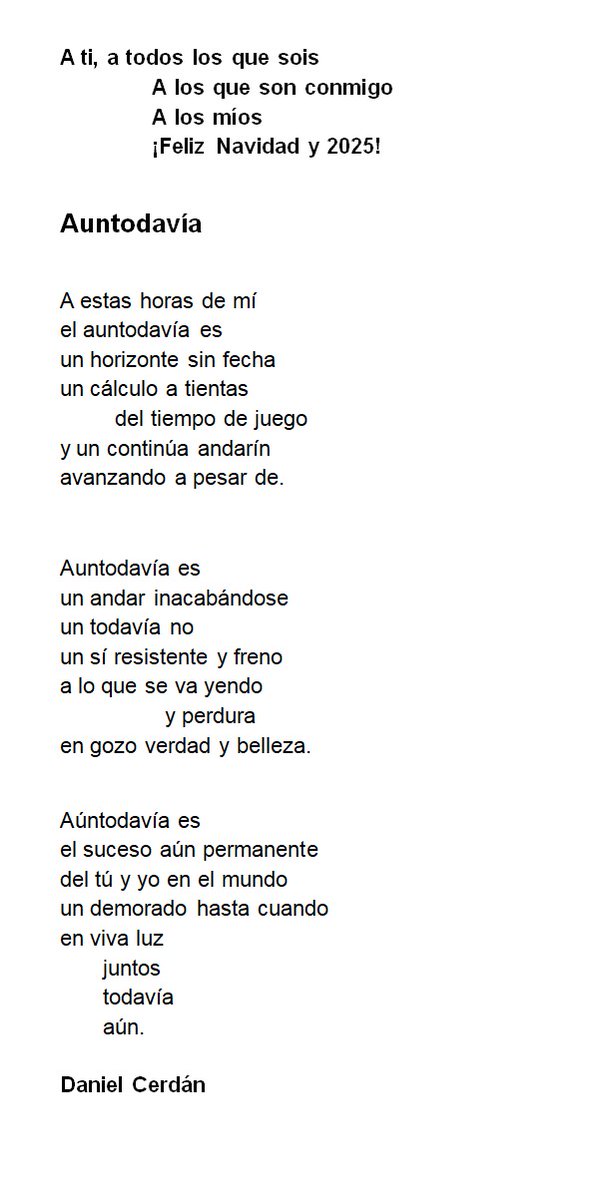
𝗔𝘂𝗻𝘁𝗼𝗱𝗮𝘃𝗶́𝗮
Hace 15 meses me atropelló una bacteria.
La endocarditis me destrozó la válvula órtica, recambiada in extremis en el quirófano, justo hoy hace un año.
Un año mas, como todos, de vida prestada.
Gracias a todos los que me sostuvieron. !Gracias!
Efectivaemnte, es un discurso brutal.
No conocía a esta leyenda del futbol norteamericano.
Mas no hay ser deportista para ser un entregado al mejor resultado. En los 70 y los 80 se sufría y aprendía de otra manera.
03/06/2017. Londres. Se cumplen 9 años del asesinato por el terrorismo yihadista del empleado del @HSBC IGNACIO ECHEVERRÍA MIRALLES DE IMPERIAL 🇪🇸. Vio un atentado desde el mercado de Borough. Fue hacia los terroristas usando su monopatín para golpearles e impedir más ataques.
@anluma99 Deploró los extremismos y las micciones como modo de manifestación
pero...
Aprecio mucho la libertad de expresión.
Al cabo el ¿ Qué tendrá el aserto cuando lo prohíben? Es su mayor empujón
La novela en marcha de @TrapielloAndres: cuatro décadas de literatura contada desde lo más íntimo https://t.co/FiE2TaBce6
Ahora leyendo a gusto "Próspero viento", que sí son sus memorias políticas: https://t.co/Q3RqEY5VHt
@cesarcocag@JavierGomaL Quizá @cesarcocag tiene más elementos de juicio para ilustrarlo. Comenzaron a hacerlo medios digitales de cuarto nivel con titulares muy atractivos que solo se explicaban al final,rompiendo la regla de las 5 W en las informaciones simples-cortas.
@cesarcocag@JavierGomaL Más que un "estilo periodistico", que no esta en ningun "libro de estilo" de periódico, será imposicición de departamentos de publicidad: necesitan que se haga scroll hasta el 6º parrafo para que vean los anuncios (en papel se ven siempre) y cliclen en ellos a veces.
@TrapielloAndres@luispardoc .@twspa Me pica la curiosidad y agradecería su respuesta ¿Porque con tantos RTs a ese tuit los hados del algoritmo de X solo lo han mostrado a unos 3.000 tuiteros?
https://t.co/x1HwS5hvXF
¿Como valorizan el "peso" de cada RT"?
¿Tienen algun enlace explicativo?
@morenoalva_pepe@JavierGomaL Ontología: el ser.
Pragmática: el uso.
Epistemología: el conocer.
Ética: el deber.
Lógica: el razonar.
Al cabo, diría @JavierGomaL , ¿formas diferentes de literatura: "juegos de palabras" ?.
Curiosa historia de dos mujrres en los extremos que acaban por entenderse cortesmente: El “disfraz” de quimio de Teresa Rodríguez (y la Mari con su bandera de España)
https://t.co/SQ5aHUfBgy
Jacinto Benavente, Premio Nobel de Literatura: “En la pelea, se conoce al soldado; sólo en la victoria, se conoce al caballero” https://t.co/Z6fDisHN4K vía @meristation
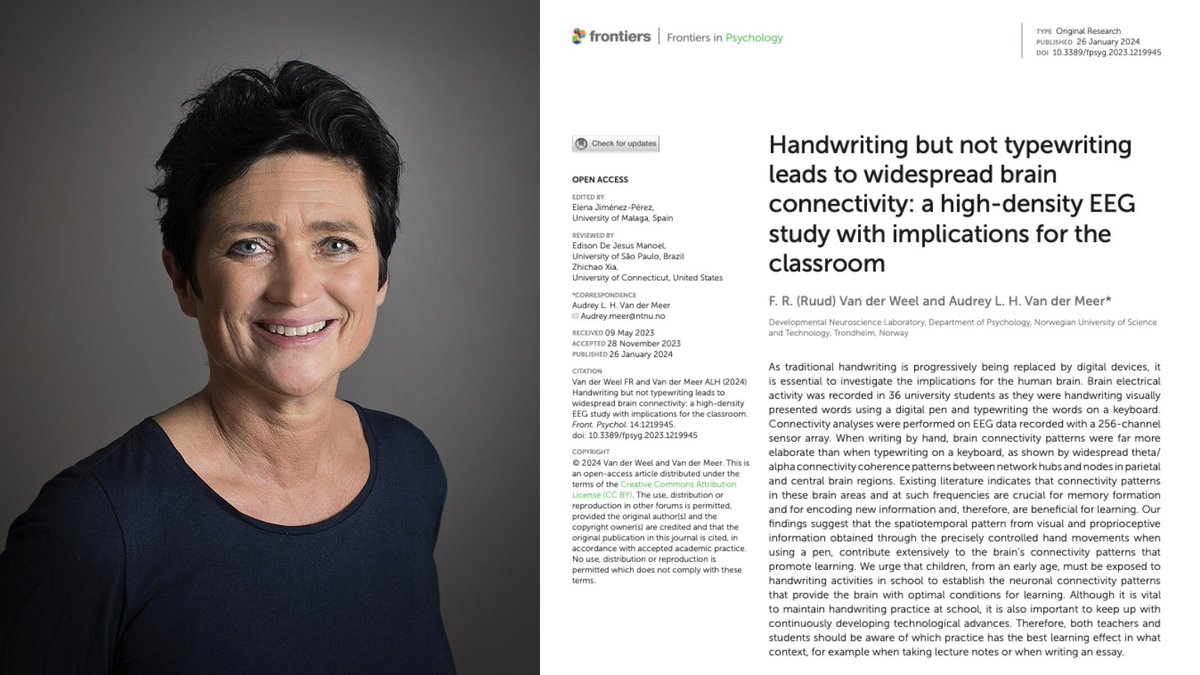
A Norwegian neuroscientist spent 20 years proving that the act of writing by hand changes the human brain in ways typing physically cannot, and almost nobody outside her field has read the paper.
Her name is Audrey van der Meer.
She runs a brain research lab in Trondheim, and the paper that closed the argument was published in 2024 in a journal called Frontiers in Psychology. The finding is brutal enough that it should have changed every classroom on Earth.
The experiment was simple. She recruited 36 university students and put each one in a cap with 256 sensors pressed against their scalp to record brain activity. Words flashed on a screen one at a time.
Sometimes the students wrote the word by hand on a touchscreen using a digital pen, and sometimes they typed the same word on a keyboard. Every neural response was recorded for the full five seconds the word stayed on screen.
Then her team looked at the part of the data most researchers had ignored for years, which is how different parts of the brain were communicating with each other during the task.
When the students wrote by hand, the brain lit up everywhere at once.
The regions responsible for memory, sensory integration, and the encoding of new information were all firing together in a coordinated pattern that spread across the entire cortex. The whole network was awake and connected.
When the same students typed the same word, that pattern collapsed almost completely.
Most of the brain went quiet, and the connections between regions that had been alive seconds earlier were nowhere to be found on the EEG.
Same word, same brain, same person, and two completely different neurological events.
The reason turned out to be something nobody had really paid attention to before her work. Writing by hand is not one motion but a sequence of thousands of tiny micro-movements coordinated with your eyes in real time, where each letter is a different shape that requires the brain to solve a slightly different spatial problem.
Your fingers, wrist, vision, and the parts of your brain that track position in space are all working together to produce one letter, then the next, then the next.
Typing throws all of that away. Every key on a keyboard requires the exact same finger motion regardless of which letter you are pressing, which means the brain has almost nothing to integrate and almost no problem to solve.
Van der Meer said it plainly in her interviews.
Pressing the same key with the same finger over and over does not stimulate the brain in any meaningful way, and she pointed out something that should scare every parent who handed their kid an iPad.
Children who learn to read and write on tablets often cannot tell letters like b and d apart, because they have never physically felt with their bodies what it takes to actually produce those letters on a page.
A decade before her, two researchers at Princeton ran the same fight using a completely different method and ended up at the same answer. Pam Mueller and Daniel Oppenheimer tested 327 students across three experiments, where half took notes on laptops with the internet disabled and half took notes by hand, before testing everyone on what they actually understood from the lectures they had watched.
The handwriting group won by a wide margin on every question that required real understanding rather than surface recall.
The reason was hiding in the transcripts of what the two groups had actually written down.
The laptop students typed almost word for word, capturing more total content but processing almost none of it as they went, while the handwriting students physically could not write fast enough to transcribe a lecture in real time, which forced them to listen carefully, decide what actually mattered, and put it in their own words on the page.
That single act of choosing what to keep was the learning itself, and the keyboard had quietly skipped the choosing and skipped the learning along with it.
Two studies. Two countries. Same answer.
Handwriting makes the brain work. Typing lets it coast.
Every note you have ever typed instead of written went into your brain through a thinner pipe. Every meeting, every book highlight, every idea you captured on your phone instead of on paper was processed at half depth.
You did not forget those things because your memory is bad. You forgot them because typing never woke the part of the brain that would have made them stick.
The fix is the thing your grandmother already knew.
Pick up a pen. Write the thing down. The slower road is the faster one.
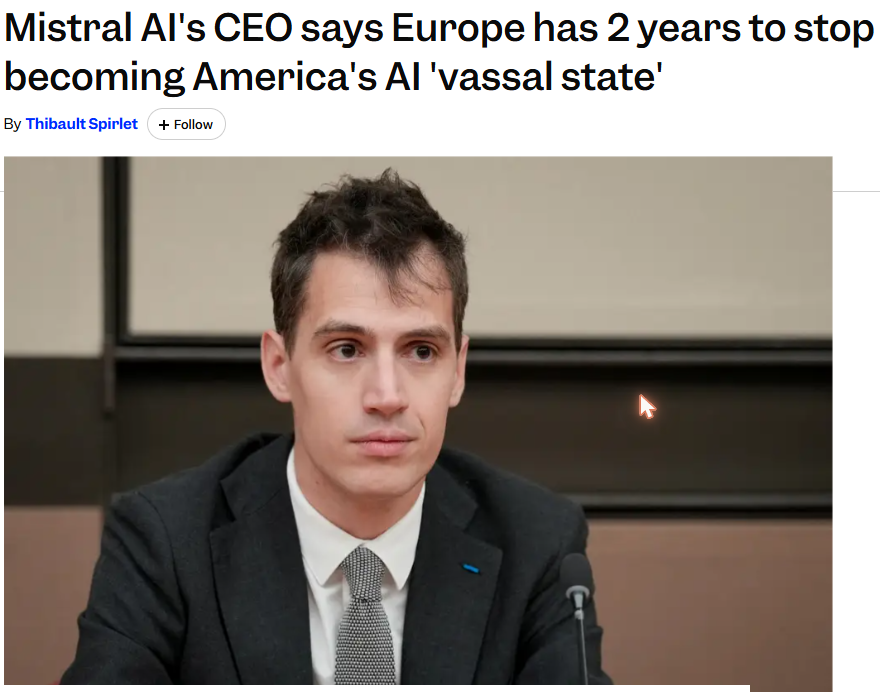
Leyendo declaraciones de Arthur Mensch, CEO y cofundador de Mistral AI en la Asamblea Nacional de Francia
Su tesis fuerte: Europa tiene dos años para construir su propia infraestructura de inteligencia artificial antes de quedar atrapada en una dependencia permanente frente a los gigantes tecnológicos estadounidenses.
El dominio en IA, según Mensch, dependerá del control sobre tres recursos clave: los chips, la energía y la capacidad de cómputo.
Claro que es una parte interesada: Mistral quiere construir un gigavatio de capacidad de cómputo de IA para 2029, y el propio CEO diceque será necesario mucho más.
En lugar de una soberanía tecnológica, el amigo francés ve una Europa perdería su capacidad de decisión, pudiendo convertirse incluso en un "estado vasallo" si no desarrolla su propia infraestructura.
https://t.co/UwfDuTRShi
@JavierGomaL Cualquier frío espectador que ojeara su portada en X diría que @javiergomal se aupa en el rango espectacular de los "superraudos", con semejante estantería en los dos primeros tercios de su su vida.
Y eso que no están ni novela, ni buceos teológicos ni poemarios inéditos:🤦♂️🤦♂️🏆
@JavierGomaL@RGMaldo Le animo a hacer alguna pieza en El Mundo sobre ese reiterado aserto sobre el moralismo impostado [o a enlazar alguna vieja, que no "anticuada"].