Today we announced our first quarter results, with ARR growing 12 percent year-over-year to $1.901 billion.
One year into general availability, our agentic products are moving from pilots into real deployments, with customers standardizing on UiPath as the orchestration and automation execution layer for their enterprise AI transformation.
The next step in that transformation is reducing the distance between an idea for automation and a governed system running it in production. With the launch of UiPath for Coding Agents, we bring coding agents into the full automation lifecycle. This changes the economics of implementation. It reduces the friction between what a customer wants to build and what they can deploy, govern, and scale.
I’m grateful to the UiPath team for the focus and discipline behind this quarter, and to our customers who continue to use our platform to drive real transformation.
Our quarterly business update: 1Q ‘2027 revenue of $418M, up 17% year-over-year, with $1.901B in ARR, which is growing 12% year-over-year. Read more in our full earnings release: https://t.co/p5MP9bqOZb
I felt this in Bengaluru at Devcon, surrounded by a community of builders that has shaped @UiPath from the beginning. Builders that take technology seriously enough to push it beyond the obvious use cases.
While I was there, I had the great pleasure of welcoming @RomalShetty for a fireside chat on what this next era asks of people and organizations.
One idea stayed with me: regardless of how much AI models evolve, there are certain human-skills that remain essential. Humans bring the initiative to decide what should be built, the judgment to know whether it works, and the ability to connect domain understanding, process knowledge, and technology.
We also discussed why this makes the development of junior talent so important. Judgment is not formed in theory. It comes from mentorship, responsibility, and being close enough to the work to understand the consequences of decisions. The people who will guide AI-powered organizations tomorrow need the opportunity to build, question, and learn today.
Romal, thank you for joining us. It was a great honor to have you at Devcon.
I’ve said it often because I believe it: coding agents will be as consequential for software as the cloud transition was.
Despite the name, they don't just write code. They build.
For the last few months, we've focused on a specific question: what happens after a coding agent finishes writing? How does that code become a working outcome inside an enterprise: secure, governed, running against real systems?
Today we're announcing UiPath for Coding Agents. Builders can use the coding agent of their choice to create, test, and deploy automations across the full lifecycle on the UiPath platform.
@BillAckman Bill, this reflects 100% my experience at uipath and even in my small VC firm. Great courage to expose it, I wish there will be more public support for this cause, I am willing to sign a letter of support.
That doesn't make AI less powerful, it just changes where the value sits. A year ago what we're building at @UiPath would have sounded like science fiction. Agents that interview subject matter experts, process documents, write the code, test it, deploy it, monitor it, handle exceptions. All of it. Today that's on our near-term roadmap.
But even as we automate more, the human role gets more important. The judgment call that no model can make for you. Enterprises need to trust who they hand the keys to and that trust is built over years, not quarters.
Financial crime compliance is one of the hardest problems in financial services. And it's only getting harder. The institutions fighting it need partners who understand the stakes.
Today I'm excited to announce that @UiPath has acquired @WorkFusion.
What drew me to @AdamFamularo and his team goes beyond the technology. Yes, they've built exceptional AI agents for customer screening, investigations, and risk analysis. But more importantly, they approach this work the way we do: with a deep respect for the human judgment at the center of compliance, and an obsession with earning customers' trust through governance, security, and control.
Together, we're going deeper on purpose-built solutions for know your customer, anti-money laundering, sanctions, and related financial crime use cases - combining their domain expertise with our business orchestration and agentic automation platform.
Adam, to you and your team: welcome to UiPath. Excited for what we'll build together.
Hearing Paul Kistner describing our partnership with @AllegisGlobal in this way is exactly what we strive for. Grateful for collaborations that push our thinking and make us better.
Enterprises want the speed and intelligence of AI agents and automation, but never at the expense of security or control.
Auditability remains essential in making that possible. Organizations need to verify what happened, when it happened, and why, and this level of transparency has shaped how we’ve built trust with enterprises over many years.
Protecting sensitive information is equally critical as AI models enter more workflows. Model governance helps safeguard PII, enforce regional and data-handling requirements, and log every model interaction so organizations can innovate without compromising the data they are responsible for.
Underpinning all of this is that customers need to know they can trust the companies that platforms and tools they rely on to get work done across their businesses. Governance and security are what allow enterprises to move forward with confidence, and they remain the foundation of the trust we’ve earned and continue to protect as the landscape of agentic automation evolves.
@UiPath’s ScreenAgent ranked #1 on OSWorld verified benchmark (https://t.co/tRSgawWaGw)!
Its energizing to build enterprise grade agents, capable of executing end to end tasks. Truly autonomous agents, with human supervision and control.
#CUAs#osworld#autonomousagents
It’s been 19 days and 20 hrs since I last felt Kate’s warm embrace. She landed 47 minutes ago. The 24 hours of travel no doubt has her rushing to shower. She needs to cleanse herself of a dirtied world incompatible with her sensibilities. The wash doubles as a ritual, preparatory for entrance into the symbolic world we’ve constructed.
The time apart has been costly. My body’s electrical signaling betrays the separation. Without her touch, my vagus nerve’s 100,000 myelinated fibers have dropped their high frequency spectral power, squawking distress. An intelligent system broadcasting diminished wave forms, hoping to be heard. There are other signals of distress.
My white blood cells have shifted their gene expression, upregulating pro-inflammatory genes IL-6 and TNF-alpha and downregulating my antiviral genes. A pro-aging biochemical signature of a system suffering hardship.
My environment is a pristine anti-aging laboratory. Air, water, food and light are meticulously measured. Toxins are filtered. Purification systems run autonomously. Biomarkers tracked. Nutrition is calibrated.
Yet outside my control is the affection of another. The 68 trillion cells that constitute Bryan Johnson run non-negotiable code. They demand tenderness, and not of a whimsical type, but deep, all-encompassing love that must be earned and carefully maintained. Otherwise they protest in self-termination.
She’s now only 13 miles away and I can viscerally feel her essence. The transmission pulses in high fidelity. As if there were a fiber optic cable streaming our connection at light speed through the multiplexed cylinders of glass. The time apart created latency, buffering the connection, depriving us of the luminescence and dimming into noise.
In 15 minutes she will be within reach. I can visualize the whites of her eyes and smell her aroma. When she arrives, she will be shy. Whenever we are apart, she returns to zero. Her previous openness will be closed. Her emotional dynamic range will be held in reserve until she feels she is safe and can trust. I’ll need to kindle her again. The rush of the courtship enthralls me.
The anticipation drives a small cluster of my midbrain neurons to flood dopamine. Nerve fibers activate, lighting up my skin’s receptors as it awaits for slow, caressing touch. My hypothalamus begins synthesizing oxytocin, preparing to dump it upon first eye contact to ensure the reestablishment of our pair bond. This biochemical orchestra fills me with delight and sensorial want.
Kate’s been mulling over what she’ll wear for days. She’s considered dozens of possibilities and modeled out my anticipated emotional state, the weather, and our planned activities. The colors will be representative of her psychological state and be positioned to soothe mine. The texture, style, and hues will interplay with our biology. The deliberately chosen accessories will add flair, intrigue and play. This is how she flirts, seduces and bypasses my mind to speak directly to my physiology. She has other tricks too.
She’s arrived. I must wait for her. Her timidness will want to determine the cadence. I hear the door crack open and her bag drop to the floor. She’s nervous. I’m on the couch, neutral and open. She rounds the corner and our eyes meet. The inhibitions wither as the magnetism draws us together. Soft hellos are whispered and our bodies interdigitate.
I feel her finger tips on the back of my neck. Goose bumps light up my body. Skin nerve cells fire signals directly to my brain, bypassing the analytical mind. The hypothalamus dumps the oxytocin, inhibiting fear and lowering cortisol. The body washes itself in this anti-inflammatory chain reaction. Our respiration and heart beats are now synchronizing. The brain piles on with a release of endorphins to soothe the psychological pain of our separation. New powers are now in control. Let them run in glory.
I press my cheek against hers. The skin on skin triggers a wave of desire. I brush her lips with mine, catalyzing a massive activation of neurons in her brain, overwhelming thought and forcing presence.
She relents and wants to dance. She’s home.
I slip my hand under her shirt and brush the small of her back. Goosebumps spread like a wildfire across her body. Her hypothalamus stimulates the release of GnRH which tells the pituitary gland to wake up her reproductive system. Our olfactory systems consume each other with delight, signaling immune system compatibility.
I move both my hands to her jawline, holding her head firmly in place. Our mirror neurons speak to each other. I know what she wants. My lips press against hers and I softly bite her lower lip. Kate’s blood vessels dilate from the acetylcholine and nitric oxide release, flushing her lips, skin and body. The cascade is nearing waterfall.
The executive control of our brains surrenders. No longer concerned with the 68 trillion cells. The prefrontal cortex goes dark. Eliminating future planning and probabilistic modeling. Activity in our parietal lobes diminishes, dissolving the boundary that distinguishes between self and other. No longer is there Kate and Bryan, just a singular biological entity suspended in a state of bliss. The outside world goes quiet. It doesn’t exist. We dissolve into raw existence.
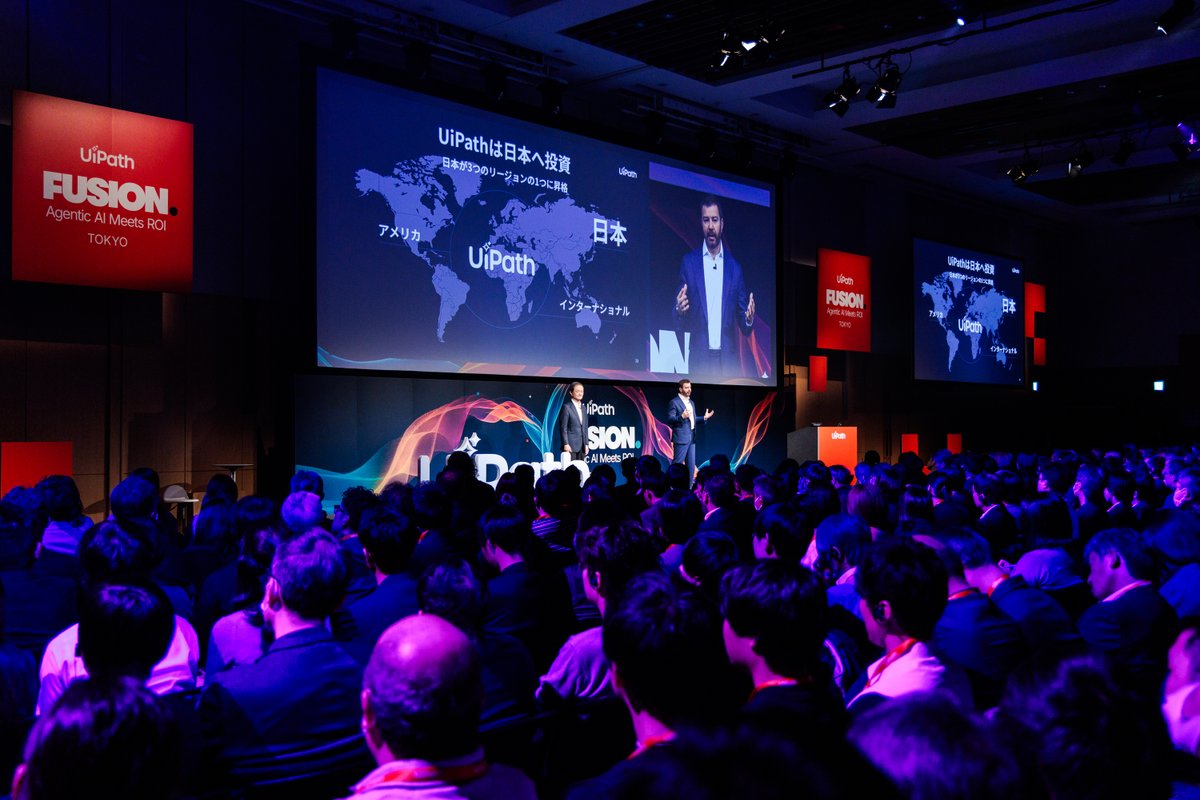
Japan has been one of the earliest countries to truly embrace automation, and one of the first places @UiPath expanded to as a company.
Every time I return, I’m reminded how open and forward-thinking this market is. Spending the past week with our customers, partners, and team across FUSION and DevCon was energizing.
Our conversations reinforced that security and enterprise reliability are not mere features, but expectations. And the key to safely harnessing the power of generative AI in the enterprise is orchestration, which stands at the core of our agentic automation approach. The trust our Japanese customers have placed in us over the years pushes us to stay sharp and continue building technology that meet these high expectations.
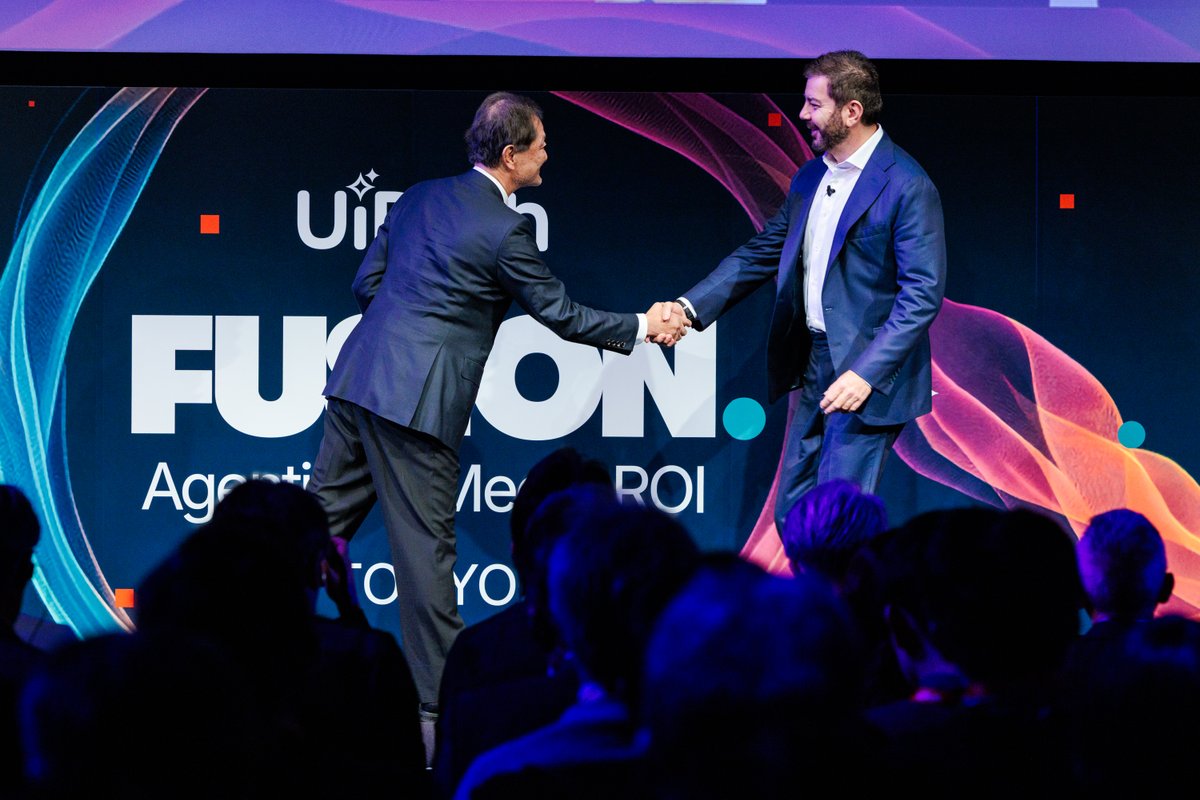
It was great to join Koichi Hasegawa on stage, and to welcome Hiromi Oka from @Microsoft and Tak Izaki from @nvidia. We talked about the agent-driven future of work: a world where autonomous AI agents, robots, and people operate together with governance and control to deliver real value.
Thank you to everyone who joined us throughout the week. Your insights, questions, and partnership continue to shape how we build.
In our third quarter, we delivered ARR of $1.782 billion, up 11% year over year - a testament to the team’s focus, consistent execution, and the momentum we’re seeing as customers scale agentic automation across the enterprise.
Thank you @MorganLBrennan and @jonfortt for having me on @CNBCOvertime today to discuss what’s behind that performance and the trends we’re seeing as enterprises accelerate their AI and automation strategies. More organizations are looking for a unified platform rather than standalone tools, and that shift is becoming clear in how they adopt and expand automation.
Our ability to bring deterministic automation, agentic automation, and orchestration together in one trusted system is a real differentiator. This combination delivers meaningful outcomes for customers and helps them run end-to-end automation with confidence and scale.
What gives me confidence is how quickly organizations are embracing an open ecosystem approach. Our customers tell me they want choice, and that they want a platform that works with any model, any system, any agent. That openness is core to who we are and fundamental to the @UiPath Platform and we are humbled that it continues to resonate with customers around the world.
If you missed the interview, you can watch the full segment here: https://t.co/F5N51rRHTC
Scalability is what separates experimentation from real transformation in technology.
The latest Everest Group report identifies scalability as one of the key drivers for intelligent process automation platforms adoption.
Enterprises are shifting away from automating tasks in isolation to end-to-end, proactive solutions, demanding an architecture that can manage complexity, uphold governance, and evolve with AI. This shaped our pivot toward orchestration, which is why I am proud to share that UiPath has been named a Leader and Star Performer in the Everest Group Full Suite Intelligent Process Automation Platform PEAK Matrix® Assessment 2025.
Orchestration applies as much to large, cross-department workflows as it does to smaller, team-level or individual processes. It creates the connective tissue that allows automation and AI to work together and provides the insights needed to understand how each element contributes to the whole.
Gaining a 360-degree view of how work happens is essential to managing complexity and scaling automation responsibly. This principle continues to guide our product direction and the way we partner with customers on their transformation journeys.
This recognition, along with our leadership position for Vision and Market Impact in the Intelligent Process Automation Platform (IPAP) PEAK Matrix® Assessment reflects our commitment to supporting enterprise-wide digital transformation.
The @UiPath Community has always been at the heart of everything we do.
From the early days of UiPath to where we are now, some of the best ideas have come from the engineers, developers, and automation experts who explore our platform and push it in new directions.
Every year at Fusion, it’s a tradition for me to meet some of our UiPath MVPs in person. It’s always one of my favorite moments: seeing familiar faces, welcoming new ones, and hearing firsthand how this community continues to drive innovation.
Our MVPs are leaders who set the pace for what’s possible in automation and now in the growing space of agentic AI. Their creativity and dedication continue to shape how technology empowers people and organizations around the world.
Applications to become a UiPath MVP are open through November 20. This year, we’re expanding the program to include new categories: AI & Agentic Workflows, Process Orchestration, and Solution Developers for those building with LLMs and coded agents beyond UiPath.
Join us in shaping the future: https://t.co/GTfTJ6a6yZ
Great points on why AI cannot (yet) replace software engineers. This is what all seasoned developers will tell, the bottleneck is not in writing code - I think coding was 5% of my job as backend dev - but in:
-Understanding and reflecting business logic
-Architecting clean, extensible systems
-Managing side effects, state, latency, auth, concurrency, observability
-Reasoning through edge cases and failure modes
https://t.co/Am44B3s24y