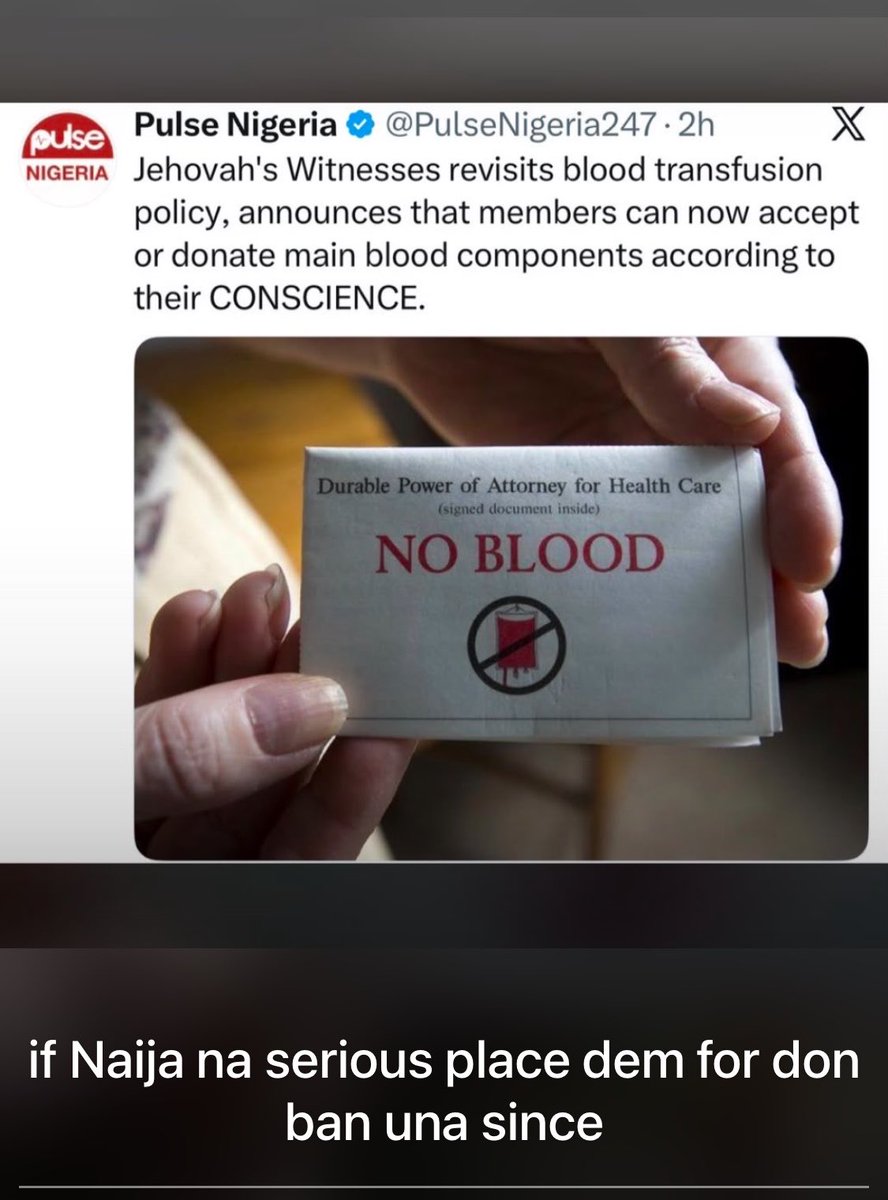
When Jehovah’s Witness patients refused consent for blood products or transfusion, I wasn’t bothered. If anything, I sometimes felt relieved; it meant less work for me. I would counsel you, explain the risks and then, respect your decision.
You held on to that same belief until death. In the end, the very belief you died defending was contradicted by its own custodians.
I remember a patient with chronic kidney disease and background heart failure who needed blood products to support his condition/potentially prolong his life. He was counselled adequately, he still declined transfusion. He eventually died.
Another case was ironic: an unconscious accident victim with traumatic brain injury and multiple fractures was brought in. His relatives consented to blood transfusion on his behalf. When he regained consciousness, they specifically asked us not to tell him that he had received blood.
He was discharged believing that he had remained a “true Witness” throughout the admission, and that his faith had saved him. Who knows how many souls he’s deceived with his version of story, since discharge.
There is something profoundly tragic about watching a potentially life-saving intervention be refused because of a religious doctrine, particularly when the consequences can be fatal.
These preventable deaths occur because the victims were persuaded to reject medically indicated treatment. If I were the relative left behind, we are going to court. You’re sure getting dragged on God.
Faith is a personal choice. But when religious doctrine(s) become the reason someone dies from a potentially treatable condition, accountability should be a question worth asking.