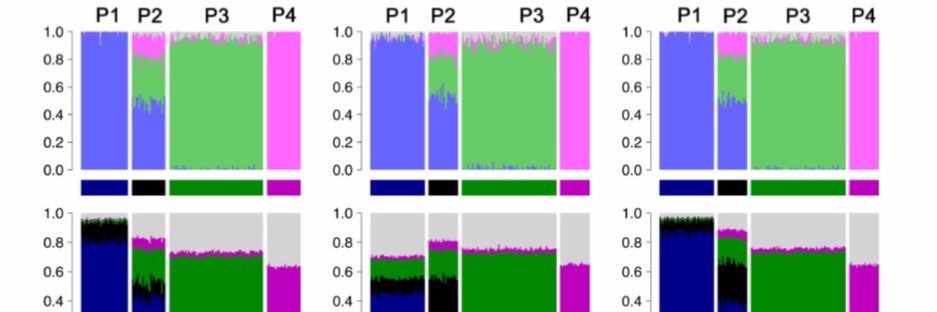
Our paper "An Ancient ecospecies of Helicobacter pylori" was published yesterday in Nature. Thanks to Elise, Roberto, Sarah and our collaborators in Oita, Gothenburg and elsewhere for their hard work. https://t.co/hNWV35JW05
We are hiring a postdoc studying the ecological niche of bacterial ecospecies. This interdisciplinary project combines genomics, molecular microbiology and fieldwork on an island near Shanghai. Please forward :). https://t.co/zywbw1v5ZB
What's left to discover: What are the viscous liquids in which Molassodon hunts, kills and devours bacterial prey? We now have many more tools to help us find out, and to understand the trade offs for different bacterial strategies. All comments welcome, thank you for reading.
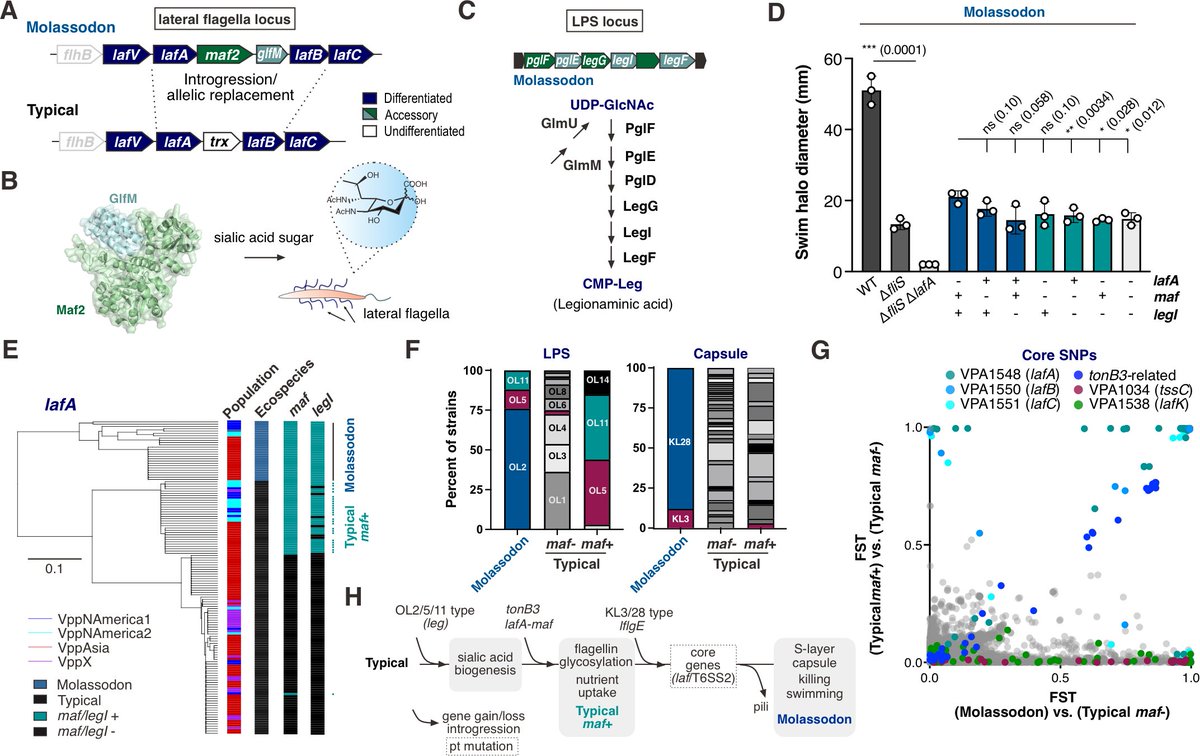
Molassodon! Excited to post my research group's first laboratory project. We identify a phenotype and a putative ecological strategy for the Molassodon ecospecies of Vibrio parahamolyticus, thanks to the hard work of our lab team led by Sarah https://t.co/Dafv1i6vgJ
We also identify a convergent intermediate form and are also able to provide details about the molecular and evolutionary assembly of the Molassodon genotype, revealing a key role for lateral flagella glycosylation.
Postdoc position in my group in Tokyo!
Please get in touch if you are interested.
And happy to discuss projects - ranging from developing new methods to analysis of new genomes that we are now sequencing in the lab.
https://t.co/RurkIGI2TC
Lab page: https://t.co/Y12xg6qiG8
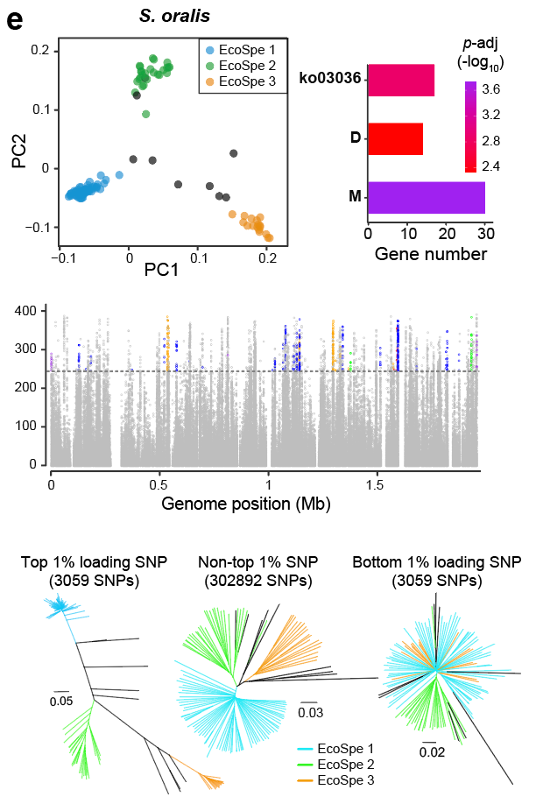
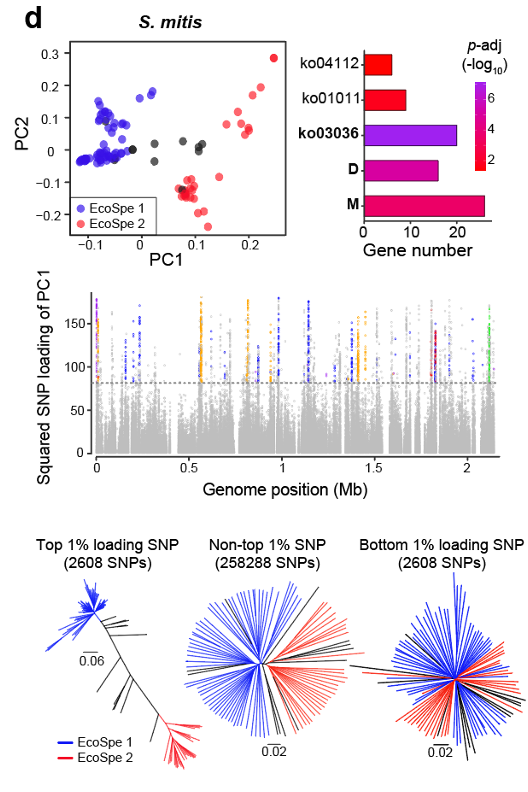
The convergence in ecospecies differentiation between the two streptococcus species, involving the same genes and gene categories (cell division related), suggest that particular genera find predictable paths for adaptive differentiation.
The first two bacterial ecospecies, in Heliocobacter pylori and vibrio parahaemolyticus are characterized by high differentiation restricted to a small fraction of the genome. The streptococcal ones have progressed further, consistent with the older age of the species.
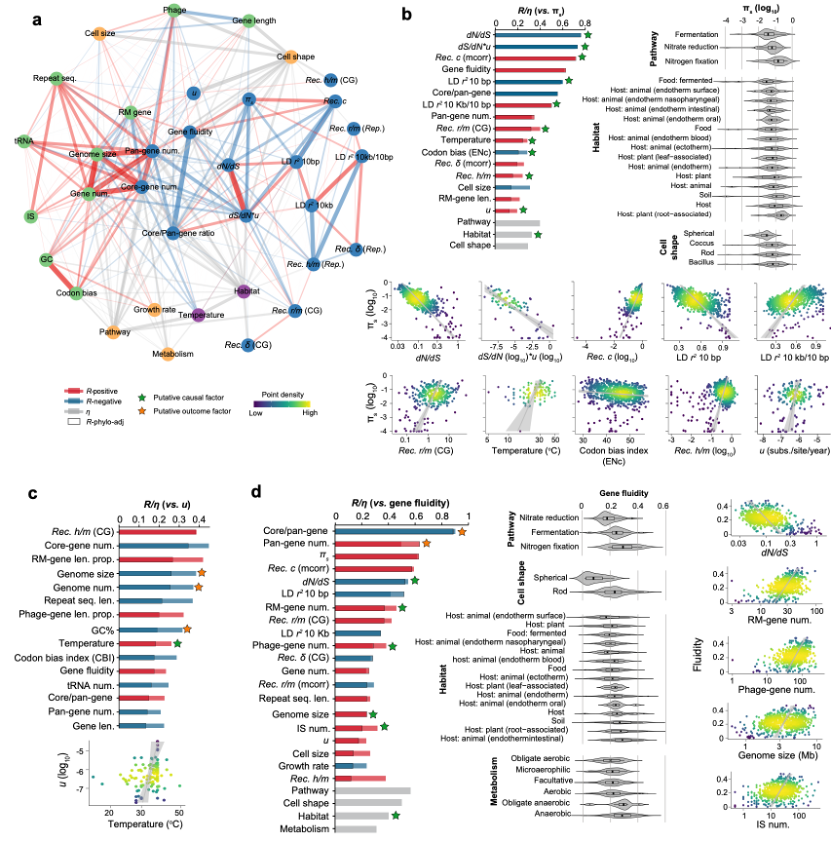
Delighted to present our Macrogenetics atlas of prokaryotes. https://t.co/KkIq4RLqR5... This is a herculean effort from Chao Yang, which has a previous existence as a preprint first posted in 2018 "why panmictic bacteria are rare?" https://t.co/GjxNb5lY4G
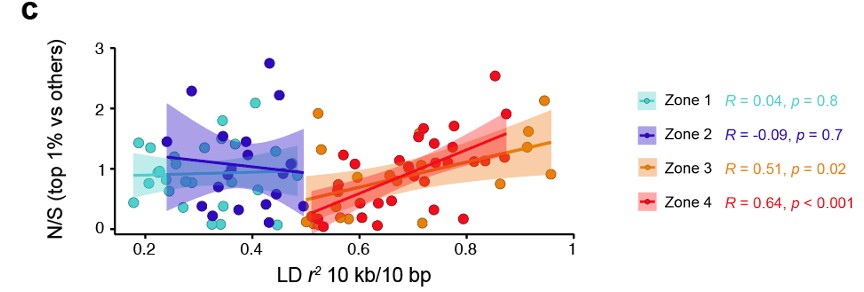
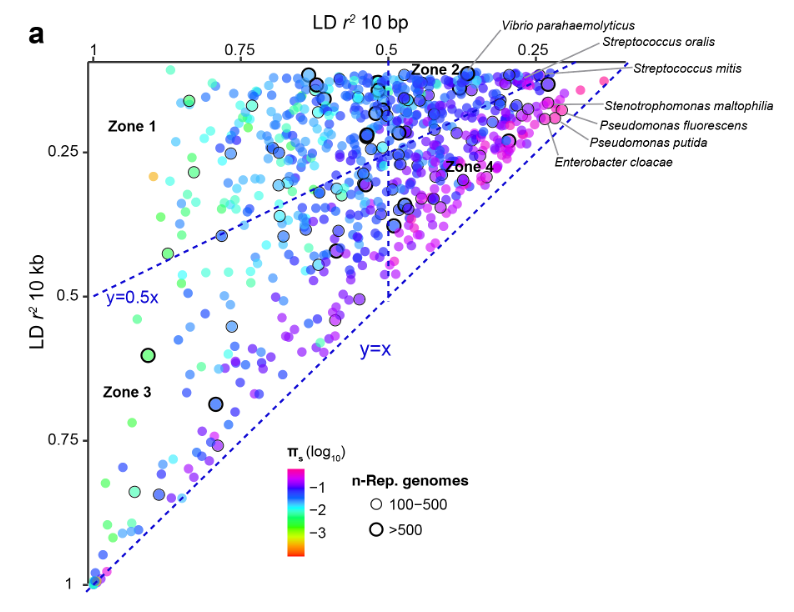
Why? Well what happens is that for species which maintain large population sizes for long time periods, natural selection becomes increasingly important in structuring diversity and this generates long range LD.
Finally, we provide an answer to the question of why panmictic bacterial species are rare. A well-mixed bacterial species should have low LD at all genetic distances, but there are no such species. Instead we find that the most diverse species have intermediate long-range LD.
And there are curious findings too, like the fact that the genome fluidity of rod shaped bacteria is more than double that of spherical ones. What can you see in the data? Or what would you like to see? Let us know!