A proper introduction:
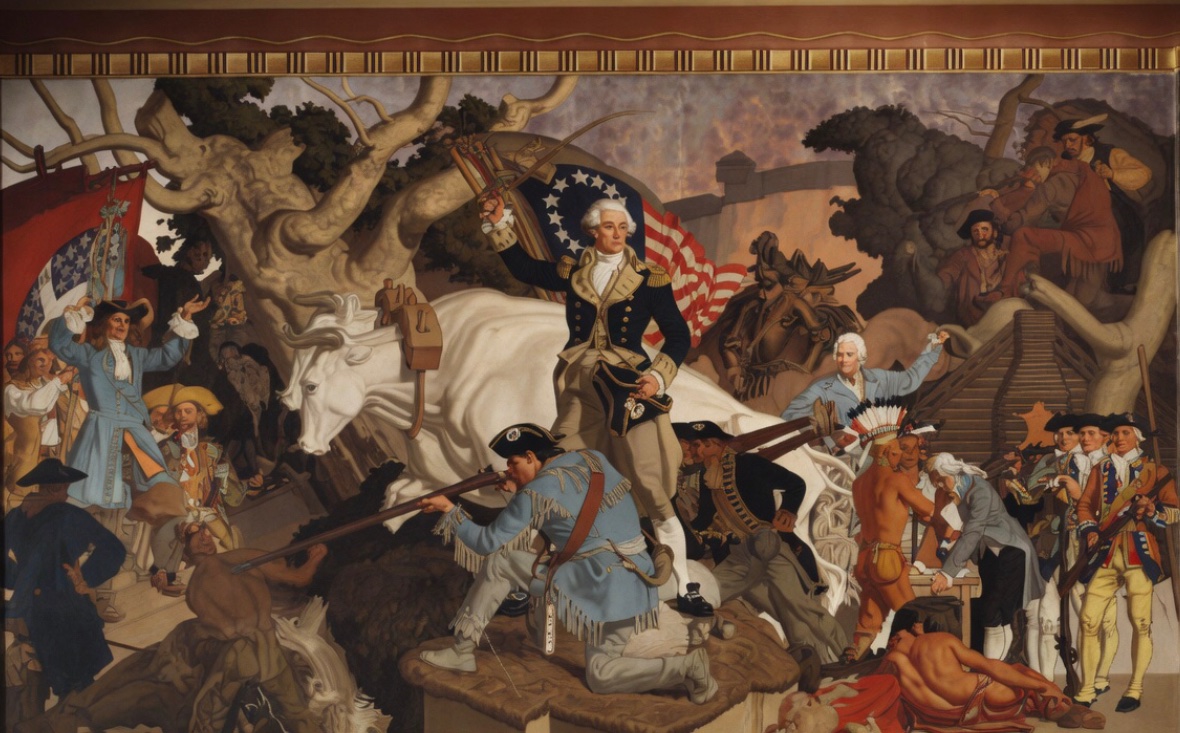
I’m Daniel Johnson. American ancestry traceable to 1630 descendant of English settlers. I seek to affect change in my country and restore the glory of which my ancestors fought to bring to this country. From conquering the native population to taming the wilderness, American history is the greatest in human history. If I can play even a small part in the restoration of our empire, that will be a life well lived.
So funny reading through all the comments on this worldstar IG post. Every guy is like “yeah stg this happened to me before” and every woman is furious but ofc won’t actually address the substance of the tweet.
We really pulled the pants off the whole charade.
Mexican President Sheinbaum: We built Mexico and we have also helped build the United States.
"The 40 million Mexicans who live there, the United States would not be what it is today without the 40 million Mexican men and women who work there..."
The Lost Mountain Line: June 9–18, 1864
A continuation of the Atlanta Campaign
[Author's Notes: This post continues the Atlanta Campaign narrative from the previous thread covering the battles of the Dallas Line — New Hope Church, Pickett's Mill, and Dallas — fought May 25–28, 1864. A word on the nature of these engagements: the names Gilgal Church, Mud Creek, and Pine Mountain don't carry the same immediate recognition as Chancellorsville, Gettysburg or Cold Harbor, and the actions fought there rarely appear in popular histories of the war. But the grinding, incremental nature of the Atlanta Campaign was precisely the point. Every ridge Johnston held, every withdrawal Sherman forced, every day the army moved closer to Atlanta — or didn't — was accumulating toward a political and strategic verdict that would prove as consequential as any single dramatic battle. Atlanta fell on September 2, 1864. Lincoln won re-election in November. The war ended the following spring. The road ran directly through these woods. With Johnston still firmly between Sherman and Atlanta, and both armies bloodied but unbroken, the campaign now shifts into the heavily forested ridges and isolated mountains of Cobb County, Georgia. The next installment will cover the operations around Kennesaw Mountain itself, including the cavalry fight at McAfee's Crossroads, Hood's unauthorized assault at Kolb's Farm, and Sherman's fateful decision to attempt what he had spent the entire campaign trying to avoid.]
***
The armies that disengaged from the Dallas-New Hope Line in the last days of May had spent four days doing things to each other that neither side particularly wanted to remember. Hooker's men still called it the Hell Hole. The survivors of the Kentucky Orphan Brigade — those who were left — had their own name for it, though most of them were past talking about it by the time the army crossed back through Dallas. Sherman pulled his forces eastward between May 29 and June 1 in the manner he had learned, against his instincts, from watching Johnston do it for weeks: methodically, under cover of skirmishers, disentangling one division at a time from a line that had cost him more than four thousand men and produced nothing he could show Washington on a map.
He needed the railroad. He had always needed the railroad, and the twenty-day experiment away from it had taught him the price of forgetting that. By June 6 his cavalry had reached Allatoona Pass, and on June 9 the Federals drove Wheeler's troopers out of Big Shanty and began the work of pressing southward again — this time with the Western and Atlantic Railroad at their backs, the supply trains running, and the memory of the Hell Hole fresh enough to inform every decision about what not to do next.
Johnston, meanwhile, had moved.
***
He had abandoned the Dallas-New Hope Line on June 4, pulling back six miles to a new position that occupied the high ground with the thoroughness of a man who had been thinking about where to go next since before the last battle was finished. The Lost Mountain Line, as it came to be called, anchored its left flank on the squat, dark bulk of Lost Mountain and ran northeast to a country crossroads at a small church called Gilgal, then turned east to the wooded mass of Brushy Mountain before bending northeast again toward the Western and Atlantic Railroad. At the center of this arc, thrust forward of the main line like a finger pointing at the approaching Federals, rose Pine Mountain — actually a long, narrow ridge rather than a true summit, about three hundred feet above the surrounding terrain — which Hardee had occupied with Bate's Division and two batteries of artillery.
The line ran ten miles. Hardee's Corps held the left between Gilgal Church and Pine Mountain, with Jackson's cavalry covering the flank from Gilgal Church west to Lost Mountain and the Dallas Road. Polk's Corps — soon to be less Polk — occupied the center. Hood anchored the right behind Noonday Creek, his line running across Brushy Mountain with Wheeler's cavalry on the extreme flank. Johnston had established his headquarters at the Cyrus York house on Burnt Hickory Road and continued building earthworks across his entire front with the patient efficiency that had characterized his generalship since Dalton. Richmond kept sending dispatches asking him when he intended to attack. Johnston kept sending dispatches back that amounted to not yet, and not here, and eventually not at all, and the dispatches grew sharper on both ends as the summer wore on.
Sherman began his general advance on June 10. After seven straight days of rain the roads had become something between mud and quicksand, and the lead elements moved cautiously through terrain that the army commander himself surveyed from the higher ground with a mixture of admiration and calculation. What he saw was worth a pause. The twin humps of Kennesaw Mountain rose in the distance — Big Kennesaw and Little Kennesaw, a camel-backed ridge more than two miles long — with Pine Mountain in the middle distance and Lost Mountain off to the right, the whole arrangement forming what Sherman described with the precision of a man measuring his problem:
"Pine, the apex, and Kennesaw and Lost Mountain the base, covering perfectly the town of Marietta and the railroad back to the Chattahoochee. On each of these peaks the enemy had his signal stations, the summits were crowned with batteries, and the spurs were alive with men busy in felling trees, digging pits, and preparing for the grand struggle impending. The scene was enchanting; too beautiful to be disturbed by the harsh clamor of war; but the Chattahoochee lay beyond, and I had to reach it."
By late morning on June 10, Howard's IV Corps, advancing in the van of Thomas's Army of the Cumberland, encountered Bate's Division on the slopes of Pine Mountain. With orders not to assault fortified positions, Howard waited for Palmer to come up on his left. The army's first day's march covered two or three miles, depending on who was measuring and how generously they counted the time spent waiting for the mud to accept their passage. The summer rains that had broken the heat were making their own contributions to the campaign.
***
For three days — June 11, 12, and 13 — Thomas's forces inched around the flanks of Pine Mountain, probing for the seams between it and the main Confederate line. By the 13th it was apparent to Thomas, and to Hardee, that the position was a forward salient — a finger of Confederate occupation thrust out from the main line in a way that left it vulnerable to being cut off on both sides. Hardee alerted Johnston to the danger. He was increasingly concerned about Bate's exposed division and what would happen to it if the Federals moved fast enough.
On the morning of June 14, Johnston decided to see the position for himself.
He rode to Pine Mountain with Hardee and Polk — the three senior commanders of the Army of Tennessee, together on a hillside that the Federal artillery had already ranged. There were men below who could have told them this. Some of them tried. The generals ignored the advice with the particular confidence of men accustomed to making decisions about danger, and rode forward, and mounted the breastworks to survey the ground below.
They were visible from the Federal lines.
Sherman, meeting with Thomas that morning, rode forward to examine the situation in front of Pine Mountain. He saw the group of officers on the summit — he could not have known who they were, though he may have suspected — and ordered Howard to disperse them. Howard directed Captain Peter Simonson's 5th Indiana Battery to open on the group. The first round scattered the officers. They did not scatter far enough. The second shot — a 3-inch bolt fired by Captain Alfred Morrison's section of ordnance rifles — struck Lieutenant General Leonidas Polk in the left side and passed through his chest, killing him instantly.
He was fifty-eight years old, an Episcopal bishop before the war, a man who had worn both the collar and the sword with a conviction that not everyone found entirely persuasive but that no one who served alongside him questioned. He had commanded a corps from Shiloh to the Chattahoochee without ever quite becoming the general his rank required him to be, and he had made decisions at Cassville three weeks earlier that Johnston would never forgive and history has never fully explained. None of that mattered on the slope of Pine Mountain in the rain of June. What mattered was that the Army of Tennessee had lost the third-ranking general in the Western Theater to a single round of artillery, and that Johnston quietly withdrew Bate's Division from the salient that same night, and that Major General William Wing Loring assumed temporary command of what remained of Polk's Corps while the army mourned and kept digging.
***
On June 15, Howard's forces pushed forward and found Bate's works abandoned, advancing until they struck the Confederate main line. Schofield moved on the Federal right toward Gilgal Church while McPherson continued pressing against Brushy Mountain on the left. It was late in the afternoon, while IV and XIV Corps pressed against Johnston's center, that Hooker's XX Corps — Geary's 2d Division and Butterfield's 3d Division — came up against Patrick Cleburne at Gilgal Church.
Cleburne had four brigades dug in across that sector, entrenched and supported by artillery, with skirmishers forward and outposts beyond them. He had done this before. He had done this before, and he would keep doing it until the war was finished with him — which it would not be for another five months, at Franklin, Tennessee. The Federals who came at his positions at Gilgal Church had learned, or were in the process of learning, what that tended to cost.
Butterfield attacked piecemeal — Ward's brigade forward unsupported, then Coburn behind him without adequate preparation, the whole affair advancing in the disconnected way that Federal assaults against prepared Confederate positions had a habit of developing in this country. Geary's attack was better organized, his whole division going in with brigades abreast, Ireland on the right, Jones in the center, Candy on the left. It made no difference. Both divisions together suffered approximately seven hundred casualties against a position that gave Cleburne no serious difficulty to hold. When it was over the two divisions pulled back and began to dig in, which was what everyone did when the shooting stopped in the summer of 1864.
The 16th belonged to Schofield. He discovered that the Confederate left was exposed — the line between Gilgal Church and Lost Mountain thinly held by Jackson's cavalry with no infantry to stiffen it — and sent Hascall's 2d Division against Ross' Mississippi cavalry brigade, threatening to pierce the gap. Once Schofield gained the high ground from which he could enfilade Hardee's left flank across Cleburne's sector, the positions from Lost Mountain to Gilgal Church became untenable. Johnston pulled back his left behind Mud Creek.
***
Hardee withdrew his four divisions on June 17 to the east bank of the rain-swollen Mud Creek, arraying from south to north with Cleburne on the left, Walker on his right, French's Division at the Latimer House, and Walthall connecting with Hood on the right. Johnston had dispatched his chief engineer, Colonel Stephen Presstman, to lay out fallback positions further to the rear. He did not intend to make a determined stand on Mud Creek. He wanted time, and Mud Creek was worth a day or two of it.
The Federals brought up fourteen guns against Cleburne's portion of the new line — Bundy's 13th New York Battery, McGill's Pennsylvania Battery E, and Cockerill's 1st Ohio Battery, six Napoleons and eight 3-inch ordnance rifles — and opened a bombardment that Cleburne's men endured behind their works with the equanimity of troops who had been on the receiving end of heavy artillery before. During the bombardment, a Federal round found Brigadier General Lucius Polk, commanding a brigade in Cleburne's Division.
He was the nephew of Leonidas Polk, who had been killed on Pine Mountain three days earlier.
The younger Polk survived, the wound to his leg severe enough to end his part in this campaign but not his life. He had taken the same risks his uncle had taken on the same line, on the same kind of ground, in the same rain that had been falling since early June. The Confederacy's losses were not always measured in the dead. Sometimes they were measured in the men who came back changed, or did not come back to that campaign at all.
On June 18, Thomas struck Hardee's salient at the Latimer House, defended by French's Division. Wood's 3d Division drove in Walker's pickets on French's left, turned inward behind Cockrell's skirmishers, and unhinged Ector's line, occupying the vacated Confederate works and bringing up artillery to enfilade French's trench line. The threat to his left flank was enough. Johnston ordered the withdrawal that night, and the Army of Tennessee slipped away from the Mud Creek Line in the darkness as it had slipped away from every line before it, and by morning it was gone.
It was gone to Kennesaw Mountain.
***
What waited there — the twin peaks and the long rocky ridge, the works already prepared along the crest, the guns dragged to the summit by a hundred men per piece — is the subject of the post that follows. So is John Bell Hood's decision to attack without orders at a place called Kolb's Farm, and the cavalry fight at McAfee's Crossroads, and the particular combination of frustration and calculation that led William Sherman to issue Special Field Order No. 28 on June 24 — the order that sent twenty thousand men against the strongest position Johnston had yet occupied, on ground that had been waiting for them since the first day of the campaign.
The mountain had been there the whole time. They were finally going to have to deal with it.




![2ndMississippi's tweet photo. The Lost Mountain Line: June 9–18, 1864
A continuation of the Atlanta Campaign
[Author's Notes: This post continues the Atlanta Campaign narrative from the previous thread covering the battles of the Dallas Line — New Hope Church, Pickett's Mill, and Dallas — fought May 25–28, 1864. A word on the nature of these engagements: the names Gilgal Church, Mud Creek, and Pine Mountain don't carry the same immediate recognition as Chancellorsville, Gettysburg or Cold Harbor, and the actions fought there rarely appear in popular histories of the war. But the grinding, incremental nature of the Atlanta Campaign was precisely the point. Every ridge Johnston held, every withdrawal Sherman forced, every day the army moved closer to Atlanta — or didn't — was accumulating toward a political and strategic verdict that would prove as consequential as any single dramatic battle. Atlanta fell on September 2, 1864. Lincoln won re-election in November. The war ended the following spring. The road ran directly through these woods. With Johnston still firmly between Sherman and Atlanta, and both armies bloodied but unbroken, the campaign now shifts into the heavily forested ridges and isolated mountains of Cobb County, Georgia. The next installment will cover the operations around Kennesaw Mountain itself, including the cavalry fight at McAfee's Crossroads, Hood's unauthorized assault at Kolb's Farm, and Sherman's fateful decision to attempt what he had spent the entire campaign trying to avoid.]
***
The armies that disengaged from the Dallas-New Hope Line in the last days of May had spent four days doing things to each other that neither side particularly wanted to remember. Hooker's men still called it the Hell Hole. The survivors of the Kentucky Orphan Brigade — those who were left — had their own name for it, though most of them were past talking about it by the time the army crossed back through Dallas. Sherman pulled his forces eastward between May 29 and June 1 in the manner he had learned, against his instincts, from watching Johnston do it for weeks: methodically, under cover of skirmishers, disentangling one division at a time from a line that had cost him more than four thousand men and produced nothing he could show Washington on a map.
He needed the railroad. He had always needed the railroad, and the twenty-day experiment away from it had taught him the price of forgetting that. By June 6 his cavalry had reached Allatoona Pass, and on June 9 the Federals drove Wheeler's troopers out of Big Shanty and began the work of pressing southward again — this time with the Western and Atlantic Railroad at their backs, the supply trains running, and the memory of the Hell Hole fresh enough to inform every decision about what not to do next.
Johnston, meanwhile, had moved.
***
He had abandoned the Dallas-New Hope Line on June 4, pulling back six miles to a new position that occupied the high ground with the thoroughness of a man who had been thinking about where to go next since before the last battle was finished. The Lost Mountain Line, as it came to be called, anchored its left flank on the squat, dark bulk of Lost Mountain and ran northeast to a country crossroads at a small church called Gilgal, then turned east to the wooded mass of Brushy Mountain before bending northeast again toward the Western and Atlantic Railroad. At the center of this arc, thrust forward of the main line like a finger pointing at the approaching Federals, rose Pine Mountain — actually a long, narrow ridge rather than a true summit, about three hundred feet above the surrounding terrain — which Hardee had occupied with Bate's Division and two batteries of artillery.
The line ran ten miles. Hardee's Corps held the left between Gilgal Church and Pine Mountain, with Jackson's cavalry covering the flank from Gilgal Church west to Lost Mountain and the Dallas Road. Polk's Corps — soon to be less Polk — occupied the center. Hood anchored the right behind Noonday Creek, his line running across Brushy Mountain with Wheeler's cavalry on the extreme flank. Johnston had established his headquarters at the Cyrus York house on Burnt Hickory Road and continued building earthworks across his entire front with the patient efficiency that had characterized his generalship since Dalton. Richmond kept sending dispatches asking him when he intended to attack. Johnston kept sending dispatches back that amounted to not yet, and not here, and eventually not at all, and the dispatches grew sharper on both ends as the summer wore on.
Sherman began his general advance on June 10. After seven straight days of rain the roads had become something between mud and quicksand, and the lead elements moved cautiously through terrain that the army commander himself surveyed from the higher ground with a mixture of admiration and calculation. What he saw was worth a pause. The twin humps of Kennesaw Mountain rose in the distance — Big Kennesaw and Little Kennesaw, a camel-backed ridge more than two miles long — with Pine Mountain in the middle distance and Lost Mountain off to the right, the whole arrangement forming what Sherman described with the precision of a man measuring his problem:
"Pine, the apex, and Kennesaw and Lost Mountain the base, covering perfectly the town of Marietta and the railroad back to the Chattahoochee. On each of these peaks the enemy had his signal stations, the summits were crowned with batteries, and the spurs were alive with men busy in felling trees, digging pits, and preparing for the grand struggle impending. The scene was enchanting; too beautiful to be disturbed by the harsh clamor of war; but the Chattahoochee lay beyond, and I had to reach it."
By late morning on June 10, Howard's IV Corps, advancing in the van of Thomas's Army of the Cumberland, encountered Bate's Division on the slopes of Pine Mountain. With orders not to assault fortified positions, Howard waited for Palmer to come up on his left. The army's first day's march covered two or three miles, depending on who was measuring and how generously they counted the time spent waiting for the mud to accept their passage. The summer rains that had broken the heat were making their own contributions to the campaign.
***
For three days — June 11, 12, and 13 — Thomas's forces inched around the flanks of Pine Mountain, probing for the seams between it and the main Confederate line. By the 13th it was apparent to Thomas, and to Hardee, that the position was a forward salient — a finger of Confederate occupation thrust out from the main line in a way that left it vulnerable to being cut off on both sides. Hardee alerted Johnston to the danger. He was increasingly concerned about Bate's exposed division and what would happen to it if the Federals moved fast enough.
On the morning of June 14, Johnston decided to see the position for himself.
He rode to Pine Mountain with Hardee and Polk — the three senior commanders of the Army of Tennessee, together on a hillside that the Federal artillery had already ranged. There were men below who could have told them this. Some of them tried. The generals ignored the advice with the particular confidence of men accustomed to making decisions about danger, and rode forward, and mounted the breastworks to survey the ground below.
They were visible from the Federal lines.
Sherman, meeting with Thomas that morning, rode forward to examine the situation in front of Pine Mountain. He saw the group of officers on the summit — he could not have known who they were, though he may have suspected — and ordered Howard to disperse them. Howard directed Captain Peter Simonson's 5th Indiana Battery to open on the group. The first round scattered the officers. They did not scatter far enough. The second shot — a 3-inch bolt fired by Captain Alfred Morrison's section of ordnance rifles — struck Lieutenant General Leonidas Polk in the left side and passed through his chest, killing him instantly.
He was fifty-eight years old, an Episcopal bishop before the war, a man who had worn both the collar and the sword with a conviction that not everyone found entirely persuasive but that no one who served alongside him questioned. He had commanded a corps from Shiloh to the Chattahoochee without ever quite becoming the general his rank required him to be, and he had made decisions at Cassville three weeks earlier that Johnston would never forgive and history has never fully explained. None of that mattered on the slope of Pine Mountain in the rain of June. What mattered was that the Army of Tennessee had lost the third-ranking general in the Western Theater to a single round of artillery, and that Johnston quietly withdrew Bate's Division from the salient that same night, and that Major General William Wing Loring assumed temporary command of what remained of Polk's Corps while the army mourned and kept digging.
***
On June 15, Howard's forces pushed forward and found Bate's works abandoned, advancing until they struck the Confederate main line. Schofield moved on the Federal right toward Gilgal Church while McPherson continued pressing against Brushy Mountain on the left. It was late in the afternoon, while IV and XIV Corps pressed against Johnston's center, that Hooker's XX Corps — Geary's 2d Division and Butterfield's 3d Division — came up against Patrick Cleburne at Gilgal Church.
Cleburne had four brigades dug in across that sector, entrenched and supported by artillery, with skirmishers forward and outposts beyond them. He had done this before. He had done this before, and he would keep doing it until the war was finished with him — which it would not be for another five months, at Franklin, Tennessee. The Federals who came at his positions at Gilgal Church had learned, or were in the process of learning, what that tended to cost.
Butterfield attacked piecemeal — Ward's brigade forward unsupported, then Coburn behind him without adequate preparation, the whole affair advancing in the disconnected way that Federal assaults against prepared Confederate positions had a habit of developing in this country. Geary's attack was better organized, his whole division going in with brigades abreast, Ireland on the right, Jones in the center, Candy on the left. It made no difference. Both divisions together suffered approximately seven hundred casualties against a position that gave Cleburne no serious difficulty to hold. When it was over the two divisions pulled back and began to dig in, which was what everyone did when the shooting stopped in the summer of 1864.
The 16th belonged to Schofield. He discovered that the Confederate left was exposed — the line between Gilgal Church and Lost Mountain thinly held by Jackson's cavalry with no infantry to stiffen it — and sent Hascall's 2d Division against Ross' Mississippi cavalry brigade, threatening to pierce the gap. Once Schofield gained the high ground from which he could enfilade Hardee's left flank across Cleburne's sector, the positions from Lost Mountain to Gilgal Church became untenable. Johnston pulled back his left behind Mud Creek.
***
Hardee withdrew his four divisions on June 17 to the east bank of the rain-swollen Mud Creek, arraying from south to north with Cleburne on the left, Walker on his right, French's Division at the Latimer House, and Walthall connecting with Hood on the right. Johnston had dispatched his chief engineer, Colonel Stephen Presstman, to lay out fallback positions further to the rear. He did not intend to make a determined stand on Mud Creek. He wanted time, and Mud Creek was worth a day or two of it.
The Federals brought up fourteen guns against Cleburne's portion of the new line — Bundy's 13th New York Battery, McGill's Pennsylvania Battery E, and Cockerill's 1st Ohio Battery, six Napoleons and eight 3-inch ordnance rifles — and opened a bombardment that Cleburne's men endured behind their works with the equanimity of troops who had been on the receiving end of heavy artillery before. During the bombardment, a Federal round found Brigadier General Lucius Polk, commanding a brigade in Cleburne's Division.
He was the nephew of Leonidas Polk, who had been killed on Pine Mountain three days earlier.
The younger Polk survived, the wound to his leg severe enough to end his part in this campaign but not his life. He had taken the same risks his uncle had taken on the same line, on the same kind of ground, in the same rain that had been falling since early June. The Confederacy's losses were not always measured in the dead. Sometimes they were measured in the men who came back changed, or did not come back to that campaign at all.
On June 18, Thomas struck Hardee's salient at the Latimer House, defended by French's Division. Wood's 3d Division drove in Walker's pickets on French's left, turned inward behind Cockrell's skirmishers, and unhinged Ector's line, occupying the vacated Confederate works and bringing up artillery to enfilade French's trench line. The threat to his left flank was enough. Johnston ordered the withdrawal that night, and the Army of Tennessee slipped away from the Mud Creek Line in the darkness as it had slipped away from every line before it, and by morning it was gone.
It was gone to Kennesaw Mountain.
***
What waited there — the twin peaks and the long rocky ridge, the works already prepared along the crest, the guns dragged to the summit by a hundred men per piece — is the subject of the post that follows. So is John Bell Hood's decision to attack without orders at a place called Kolb's Farm, and the cavalry fight at McAfee's Crossroads, and the particular combination of frustration and calculation that led William Sherman to issue Special Field Order No. 28 on June 24 — the order that sent twenty thousand men against the strongest position Johnston had yet occupied, on ground that had been waiting for them since the first day of the campaign.
The mountain had been there the whole time. They were finally going to have to deal with it.](https://pbs.twimg.com/media/HKN3_3IWYAAAk6g.jpg)
![2ndMississippi's tweet photo. The Lost Mountain Line: June 9–18, 1864
A continuation of the Atlanta Campaign
[Author's Notes: This post continues the Atlanta Campaign narrative from the previous thread covering the battles of the Dallas Line — New Hope Church, Pickett's Mill, and Dallas — fought May 25–28, 1864. A word on the nature of these engagements: the names Gilgal Church, Mud Creek, and Pine Mountain don't carry the same immediate recognition as Chancellorsville, Gettysburg or Cold Harbor, and the actions fought there rarely appear in popular histories of the war. But the grinding, incremental nature of the Atlanta Campaign was precisely the point. Every ridge Johnston held, every withdrawal Sherman forced, every day the army moved closer to Atlanta — or didn't — was accumulating toward a political and strategic verdict that would prove as consequential as any single dramatic battle. Atlanta fell on September 2, 1864. Lincoln won re-election in November. The war ended the following spring. The road ran directly through these woods. With Johnston still firmly between Sherman and Atlanta, and both armies bloodied but unbroken, the campaign now shifts into the heavily forested ridges and isolated mountains of Cobb County, Georgia. The next installment will cover the operations around Kennesaw Mountain itself, including the cavalry fight at McAfee's Crossroads, Hood's unauthorized assault at Kolb's Farm, and Sherman's fateful decision to attempt what he had spent the entire campaign trying to avoid.]
***
The armies that disengaged from the Dallas-New Hope Line in the last days of May had spent four days doing things to each other that neither side particularly wanted to remember. Hooker's men still called it the Hell Hole. The survivors of the Kentucky Orphan Brigade — those who were left — had their own name for it, though most of them were past talking about it by the time the army crossed back through Dallas. Sherman pulled his forces eastward between May 29 and June 1 in the manner he had learned, against his instincts, from watching Johnston do it for weeks: methodically, under cover of skirmishers, disentangling one division at a time from a line that had cost him more than four thousand men and produced nothing he could show Washington on a map.
He needed the railroad. He had always needed the railroad, and the twenty-day experiment away from it had taught him the price of forgetting that. By June 6 his cavalry had reached Allatoona Pass, and on June 9 the Federals drove Wheeler's troopers out of Big Shanty and began the work of pressing southward again — this time with the Western and Atlantic Railroad at their backs, the supply trains running, and the memory of the Hell Hole fresh enough to inform every decision about what not to do next.
Johnston, meanwhile, had moved.
***
He had abandoned the Dallas-New Hope Line on June 4, pulling back six miles to a new position that occupied the high ground with the thoroughness of a man who had been thinking about where to go next since before the last battle was finished. The Lost Mountain Line, as it came to be called, anchored its left flank on the squat, dark bulk of Lost Mountain and ran northeast to a country crossroads at a small church called Gilgal, then turned east to the wooded mass of Brushy Mountain before bending northeast again toward the Western and Atlantic Railroad. At the center of this arc, thrust forward of the main line like a finger pointing at the approaching Federals, rose Pine Mountain — actually a long, narrow ridge rather than a true summit, about three hundred feet above the surrounding terrain — which Hardee had occupied with Bate's Division and two batteries of artillery.
The line ran ten miles. Hardee's Corps held the left between Gilgal Church and Pine Mountain, with Jackson's cavalry covering the flank from Gilgal Church west to Lost Mountain and the Dallas Road. Polk's Corps — soon to be less Polk — occupied the center. Hood anchored the right behind Noonday Creek, his line running across Brushy Mountain with Wheeler's cavalry on the extreme flank. Johnston had established his headquarters at the Cyrus York house on Burnt Hickory Road and continued building earthworks across his entire front with the patient efficiency that had characterized his generalship since Dalton. Richmond kept sending dispatches asking him when he intended to attack. Johnston kept sending dispatches back that amounted to not yet, and not here, and eventually not at all, and the dispatches grew sharper on both ends as the summer wore on.
Sherman began his general advance on June 10. After seven straight days of rain the roads had become something between mud and quicksand, and the lead elements moved cautiously through terrain that the army commander himself surveyed from the higher ground with a mixture of admiration and calculation. What he saw was worth a pause. The twin humps of Kennesaw Mountain rose in the distance — Big Kennesaw and Little Kennesaw, a camel-backed ridge more than two miles long — with Pine Mountain in the middle distance and Lost Mountain off to the right, the whole arrangement forming what Sherman described with the precision of a man measuring his problem:
"Pine, the apex, and Kennesaw and Lost Mountain the base, covering perfectly the town of Marietta and the railroad back to the Chattahoochee. On each of these peaks the enemy had his signal stations, the summits were crowned with batteries, and the spurs were alive with men busy in felling trees, digging pits, and preparing for the grand struggle impending. The scene was enchanting; too beautiful to be disturbed by the harsh clamor of war; but the Chattahoochee lay beyond, and I had to reach it."
By late morning on June 10, Howard's IV Corps, advancing in the van of Thomas's Army of the Cumberland, encountered Bate's Division on the slopes of Pine Mountain. With orders not to assault fortified positions, Howard waited for Palmer to come up on his left. The army's first day's march covered two or three miles, depending on who was measuring and how generously they counted the time spent waiting for the mud to accept their passage. The summer rains that had broken the heat were making their own contributions to the campaign.
***
For three days — June 11, 12, and 13 — Thomas's forces inched around the flanks of Pine Mountain, probing for the seams between it and the main Confederate line. By the 13th it was apparent to Thomas, and to Hardee, that the position was a forward salient — a finger of Confederate occupation thrust out from the main line in a way that left it vulnerable to being cut off on both sides. Hardee alerted Johnston to the danger. He was increasingly concerned about Bate's exposed division and what would happen to it if the Federals moved fast enough.
On the morning of June 14, Johnston decided to see the position for himself.
He rode to Pine Mountain with Hardee and Polk — the three senior commanders of the Army of Tennessee, together on a hillside that the Federal artillery had already ranged. There were men below who could have told them this. Some of them tried. The generals ignored the advice with the particular confidence of men accustomed to making decisions about danger, and rode forward, and mounted the breastworks to survey the ground below.
They were visible from the Federal lines.
Sherman, meeting with Thomas that morning, rode forward to examine the situation in front of Pine Mountain. He saw the group of officers on the summit — he could not have known who they were, though he may have suspected — and ordered Howard to disperse them. Howard directed Captain Peter Simonson's 5th Indiana Battery to open on the group. The first round scattered the officers. They did not scatter far enough. The second shot — a 3-inch bolt fired by Captain Alfred Morrison's section of ordnance rifles — struck Lieutenant General Leonidas Polk in the left side and passed through his chest, killing him instantly.
He was fifty-eight years old, an Episcopal bishop before the war, a man who had worn both the collar and the sword with a conviction that not everyone found entirely persuasive but that no one who served alongside him questioned. He had commanded a corps from Shiloh to the Chattahoochee without ever quite becoming the general his rank required him to be, and he had made decisions at Cassville three weeks earlier that Johnston would never forgive and history has never fully explained. None of that mattered on the slope of Pine Mountain in the rain of June. What mattered was that the Army of Tennessee had lost the third-ranking general in the Western Theater to a single round of artillery, and that Johnston quietly withdrew Bate's Division from the salient that same night, and that Major General William Wing Loring assumed temporary command of what remained of Polk's Corps while the army mourned and kept digging.
***
On June 15, Howard's forces pushed forward and found Bate's works abandoned, advancing until they struck the Confederate main line. Schofield moved on the Federal right toward Gilgal Church while McPherson continued pressing against Brushy Mountain on the left. It was late in the afternoon, while IV and XIV Corps pressed against Johnston's center, that Hooker's XX Corps — Geary's 2d Division and Butterfield's 3d Division — came up against Patrick Cleburne at Gilgal Church.
Cleburne had four brigades dug in across that sector, entrenched and supported by artillery, with skirmishers forward and outposts beyond them. He had done this before. He had done this before, and he would keep doing it until the war was finished with him — which it would not be for another five months, at Franklin, Tennessee. The Federals who came at his positions at Gilgal Church had learned, or were in the process of learning, what that tended to cost.
Butterfield attacked piecemeal — Ward's brigade forward unsupported, then Coburn behind him without adequate preparation, the whole affair advancing in the disconnected way that Federal assaults against prepared Confederate positions had a habit of developing in this country. Geary's attack was better organized, his whole division going in with brigades abreast, Ireland on the right, Jones in the center, Candy on the left. It made no difference. Both divisions together suffered approximately seven hundred casualties against a position that gave Cleburne no serious difficulty to hold. When it was over the two divisions pulled back and began to dig in, which was what everyone did when the shooting stopped in the summer of 1864.
The 16th belonged to Schofield. He discovered that the Confederate left was exposed — the line between Gilgal Church and Lost Mountain thinly held by Jackson's cavalry with no infantry to stiffen it — and sent Hascall's 2d Division against Ross' Mississippi cavalry brigade, threatening to pierce the gap. Once Schofield gained the high ground from which he could enfilade Hardee's left flank across Cleburne's sector, the positions from Lost Mountain to Gilgal Church became untenable. Johnston pulled back his left behind Mud Creek.
***
Hardee withdrew his four divisions on June 17 to the east bank of the rain-swollen Mud Creek, arraying from south to north with Cleburne on the left, Walker on his right, French's Division at the Latimer House, and Walthall connecting with Hood on the right. Johnston had dispatched his chief engineer, Colonel Stephen Presstman, to lay out fallback positions further to the rear. He did not intend to make a determined stand on Mud Creek. He wanted time, and Mud Creek was worth a day or two of it.
The Federals brought up fourteen guns against Cleburne's portion of the new line — Bundy's 13th New York Battery, McGill's Pennsylvania Battery E, and Cockerill's 1st Ohio Battery, six Napoleons and eight 3-inch ordnance rifles — and opened a bombardment that Cleburne's men endured behind their works with the equanimity of troops who had been on the receiving end of heavy artillery before. During the bombardment, a Federal round found Brigadier General Lucius Polk, commanding a brigade in Cleburne's Division.
He was the nephew of Leonidas Polk, who had been killed on Pine Mountain three days earlier.
The younger Polk survived, the wound to his leg severe enough to end his part in this campaign but not his life. He had taken the same risks his uncle had taken on the same line, on the same kind of ground, in the same rain that had been falling since early June. The Confederacy's losses were not always measured in the dead. Sometimes they were measured in the men who came back changed, or did not come back to that campaign at all.
On June 18, Thomas struck Hardee's salient at the Latimer House, defended by French's Division. Wood's 3d Division drove in Walker's pickets on French's left, turned inward behind Cockrell's skirmishers, and unhinged Ector's line, occupying the vacated Confederate works and bringing up artillery to enfilade French's trench line. The threat to his left flank was enough. Johnston ordered the withdrawal that night, and the Army of Tennessee slipped away from the Mud Creek Line in the darkness as it had slipped away from every line before it, and by morning it was gone.
It was gone to Kennesaw Mountain.
***
What waited there — the twin peaks and the long rocky ridge, the works already prepared along the crest, the guns dragged to the summit by a hundred men per piece — is the subject of the post that follows. So is John Bell Hood's decision to attack without orders at a place called Kolb's Farm, and the cavalry fight at McAfee's Crossroads, and the particular combination of frustration and calculation that led William Sherman to issue Special Field Order No. 28 on June 24 — the order that sent twenty thousand men against the strongest position Johnston had yet occupied, on ground that had been waiting for them since the first day of the campaign.
The mountain had been there the whole time. They were finally going to have to deal with it.](https://pbs.twimg.com/media/HKN39ZyXIAAysRr.jpg)
![2ndMississippi's tweet photo. The Lost Mountain Line: June 9–18, 1864
A continuation of the Atlanta Campaign
[Author's Notes: This post continues the Atlanta Campaign narrative from the previous thread covering the battles of the Dallas Line — New Hope Church, Pickett's Mill, and Dallas — fought May 25–28, 1864. A word on the nature of these engagements: the names Gilgal Church, Mud Creek, and Pine Mountain don't carry the same immediate recognition as Chancellorsville, Gettysburg or Cold Harbor, and the actions fought there rarely appear in popular histories of the war. But the grinding, incremental nature of the Atlanta Campaign was precisely the point. Every ridge Johnston held, every withdrawal Sherman forced, every day the army moved closer to Atlanta — or didn't — was accumulating toward a political and strategic verdict that would prove as consequential as any single dramatic battle. Atlanta fell on September 2, 1864. Lincoln won re-election in November. The war ended the following spring. The road ran directly through these woods. With Johnston still firmly between Sherman and Atlanta, and both armies bloodied but unbroken, the campaign now shifts into the heavily forested ridges and isolated mountains of Cobb County, Georgia. The next installment will cover the operations around Kennesaw Mountain itself, including the cavalry fight at McAfee's Crossroads, Hood's unauthorized assault at Kolb's Farm, and Sherman's fateful decision to attempt what he had spent the entire campaign trying to avoid.]
***
The armies that disengaged from the Dallas-New Hope Line in the last days of May had spent four days doing things to each other that neither side particularly wanted to remember. Hooker's men still called it the Hell Hole. The survivors of the Kentucky Orphan Brigade — those who were left — had their own name for it, though most of them were past talking about it by the time the army crossed back through Dallas. Sherman pulled his forces eastward between May 29 and June 1 in the manner he had learned, against his instincts, from watching Johnston do it for weeks: methodically, under cover of skirmishers, disentangling one division at a time from a line that had cost him more than four thousand men and produced nothing he could show Washington on a map.
He needed the railroad. He had always needed the railroad, and the twenty-day experiment away from it had taught him the price of forgetting that. By June 6 his cavalry had reached Allatoona Pass, and on June 9 the Federals drove Wheeler's troopers out of Big Shanty and began the work of pressing southward again — this time with the Western and Atlantic Railroad at their backs, the supply trains running, and the memory of the Hell Hole fresh enough to inform every decision about what not to do next.
Johnston, meanwhile, had moved.
***
He had abandoned the Dallas-New Hope Line on June 4, pulling back six miles to a new position that occupied the high ground with the thoroughness of a man who had been thinking about where to go next since before the last battle was finished. The Lost Mountain Line, as it came to be called, anchored its left flank on the squat, dark bulk of Lost Mountain and ran northeast to a country crossroads at a small church called Gilgal, then turned east to the wooded mass of Brushy Mountain before bending northeast again toward the Western and Atlantic Railroad. At the center of this arc, thrust forward of the main line like a finger pointing at the approaching Federals, rose Pine Mountain — actually a long, narrow ridge rather than a true summit, about three hundred feet above the surrounding terrain — which Hardee had occupied with Bate's Division and two batteries of artillery.
The line ran ten miles. Hardee's Corps held the left between Gilgal Church and Pine Mountain, with Jackson's cavalry covering the flank from Gilgal Church west to Lost Mountain and the Dallas Road. Polk's Corps — soon to be less Polk — occupied the center. Hood anchored the right behind Noonday Creek, his line running across Brushy Mountain with Wheeler's cavalry on the extreme flank. Johnston had established his headquarters at the Cyrus York house on Burnt Hickory Road and continued building earthworks across his entire front with the patient efficiency that had characterized his generalship since Dalton. Richmond kept sending dispatches asking him when he intended to attack. Johnston kept sending dispatches back that amounted to not yet, and not here, and eventually not at all, and the dispatches grew sharper on both ends as the summer wore on.
Sherman began his general advance on June 10. After seven straight days of rain the roads had become something between mud and quicksand, and the lead elements moved cautiously through terrain that the army commander himself surveyed from the higher ground with a mixture of admiration and calculation. What he saw was worth a pause. The twin humps of Kennesaw Mountain rose in the distance — Big Kennesaw and Little Kennesaw, a camel-backed ridge more than two miles long — with Pine Mountain in the middle distance and Lost Mountain off to the right, the whole arrangement forming what Sherman described with the precision of a man measuring his problem:
"Pine, the apex, and Kennesaw and Lost Mountain the base, covering perfectly the town of Marietta and the railroad back to the Chattahoochee. On each of these peaks the enemy had his signal stations, the summits were crowned with batteries, and the spurs were alive with men busy in felling trees, digging pits, and preparing for the grand struggle impending. The scene was enchanting; too beautiful to be disturbed by the harsh clamor of war; but the Chattahoochee lay beyond, and I had to reach it."
By late morning on June 10, Howard's IV Corps, advancing in the van of Thomas's Army of the Cumberland, encountered Bate's Division on the slopes of Pine Mountain. With orders not to assault fortified positions, Howard waited for Palmer to come up on his left. The army's first day's march covered two or three miles, depending on who was measuring and how generously they counted the time spent waiting for the mud to accept their passage. The summer rains that had broken the heat were making their own contributions to the campaign.
***
For three days — June 11, 12, and 13 — Thomas's forces inched around the flanks of Pine Mountain, probing for the seams between it and the main Confederate line. By the 13th it was apparent to Thomas, and to Hardee, that the position was a forward salient — a finger of Confederate occupation thrust out from the main line in a way that left it vulnerable to being cut off on both sides. Hardee alerted Johnston to the danger. He was increasingly concerned about Bate's exposed division and what would happen to it if the Federals moved fast enough.
On the morning of June 14, Johnston decided to see the position for himself.
He rode to Pine Mountain with Hardee and Polk — the three senior commanders of the Army of Tennessee, together on a hillside that the Federal artillery had already ranged. There were men below who could have told them this. Some of them tried. The generals ignored the advice with the particular confidence of men accustomed to making decisions about danger, and rode forward, and mounted the breastworks to survey the ground below.
They were visible from the Federal lines.
Sherman, meeting with Thomas that morning, rode forward to examine the situation in front of Pine Mountain. He saw the group of officers on the summit — he could not have known who they were, though he may have suspected — and ordered Howard to disperse them. Howard directed Captain Peter Simonson's 5th Indiana Battery to open on the group. The first round scattered the officers. They did not scatter far enough. The second shot — a 3-inch bolt fired by Captain Alfred Morrison's section of ordnance rifles — struck Lieutenant General Leonidas Polk in the left side and passed through his chest, killing him instantly.
He was fifty-eight years old, an Episcopal bishop before the war, a man who had worn both the collar and the sword with a conviction that not everyone found entirely persuasive but that no one who served alongside him questioned. He had commanded a corps from Shiloh to the Chattahoochee without ever quite becoming the general his rank required him to be, and he had made decisions at Cassville three weeks earlier that Johnston would never forgive and history has never fully explained. None of that mattered on the slope of Pine Mountain in the rain of June. What mattered was that the Army of Tennessee had lost the third-ranking general in the Western Theater to a single round of artillery, and that Johnston quietly withdrew Bate's Division from the salient that same night, and that Major General William Wing Loring assumed temporary command of what remained of Polk's Corps while the army mourned and kept digging.
***
On June 15, Howard's forces pushed forward and found Bate's works abandoned, advancing until they struck the Confederate main line. Schofield moved on the Federal right toward Gilgal Church while McPherson continued pressing against Brushy Mountain on the left. It was late in the afternoon, while IV and XIV Corps pressed against Johnston's center, that Hooker's XX Corps — Geary's 2d Division and Butterfield's 3d Division — came up against Patrick Cleburne at Gilgal Church.
Cleburne had four brigades dug in across that sector, entrenched and supported by artillery, with skirmishers forward and outposts beyond them. He had done this before. He had done this before, and he would keep doing it until the war was finished with him — which it would not be for another five months, at Franklin, Tennessee. The Federals who came at his positions at Gilgal Church had learned, or were in the process of learning, what that tended to cost.
Butterfield attacked piecemeal — Ward's brigade forward unsupported, then Coburn behind him without adequate preparation, the whole affair advancing in the disconnected way that Federal assaults against prepared Confederate positions had a habit of developing in this country. Geary's attack was better organized, his whole division going in with brigades abreast, Ireland on the right, Jones in the center, Candy on the left. It made no difference. Both divisions together suffered approximately seven hundred casualties against a position that gave Cleburne no serious difficulty to hold. When it was over the two divisions pulled back and began to dig in, which was what everyone did when the shooting stopped in the summer of 1864.
The 16th belonged to Schofield. He discovered that the Confederate left was exposed — the line between Gilgal Church and Lost Mountain thinly held by Jackson's cavalry with no infantry to stiffen it — and sent Hascall's 2d Division against Ross' Mississippi cavalry brigade, threatening to pierce the gap. Once Schofield gained the high ground from which he could enfilade Hardee's left flank across Cleburne's sector, the positions from Lost Mountain to Gilgal Church became untenable. Johnston pulled back his left behind Mud Creek.
***
Hardee withdrew his four divisions on June 17 to the east bank of the rain-swollen Mud Creek, arraying from south to north with Cleburne on the left, Walker on his right, French's Division at the Latimer House, and Walthall connecting with Hood on the right. Johnston had dispatched his chief engineer, Colonel Stephen Presstman, to lay out fallback positions further to the rear. He did not intend to make a determined stand on Mud Creek. He wanted time, and Mud Creek was worth a day or two of it.
The Federals brought up fourteen guns against Cleburne's portion of the new line — Bundy's 13th New York Battery, McGill's Pennsylvania Battery E, and Cockerill's 1st Ohio Battery, six Napoleons and eight 3-inch ordnance rifles — and opened a bombardment that Cleburne's men endured behind their works with the equanimity of troops who had been on the receiving end of heavy artillery before. During the bombardment, a Federal round found Brigadier General Lucius Polk, commanding a brigade in Cleburne's Division.
He was the nephew of Leonidas Polk, who had been killed on Pine Mountain three days earlier.
The younger Polk survived, the wound to his leg severe enough to end his part in this campaign but not his life. He had taken the same risks his uncle had taken on the same line, on the same kind of ground, in the same rain that had been falling since early June. The Confederacy's losses were not always measured in the dead. Sometimes they were measured in the men who came back changed, or did not come back to that campaign at all.
On June 18, Thomas struck Hardee's salient at the Latimer House, defended by French's Division. Wood's 3d Division drove in Walker's pickets on French's left, turned inward behind Cockrell's skirmishers, and unhinged Ector's line, occupying the vacated Confederate works and bringing up artillery to enfilade French's trench line. The threat to his left flank was enough. Johnston ordered the withdrawal that night, and the Army of Tennessee slipped away from the Mud Creek Line in the darkness as it had slipped away from every line before it, and by morning it was gone.
It was gone to Kennesaw Mountain.
***
What waited there — the twin peaks and the long rocky ridge, the works already prepared along the crest, the guns dragged to the summit by a hundred men per piece — is the subject of the post that follows. So is John Bell Hood's decision to attack without orders at a place called Kolb's Farm, and the cavalry fight at McAfee's Crossroads, and the particular combination of frustration and calculation that led William Sherman to issue Special Field Order No. 28 on June 24 — the order that sent twenty thousand men against the strongest position Johnston had yet occupied, on ground that had been waiting for them since the first day of the campaign.
The mountain had been there the whole time. They were finally going to have to deal with it.](https://pbs.twimg.com/media/HKN37VMWUAA7R2Y.jpg)




![2ndMississippi's tweet photo. The Lost Mountain Line: June 9–18, 1864
A continuation of the Atlanta Campaign
[Author's Notes: This post continues the Atlanta Campaign narrative from the previous thread covering the battles of the Dallas Line — New Hope Church, Pickett's Mill, and Dallas — fought May 25–28, 1864. A word on the nature of these engagements: the names Gilgal Church, Mud Creek, and Pine Mountain don't carry the same immediate recognition as Chancellorsville, Gettysburg or Cold Harbor, and the actions fought there rarely appear in popular histories of the war. But the grinding, incremental nature of the Atlanta Campaign was precisely the point. Every ridge Johnston held, every withdrawal Sherman forced, every day the army moved closer to Atlanta — or didn't — was accumulating toward a political and strategic verdict that would prove as consequential as any single dramatic battle. Atlanta fell on September 2, 1864. Lincoln won re-election in November. The war ended the following spring. The road ran directly through these woods. With Johnston still firmly between Sherman and Atlanta, and both armies bloodied but unbroken, the campaign now shifts into the heavily forested ridges and isolated mountains of Cobb County, Georgia. The next installment will cover the operations around Kennesaw Mountain itself, including the cavalry fight at McAfee's Crossroads, Hood's unauthorized assault at Kolb's Farm, and Sherman's fateful decision to attempt what he had spent the entire campaign trying to avoid.]
***
The armies that disengaged from the Dallas-New Hope Line in the last days of May had spent four days doing things to each other that neither side particularly wanted to remember. Hooker's men still called it the Hell Hole. The survivors of the Kentucky Orphan Brigade — those who were left — had their own name for it, though most of them were past talking about it by the time the army crossed back through Dallas. Sherman pulled his forces eastward between May 29 and June 1 in the manner he had learned, against his instincts, from watching Johnston do it for weeks: methodically, under cover of skirmishers, disentangling one division at a time from a line that had cost him more than four thousand men and produced nothing he could show Washington on a map.
He needed the railroad. He had always needed the railroad, and the twenty-day experiment away from it had taught him the price of forgetting that. By June 6 his cavalry had reached Allatoona Pass, and on June 9 the Federals drove Wheeler's troopers out of Big Shanty and began the work of pressing southward again — this time with the Western and Atlantic Railroad at their backs, the supply trains running, and the memory of the Hell Hole fresh enough to inform every decision about what not to do next.
Johnston, meanwhile, had moved.
***
He had abandoned the Dallas-New Hope Line on June 4, pulling back six miles to a new position that occupied the high ground with the thoroughness of a man who had been thinking about where to go next since before the last battle was finished. The Lost Mountain Line, as it came to be called, anchored its left flank on the squat, dark bulk of Lost Mountain and ran northeast to a country crossroads at a small church called Gilgal, then turned east to the wooded mass of Brushy Mountain before bending northeast again toward the Western and Atlantic Railroad. At the center of this arc, thrust forward of the main line like a finger pointing at the approaching Federals, rose Pine Mountain — actually a long, narrow ridge rather than a true summit, about three hundred feet above the surrounding terrain — which Hardee had occupied with Bate's Division and two batteries of artillery.
The line ran ten miles. Hardee's Corps held the left between Gilgal Church and Pine Mountain, with Jackson's cavalry covering the flank from Gilgal Church west to Lost Mountain and the Dallas Road. Polk's Corps — soon to be less Polk — occupied the center. Hood anchored the right behind Noonday Creek, his line running across Brushy Mountain with Wheeler's cavalry on the extreme flank. Johnston had established his headquarters at the Cyrus York house on Burnt Hickory Road and continued building earthworks across his entire front with the patient efficiency that had characterized his generalship since Dalton. Richmond kept sending dispatches asking him when he intended to attack. Johnston kept sending dispatches back that amounted to not yet, and not here, and eventually not at all, and the dispatches grew sharper on both ends as the summer wore on.
Sherman began his general advance on June 10. After seven straight days of rain the roads had become something between mud and quicksand, and the lead elements moved cautiously through terrain that the army commander himself surveyed from the higher ground with a mixture of admiration and calculation. What he saw was worth a pause. The twin humps of Kennesaw Mountain rose in the distance — Big Kennesaw and Little Kennesaw, a camel-backed ridge more than two miles long — with Pine Mountain in the middle distance and Lost Mountain off to the right, the whole arrangement forming what Sherman described with the precision of a man measuring his problem:
"Pine, the apex, and Kennesaw and Lost Mountain the base, covering perfectly the town of Marietta and the railroad back to the Chattahoochee. On each of these peaks the enemy had his signal stations, the summits were crowned with batteries, and the spurs were alive with men busy in felling trees, digging pits, and preparing for the grand struggle impending. The scene was enchanting; too beautiful to be disturbed by the harsh clamor of war; but the Chattahoochee lay beyond, and I had to reach it."
By late morning on June 10, Howard's IV Corps, advancing in the van of Thomas's Army of the Cumberland, encountered Bate's Division on the slopes of Pine Mountain. With orders not to assault fortified positions, Howard waited for Palmer to come up on his left. The army's first day's march covered two or three miles, depending on who was measuring and how generously they counted the time spent waiting for the mud to accept their passage. The summer rains that had broken the heat were making their own contributions to the campaign.
***
For three days — June 11, 12, and 13 — Thomas's forces inched around the flanks of Pine Mountain, probing for the seams between it and the main Confederate line. By the 13th it was apparent to Thomas, and to Hardee, that the position was a forward salient — a finger of Confederate occupation thrust out from the main line in a way that left it vulnerable to being cut off on both sides. Hardee alerted Johnston to the danger. He was increasingly concerned about Bate's exposed division and what would happen to it if the Federals moved fast enough.
On the morning of June 14, Johnston decided to see the position for himself.
He rode to Pine Mountain with Hardee and Polk — the three senior commanders of the Army of Tennessee, together on a hillside that the Federal artillery had already ranged. There were men below who could have told them this. Some of them tried. The generals ignored the advice with the particular confidence of men accustomed to making decisions about danger, and rode forward, and mounted the breastworks to survey the ground below.
They were visible from the Federal lines.
Sherman, meeting with Thomas that morning, rode forward to examine the situation in front of Pine Mountain. He saw the group of officers on the summit — he could not have known who they were, though he may have suspected — and ordered Howard to disperse them. Howard directed Captain Peter Simonson's 5th Indiana Battery to open on the group. The first round scattered the officers. They did not scatter far enough. The second shot — a 3-inch bolt fired by Captain Alfred Morrison's section of ordnance rifles — struck Lieutenant General Leonidas Polk in the left side and passed through his chest, killing him instantly.
He was fifty-eight years old, an Episcopal bishop before the war, a man who had worn both the collar and the sword with a conviction that not everyone found entirely persuasive but that no one who served alongside him questioned. He had commanded a corps from Shiloh to the Chattahoochee without ever quite becoming the general his rank required him to be, and he had made decisions at Cassville three weeks earlier that Johnston would never forgive and history has never fully explained. None of that mattered on the slope of Pine Mountain in the rain of June. What mattered was that the Army of Tennessee had lost the third-ranking general in the Western Theater to a single round of artillery, and that Johnston quietly withdrew Bate's Division from the salient that same night, and that Major General William Wing Loring assumed temporary command of what remained of Polk's Corps while the army mourned and kept digging.
***
On June 15, Howard's forces pushed forward and found Bate's works abandoned, advancing until they struck the Confederate main line. Schofield moved on the Federal right toward Gilgal Church while McPherson continued pressing against Brushy Mountain on the left. It was late in the afternoon, while IV and XIV Corps pressed against Johnston's center, that Hooker's XX Corps — Geary's 2d Division and Butterfield's 3d Division — came up against Patrick Cleburne at Gilgal Church.
Cleburne had four brigades dug in across that sector, entrenched and supported by artillery, with skirmishers forward and outposts beyond them. He had done this before. He had done this before, and he would keep doing it until the war was finished with him — which it would not be for another five months, at Franklin, Tennessee. The Federals who came at his positions at Gilgal Church had learned, or were in the process of learning, what that tended to cost.
Butterfield attacked piecemeal — Ward's brigade forward unsupported, then Coburn behind him without adequate preparation, the whole affair advancing in the disconnected way that Federal assaults against prepared Confederate positions had a habit of developing in this country. Geary's attack was better organized, his whole division going in with brigades abreast, Ireland on the right, Jones in the center, Candy on the left. It made no difference. Both divisions together suffered approximately seven hundred casualties against a position that gave Cleburne no serious difficulty to hold. When it was over the two divisions pulled back and began to dig in, which was what everyone did when the shooting stopped in the summer of 1864.
The 16th belonged to Schofield. He discovered that the Confederate left was exposed — the line between Gilgal Church and Lost Mountain thinly held by Jackson's cavalry with no infantry to stiffen it — and sent Hascall's 2d Division against Ross' Mississippi cavalry brigade, threatening to pierce the gap. Once Schofield gained the high ground from which he could enfilade Hardee's left flank across Cleburne's sector, the positions from Lost Mountain to Gilgal Church became untenable. Johnston pulled back his left behind Mud Creek.
***
Hardee withdrew his four divisions on June 17 to the east bank of the rain-swollen Mud Creek, arraying from south to north with Cleburne on the left, Walker on his right, French's Division at the Latimer House, and Walthall connecting with Hood on the right. Johnston had dispatched his chief engineer, Colonel Stephen Presstman, to lay out fallback positions further to the rear. He did not intend to make a determined stand on Mud Creek. He wanted time, and Mud Creek was worth a day or two of it.
The Federals brought up fourteen guns against Cleburne's portion of the new line — Bundy's 13th New York Battery, McGill's Pennsylvania Battery E, and Cockerill's 1st Ohio Battery, six Napoleons and eight 3-inch ordnance rifles — and opened a bombardment that Cleburne's men endured behind their works with the equanimity of troops who had been on the receiving end of heavy artillery before. During the bombardment, a Federal round found Brigadier General Lucius Polk, commanding a brigade in Cleburne's Division.
He was the nephew of Leonidas Polk, who had been killed on Pine Mountain three days earlier.
The younger Polk survived, the wound to his leg severe enough to end his part in this campaign but not his life. He had taken the same risks his uncle had taken on the same line, on the same kind of ground, in the same rain that had been falling since early June. The Confederacy's losses were not always measured in the dead. Sometimes they were measured in the men who came back changed, or did not come back to that campaign at all.
On June 18, Thomas struck Hardee's salient at the Latimer House, defended by French's Division. Wood's 3d Division drove in Walker's pickets on French's left, turned inward behind Cockrell's skirmishers, and unhinged Ector's line, occupying the vacated Confederate works and bringing up artillery to enfilade French's trench line. The threat to his left flank was enough. Johnston ordered the withdrawal that night, and the Army of Tennessee slipped away from the Mud Creek Line in the darkness as it had slipped away from every line before it, and by morning it was gone.
It was gone to Kennesaw Mountain.
***
What waited there — the twin peaks and the long rocky ridge, the works already prepared along the crest, the guns dragged to the summit by a hundred men per piece — is the subject of the post that follows. So is John Bell Hood's decision to attack without orders at a place called Kolb's Farm, and the cavalry fight at McAfee's Crossroads, and the particular combination of frustration and calculation that led William Sherman to issue Special Field Order No. 28 on June 24 — the order that sent twenty thousand men against the strongest position Johnston had yet occupied, on ground that had been waiting for them since the first day of the campaign.
The mountain had been there the whole time. They were finally going to have to deal with it.](https://pbs.twimg.com/media/HKN4CaTWYAAYNtI.jpg)


