Recently, a number of colleagues and friends have expressed concern and worry about how Ai will impact their careers, their future and their children’s. Expressing a common narrative and a question that asks:
Did We Wish for Our Own Undoing?
AI Didn’t Steal Our Purpose, Routine Did
I grew up worshipping technology.
We flipped through magazines that promised flying cars and thinking machines, and we asked the same question every kid asked: Will we live to see it?
We did.
Every week, a new breakthrough: models that teach themselves, robots that don’t tire, systems that “know” before we decide. Each step forward feels like a step into fog, and in that fog I hear a quiet, unsettling thought:
What if what we wished for is the thing that unmoors us?
The old world had a rhythm. Not perfect, never perfect, but predictable enough to plan a life, to raise children with a map that felt like it would still matter in ten years. Today, the map redraws itself overnight. Careers compress into skill sprints. Beliefs bend under headlines. Our kids’ questions outpace our answers.
It’s easy, so easy to confuse speed with progress, novelty with meaning, optimization with wisdom. To mistake automation for advancement and convenience for care. And when the ground keeps moving, faith in institutions, in narratives, sometimes in ourselves can start to thin.
But here’s a different reading of the moment:
Technology didn’t erase purpose; it exposed the parts of our purpose we outsourced to routine.
When the predictable path disappears, what remains is the practice of being human, values we carry into any era:
•Dignity over efficiency. If a process saves time but empties people, it isn’t an upgrade.
•Discernment over dopamine. Not every “new” deserves our attention; not every “fast” earns our trust.
•Craft over churn. Depth is a competitive edge, especially when breadth is cheap.
•Stewardship over spectacle. Build what your children will thank you for, not what your peers will applaud.
•Courage over certainty. Teach kids to navigate ambiguity, not to hide from it.
Yes, the future is uncertain. But so was every meaningful chapter humanity has ever written. What we lost in predictability, we can regain in intention. What automation accelerates, character must govern.
So here’s my stance as a technologist, a parent, and a citizen:
Use machines to extend our capacity, never to excuse our responsibility.
Teach our children to master tools, and refuse to be mastered by trends.
Judge progress by the human beings it helps us become.
We didn’t wish for our undoing.
We wished for the chance to build, wisely, at a scale our grandparents could only imagine.
And that chance is still ours.
🚨BREAKING Google X spin out IYO, which makes smart ear buds from 2018, alleges Sam Altman / OpenAI heard their pitch, passed, got Jony Ive to try it before copying it, buying his co for $6.5B and calling it IO.
Most dramatic must-read tech lawsuit this year. Link below:
Here it comes…
“(Reuters) -Canadian Prime Minister Justin Trudeau is expected to announce as early as Monday that he will resign as Liberal Party Leader,”
https://t.co/gclndAcv7W
The last barrier to #Florida#SportsBetting has been lifted. The D.C. Circuit today denied to hear further challenges to the Florida Compact. @HardRockBet could be open statewide real soon.
Breaking news. Florida #sportsbetting alert! Today, the D.C. Circuit ruled in favor of the Seminole Tribe completely reversing the District Court. This is a huge victory for Hard Rock and the first to favorably resolve a post-PASPA challenge under IGRA. More analysis to come!
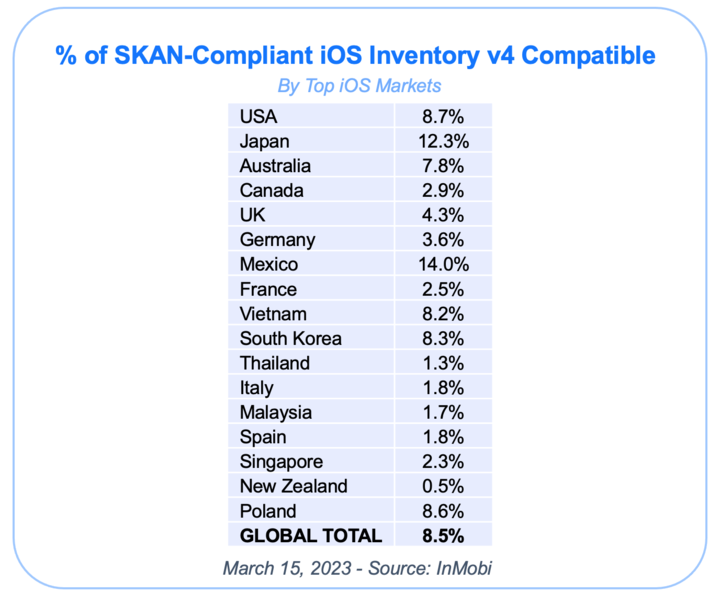
SKAdNetwork 4.0 compatibility rates are still very low -- less than 10% in the US. This is important to consider when assessing any potential positive impact of SKAdNetwork 4.0 in 2023. Data courtesy of @saracamden / inMobi, originally shared in the Mobile Dev Memo Slack.
6/ VCs groused about the proportion of raised capital being allocated to direct response marketing on platforms like Facebook. But the alternative is not that these companies grow organically & save that ad spend; they simply won't form in the first place. https://t.co/IdshFbjNh6
5/ Given DTC's absolute dependency on behavioral advertising, it's no wonder that the category faces a profound threat from ATT and forthcoming privacy policies designed to disrupt behavioral advertising. DTC sits at the epicenter of the ATT recession. https://t.co/A46UmsSJRM
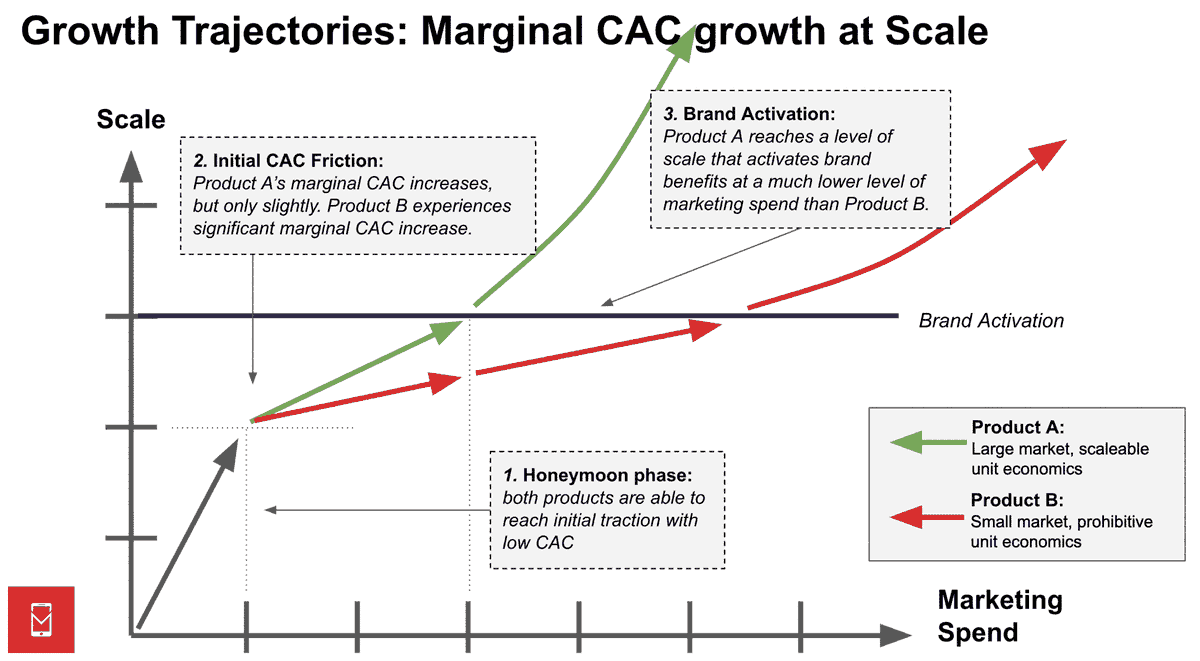
4/ In some cases, what appeared initially as a shortcoming in advertising tactics was revealed to be a problem with the total addressable market. Meta was so adept at quickly pairing a product's ads with the most compatible consumers that it depleted them. https://t.co/ZbY3ELb5GM
3/ Impressive initial advertising / commercial scale could plateau quickly for very niche products; potential customers were exhausted in short order. I discuss this phenomenon here. https://t.co/DTRShHDpJ4
2/ DTC brands largely outsourced their customer development and marketing functions to Facebook: behavioral purchasing histories could be used to aggregate a critical commercial mass on Facebook and Instagram for *any* niche product. https://t.co/e62cFXV0XV
The DTC's category's very existence is predicated on behavioral advertising targeting: the notion that a substantive audience for any niche product can be uncovered at the scale of the internet. (1/X)