@Dora_Siliya you should have pushed for better services when you had power to change laws, imagine if you pushed for National Airports to purchase new shuttles at the airport,nice lounges..you couldn't be riding in the poor looking shuttle.🤷
Two Mountains Burial Services, the morgue that’s been keeping former President Edgar Lungu’s body says it will no longer accept possession of the late President’s remains. They’re asking the Lungus not to request the return of the remains to their custody.
[ON AIR] @peterndoro speaks to Kelvin Fube Bwalya, President of Zambia Must Prosper (ZMP), on the party’s criticism of government over the handling of former President Edgar Lungu’s remains. Lungu died at the age of 68, while receiving treatment in South Africa in June 2025.
Watch Live: https://t.co/deFNGbnMfb
#RiseAndShine #Zambia #EdgarLungu
Zambians are asking: who is the next to lead this nation?One name keep coming up Kelvin Fube Bwalya,popularly known as KBF.A lawyer,strategist,and reformist, KBF has played a role in shaping Zambia’s political landscape for years.But the question remains:is the time now right..
The author appeals to Dr. Mumba to reconsider his recent actions, urging him to preserve MMD’s historical significance instead of dissolving it—just as his earlier movement, the National Christian Coalition (NCC), once embodied hope and faith.keep both legacies—Victory and MMD—
From 1989 to 2025, Zambia’s political and spiritual history has been shaped by great leaders like Dr. Nevers Mumba and Dr. Frederick Titus Jacob Chiluba (FTJ). Dr. Mumba inspired the nation through Victory Ministries International, drawing youths to their TVs every Sunday
. Around the same time, Dr. Chiluba emerged as a powerful voice, founding the Movement for Multi-Party Democracy (MMD) that ended UNIP’s long rule and ushered in democracy.
Today, however, there is concern that MMD’s legacy is being erased.
@Airtel_Zambia Ba Airtel, please give us an update.
It’s now been over a month of experiencing a very poor network. Ndola has become like Kasempa or Mwinilunga in terms of connectivity. We are buying data that we can’t even enjoy, should we start migrating let us know?
This fake story could have been much worse! Remember that in weak governance environments, where corruption and inequality remain unresolved, disinformation narratives gain traction. The 2024 Afrobarometer report found that while a majority of Africans still support elections as the best way to choose leaders, enthusiasm for electoral participation has declined, partly due to manipulated information ecosystems.
Foreign-sponsored disinformation campaigns, which have nearly quadrupled since 2022, often exploit existing grievances, social divisions, and institutional weaknesses to sow mistrust in democratic processes.
Beyond state-level manipulation, gendered disinformation also poses a growing threat to democracy by deterring women from political participation.
Gender activist Imelda Molokomme has emphasized that the advancement of democracy requires increased representation of women in positions of power. Yet, more than 70% of influential South African women surveyed in 2023 reported online abuse and harassment, while studies from the 2024 South African elections revealed targeted misinformation narratives portraying women leaders as unfit to govern.
Financing or Interference?
In a recent documentary on the current state of Southern Africa’s democracies, long-time Zambian diplomat Lazarous Kapambwe argued another key point: elections cannot really be free and fair if excessive funding comes from foreign interests. Kapambwe served as diplomat to the UN, US, Ethiopia and the AU.
“The financing [of political parties] determines how effective you can be in your participation because you have to reach all the areas of our countries … and if you have to campaign, you have to campaign in every country in every part of the country.
Until we address the issue of how to fund [and] how to sustain political parties, we cannot really have a completely free and fair electoral process in any country; because the danger we have is that we leave space for foreigners to finance and therefore interfere in our political processes, and there is no such thing as a free lunch and it is not always in your interest, what the funder may want.”
That is a very strong, but profound, statement.
Democracy is stronger when participants of the process actually have a voice. In the case of Zambia, political parties are not mandated to declare where their funding is coming from. This means no one would ever know who is funding our political leadership and in turn, no one knows what is being given in exchange for this funding.
Former President of Botswana Ian Khama stressed that a ruling party has a higher chance at getting funding because of the power dynamics. The line of thought clearly demonstrates how influential funding can be to the outcome of elections.
We cannot, however, ignore the fact that interference in elections succeeds largely because Africa’s own political class is susceptible to external manipulation. Scholars like Paul Nugent and Staffan Lindberg in their respective publications on African elections have shown that vote buying, ballot rigging, and manipulation are often internally driven but create vulnerabilities for external influence. It is very clear that many African states have systemic weaknesses like dishonesty, patronage, and mediocrity and that makes them highly susceptible to both domestic and foreign manipulation.
What Zambia Must Do Now
As our country approaches its own elections, the task ahead is clear. The fight against foreign interference cannot be left to government alone. It requires coordinated action by civil society, the media, the private sector, and the wider citizenry. Public awareness campaigns that educate citizens on the mechanics of disinformation and foreign meddling are now very important. Partnerships with social media platforms, similar to those piloted by South Africa’s Electoral Commission, can also help contain the spread of harmful narratives.
2/2
“Until we address the issue of how to fund and sustain political parties, we cannot really have a completely free and fair electoral process in any country; because the danger we have is that we leave space for foreigners to finance and therefore interfere in our political processes.” - Amb. Lazarous Kapambwe
THE BALLOT BOX UNDER SIEGE: CHALLENGES TO ZAMBIA’S ELECTORAL INTEGRITY WITH ONE YEAR TO GO
By Dingindaba Jonah Buyoya
As the country prepares itself for the 2026 election, we are about to see an increase in political discourse among citizens. Part of that discourse, unfortunately, will be manipulated by invisible hands from lands far, far away. This is perhaps the most ironic part of elections; that they are ideally supposed to be the pinnacle of sovereignty but also tend to have a lot of foreign influence from “global superpowers”.
It is therefore important that we talk about the dangers that may come with disinformation in relation to elections, especially that we recently saw President Hakainde Hichilema being a victim of disinformation in a recent “news” article claiming that he was requesting refunds for unsuccessful visa fees in the EU and UK.
From a very surface level, elections in Africa appear to be influenced only by local factors like the cost of living, corruption, healthcare, freedoms of the people and similar indicators. The truth, however, is that national discussions can be externally influenced, whether that be when foreign forces launch well-orchestrated disinformation campaigns or when political parties heavily funded by foreign interests do not put their own people first.
Lessons from the Region
The past year saw several important elections across the world. In Southern Africa, we saw South Africa's first coalition negotiations, Botswana’s peaceful transition of power and Mozambique’s post-election violence. These demonstrated both how strong democracy in the region is, but also how fragile it can be: so many things to be proud of, but some to be worried about too, because the global trend of democratic backsliding is creeping into even Africa’s most stable democracies.
In this environment, external actors seeking to influence domestic politics, often to serve their own strategic and economic interests, are an increasing concern. This is one of the things Zambia needs to be on high alert to as the country heads to the polls next year. If our elections are to represent the will of the people, then the process must also be driven by the people. This should not be limited to votes, but influence too.
The wide-ranging experiences of other African nations, which have seen both funding and disinformation weaponised against democratic processes, serve as key examples. In the Central African Republic (CAR), Russian operatives financed President Touadéra’s campaign in 2020 and subsequently secured favourable mining contracts, while in Madagascar, a BBC investigation uncovered cash bribes offered to presidential candidates. Taking a more economic approach, China has been known to plan strategic high-profile investments to coincide with elections where favourable incumbents seek another term.
Foreign private companies have also been involved when it comes to manipulating the public discourse: Israeli firm ‘Team Jorge’, for example, has reportedly spread disinformation to influence at least 20 recent African elections. Zambia must be alert to the whole range of challenges if we are to protect our electoral integrity.
The Weaponization of Disinformation
Disinformation has become a powerful tool to destabilize electoral processes, and Zambia is not immune. Followers of online news probably came across a story recently claiming that President Hakainde Hichilema’s government was demanding refunds for unsuccessful EU and UK visa applications. This was so viral that it reached millions of people. It just shows how quickly external narratives can be weaponized to undermine public trust.
1/2
Why do presidents fail?
By Sishuwa Sishuwa
No leader in competitive multi-party democracies gets elected to power on the promise of delivering failure. Yet even those who promise progressive change and structural reform generally end up failing once in office. Why? How do presidents make decisions on key national issues? What drives, influences, or constrains their actions?
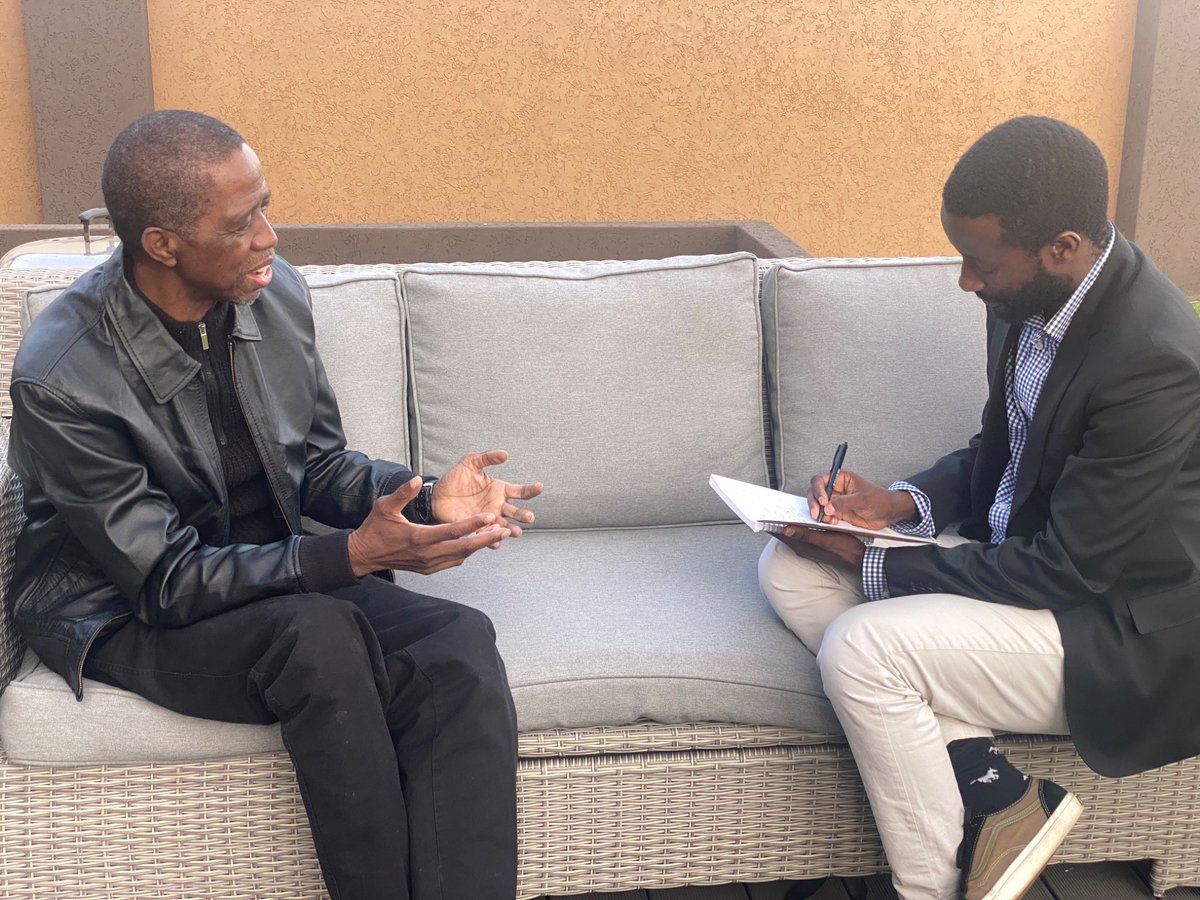
Yesterday, I interviewed former President of Zambia, Edgar Lungu, as part of the fieldwork research for my next book, Why Presidents Fail: Presidential Power and Decision-making in Zambia under Edgar Lungu. The book draws on interviews, newspaper accounts, and archival sources to provide a critical evaluation of his seven-year presidency on a range of issues. These include constitutional reform, democratic institutions, the management of ruling party cadres, anti-corruption, national unity, the economy, foreign policy, and the key players and institutions during the presidential transition process.
Understanding the factors that shape presidential decision-making is essential to strengthening democracies and avoiding the pitfalls of the past. I am grateful to former president Lungu for the meeting and not dodging uncomfortable questions.
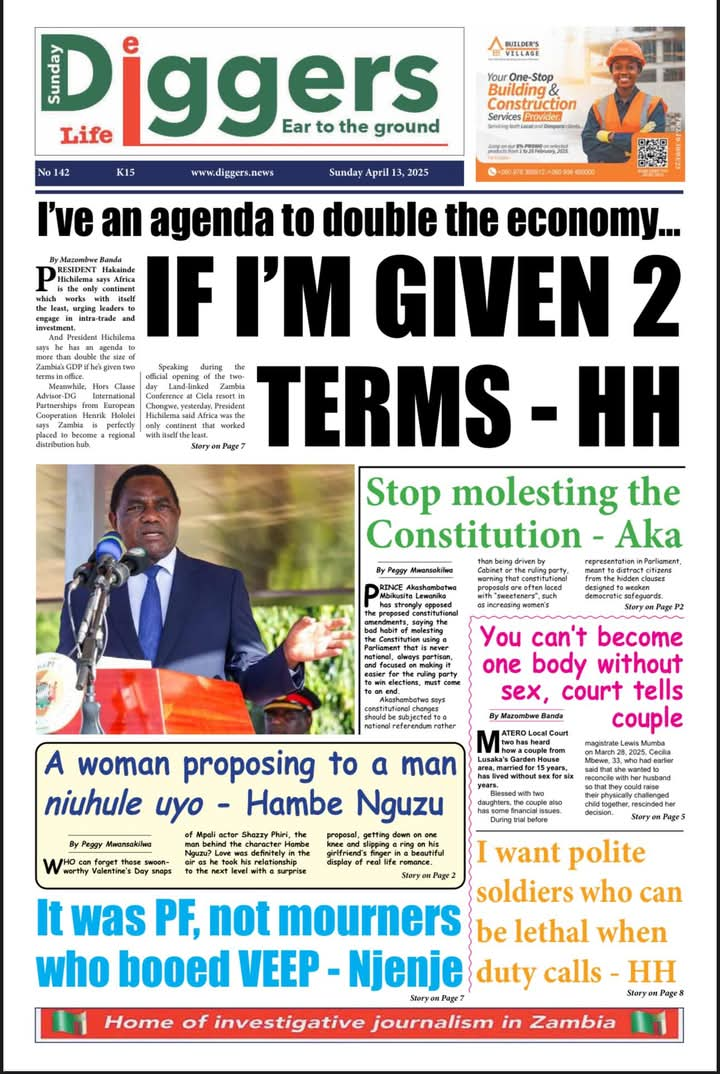
As admirable as the Ambition is, what are you putting in place to achieve that @HHichilema? Doubling the economy with no Energy kanabesa will be very difficult, plus we need a totally new cabinet in the second term. Only Finance and Infrastructure should continue. I submit