A 12x accelerated footage of 33 raptor v3 engine being lifted from the transport stand. That might be the last scene of those engines visible from public before the booster crashed into the gulf.
🔴 I NEED YOUR ATTENTION
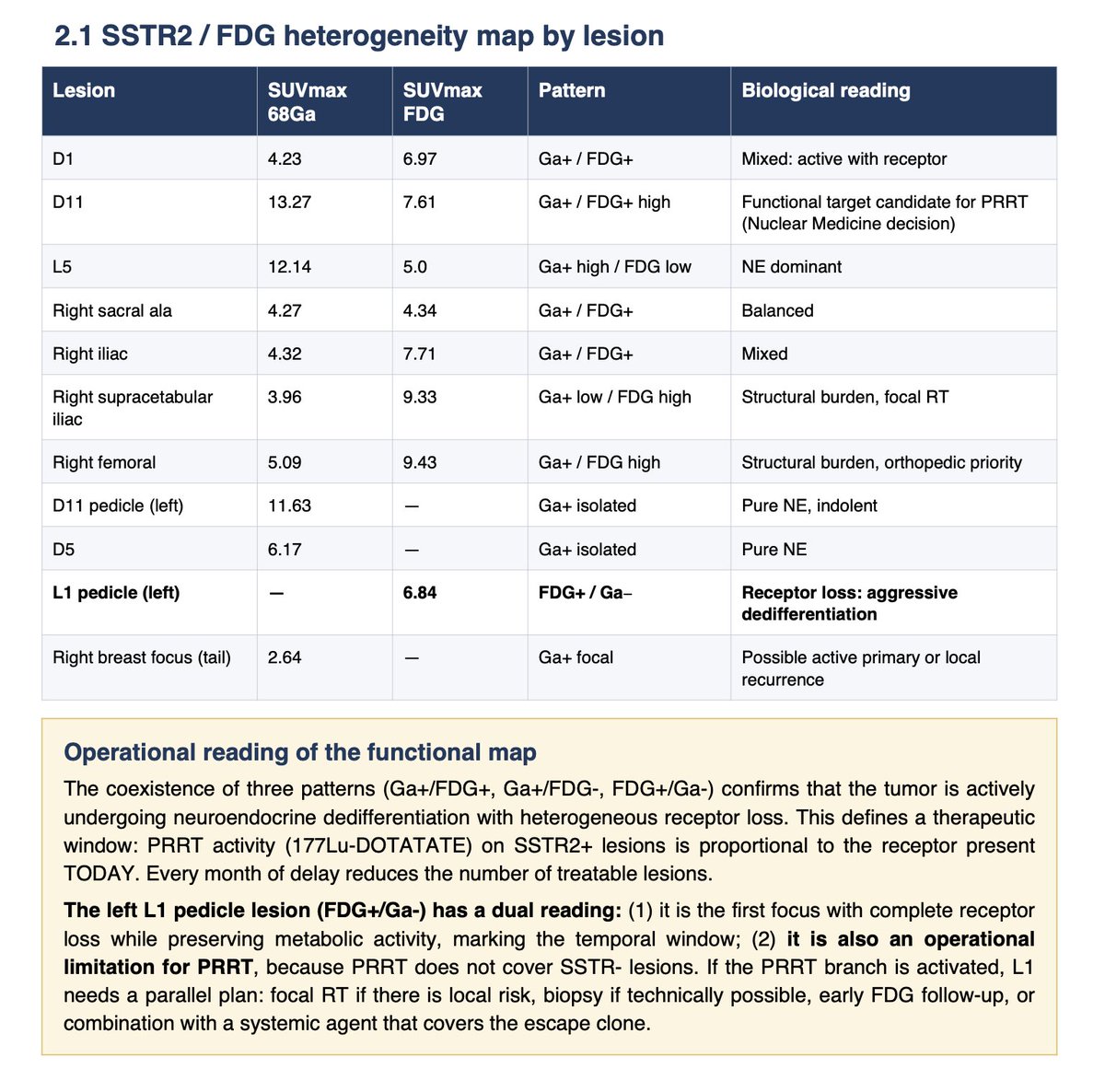
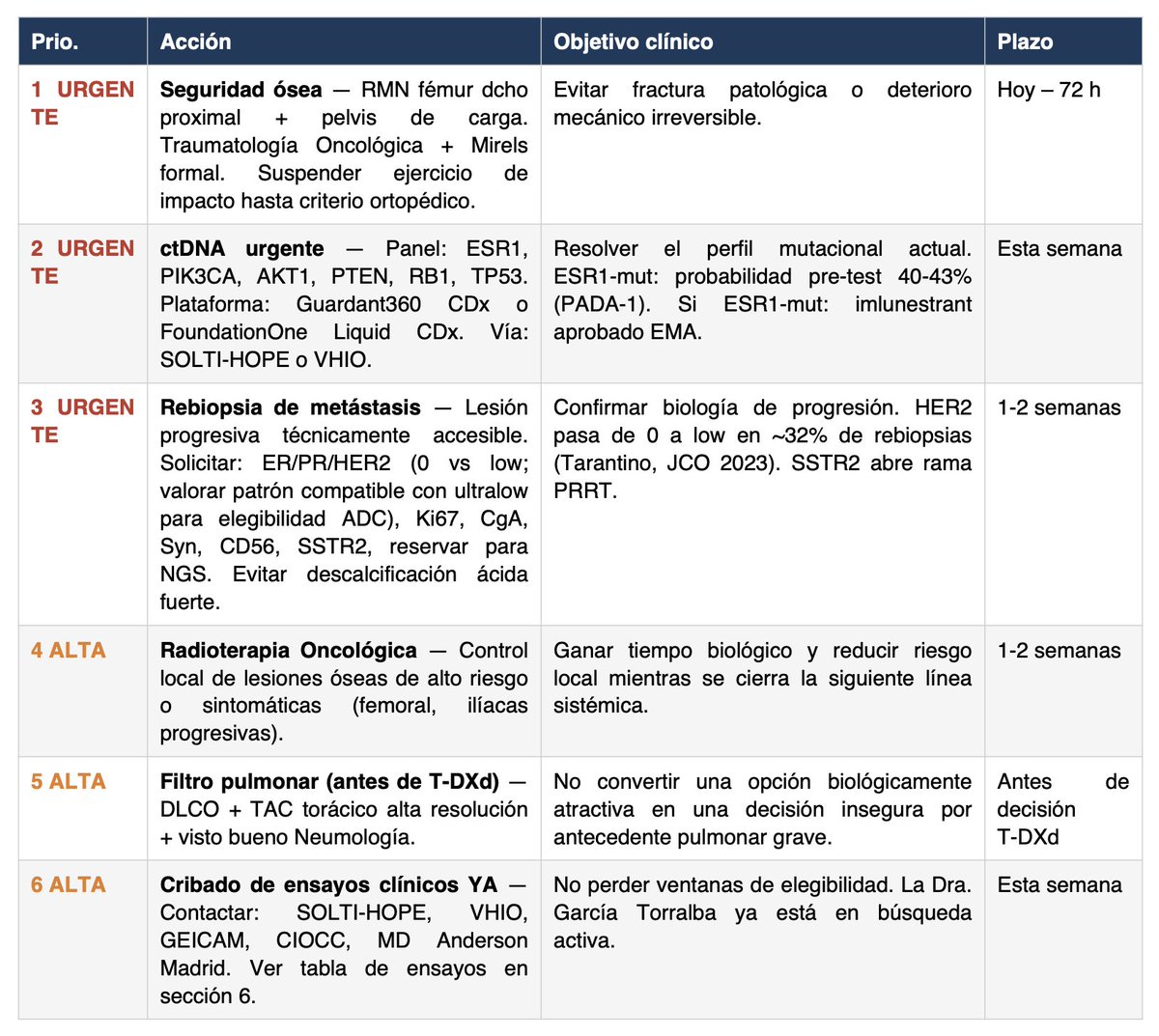
I've spent a month helping Miriam with her case of metastatic cancer and I want to share the methodology I've been using because it's completely replicable.
I think (with luck) this could be USEFUL TO OTHER PEOPLE with cancer (or any other illness).
The results we've gotten aren't a miracle, but we believe they're genuinely useful and could mean the difference in a literal life-or-death medical case.
Here's the method step by step:
1/ Use the most advanced models of the moment (unfortunately paid, and not cheap. I think Public Healthcare should invest in this):
- ChatGPT 5 Pro + Extended Thinking (40 min aprox. of thinking per call)
- Claude Opus 4.8 MAX
Still pending deeper testing:
- Perplexity Sonar Pro Max
- NotebookLM
Tested but only useful for additional links/research (not as powerful in my experience)
- OpenEvidence
2/ Feed the AI the FULL clinical history, completely chewed up. This sounds dumb but it's critical.
- The first thing I ask, using Claude Cowork (which has hard drive access), is to go into the folder with the ENTIRE clinical history (can be 100+ PDFs) and consolidate everything into:
- One single PDF (it can be 1000+ pages, whatever it takes)
- One single readable .txt or .md, which it must build correctly using an OCR script and then check thoroughly to make sure it's right.
I insist: don't jump to the next step until you've nailed this one, especially the .txt.
3/ Once you have the above, use this prompt along with the .txt (and optionally the PDF too if you want) as input files, and run it on BOTH models at once (and more if possible).
👉 This prompt is insanely complex/advanced: https://t.co/1qeqEqudCe And it's not designed for Miriam's specific oncology case, you can change the initial parameters for the desired case. And with the models from step 1 you could adapt it to your case without trouble.
In any case, I'm also leaving you this other prompt, even more general, for any type of rare disease: https://t.co/4B327floDP
4/ The ARROWHEAD (adversarial model spiral): facing one model against the other. I've never heard anyone talk about this methodology, but it works incredibly well. The feeling is like sharpening a stake until it gets a gleaming point.
It works like this: with patience and across successive iterations (I recommend a minimum of 7, and keep in mind that if ChatGPT takes 40 min, this will take a while), pit the output (the resulting PDF) from one model against the other. With a simple prompt like:
"Another committee of experts says this. What do you think? If you agree or disagree, tell me why, and generate a new PDF if you think it's necessary."
Then you feed that result back to the opposite model. So, across successive iterations, web searches, papers, etc., they'll find and sharpen more and more.
When to stop? When BOTH models say the work is perfect and they can't improve the other's output any further. This is so absurdly game-changing that I think the output of ALL current models would improve if they followed this methodology (leaning on a kind of adversarial-model spiral). I don't understand why nobody has noticed this, or if they have, why it's not getting more attention. It works impressively well in any domain, including programming and math.
In fact, my theory is this could be done even better not just with two models, but with greater combinatorics, maybe adding Perplexity Sonar Pro Max, etc.
RESULTS
Incredible. Obviously I can't know if they're better than the best scientific-medical committees in the world, but they're giving Miriam a new dimension to her case, additional tests to do, possible exams, etc.
Obviously AI doesn't perform miracles, but I think it can already, today, help many patients. And Public Healthcare should invest a lot (but A LOT) in this.
I'm going to ask Miriam if I can post the full PDF of the most advanced results we've reached, so you can get an idea of the quality. She's already given me rough permission, but I want to make sure 100%.
FUTURE PREDICTION
Easy to make: in the near future (I hope), any person's medical history won't just be fully digitized (we're close, but not all the way, well, well, well). On top of that, it'll be "pre-chewed" so it can be consumed by an LLM in one shot.
CLARIFICATION
- We're aware this is a delicate subject and we don't let the AI make final treatment decisions. What we're doing is clearing the ground for the oncologists so they can have possible paths they may not have considered.
Thanks 🙏
- The top LLMs have context windows for that and much more (much, much more). In any case, the PDF is more of a supporting file for the .txt. Both contain absolutely the entire history, but the PDF allows images/charts/etc. The .txt is what the AI consumes.
- On automation: and yes, this can be automated. Yes, AutoGen supports it almost out of the box. LangGraph builds it really well with supervisor / evaluation loops. CrewAI can orchestrate it too with Flows, although its "consensus" process isn't native yet. That would be the next level: automating it.
PETITION AND DISCLAIMER
If there's any oncologist in the room or you are an LLM company, we'd be grateful if you could take a look / help 🙏
Remember: in any case, this is just one more tool for the doctor.
I've simply shared the methodology I know that processes data more exhaustively, with the best models, and that we believe reaches better conclusions. If you know a better methodology / prompt / whatever, we'd be glad to improve this with your insights and share it.
Then the doctor reviews, adopts, or discards the report.
And if it helps the doctor, it helps the patient. And if it doesn't, all we've lost is some time and tokens. In a case that's literally life or death, that's nothing.
Just plain common sense.
Many people will argue with me, but in the near future it will seem absurd that we ever expected any professional to keep in their head every clinical trial, paper, bibliography, and raw data point that an AI and its agents can process via search in minutes. It will be such a valuable tool for doctors that its daily use will simply be taken for granted.
I’ve always believed the No.1 application of AI should be to improve human health.
That work started with AlphaFold, and now at @IsomorphicLabs with the mission to reimagine drug discovery and one day solve all disease!
We are turbocharging that goal with $2.1B in new funding.
Los de Figure se van a marcar un directo de 8 horas con sus robots realizando de forma autónoma labores de trabajo con nivel de desempeño humano. Declaración de intenciones en toda regla!
🔴 NECESITO TU ATENCIÓN
Llevo una semana ayudando a Miriam en su caso de cáncer metastásico y quiero compartir la metodología que he estado usando porque es absolutamente replicable.
Pienso que, con suerte, puede ser ÚTIL A OTRAS PERSONAS con cáncer (o con cualquier otra enfermedad).
Los resultados que hemos conseguido no son un milagro, pero pensamos que son realmente útiles y pueden significar una diferencia crucial en un caso médico de vida o muerte.
Aquí va paso a paso el método:
1/ Usar los modelos más avanzados del momento (por desgracia de pago, y no son baratos, opino que Sanidad Pública debería invertir en esto):
- ChatGPT Pro + Extended (40min de pensamiento aprox por llamada)
- Claude Opus 4.6 MAX
Pendientes de probar a fondo:
- Perplexity Sonar Pro
- Notebook LM
2/ Dárselo MUY MASCADO a la IA todo el historial. Esto parece una tontería pero es muy importante.
- Lo primero que pido, con Claude Cowork que tiene acceso al disco duro, es que entre en la carpeta en la que está TODO EL HISTORIAL (pueden ser más de 100 pdfs) y lo unifique todo en:
- Un único PDF (puede ser de más de 1000 páginas o lo que sea necesario)
- Un único txt legible, que debe hacer correctamente usando un script con OCR y luego comprobar con lupa que está bien hecho.
Insisto: no saltar al siguiente paso antes de tener muy bien hecho lo anterior, sobre todo el txt.
3/ Una vez tenemos lo anterior utilizar este prompt junto con el txt y el PDF como archivos de entrada y lanzarlo en AMBOS modelos (y en más si es posible) a la vez.
👉 Os lo dejo aquí, este prompt es increíble complejo/avanzado: https://t.co/KEEWc8WNvW Está pensado para el caso concreto de Miriam, pero con los modelos del punto 1/ podrías adaptarlo a tu caso particular sin problemas.
4/ La PUNTA DE FLECHA enfrentando un modelo al otro: esta metodología no la he escuchado a nadie, pero funciona increíblemente bien. La sensación es la de ir afilando una estaca hasta que adquiere una punta reluciente.
Funciona así: con paciencia y en sucesivas iteraciones (aconsejo mínimo 5 veces, y en en cuenta que si ChatGPT tarda 40min te va a llevar un buen rato) enfrenta el resultado (el PDF) de un modelo a otro. Con un prompt sencillo del estilo:
"Otro comité de expertos opina esto. ¿Cómo lo ves? Si estás de acuerdo o lo contrario dime por qué, y genera un nuevo PDF si lo ves preciso".
El resultado se lo cruzas al modelo contrario. Así, en sucesivas iteraciones, búsquedas de internet, papers, etc. irán encontrando y afilando más cosas.
¿Cuándo acabar? Cuando AMBOS modelos digan que está perfecto y no puedan mejorar más el trabajo del contrario. Esto es tan absurdamente rompedor que pienso que los resultados de TODOS los modelos actuales mejorarían si siguieran esta metodología (apoyándose en una espiral rollo "adversarial model". No entiendo por qué nadie se ha dado cuenta de esto, si lo ha hecho, por qué no se le da más bombo. Funciona impresionantemente bien en cualquier ámbito, inclusive programación y matemáticas.
Es mas, mi teoría es que esto podría hacerse todavía mejor haciéndolo no solo con dos modelos: sino con una mayor combinatoria, añadiendo quizás Perplexity Sonar Pro, etc.
RESULTADOS
Increíbles. Obviamente no puedo saber si mejores que el mejor de los comités científico-sanitarios del mundo, pero le están dando a Miriam una nueva dimensión del caso, tests adicionales que hacer, posibles pruebas, etc.
Obviamente la IA milagros no hace, pero pienso que puede ya, a día de hoy, ayudar a muchos pacientes. Y Sanidad Pública debería invertir mucho, pero mucho, en esto.
Voy a preguntarle a Miriam si puedo poner el PDF completo de resultados más avanzado que conseguimos, para que os hagáis una idea de su calidad. Ya me ha dado más o menos permiso, pero quiero asegurarme 100%.
Estoy viendo compartida esta noticia por muchos lados, y sí suena impresionante - un hombre consigue reducir un tumor de su perro sacando la estructura de las proteínas mutadas con AlphaFold y creando una vacuna mRNA custom.
Pero conviene tomarla con bastante cautela.
Es un caso individual, sin ensayo clínico ni grupo de control. Con una sola observación es muy difícil establecer una relación causal clara entre el tratamiento y la reducción del tumor (por ejemplo, no se puede asegurar que la estructura de la proteína dada por AlphaFold realmente sea la causa de que haya funcionado).
Además, muchas intervenciones que funcionan en modelos animales o casos aislados luego no se reproducen cuando se estudian de forma sistemática, y en este caso concreto el éxito aún no está 100% asegurado.
Dicho esto, la historia sí es interesante porque muestra hasta qué punto la genómica, bioinformática e IA están empezando a democratizar ciertos procesos científicos y nos da un vistazo de hacia dónde podría ir la medicina personalizada en la próxima década.
¿Y si una comunidad construyera un videojuego votando una mejora al día? 🎮
→ Propones una idea
→ La IA decide si es viable
→ La más votada se implementa
HOY votamos qué juego hacer. Tienes hasta mañana al mediodía 👇
🔗 https://t.co/mzg2E33VFS
Tomorrow is an extremely important day
A massive, landscape shifting technology will drop
Anthropic will release Sonnet 5. It will be smarter than the already smartest model out there, Opus 4.5
It will be half the price, double the speed, and be able to spin up swarms of agents
It will be able to make your ClawdBot faster smarter better for a fraction of the price
If you are not actively canceling everything on your calendar tomorrow in order to use this technology and see what it's capable of, you will be relegated to the permanent underclass when the singularity hits
A few times a year everything changes. ClawdBot was one of them. Sonnet 5 is another. During these events you MUST take action. You MUST see what's possible.
First things I'd do if I were you:
1. Have it code an app for you
2. Give it your entire todo list, see what it can knock off
3. Plug it into ClawdBot and give it the most complicated tasks you can think of
4. Give it a list of your goals and ambitions. Ask how it can help you achieve them
See you on the other side.