Cosmographer at University Paris-Saclay | co-discoverer of Laniakea (our home supercluster), Ho'oleilana, and some other (very) large scale structures 🌌 🔭 💻
Discovery alert!
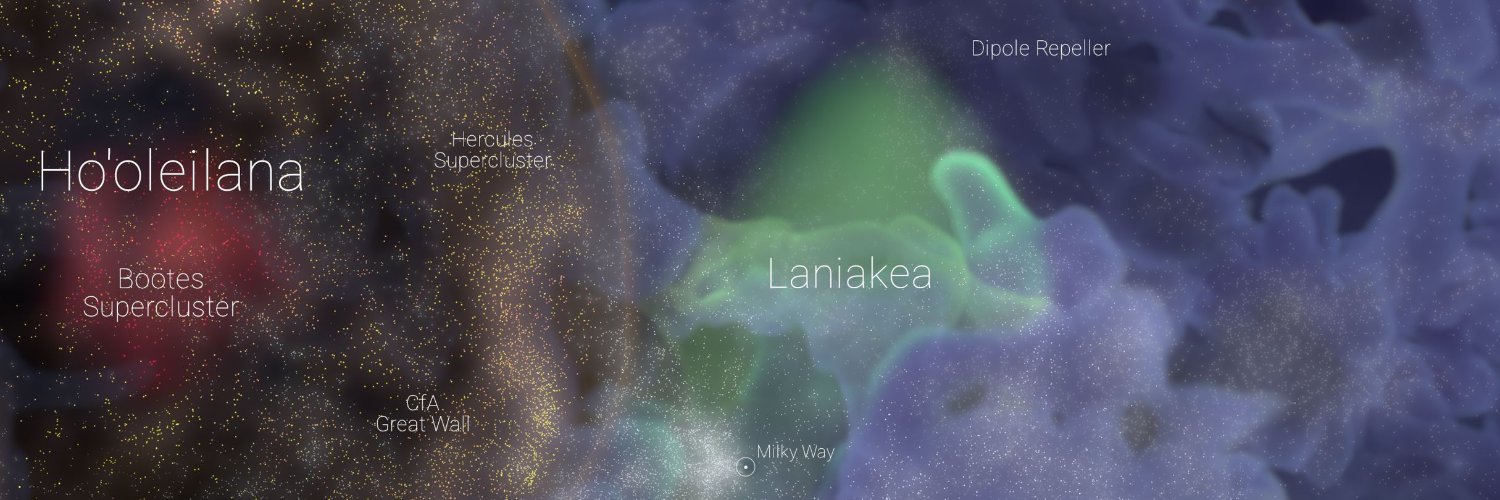
A spherical shell-like structure 1 billion light-years in diameter named Ho’oleilana is discovered in the distribution of relatively nearby galaxies. We posit this is the 1st observation of an individual Baryon Acoustic Oscillation (BAO).
https://t.co/0fFuH7JeVH
With a 96-inch wingspan and the uncanny ability — at a height of 7’4” — to not just dunk the ball but also hit 3-pointers, “Wemby” (Victor Wembanyama) of the San Antonio @Spurs, is widely rumored to be a space Alien.
I am not authorized to comment further.
NASA Earth Observatory image of the day
One of the first images transmitted back to Earth from the #Artemis II mission was a stunner. In a single image, Earth’s full disk appears amid celestial phenomena that illustrate its place in the solar system.
https://t.co/9dg6q3AFIt
FIRST LOOK at the life-size N-1 Starfighter inside the lobby of George Lucas’ new Lucas Museum of Narrative Art.
Imagine walking into a museum and being greeted by a full-scale Naboo Starfighter. 🤯
The museum is set to open on September 22, 2026
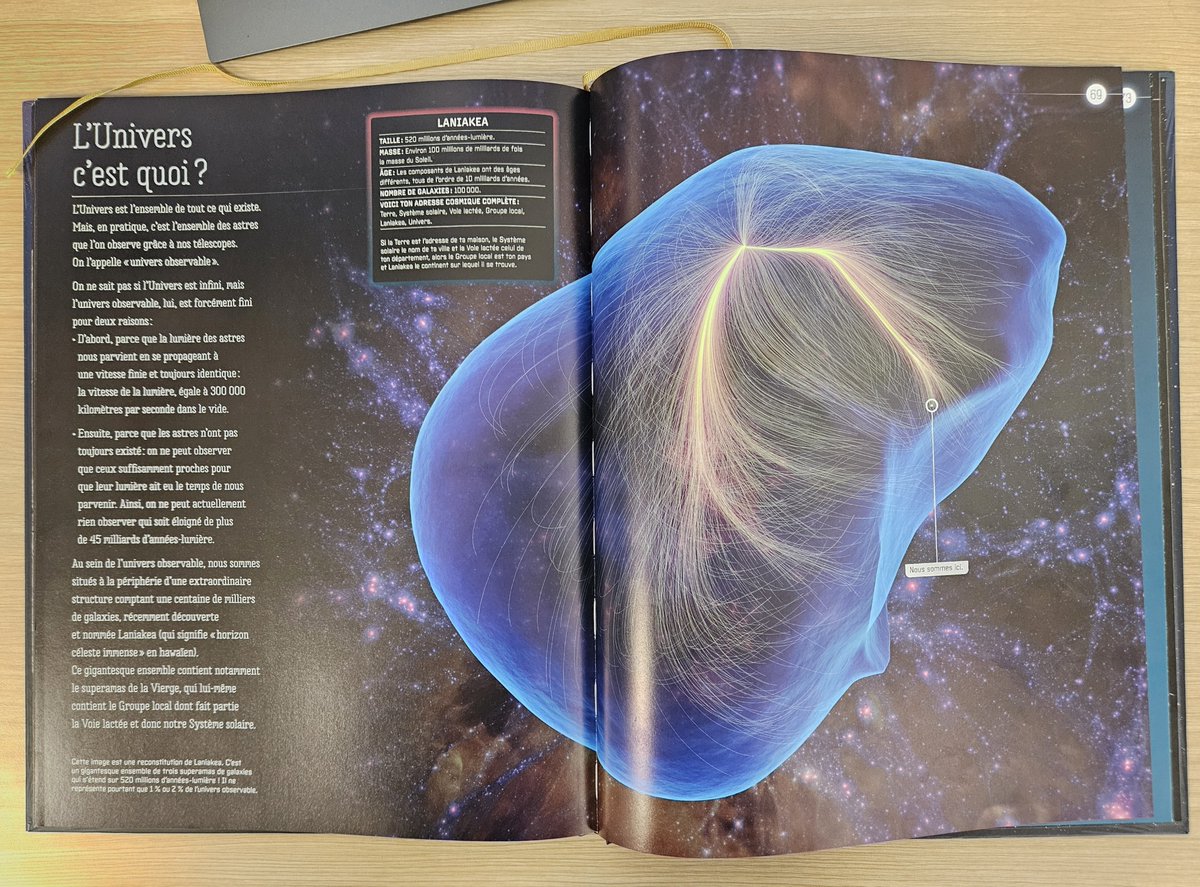
Got a copy of Roland Lehoucq's latest book "Astronomie". It features a beautiful double-page rendering of Laniakea, our Home supercluster of galaxies, produced by Félix Pharand-Deschênes @Globaia
https://t.co/4uQH1GAyoj
This is where the fun begins.
From the plaza of the Lucas Museum, visitors are greeted by the original N-1 Starfighter that was used in Star Wars: Episode I, featuring R2-D2 in position to pilot the craft and welcome you to the museum.
#LucasMuseum#GeorgeLucas#N1Starfighter #museum #sneakpeek
This photo illustrates three phenomena that surprised me when I arrived on board the @Space_Station. I didn’t realize before seeing it with my own eyes that the Earth’s atmosphere would be so visible in the night sky, seemingly even more obvious at nighttime than daytime, nor that it would be so colorful! These orange and green colors on the horizon are airglow, a faint emission of light caused by chemical reactions and interactions between UV radiation and gases in our atmosphere (unlike aurora, which is caused by solar wind particles interacting with Earth’s magnetic field, airglow is present everywhere, all of the time). I was also surprised to see how blue and well lit the Earth can be at night, when a bright Moon illuminates it (Moonglow!). This photo was taken on May 30, the day prior to the full Moon. I hope that this provides a bit more @NASAArtemis Moon Joy for all of us!
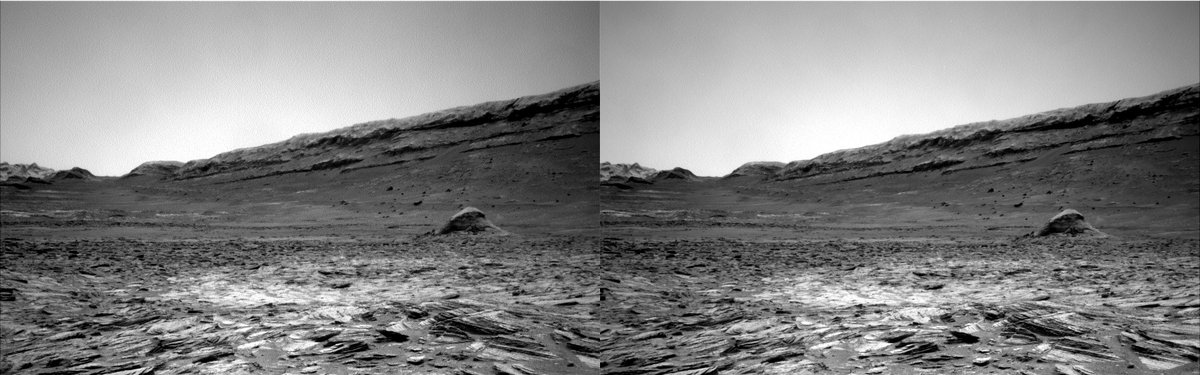
Tiny little butte in the middle of the valley, captured in Stereo3D a few hours ago by Curiosity
To go 3D: eyes' lines of sight parallel, left image for left eye, right image for right eye.
Credit images: NASA/JPL-Caltech
#Mars