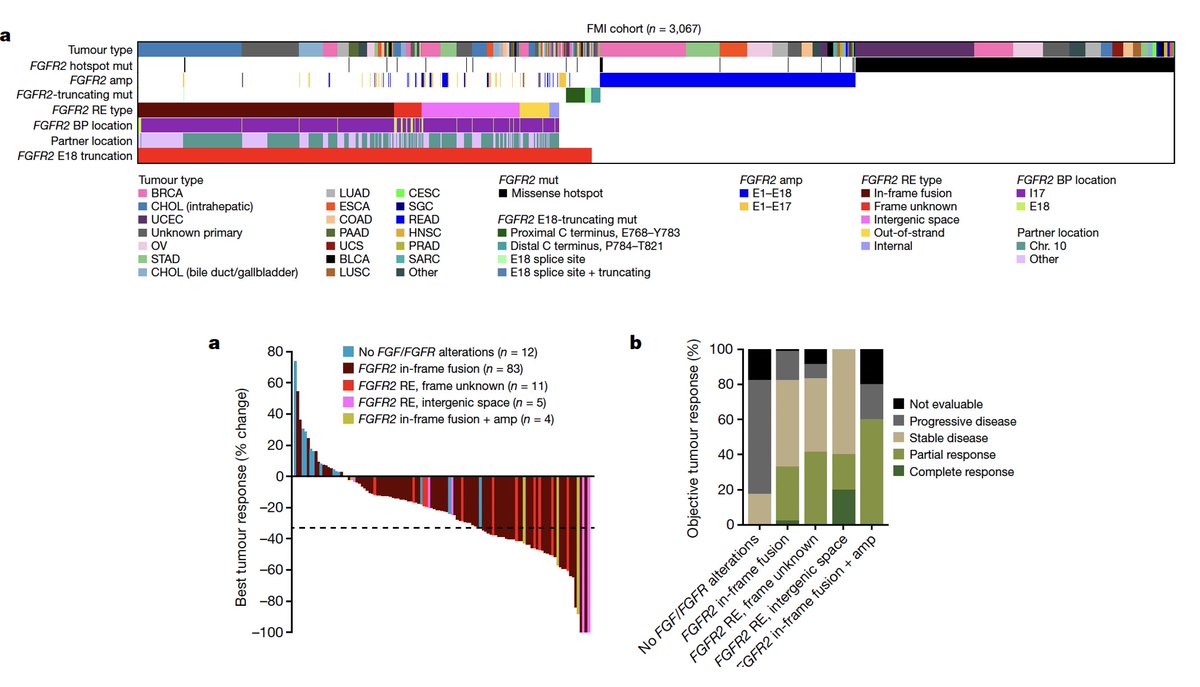
Just last week at @nature: “Truncated FGFR2 is a clinically actionable oncogene in multiple cancers” by @jjonkers2 and colleagues https://t.co/HN5Rs8DWCl
Exciting findinges from @DanielZinggCH, @jjonkers2 and colleagues. Highlighting that for personalized treatment approaches, we need to test the functional consequences of genetic changes in tumors. Both for tumor suppressors and oncogenes that offer treatment opportunities.
🔥The evolving molecular landscape of FGFR2 alterations in cancer🔥
https://t.co/YnL0JACltX
✅SNVs, EIDs, REs ➡️ E18-truncation
✅most often in #cholangiocarcinoma
👉 loss of C terminus➡️FGFR2🔥⬆️
👉multiple 💊🎯,not all respond equally ->know your target!
@myESMO#LiverTwitter
Published in @Nature: Through the investigation of genetic changes in tumors, @RutgersCancer Dr. Shridar Ganesan & colleagues in collaboration with researchers from @NKI_nl & @oncodeinstitute find opportunities to improve treatment for cancer patients.
https://t.co/RZIYVBEMYC
Genetic alterations in the FGFR2 gene represent a promising target for therapies, but clinical responses remained unpredictable. An international research team led by @jjonkers2@oncodeinstitute elucidated the mechanism behind this variation in response ➡️ https://t.co/yRhzjgc0X3
Promising findings in @Nature by the team of Oncode Investigator @jjonkers2: truncation of FGFR2 drives tumor formation. “Clinical trial data revealed that a good response to treatment correlates with the presence of the truncated form." Read more: https://t.co/unf1t5psgv