As AI takes on routine tasks, how do we prepare people for greater responsibility?
I spoke with High Point University students about why life skills will become even more valuable in the AI age.
https://t.co/X65nYedanB
Will AI make accountants less relevant?
I believe that is the wrong question.
As AI automates more tasks, human value shifts toward judgment, trust, strategic insight, and anticipation.
The accountant of 2040 will not just report what happened. They will help leaders see what is coming.
#Rise2040 #CPA #CGMA #AICPA #CIMA
My latest:
https://t.co/aYdtRDhKYe
When AI handles more routine accounting work, where will professional value grow?
I see an opportunity in judgment, trust, and helping clients anticipate what comes next.
My new blog considers the accountant of 2040: https://t.co/xXNxhtt62F
Anthropic says Claude identified a novel enzyme system; scientists followed with lab tests.
I see my Both/And Principle at work here: combine AI analysis with human expertise.
Where could that pairing help your team discover more?
https://t.co/Wv8BrO1iAQ
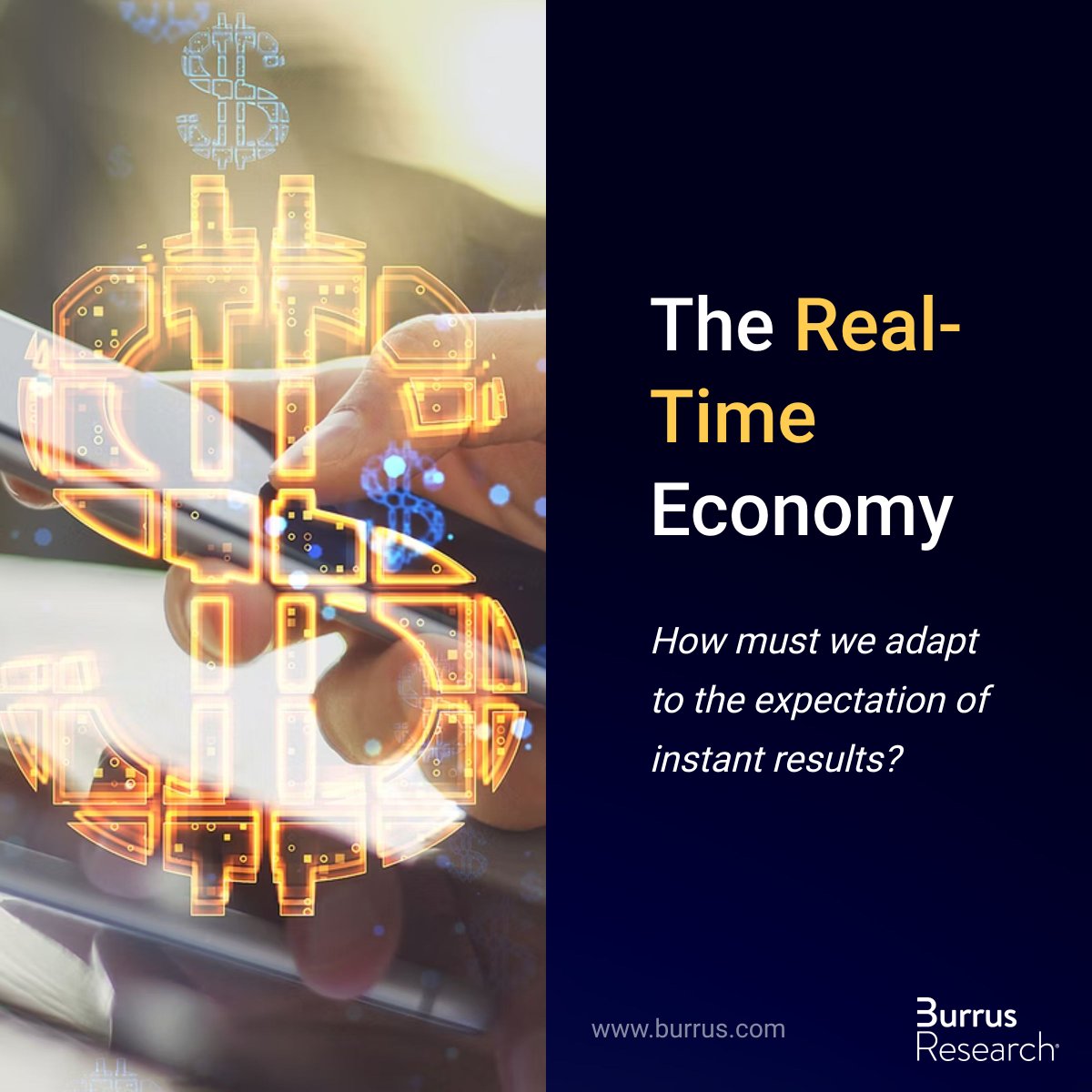
This week I’ve been thinking about how quickly “fast” becomes “normal.” Once a payment takes seconds, three business days feels like a long time.
Where is your industry still making people wait?
Walmart says shoppers who use Sparky spend 40% more per order. Is this true?
I spoke with Moneywise about the question that raises for every AI shopping assistant: whose interests shape its recommendations?
Convenience is useful, but shoppers also deserve clarity about their data. https://t.co/vDzOeI5yKK
When instant becomes the expectation, “fast enough” becomes a business risk.
Daniel Burrus explores how AI and real-time data are reshaping customer experience—and why leaders must anticipate what’s next.
https://t.co/t66v66b6Ha
A payment clears in seconds. A package updates its location as it moves. Expectations change quickly once people experience that speed.
My new blog looks at what the real-time economy means for leaders now: https://t.co/xXNxhtt62F
A Colorado River water cut won’t stop at the farm gate. It could affect what gets planted, what growers pay, and what shows up on grocery shelves.
I spoke with The Food Institute about the pressure ahead and where precision agriculture can help: https://t.co/3YFLcstuvl
AI makes it easy to produce a polished first draft. That doesn’t make it a finished idea.
I spoke with Reworked about how teams can gain speed without letting their thinking, campaigns, and brand voices blend into the crowd.
https://t.co/xNhyP0cu6R
How much value leaves your business disguised as waste?
Circular design, product recovery, AI, and material tracking are opening new ways to keep that value working.
I examine the Hard Trends behind this shift in my latest blog.
https://t.co/xXNxhtt62F
What if yesterday’s products became tomorrow’s raw materials?
A new commercial-scale facility can process up to 25,000 metric tons of end-of-life magnet products annually.
Creating new opportunities from what has been considered old waste is actually a Hard Trend you can capitalize on as an organization.
https://t.co/ms9DwKxtbK
Past success can quietly become a barrier to future growth.
I shared my perspective on legacy thinking in this Forbes article examining why successful organizations can still develop dangerous innovation blind spots.
https://t.co/lZFZ44pkys
Brain-computer interfaces are moving toward the devices we already use.
This convergence brings neuroscience, computing, and connectivity together to create entirely new capabilities.
Don’t just watch what technology can do today. Anticipate what it will make possible tomorrow.
https://t.co/aalhXFsokh
Brain-computer interfaces are already helping people with paralysis communicate through neural activity.
As AI improves signal interpretation and devices become more practical, leaders should watch the capabilities taking shape and the new questions they create.
https://t.co/EBvEF7BcYj
Speakers Inc. has recognized me as one of its Best Digital Transformation Speakers for 2026—specifically for practical innovation and Anticipatory Strategy.
Transformation must lead to action, which is why I’m so passionate about being the disruptor as opposed to the disrupted.
https://t.co/GFkcSOlaUK
Would you trust a retailer’s AI more if it told you a competitor had a better price?
I shared my thoughts with The U.S. Sun on Walmart’s Sparky, AI-driven shopping, impulse purchases, and why accuracy will shape customer adoption.
https://t.co/AXh7s5p9k3
A customer who can see a sofa in their living room before buying it has fewer reasons to hesitate.
That practical use of AR says a great deal about where retail is heading. My latest blog looks at how immersive experiences are changing the way people shop, engage, and decide.
https://t.co/EBvEF7BcYj
Eight distinct technologies are already shaping the decade ahead.
PC Tech Magazine recently featured my Hard Trends and Soft Trends framework in its look at AI agents, robotics, quantum computing, ambient computing, digital identity, and more.
https://t.co/HXrO16a3RF
Leadership development should be measured by better decisions and business results as opposed to simple course completions.
I spoke with SHRM recently about how my Anticipatory Learning System helps leaders apply what they learn immediately in their careers.
https://t.co/tsnWwaDcVS