Biological Pest Control
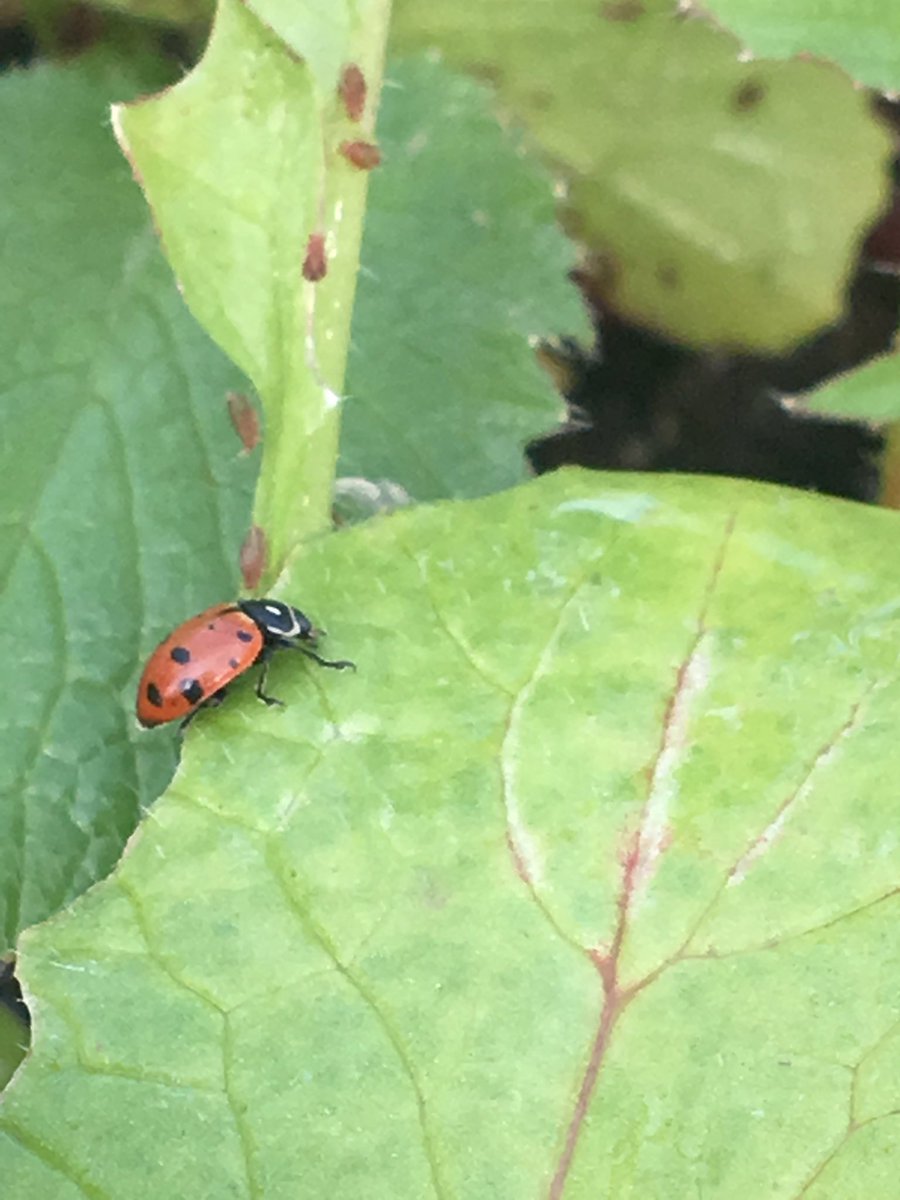
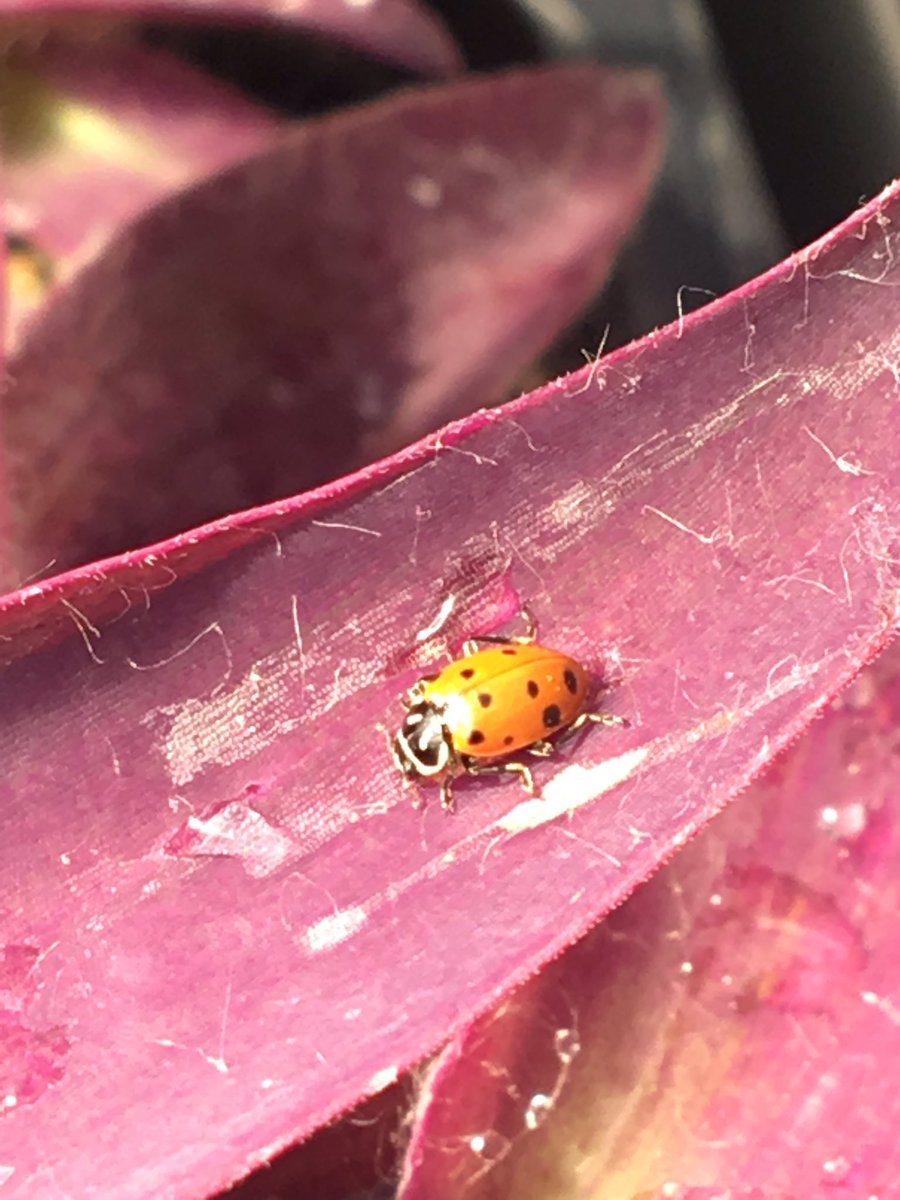
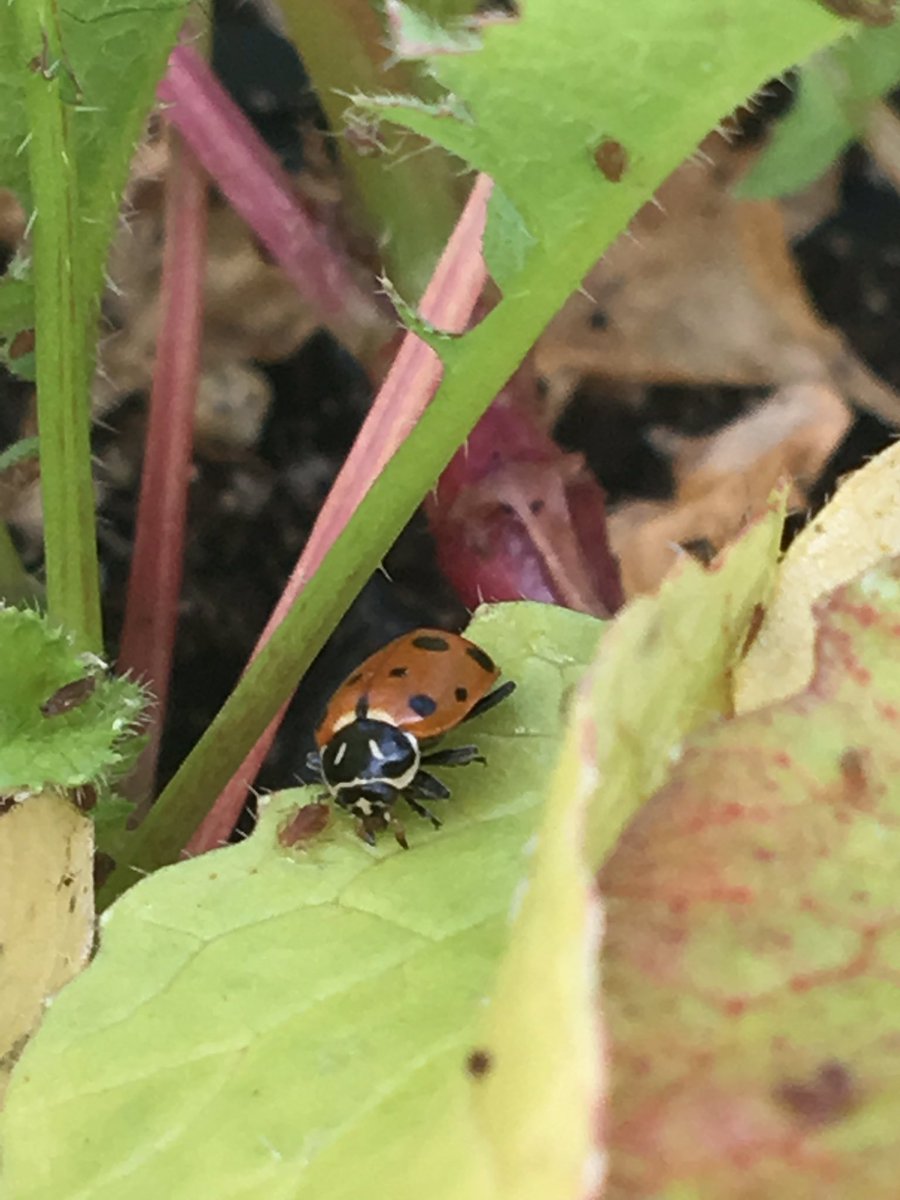
Using bugs to kill bugs. We had quite the aphid problem in the greenhouse and Mr. Kurtz decided to take a natural approach to controlling the pests. We used ladybugs. They eat up to 50 aphids per day and are no threat to the surrounding plants.
Dividing Perennials (money for nothin’)
Today we divided the Japanese/Maiden grass or more formally known as the Miscanthus Sinensis Gracillimus. We learned that by dividing the plant you can increase the size of your garden using nothing but the plants that were already there.
Here’s a useful video I found for learning how to prune a tomato plants. I found some over growth on ours and used these tips to stimulate growth and keep the plant healthy.
How to Prune Tomato Suckers https://t.co/ynpab5KkTT via @YouTube
After further inspection of the grub that we froze we have determined that it is a European chafer. We know this because of the two distinct lines that run down the middle of the raster hair pattern.
While edging Cody found a grub. We took it inside and decided to see what species it was. I learned that you can identify a grub by the raster hairs found on the end of its body. We suspect that it is a Japanese grub but it moved too fast to get a closer look.
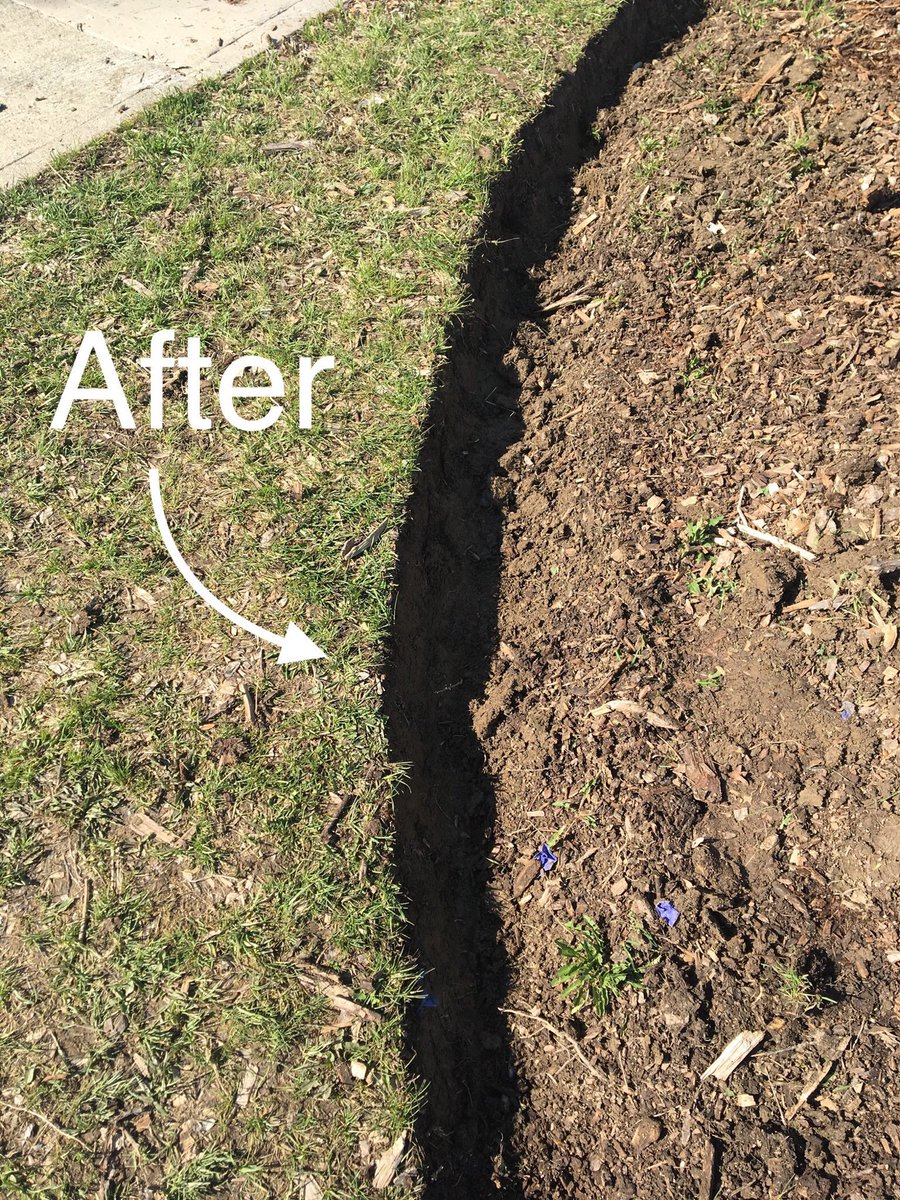
We learned that traditionally a 90° angle on a edge is preferred in gardens, but for a space like ours that gets walked across consistently a beveled angle will support the edge much better and will prevent it from caving in on itself.
Yesterday was a beautiful day so the Grade 10 students took on the task of renewing the memorial garden. We began with edging and bringing in some new mulch. In addition to this we lifted the memorial stones and put gravel underneath to make them level.
On May 1st @gardenparty2019 and I are leading a ICE training group where we are taking up-cycled tires from the automotive class and turning them into planters. We are then filling them with mixture of compost and soil and teaching students how to transplant seedlings.
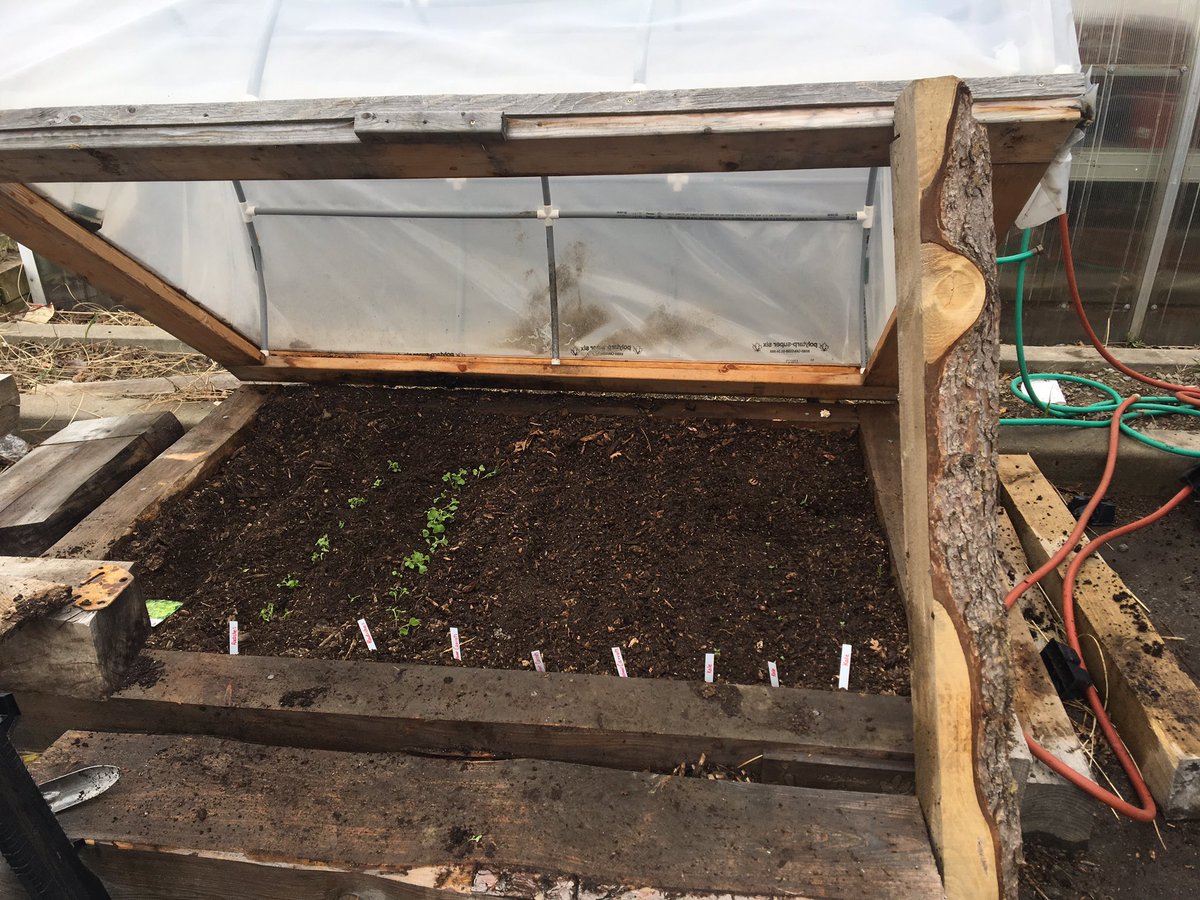
Mini Greenhouse:
Cauliflower (red), radishes (blue), carrots (yellow), and kale (green). The greenhouse is allowing us to propagate the plants early so we can harvest before the end of the school year. I’ve been maintaining the bed by pulling weeds and watering when necessary.
explaining veganism, the benefits and what is going terribly wrong from the perspective of a “weekend” vegan. I’m also working on starting a small veggie garden in one of our raised bed greenhouses and planning to build another for our ICE training on May 1st.
I am regrouping. I want to find more substantial learning from this class. Instead of posting daily about essentially random topics I have been taking some time to create what I consider an example of true critical thinking. I’ve been working on a podcast/ted talk style piece —>
Day 24: Grow Cube Design
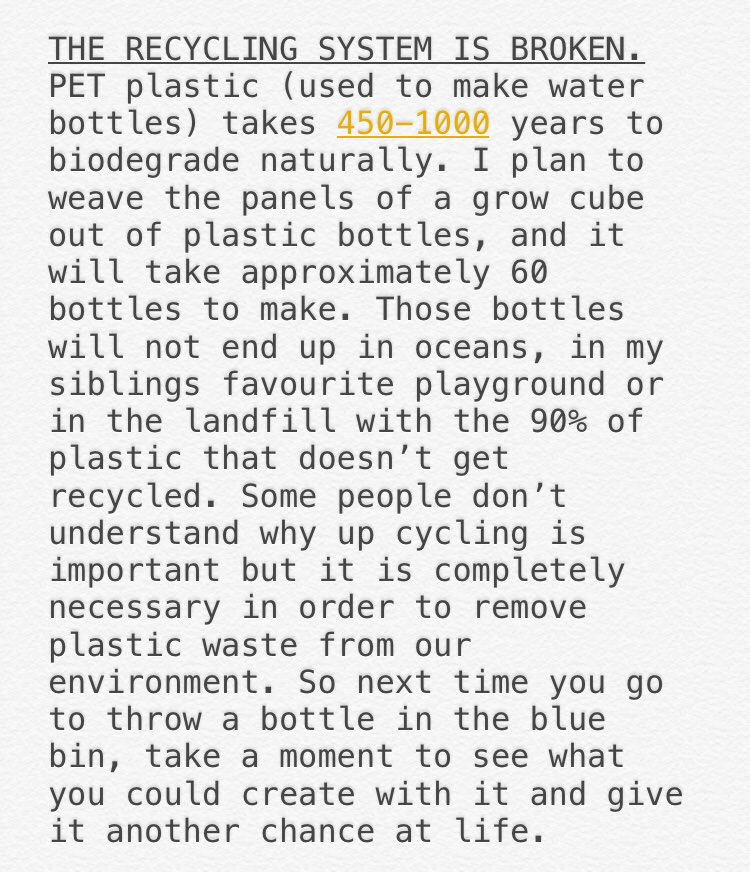
I’ve decided to use the weaving technique I’ve learned recently to make Mr. Kurtz grow cube even more environmentally friendly by using more post consumer building materials. i.e. plastic bottles
Day 22: Ted Talks Continued...
The amazing thing is that most of the Top 20 solutions can be executed fairly easily by every person. This includes cutting down on food waste, eating less meat, installing solar panels, and voting for gender equality.
Day 22: Ted Talks
-100 solutions to reverse global warming
We just watched another Ted Talk that pulled everything together. It discussed drawdown. A new term that refers to when greenhouse gases decrease in the atmosphere on a year to year basis.
Day 22: Ted Talks Continued...
This talk mentioned how altering the way we use refrigeration is the #1 solution to reverse global warming. As well as how our diets are not only damaging our health but the environment.