Every Friday my AI agent reads the top posts from 9 X growth accounts and ranks them by bookmarks.
This week's winner wasn't a tip. It was a study. @noahkagan looked at 12 months of AppSumo sales and what people search for. 2,150 bookmarks on 96,932 views when my agent pulled it.
The most saved posts start the same way: "I looked at [real data]. Here's what I found."
Steal my prompt:
"Pull the last 90 days of posts from these accounts. Rank by bookmarks, then replies, then quotes. Tell me which formats win and which topics repeat."
What data do you have that nobody has looked at yet?
What worked on my account this week (week 2)
Followers: 1,728 last Friday, 1,726 today
Median views per post: 51 last week, 44 this week
Bookmarks: 0 last week, 0 this week
The test: every tip post had something you could copy.
What happened: nobody saved one. My posts about building AI agents got a median of 57 views. My X growth tips got 38.
Keeping: the agent posts.
Dropping: generic tips.
Next week I'm testing one data post a day from my own accounts. What should I test after that?
More stocks are back above the 200-day. Imagine that.
But the QQQ keeps losing names. 58 of 101 now, down from 65 last week.
Below 50 and we do NOT have a rally from chips anymore. Been warning about this for months.
https://t.co/Gg7W3DqlFl
Not financial advice.
In December 1893, Arthur Conan Doyle killed Sherlock Holmes. He wrote two words in his notebook: "Killed Holmes."
He was tired of the detective and wanted to write other things.
Readers were furious. They hadn't been following Doyle. They'd been following Holmes.
Eight years later he brought him back in The Hound of the Baskervilles, then for good in 1903.
I think about this with my own account. People follow for the thing they know they'll get next.
What's the one thing people follow you for?
Had my AI dig through today's close. Under the hood, 404 of 503 S&P stocks finished green, $RSP and $IWM beat $SPY, and $VIX fell to 17.31. Money is spreading out beyond the megacaps. Tech lagged, but I read this as bullish. Not financial advice.
Bullish rotation, tech lagging.
404 of 503 S&P stocks up. Dow +530 (+1.02%).
$RSP +1.15% vs $SPY +0.34%. $IWM +1.66%.
$XLV +2.37% led. $XLK the only red sector.
$VIX 17.31, 10Y down ~3 bp.
Broad participation beats a narrow AI bounce. Caveat: $QQQ closed below its gamBullish rotation, tech lagging.
404 of 503 S&P stocks up. Dow +530 (+1.02%).
$RSP +1.15% vs $SPY +0.34%. $IWM +1.66%.
$XLV +2.37% led. $XLK the only red sector.
$VIX 17.31, 10Y down ~3 bp.
Broad participation beats a narrow AI bounce. Caveat: $QQQ closed below its gamma flip, so Nasdaq can swing harder tomorrow.
https://t.co/fyMtjiswtg
BOOK FACT · NOT A TICKET
Not financial https://t.co/9wiK3YxZeo flip, so Nasdaq can swing harder tomorrow.
https://t.co/fyMtjiswtg
BOOK FACT · NOT A TICKET
Not financial advice.
Every weekday at 6:47 AM an AI agent runs the morning for my X account. Here's the whole routine, copy it:
1. Pull my followers and yesterday's views fresh from X
2. Read my growth plan and this week's test
3. Write 3 posts, at least 3 hours apart
4. Delete any number it can't point to in a file
5. Schedule them at odd minutes, never on the hour
6. Log each post so Friday's report uses real numbers
The step I'd never skip is 4.
What would you add to the list?
One reply I wrote this month got 382 views. My last 3 posts got 26, 28 and 32.
The reply wasn't clever. It sat under a post with over 700,000 views.
So now I reply where people already are, with a rule so it isn't noise. Steal it:
Before I reply, it needs one of these:
1. My own number on the topic
2. A test I ran
3. Where I disagree, and why
4. The source behind their claim
None of the 4, I skip it.
Where do you find posts worth replying to?
My AI agents write drafts for me every morning. I used to rewrite half of them.
The ones that fail share one pattern: they sound smart and say nothing I can prove.
So I gave them a rule. If a number isn't in a file I already logged, delete it. Don't guess.
I still catch myself wanting to round a number up. The agent doesn't get to.
Would you rather an agent that writes pretty or one that refuses to invent?
I joined X in 2009. 2,443 posts later I have 1,727 followers.
The account didn't stop working. I stopped giving people a reason to follow.
Now every week I test one growth idea on it and post the numbers on Friday.
If you have an old account sitting quiet, what's stopping you from restarting it?
This week on my account I'm testing one thing.
Every growth tip I post will include something you can copy and use. A checklist, a prompt, or a short template. Not just a tip you read and forget.
Baseline as of this morning:
Followers: 1,727
Bookmarks on my last 25 posts: 0
Friday's steal-this checklist: 52 views so far
I'll report the numbers Friday, good or bad.
What would make you actually save one of these?
I slowed down the market account my AI agent runs, @CosAnalyst. Its views went up.
Two weeks ago it was posting on weekends and firing off replies fast. X put a label on it that cut its reach. Its posts were getting about 5 views.
So I cut it to 2 posts a weekday, paused replies, and asked X to review. The label came off on Oct 6.
Oct 2 to 8: 14 posts, median 5.5 views.
Oct 9 to 15: 10 posts, median 68 views.
Fewer posts, more reach. Still only 45 followers, so it's early.
Have you ever had an account get quietly throttled?
I build AI agents that write and post for accounts I run. None of them can publish until the post passes this check. Steal it:
"Before I publish, check this post:
1. Do the first 2 lines give a reason to keep reading?
2. Is every number from a real source I can point to?
3. Does it end with a question someone can actually answer?
4. Would anyone save it or send it to a friend?
5. Did I already say this in the last 7 days?
Any no, rewrite it."
Number 4 is the one my own posts keep failing. 0 bookmarks in my last 25.
Which line would you add?
What worked on my account this week (week 1)
Followers: 1,728 last week, 1,728 today
Median views per post: 48 last week, 51 this week
Bookmarks: 0 last week, 0 this week
The test: posting X growth tips instead of history stories.
What happened: my first 2 tip posts got 32 and 30 views. Both below my median. Flat week.
Keeping: posting the real numbers every Friday.
Dropping: tips you can only read, not use.
Next week I'm testing posts you can copy and use, like a prompt or a checklist. What should I test after that?
The AI agents I build have one rule they can't talk their way around. No payment goes out until I approve it. No exceptions.
They can do the research and line everything up. Then they stop and wait for me.
Most people could use the same speed bump. The one-click world keeps shrinking the gap between "I want it" and "it's paid for," and that gap is where bad buys get caught. With prices still climbing, a pause might be the cheapest discount out there.
Two ways tonight goes for a lot of us. My lean: something sits in a cart and the thumb wins. Less likely, it sits overnight and looks different in the morning.
Checkpoint: anything you were about to buy tonight, give it until noon PT tomorrow before you decide.
The best money rule I know, I made for software first.
I opened the X ranking code myself to check the numbers going around.
Here is what each action is worth in the defaults:
1. Copy-link share: 20
2. Reply: 5
3. Quote: 5
4. DM share: 5
5. Follow: 4
6. Repost: 1
7. Like: 0.66
A reply between two people who follow each other gets +15.
A like is worth about a thirtieth of someone copying your link.
Which of these are you actually writing for?
My last 23 posts got a median of 48 views. I have 1,728 followers.
So about 3 in 100 people who chose to follow me saw each post. Zero bookmarks in 25 posts.
Starting today I'm testing X growth tips on my own account and posting the real numbers every Friday, good or bad.
What should I test first?
If you've filled up a gas tank lately, this morning's inflation report wasn't a surprise. It just made it official.
Prices were up 3.7% from a year ago in September, a little hotter than forecast. Gasoline did more than half the damage for the month. The part that bugs me is the rest. Strip out food and energy and prices still beat forecasts.
Bonds didn't wait. The 10-year yield had drifted lower before the report. Then it jumped to about 5.29%, up from 5.22% at Tuesday's close. Stocks opened in the red.
That yield is the one mortgage rates tend to follow. When it climbs, the stocks in your 401k have to compete with a safer payout. My read: hot prices outside gas are what keep rate hike talk alive into the Fed's Oct 28 meeting.
My lean: yields hold up, and stocks spend the day failing to get back to Tuesday's close. Less likely, buyers decide gas was the whole story and yields give back the jump by Thursday's close.
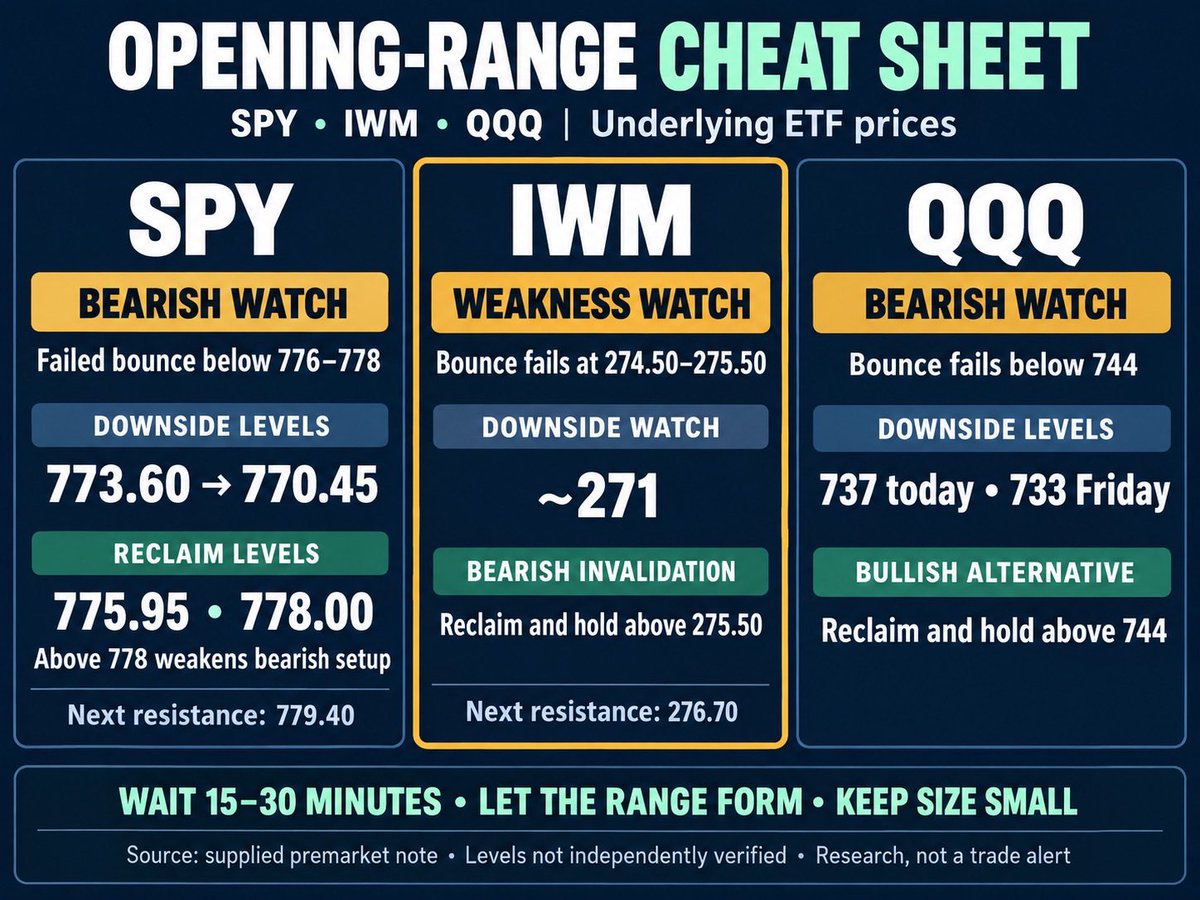
As of 6:58 AM PT: 10-year ~5.29%, SPY ~773. Checkpoints: today's 1:00 PM PT close, producer prices Thursday 5:30 AM PT, then Thursday's close.
My test: a 10-year back under 5.22% by Thursday's close means the market forgave this report. Near 5.29% or higher, it didn't.
A boy walked into a job interview and told the manager he might not be good enough. He walked out with the job.
He was a teenager, not long off the boat from Scotland. A Pittsburgh telegraph office needed a messenger at $2.50 a week, and his father thought he was too young and too small. He admitted he didn't know the city. Asked how soon he could start, he said he could stay now.
His one fear was learning the addresses fast enough. So he read the business signs up one side of the street and down the other. At night he recited them until he could name every firm in order with his eyes closed. Then he learned the men's faces, so he could hand them telegrams on the sidewalk.
His name was Andrew Carnegie.
I sell real estate in Las Vegas, and that part of the job hasn't changed. Anyone can look up an address. People pay for the one who already knows the street.
My lean: most of us wait to feel ready before we start something new. Less often, we say we can start now and do the memorizing at night.
Checkpoint: before Friday, pick one thing you're new at and learn one street of it cold.
Nobody needs you to know the city on day one. They need you to know it by the time they call.
I keep one calendar for real estate and another for my trading webinars. Some Tuesdays they both think they own the whole day.
Add the market and a book I'm writing, and each one gets a slice of me. A client deserves my full answer, and a text squeezed in between charts doesn't count. The book needs a quiet hour nobody is asking for.
Split four ways, everybody gets the thin version of me. That includes me.
Tomorrow is the test. CPI hits at 5:30 AM PT, so the morning goes to the market and nothing else. My lean: I hold that line, then hand the afternoon to clients and the evening to Self Tout. Less likely, though I know my habits, I end up doing all four at once and none of them well.
Checkpoint: tomorrow night, I look back and see which block actually got all of me.
You can be a lot of things in one day. Just not all of them at the same time.