Christians Are Being Hunted Like Sport | Ricky Bakker, The Gateway Pundit
There is nothing covert about what is happening to Christians in Nigeria. The men carrying out these attacks are not hiding their intentions. They are broadcasting them.
Survivors report that Islamist Fulani militants tell them directly, as they burn their homes and cut down their neighbors: “We will destroy all Christians.”
That is not the language of a land dispute or a tribal conflict, no matter how many times the Nigerian government has tried to frame it that way. That is a religious extermination campaign, and it is being carried out in the open, with near-total impunity, while most of the Western world looks the other way.
Of the 4,849 Christians killed for their faith worldwide in the past year, 3,490 of them, 72 percent of the global total, were killed in Nigeria. No other country on earth comes close to those numbers, and yet Nigeria rarely trends on social media.
It rarely leads the evening news. The massacres come and go, and the world moves on.
According to a report by the Society for International Human Rights, an average of 30 Christians were murdered every single day in Nigeria throughout 2025. Going back further, since 2009, an estimated 125,000 Christians have been killed. More than 19,100 churches have been burned to the ground, and over 1,100 Christian communities have been seized and occupied by jihadist forces.
To understand what those numbers look like on the ground, consider what happened in Benue State on the night of June 13, 2025.
Fulani militants surrounded the village of Yelwata after dark. Julius Joor, the village head, described what he witnessed — attackers shooting and killing people, forcing families out of their homes, pouring fuel, and setting houses on fire. When it was over, approximately 150 Christians were dead.
That was a single night, in a single village, in a country where this happens constantly.
These attacks do not even stop for the holiest days of the Christian calendar. On Palm Sunday 2026, militants entered the predominantly Christian community of Angwan Rukuba in Plateau State and opened fire on residents, killing at least 30 people.
Reports from nearby communities indicated that at least 10 more were killed the same day in separate attacks.
Palm Sunday. The day Christians around the world celebrate Christ’s triumphal entry into Jerusalem, and Nigerian believers were being shot in the streets.
Sen. Josh Hawley has publicly labeled what is happening as genocide. Sen. Ted Cruz introduced the Nigeria Religious Freedom Accountability Act. The Trump administration officially designated Nigeria a Country of Particular Concern for religious freedom violations.
These are meaningful steps, and they deserve recognition. But designations do not bury the dead, and accountability has so far remained largely on paper.
They are our family, and they need us to remember that.
It can be easy, when reading statistics like these, to feel the weight of them for a moment and then set them down and go on with your day. The distance feels too vast. The problem feels too large. But the Christian faith does not give us that option, and it never has.
The believers being slaughtered in Benue and Plateau States are not a separate branch of Christianity happening somewhere far away from you. They are members of the same Body you belong to. They confess the same Lord, hold the same hope, and are sealed by the same Holy Spirit.
When they suffer, Scripture tells us plainly that we suffer with them, whether we are paying attention or not (1 Corinthians 12:26).
So the question is not whether their suffering has anything to do with you. It does. The question is what you are going to do about it.
Start with prayer, and take it seriously. Bring the villages of Benue State before God by name. Pray for the widows of Yelwata, for the children who lost their fathers on Palm Sunday, for the pastors still standing in pulpits in communities that have been attacked again and again. These are real people with real names, and they deserve to be prayed for as such, not just folded into a vague request for “persecuted Christians around the world.”
Then consider giving to the organizations that are actually on the ground in Nigeria, Open Doors International and International Christian Concern among them. They are rebuilding churches, supporting displaced families, and standing with believers when their own government has failed them.
The resources you send are not symbolic gestures. For many of these families, they are the difference between survival and collapse.
And finally, use your voice. Share what is happening. Say the word genocide when it applies, because applying accurate language to atrocities is one of the ways ordinary people create the pressure that eventually moves governments to act.
The Nigerian church is not a charity case. These are some of the most resilient, faith-filled believers on the planet, worshipping in the ashes of burned churches and praising God over the graves of their martyrs.
What they need from you is not pity. It is solidarity. It is the knowledge that the global Body of Christ sees them, stands with them, and refuses to let their suffering disappear quietly into a news cycle.
They are your family. Treat them like it.
https://t.co/hMG5MTvh52
Key result:
SVM outperformed Naïve Bayes → better for complex text data.
Biggest takeaway:
Real-world data is messy, emotional, and contradictory but that is what makes it powerful.
Project: https://t.co/NAEey573zq
#Data#NLP#MachineLearning#Canada#Industry#JobinChemical
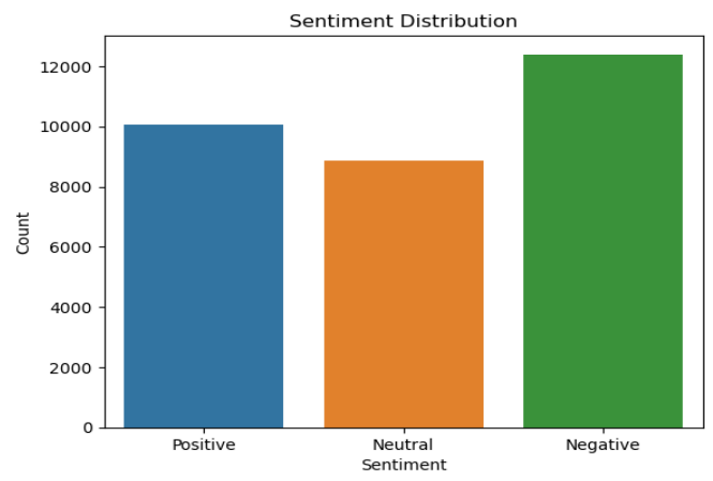
We analyzed 43,000+ tweets about climate change and the results were not what I expected.
Public opinion is not aligned. It is divided 👇
→ Highly polarized sentiment
→ Awareness + skepticism coexist
→ Policy discussions drive negativity
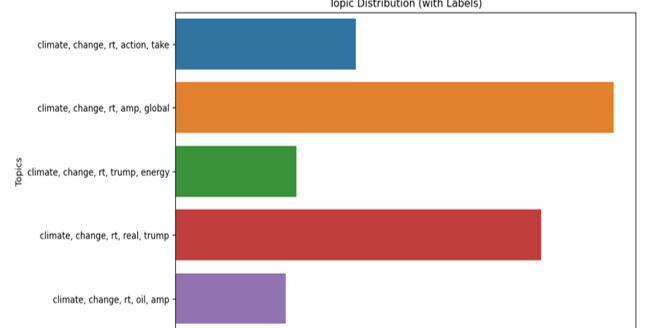
→ Conversations shaped by politics
& activism.
How we figured this out:
Built a full NLP pipeline:
• Cleaned noisy Twitter data
• VADER → sentiment analysis
• TF-IDF → feature extraction
• LDA → topic modeling
These visuals show what people are actually talking about 👇
@Glencore@CerrejonCol Are you planning to do some research or work in Canada? I have degree in chemistry and MSc in Materials science as well. Also, I am a Data analyst. Mind if we can connect @Glencore? I look forward to your reply. Thanks
If you have time on your hands and you are not locked in on AI or some skill of the future, then you are doing yourself a great disservice.
Time is an essential factor that many people do not have. People are locked in on their jobs, trying to make a living. If you are in a position where you do not have to work for hours to make a living and you have spare time at your disposal, you have to lock in on AI now.
And yes, even busy people need to make out time. Swap 30 minutes of scrolling for 30 minutes of learning. That is it. No matter how packed your schedule is, find the time. Your future self will thank you.
Here are 5 free courses on AI you need to lock in on now:
1. Google's Generative AI Learning Path: A structured, beginner-friendly path covering the fundamentals of generative AI, large language models, and responsible AI. It is completely free.
https://t.co/qcMnE0HfU3…
2. Elements of AI: A globally recognized course designed for non-technical people that breaks down how AI works and why it matters in the real world.
https://t.co/GbYXO1XOZT
3. AI For Everyone (Coursera): One of the most watched AI courses in the world. It strips away the complexity and teaches you how to think about AI as a business and life tool.
https://t.co/A1ZnaixwhD…
4. Anthropic's Claude AI Course: Learn directly from the makers of Claude. This free course covers how to effectively use and understand AI models, making it one of the most credible and practical resources available today.
https://t.co/7a6jr7kdv9
Here are 5 jobs that are future proof:
1. AI Prompt Engineer: Companies are paying top dollar for people who know how to communicate with AI tools effectively to generate business outcomes. This role is only growing.
2. Cybersecurity Analyst: As AI advances, so do digital threats. The demand for people who can protect systems, data, and infrastructure will never slow down.
3. Data Analyst: Every business runs on data. The ability to read, interpret, and turn data into decisions makes you indispensable in any industry.
4. Content Creator & Digital Marketer: Brands need human voices, storytelling, and creativity to connect with audiences. With AI as your assistant, one person can now produce the output of an entire team — no degree required.
5. AI Trainer & Evaluator: AI models need humans to teach, test, and fine-tune them. This behind-the-scenes role is quietly becoming one of the most in-demand positions in the tech world — and you can start with zero academic background.
The window is open right now. The question is, are you walking towards it?