Real stories. Unsolved mysteries.
Forgotten cases, unexplained disappearances, and dark historical mysteries.
Some stories were never meant to be forgotten.
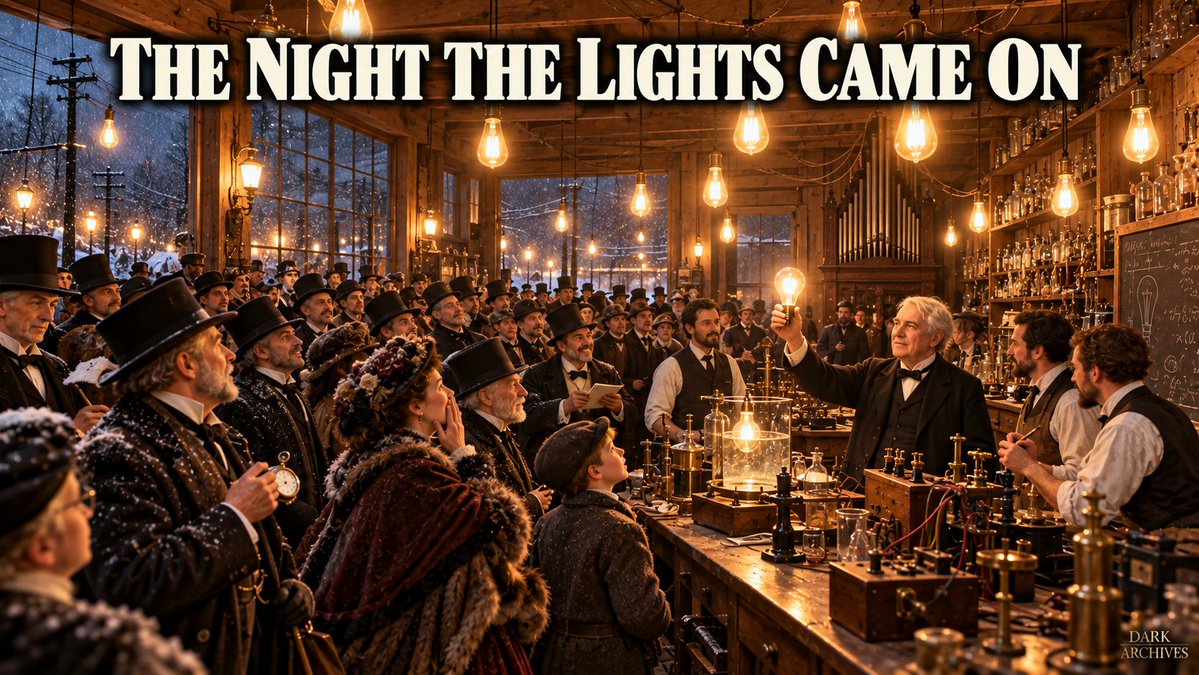
New Year's Eve, 1879. A special train pulls into a tiny New Jersey village, and people in their fanciest evening clothes step off into a snowy, stormy night. They didn't come for a party. They came to see Thomas Edison's laboratory light up without a single gas flame or candle. 💡
Reports at the time counted about 25 bulbs in the lab and a few dozen more in the offices, nearby houses, and along the street. Hundreds of people showed up. Edison explained that the glowing part inside each bulb was a tiny horseshoe-shaped piece of carbonized paper sitting in a vacuum, and he even showed one still burning after being dunked in water.
Gas lamps had lit cities for decades, but something felt different that night. People were watching the end of an era, and most of them probably knew it.
#MenloPark1879 #ElectricLight #InventionHistory
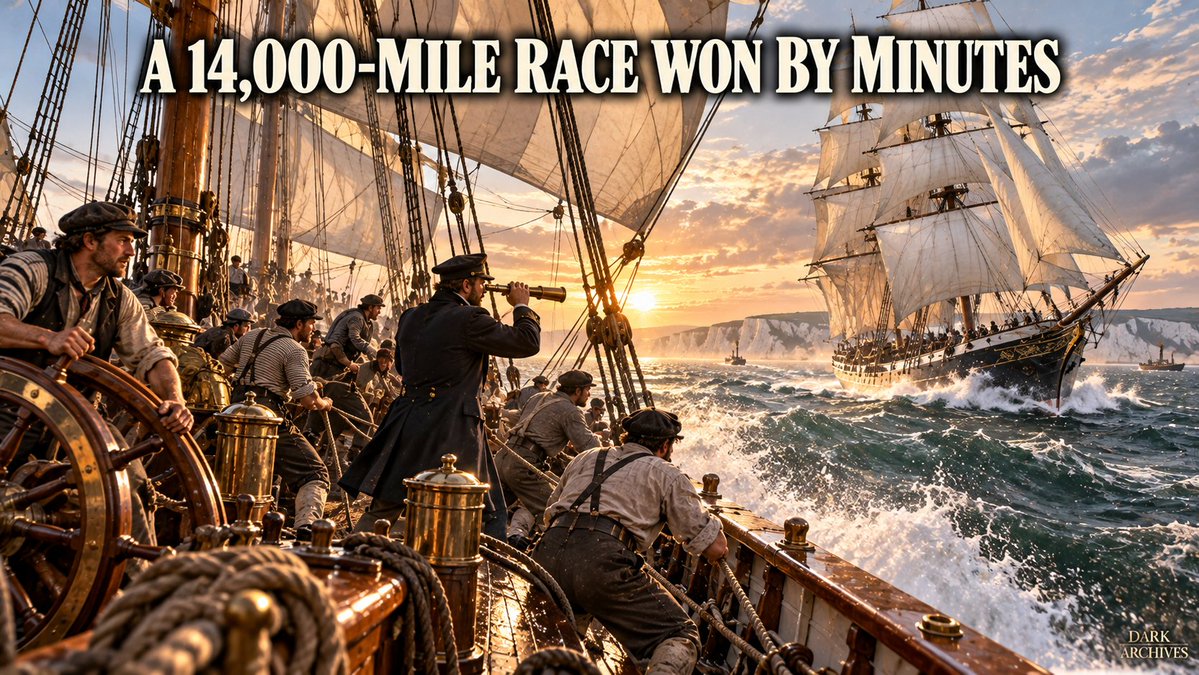
In late May 1866, a handful of the fastest sailing ships in the world set off from a port in southern China, all carrying the first tea of the season and all heading for London. Whoever docked first would get a bonus, and the newspapers back home covered it almost like a horse race. 🍃
They sailed about 14,000 miles, through the Indonesian islands, around the bottom of Africa, and up the Atlantic, and it took roughly 100 days. Most of the time the ships couldn't even see each other. But when they finally reached the English Channel, two of them, Ariel and Taeping, were practically side by side.
Ariel led into the Channel, but Taeping got up the Thames first and won by less than half an hour after months at sea. The two captains reportedly agreed to split the prize money.
#GreatTeaRace1866 #TeaClipper #AgeOfSail
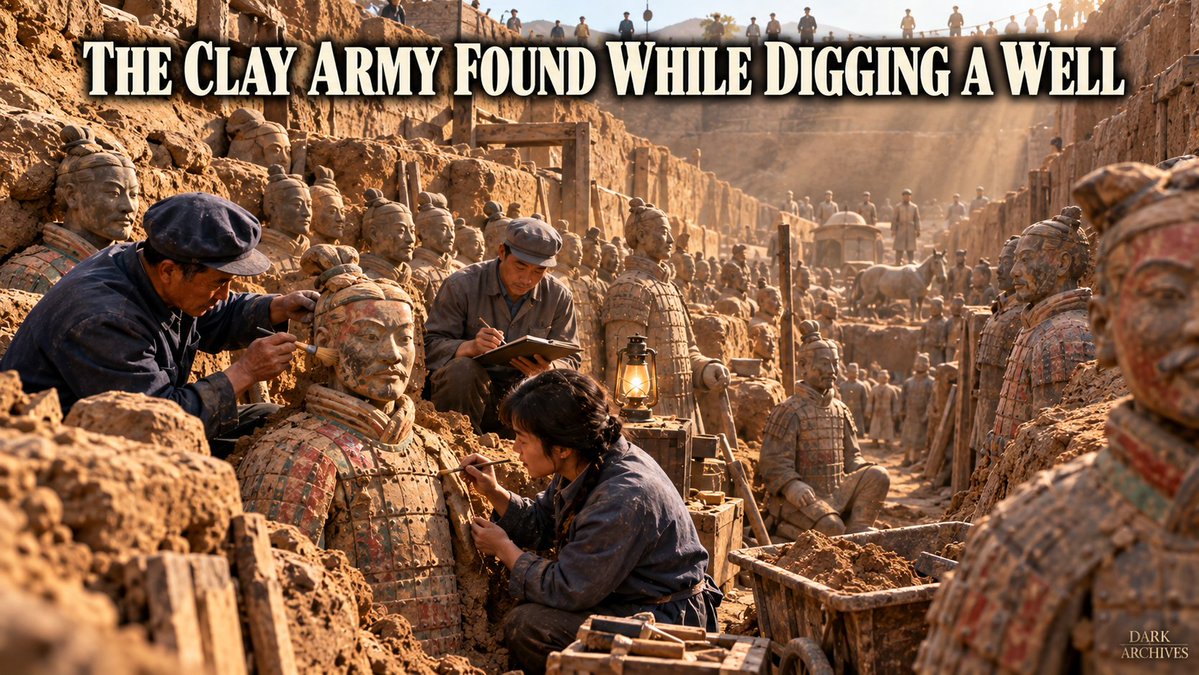
March 1974. Farmers near Xi'an, in central China, are digging a well because a drought is hurting their crops. A few days in, their shovels hit something that isn't just dirt: pottery pieces, bronze arrowheads, and then part of a clay head. 🪖
That well ended up leading to the tomb complex of Qin Shi Huang, the first emperor of a unified China, who died in 210 BC. Historians estimate around 700,000 workers were involved in building it. So far, thousands of life-size clay soldiers have been found, each one with its own face and its own hairstyle, and it's estimated there are about 8,000 in total.
Originally they were painted in bright colors, but the paint started flaking and fading soon after being exposed to air. And the emperor's actual burial chamber hasn't been opened to this day.
#TerracottaArmy #QinShiHuang #AncientChina
Before the 1870s, people honestly argued about whether a galloping horse ever has all four hooves off the ground at once. It happens too fast for the human eye to settle, and painters had been drawing horses with their legs stretched out front and back for centuries. 🐎
In 1878, photographer Eadweard Muybridge lined up a row of cameras along a racetrack in Palo Alto, California, with wires stretched across the dirt so the horse would trigger each shutter as it ran past. The accounts differ on how many cameras there were, usually 12, sometimes more. What the pictures showed was that yes, for a split second the horse is completely airborne, with its legs tucked under its body rather than stretched out.
You'll often hear that it all started with a $25,000 bet. That detail gets repeated a lot, but I haven't seen it hold up well, and some historians treat it as legend. What isn't legend is where it led: Muybridge kept going and built a device that projected his photos in motion, and that's one of the early steps toward cinema.
#EadweardMuybridge #HorseInMotion #BirthOfCinema
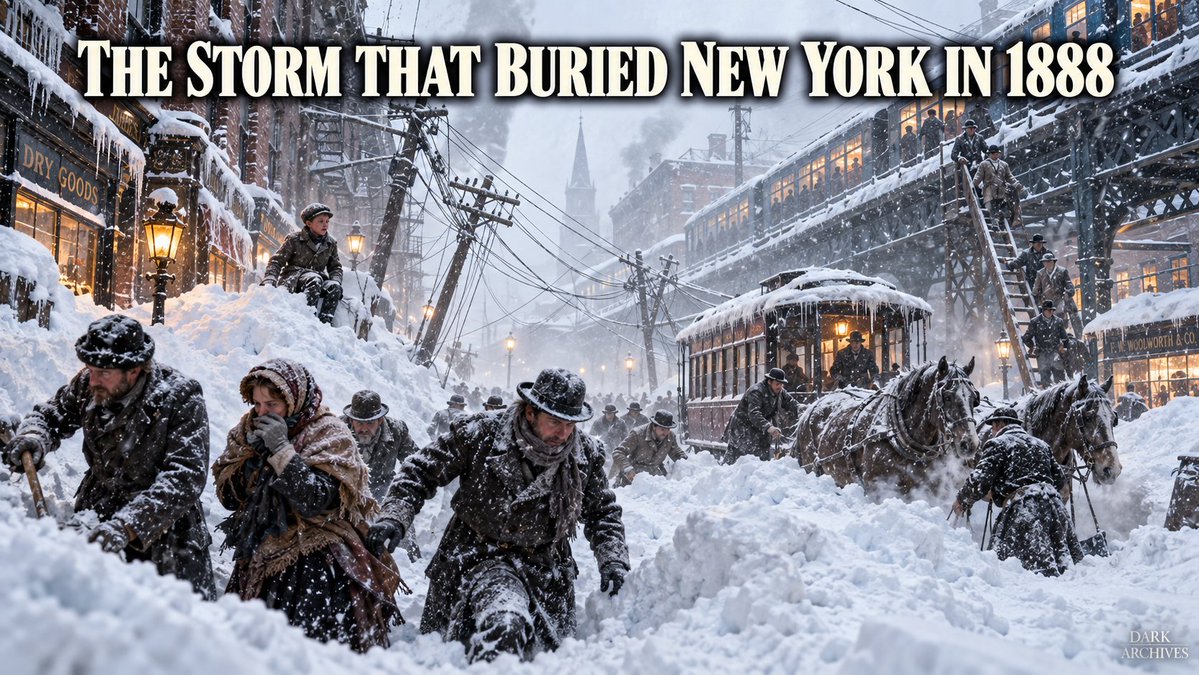
In March 1888, a storm came in that New Yorkers never saw coming. It started as rain, turned to sleet, and then buried the whole Northeast in snow for three days. Around New York, drifts piled up higher than the first-floor windows, and in some parts of the region they hit 40 or 50 feet. ❄️
Telegraph poles snapped and left wires tangled across the streets. Fire crews couldn't get through the snow. About 15,000 people ended up stranded on elevated trains, and some locals tied ladders together and charged people to climb down. Roughly 200 people died in New York City, and more than 400 in the region overall.
It was such a shock that the city started getting serious about burying its wires and moving transit underground. Boston opened the first subway in the US in 1897, and New York followed in 1904.
#Blizzard1888 #WhiteHurricane #NewYorkHistory
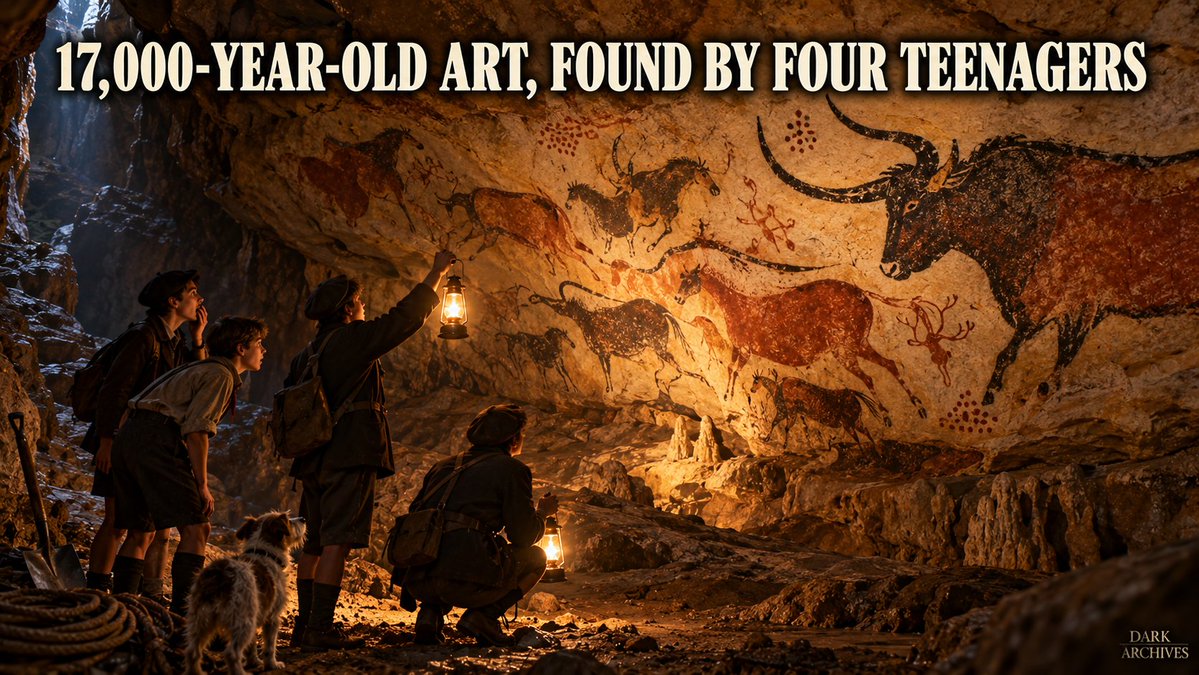
September 1940. France is under occupation, and a group of teenagers in the countryside near Montignac find a hole where a tree has fallen. There's a local rumor about a secret tunnel leading to a hidden treasure, so they grab some oil lamps and slide down. 🔦
The story usually says a dog named Robot led them there, though the details vary depending on who's telling it. What's not in doubt is what they found: a huge underground hall covered in paintings of bulls, horses, and deer, some of them longer than a car, all made roughly 17,000 years ago.
One of the boys, 14 at the time, even camped outside the entrance to guard the cave in the first days. It opened to visitors in 1948, but so many people breathing inside started damaging the paintings that it was closed in 1963. Today most people see an exact replica instead.
#Lascaux #CaveArt #Prehistory
During World War II, thousands of people worked at a country estate in England called Bletchley Park, reading enemy messages that were supposed to be unreadable. At its peak in early 1945 there were roughly 9,000 of them, about three quarters of them women, and a lot were barely out of their teens. 🔐
Everyone signed the Official Secrets Act. Some families had no idea where their daughters had even been sent. And when the war ended, nobody got to go home and tell the story. The silence just kept going.
It wasn't until 1974 that a former RAF officer, F. W. Winterbotham, got permission to publish a book about it, and people who'd kept the secret for three decades could finally start talking. The book wasn't perfect, and some of its details have been questioned since, but it cracked open one of the best-kept secrets of the war. It took until 2009 for the British government to formally recognize their contribution.
#BletchleyPark #Codebreakers #WW2Secrets
@OldWorldAnew It's actually one of the best-documented builds of the era. Prefab iron and glass made it fast, newspapers covered it week by week, and the Hyde Park deal always required it to be removed. The 1936 fire was watched by huge crowds and filmed. Nothing hidden there.
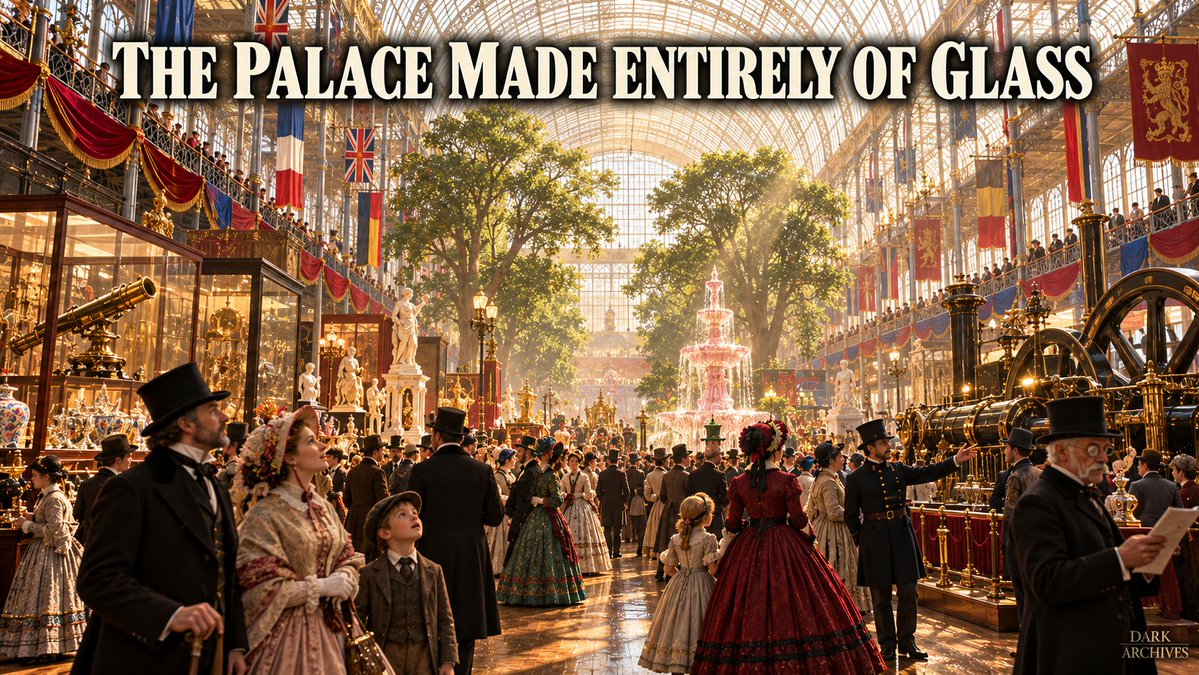
In 1851, London built a palace out of glass and iron in the middle of Hyde Park. It was for the Great Exhibition, a world's fair where more than 10,000 exhibitors showed off everything from steam engines to false teeth. 🏛️
The building's designer wasn't even an architect. Joseph Paxton was a head gardener who'd made his name building greenhouses, and his plan beat out around 250 other entries. The whole thing went up in about nine months using prefabricated parts and roughly 293,000 panes of glass. Some giant elm trees were already growing on the site, so rather than cut them down, Paxton just built the roof around them.
About 6 million people came through, and a lot of them took the train in for the day. The money left over helped buy the land in South Kensington where London's big museums now stand.
#CrystalPalace #GreatExhibition1851 #VictorianEngineering
In December 1912, a room full of scientists in London got a look at what was supposed to be the missing link between apes and humans. A big human-looking brain case, a chunky ape-like jaw, found in a gravel pit in Sussex. It fit what a lot of experts at the time expected to see, which is probably why so many of them wanted it to be real. 🦴
It took about 40 years to unravel. In 1949 a fluorine test showed the bones were way too young, and by 1953 researchers had figured out the whole thing was a mashup: a medieval human skull and the jaw of an orangutan, with the teeth filed down and everything stained to look ancient.
Nobody has ever been proven guilty beyond doubt, though a 2016 study of the specimens points to a single forger and most of the suspicion lands on Charles Dawson, the man who "found" it. Science did catch the fake in the end, it just took a long time and a lot of embarrassment.
#PiltdownMan #ScienceHoax #Paleoanthropology
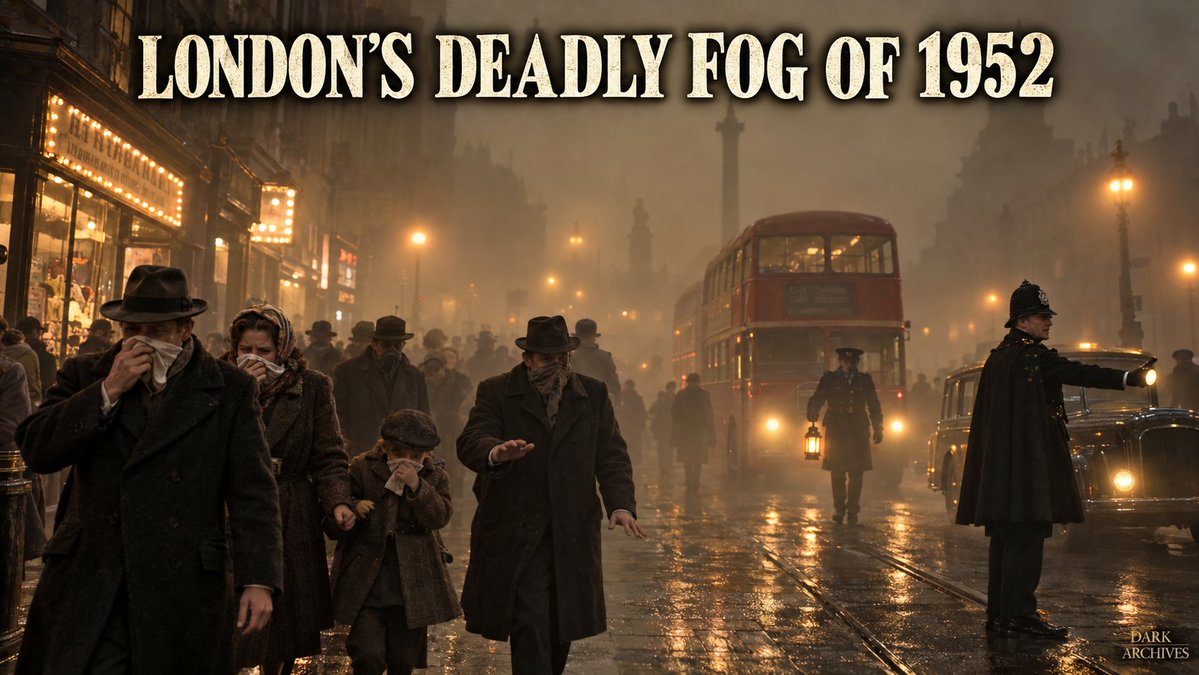
Imagine walking out your front door in December 1952 and not being able to see your own feet. That's what London was like for five days. A stretch of freezing weather had everyone burning extra coal, the wind died completely, and all that smoke just sat over the city and turned into a thick yellow-brown smog. 🌫️
Buses had to be led through the streets by people walking ahead with lanterns. Theatres cancelled shows because the audience couldn't see the stage. What tipped people off that something was badly wrong was that undertakers ran out of coffins and florists ran out of flowers.
The government's first estimate was around 4,000 deaths. Later research puts it closer to 10,000 to 12,000. It shook the country enough that Parliament passed the Clean Air Act in 1956, which cut back on burning coal in cities.
#GreatSmog1952 #KillerFog #CleanAirAct
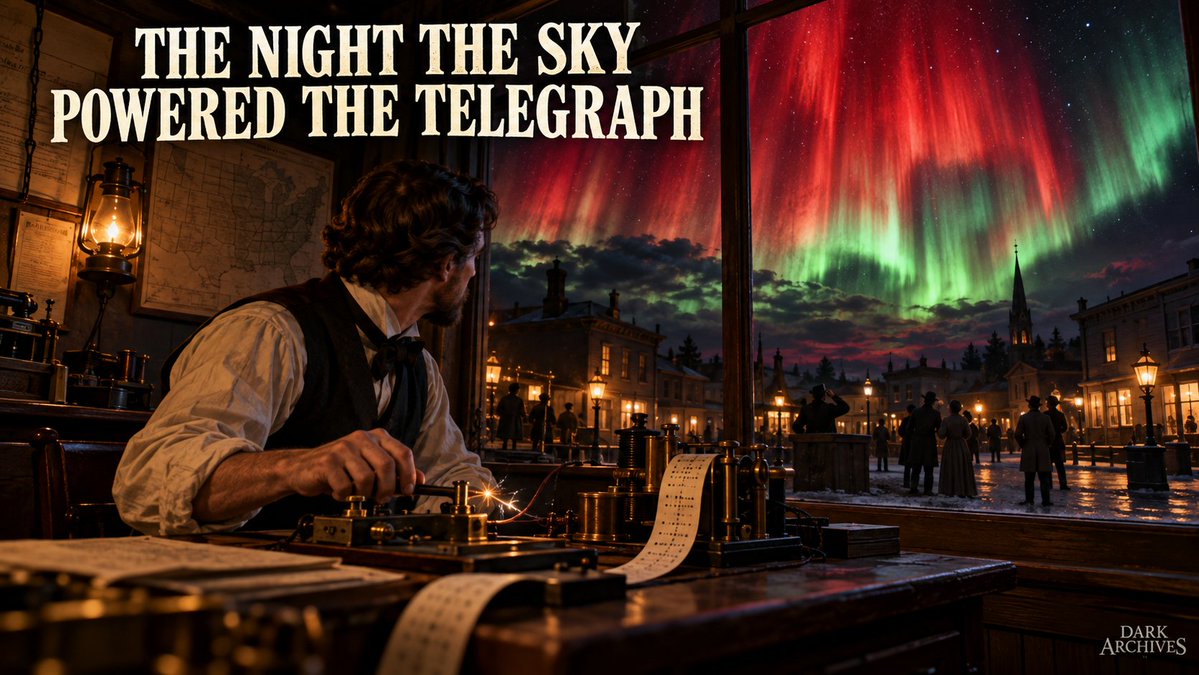
On the morning of September 1, 1859, an English astronomer named Richard Carrington was sketching sunspots when two blinding patches of white light flared up on the sun. They faded after about five minutes, and he barely knew what he'd seen. Less than a day later, the whole planet found out. ☀️
Auroras lit up skies as far south as the Caribbean, and in some places the glow was bright enough to read a newspaper at night. Telegraph lines went haywire, with sparks jumping out of the equipment. In one famous case, operators in Boston and Portland unplugged their batteries and just kept sending messages using the electricity coming down from the sky.
It's still considered the biggest solar storm ever recorded, and scientists say a repeat today could knock out power grids and GPS. Back then, all it did was mess with the telegraph.
#CarringtonEvent #SolarStorm #SpaceWeather
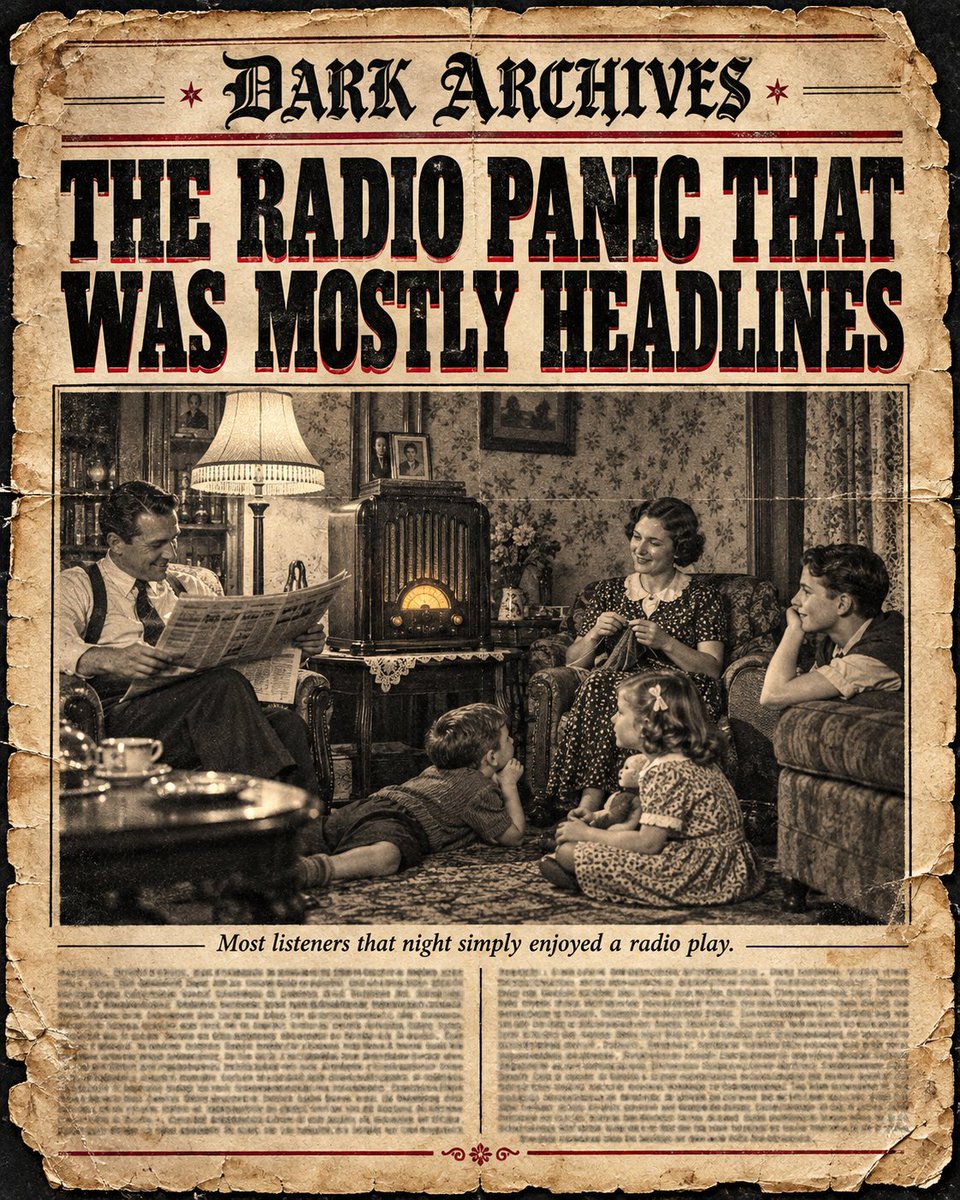
Every October the same story comes back: on the night of October 30, 1938, a radio drama about Martians landing in New Jersey supposedly sent America into a full-blown panic. People fleeing their homes, phone lines jammed, chaos in the streets. 📻
When historians went back through the evidence, though, that picture mostly fell apart. The audience that night was small, and plenty of the people who did tune in seem to have understood it was a play. Some listeners really were frightened, but even the newspapers of the time didn't report any deaths or serious injuries, which you'd expect if a nation had actually lost its mind.
So where did the panic story come from? A lot of it came from the papers themselves. Radio was eating into advertising money during the Depression, and a front page about gullible listeners made the new medium look reckless. The legend then got repeated for decades, even in a famous 1940 study. Kind of funny that a story about a fake news broadcast turned into a fake news story of its own. 📰
#WarOfTheWorlds #RadioHistory #MythBusted
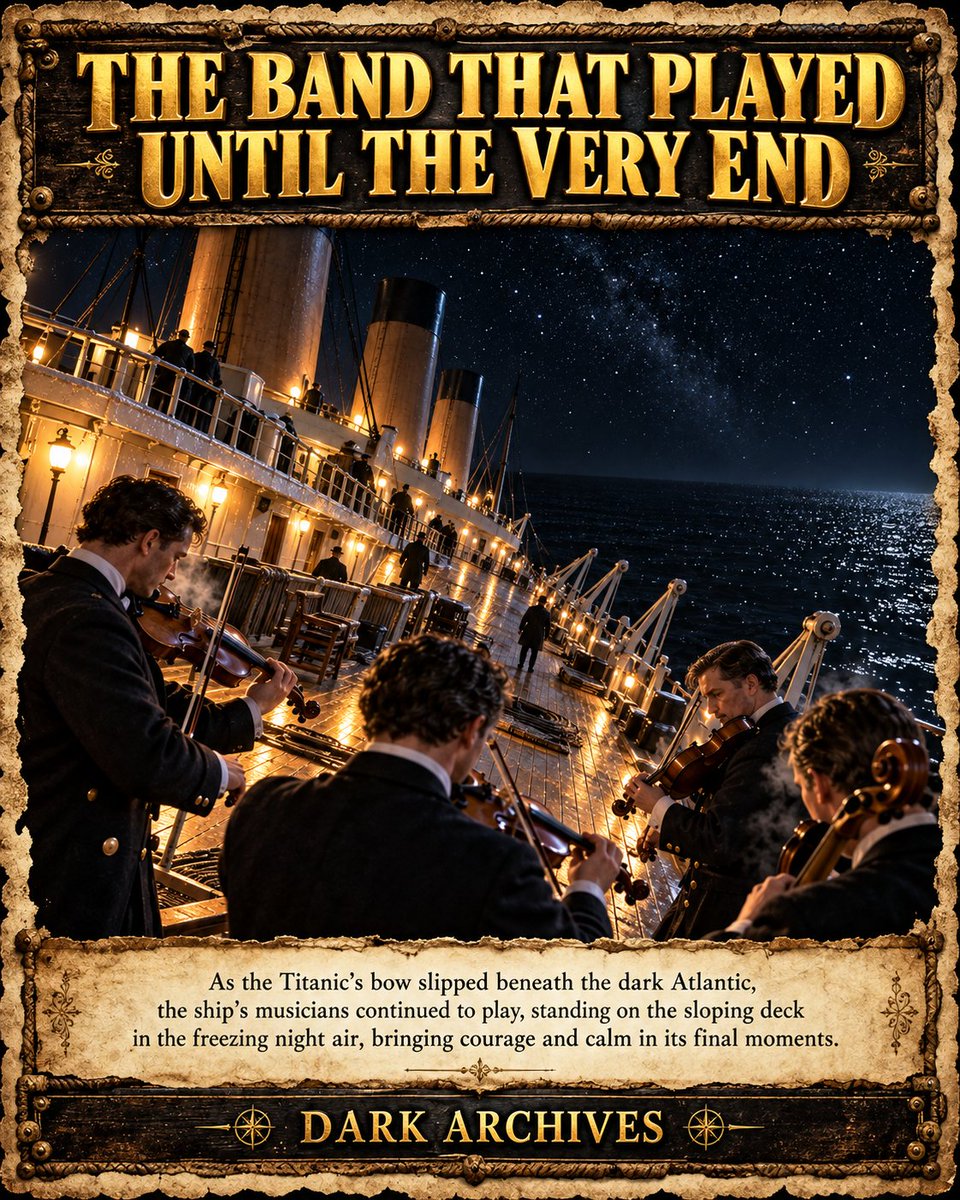
In the final hour of April 14, 1912, as the "unsinkable" Titanic began slipping into the freezing Atlantic, eight musicians did something almost impossible to imagine. Instead of trying to find a spot on a lifeboat, they picked up their instruments, walked out onto the increasingly tilted deck, and kept playing. 🎻
Survivors said they started with lively, upbeat tunes, meant to keep people calm. As the ship sank lower, the music reportedly grew slower and more solemn. Not one of them survived. There's some debate among historians about the exact final song, but what's not in question is that they kept playing long after they had every reason to stop.
#TitanicHistory #WallaceHartley #1912Disaster
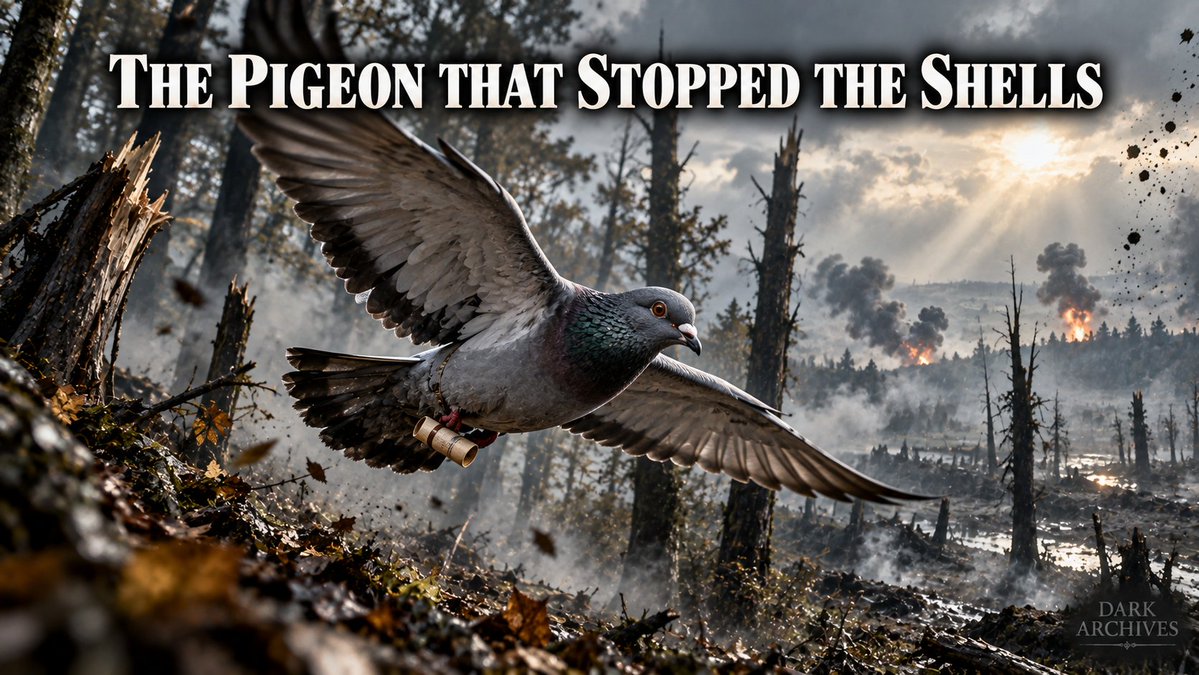
October 1918, deep in a French forest. About 550 American soldiers are trapped behind enemy lines, and then their own side starts shelling them by mistake. The phone lines are cut, there's no radio, and the messengers on foot keep getting shot. 🐦
By the story most people tell, they were down to one last carrier pigeon, a bird named Cher Ami. They tied a note to its leg asking their own artillery to stop firing. The bird got shot in the chest and lost a leg, but still flew roughly 25 miles in about half an hour and got the message through. The shelling stopped, and around 194 of those soldiers made it out alive.
Some of the finer details are debated, but the bird's part in it is well documented. Cher Ami got a French war medal, and it's on display at the Smithsonian today.
#CherAmi #LostBattalion #WW1Heroes
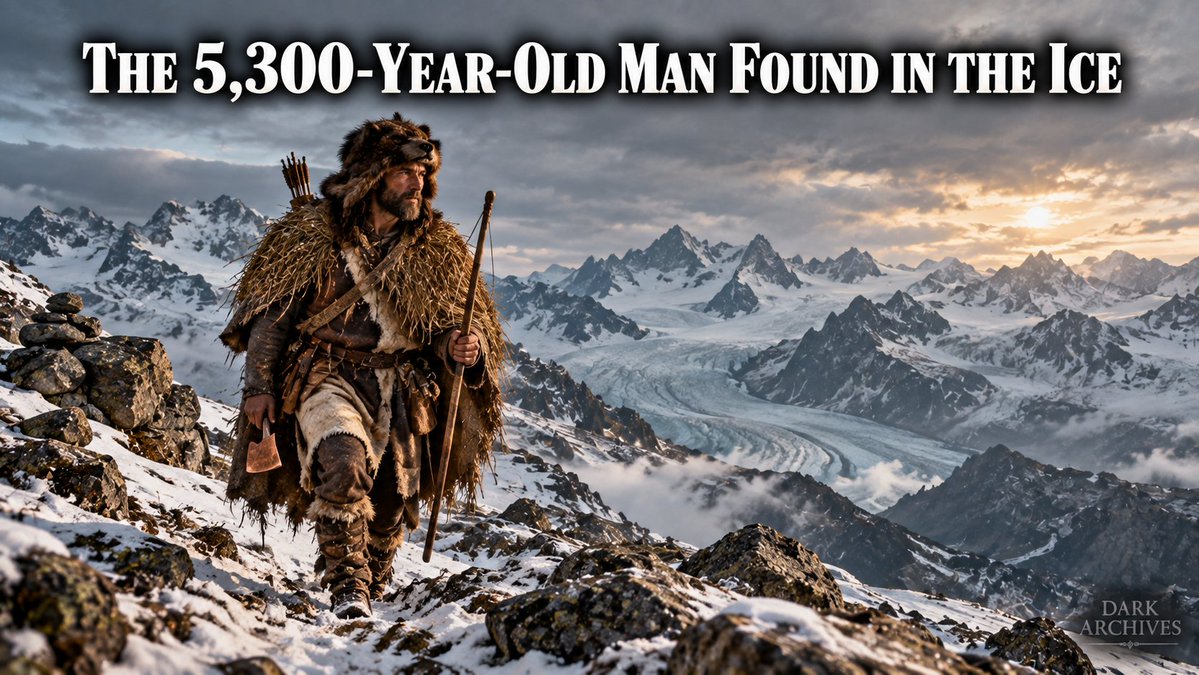
In September 1991, two hikers in the Alps spotted what looked like a body poking out of a melting glacier. Everyone assumed it was some unlucky mountaineer from a few decades back. It turned out to be someone who had died about 5,300 years ago, long before the pyramids were built. 🏔️
They named him Ötzi. He was around 45, wore a coat and shoes stitched from animal hides, and carried a copper axe, a bow, and a small kit for starting fires. His body had 61 tattoos. Scientists later found an arrowhead in his shoulder, plus signs of a blow to the head, so it looks like he was attacked. What exactly killed him is still debated.
Because he was found just barely on the Italian side of the border, that's where he stays. He's in a museum in Bolzano, kept in a chamber that copies the ice he was buried in.
#OtziTheIceman #CopperAge #AlpineArchaeology