NEW BOOK: A FRAMEWORK FOR ISTIHALAH IN THE CONTEMPORARY WORLD
In this book, I discuss the Fiqh of Istihalah and attempt to create a framework that can be used in practice today.
There is a chemical analysis of several examples of Istihalah from the books of Fiqh as well studies of forms of apparent transformations that are not deemed as Isithalah.
There is a detailed discussion on the use of industry knowledge in Shariah research, as well as an explanation on how and to what extent the Fuqaha incorporated such learnings.
Download 👇
https://t.co/krVqMY9F8n
📗 NEW BOOK: DOWNLOAD BELOW
THE BEST CITY IN THE WORLD
There is no place or city like al-Madīnah al-Munawwarah; no matter how advanced, how upmarket, or how luxurious some destinations feel, al-Madīnah is al-Madīnah. This book is a spiritual exploration and brief expression of the history, the several names, the virtues, the etiquettes of visiting, and the rewards of passing away in al-Madīnah al-Munawwarah.
Shaykh Abdur Raheem Limbada (Hafiẓahullah) writes, “The moment Rasūlullah stepped foot in this city, everything changed; Yathrib, and everything associated with Yathrib disappeared; al-Madīnah was born. The world in between the mountains of al-Madīnah al-Munawwarah completely transformed.”
Shaykh Anwar Narma (Ḥafiẓahullah) writes, “The book we have before us is an extraordinary rendition of love that the author has manifested in the form of his words in praise and ode of the greatest of all cities, Al-Madīnah al-Munawwarah.”
Shaykh Imran Ibn Adam (Ḥafiẓahullah) writes, “The book has been written with love and spirituality. May Allah make my beloved brother Shaykh Faraz (may Allah preserve him) prosper in his talents and give him the ability to keep on writing. Āmīn.”
Shaykh Yusuf Lorgat (Ḥafiẓahullah) writes, “Every writer has a passion to write about al-Madīnah, and every writer has their own unique style and relationship with al-Madīnah al-Munawwarah. The reality behind all of this is that this city is none other than the city of the beloved of Allah.”
Ustadh Khalid Patel (Ḥafiẓahullah) writes, “May Allah accept this work and make it a means of bringing the true love of Rasulullah. Upon reading, when a person closes their eyes, they will think of and see al-Madīnah al-Munawwarah, and as a result, they will, in reality, think of Rasulullah.”
Download:
https://t.co/G70kOaUhvK
As part of the advanced and practical Islamic Finance training the students receive, we were looking through how the Diminishing Musharakah product actually works, as well as the deeper Fiqh underlying the entire end-to-end of the product.
This term, one of the modules that the students study is advanced Islamic inheritance laws.
The students will also study the drafting of wills, the Islamic requirements, probate process, execution, the use of trusts and more.
The Students of the Darul Iftaa are currently specialising in Halal Food, and learning how and why different ingredients are used, and the processes that are involved.
The students of the Darul Iftaa began their short course in English law to understand how legal documents and contracts are structured and operate.
At the Darul Iftaa, we do not only study the classical, but support the students to have working knowledge of contemporary areas.
Just another day at the Darul Iftaa.
The students have started Mu'amalat studies, where in we deep dive into the principles of every chapter of Mu'amalat, and focus on contemporary finance, investment and business practices.
We discussed how food & investments are similar!
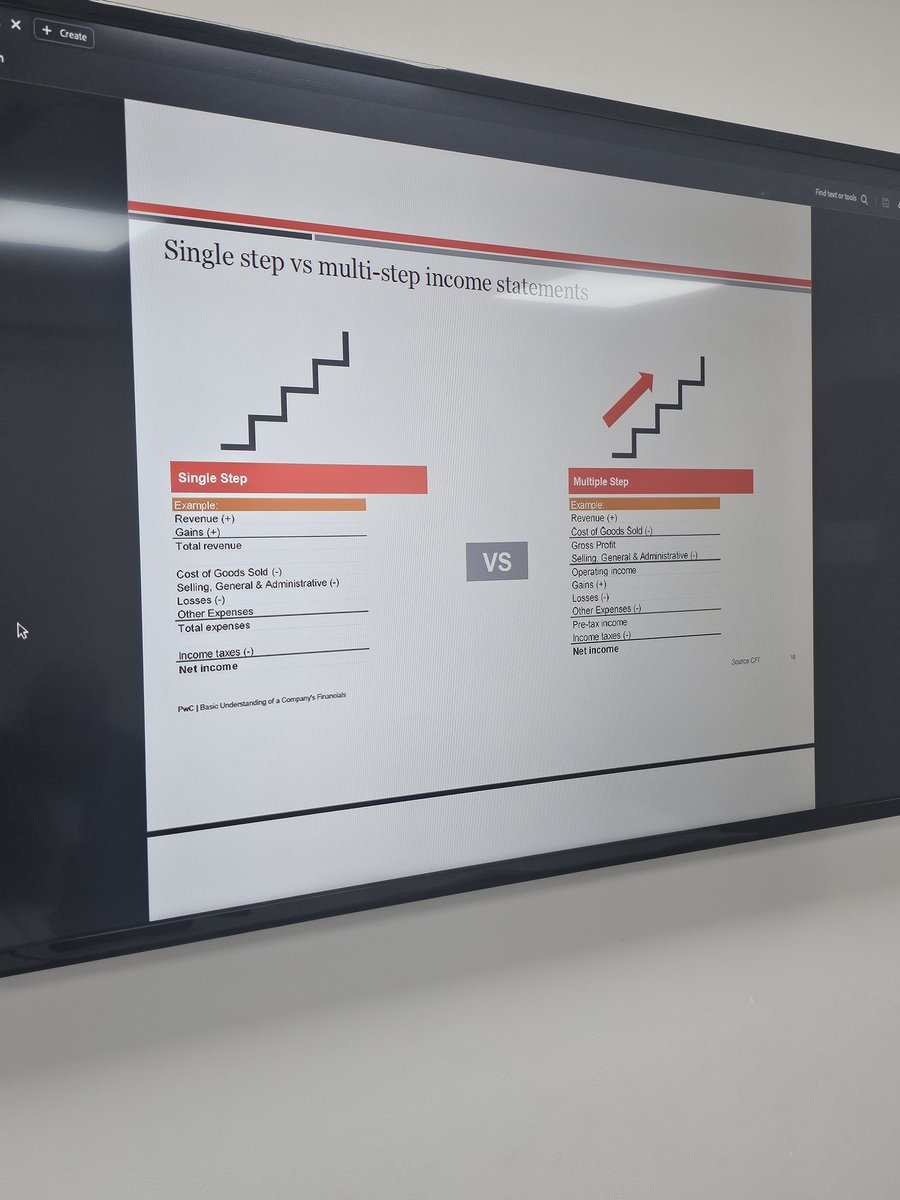
The students of the Darul Iftaa are currently learning about Financial Statements.
Every Fridays, they engage in crash courses and specialised modules on contemporary arts, sciences, social sciences and more.
📜 HOW FINANCING OPERATED IN THE ERA OF THE PROPHET ﷺ
🟢 After searching through dozens of books on the Sirah and Fiqh to understand the financing landscape in the blessed era, some patterns became visible to me:
1️⃣ In the era of the Prophet ﷺ, people truly lived within their means and sufficed with less.
2️⃣ Having more material and wealth for the sake of having more wealth was not the goal of any of them.
3️⃣ They did not think very long term when it came to amassing wealth.
🟢 When it came to financing, there were six main activities:
1️⃣ Interest-free loans
2️⃣ Mudaraba
3️⃣ Musharaka
4️⃣ Credit sales
5️⃣ Abundance of Sadaqah
6️⃣ Zakat
From my review of the Qur'an, Sunnah & classical books, I found the above. Perhaps other scholars may find more. The contemporary modes of Islamic financing did not exist formally as such, that's not to say they are impermissible or a bid'ah. Most contemporary modes of Islamic financing are built on Shariah principles, and the Fiqh allows us to develop and build such structures. However, the way financing is done today seems to be different to how it was done in that era. That is not surprising, as money, markets & systems are different today.
🟢 Interest-free lending was very common. It made perfect sense because:
1️⃣ The reward is great in the Qur'an and Sunnah, and that community was driven primarily by reward and not financial return.
2️⃣ Gold - which was the currency - did not depreciate in value, so they were indifferent to inflation risk.
3️⃣ It was a risk to keep excess gold as it could be lost, misplaced or taken.
4️⃣ Giving a loan meant your funds were guaranteed and repayable as loans are guaranteed. This gave protection to their gold & a better option than keeping it for themselves.
5️⃣ The interest-free lending market was very liquid, so everyone was willing to give, creating liquidity in the market and comfort for other lenders to be able to call back their loan on demand.
6️⃣ Social reputation and self honour was everything in that era, so defaulting was a huge blotch and stain on one's dignity. The people were people of value and of their word.
All of the above unlocked a market of interest-free lending in gold.
🟢 Mudaraba & Musharaka were forms of providing capital & business, similar to how companies raise capital in pre-seed or series A, B & C. The investors were interested in the business & wanted to have a stake in the business for the underlying business' potential.
🟢 Credit sales with collateral were also common. People would engage in real trade & grant respite in payment.
🟢 What is super obvious was that those in need of capital were not seen as customers, but rather beneficiaries of Sadaqah & Zakat. There was no desire to make money from them in the long-term. It was either making money with them, or giving them Sadaqah or Zakat to support them in the short term. The people's generosity was literally out of this world. They believed that by giving, they would get more, and they truly did.
🌙 𝗥𝗮𝗺𝗮𝗱𝗮𝗻 𝗚𝗶𝗳𝘁 𝗳𝗼𝗿 𝗬𝗼𝘂 𝗔𝗹𝗹
𝗙𝗥𝗘𝗘 𝗖𝗼𝗽𝘆 𝗼𝗳 𝗠𝘆 𝗕𝗼𝗼𝗸 '𝗭𝗮𝗸𝗮𝘁 𝗠𝗮𝗱𝗲 𝗘𝗮𝘀𝘆' (𝗥𝗲𝘁𝗮𝗶𝗹𝗶𝗻𝗴 𝗮𝘁 £𝟭𝟵.𝟵𝟵)!
This is my Ramadan gift to you
DOWNLOAD FROM BELOW 👇
https://t.co/oAszFBYe1f