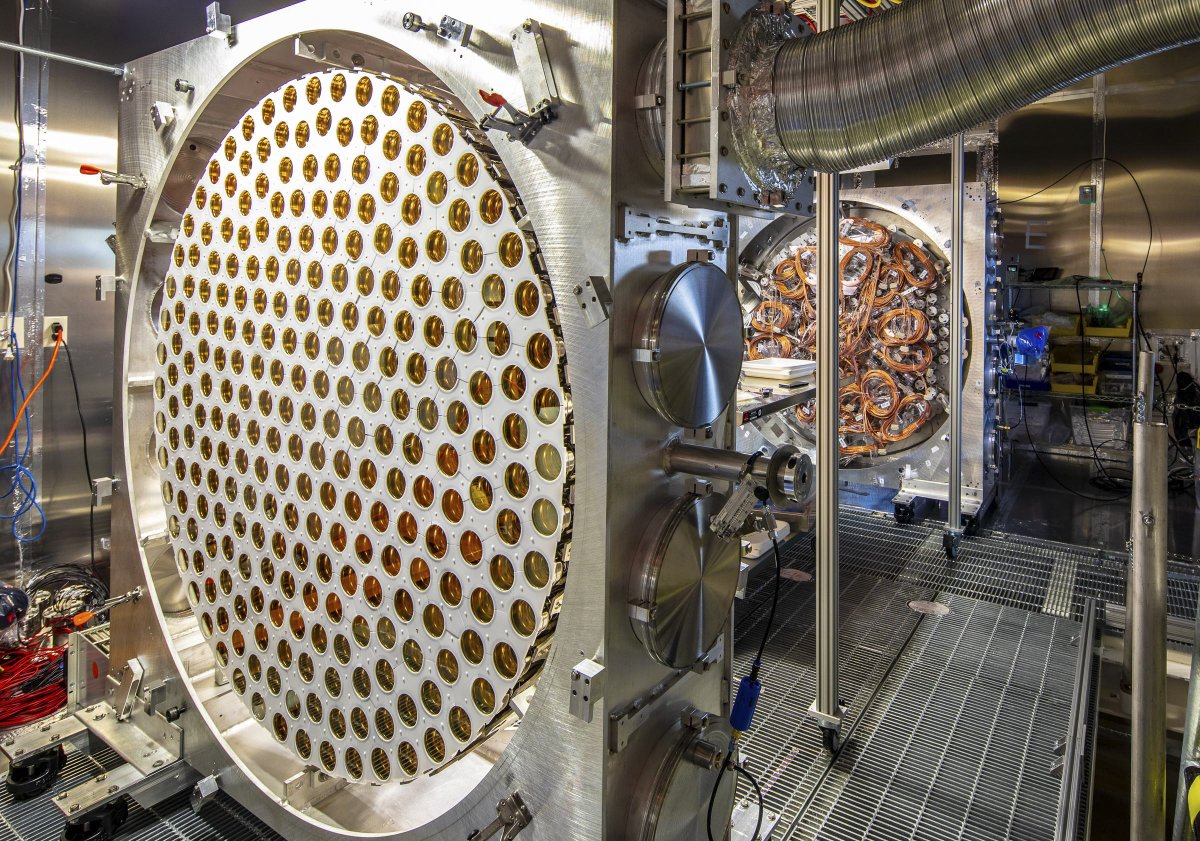
DARWIN is an R&D collaboration for XLZD, the future LXe observatory in astroparticle physics focussed on dark matter and neutrino science. Supported by ERC.
New cosmic-scale gravity tests using CMB distortions across hundreds of thousands of galaxy clusters show Newton–Einstein gravity holds, tightening constraints on modified gravity and bolstering dark matter. https://t.co/NO4dEx9tJ0 https://t.co/PTcGb05mqg
The number of grant applications is rising sharply. Our capacity for their evaluation isn’t.
ERC President Maria Leptin explains why stricter resubmission limits are being introduced for 2027 calls and what this mean for applicants.
https://t.co/YavrW4P8FJ
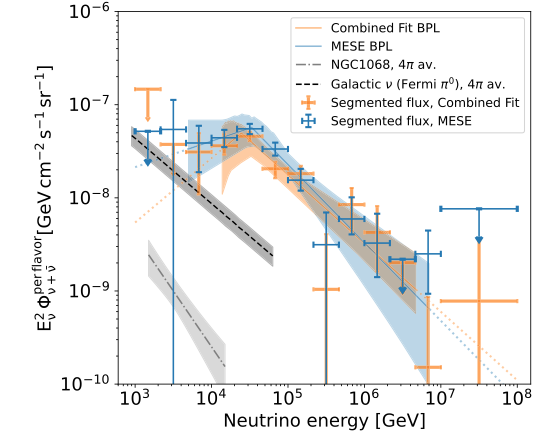
The @uw_icecube observatory at the South Pole has found evidence for a break in the spectrum of cosmic neutrinos, with theoretical implications for their generation.
PRL: https://t.co/n7qSKxHIgo
PhysMag: https://t.co/C7NrjmSWa8
Our study on model-independent searches of new physics in DARWIN (now XLZD) with deep learning is published in EPJ-C, open access. Work led by Andre Scaffidi from SISSA @Sissaschool https://t.co/9PI49utQDZ
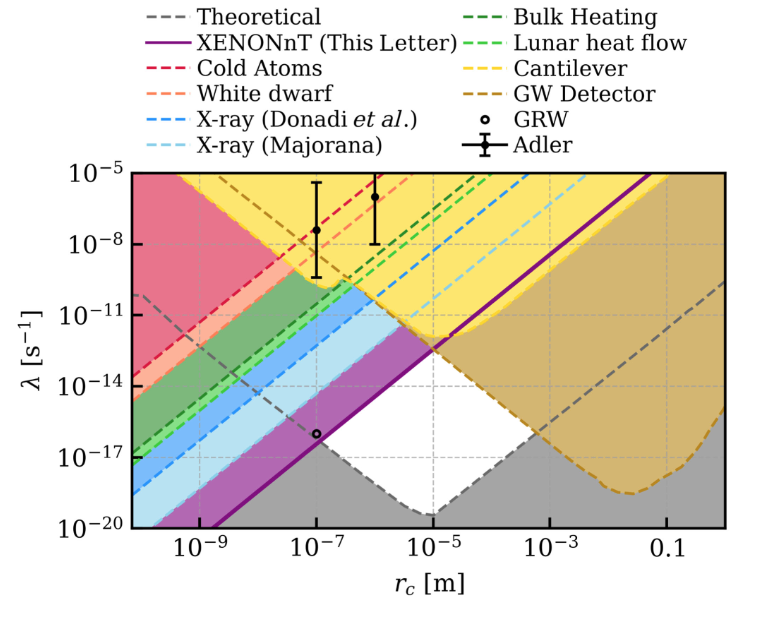
The XENON collaboration, which usually looks for dark matter, has searched for x rays from dynamical quantum collapse models, improving previous constraints by two orders of magnitude https://t.co/2Pl7nUZmE0 #OpenAccess
We searched for x-rays in XENONnT's low-energy data, as predicted from dynamical quantum collapse models, and improved upon previous constraints by up to two orders of magnitude: https://t.co/rTMJ0O0s4l
♻️ ⚡ 🔋 The Swiss Confederation launches six new National Centres of Competence in Research (NCCRs). The NCCR “Separations”, which aims to accelerate research in separation sciences and technology transfer to industry, is led by our university.
https://t.co/vm42RjdSVk
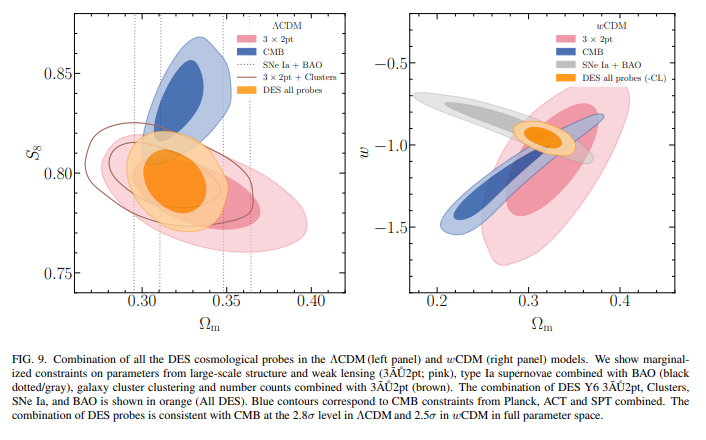
Dark Energy Survey 6-year results: The S8 tension with CMB is still there (left plot), but still only two sigma-ish. Cosmological constant dark energy (w = -1, right plot) continues to be favored. The death of ΛCDM keeps not happening.
Dark matter is one of the biggest mysteries in physics. Join a webinar – broadcast from nearly a mile underground – to hear the latest results from the LZ #DarkMatter experiment at 10am MT on Dec. 8.
https://t.co/YIn0q5xMto
Astrophysicist Arthur McDonald uncovered a secret of one of the most mysterious and ghostly particles of our universe - the neutrino.
At SNOLAB, a science laboratory 2km underground, McDonald proved that neutrinos have mass. He shared the 2015 physics prize with Takaaki Kajita.
First search for sub-MeV dark matter particles using a superconducting nanowire experiment
PRL: https://t.co/MlHoSzp9dr #OpenAccess
PhysMag: https://t.co/Mpa84Yvn4Q
XENONnT is the first experiment to measure nuclear recoils from solar neutrinos
Today, July 10, at the #IDM2024 in L’Aquila (IT), Fei Gao, from Tsingua Universitiy, reported this result: we can say that XENONnT enters into the so-called “neutrino fog”.This is a great achievement!
#DarkMatter is thought to make up 85% of the mass of the universe. Weakly Interactive Massive Particles (WIMPs) are 1 of many possible types of dark matter particles.
Find out more about the search for dark matter, and why scientists think it's out there👇https://t.co/qEF5WnKf8I
It's #ThrowbackThursday! Last month, members of @XLZDconsortium held a meeting @RutherfordApLab.
The international group of researchers discussed their plans for the largest ever liquid xenon experiment dedicated to searching for #DarkMatter🔍
See more👇
https://t.co/MZKYPVU16C
In April 1995, scientists at Fermilab achieved a major breakthrough by discovering the top #quark, the final piece of the puzzle in the Standard Model's quark. Read more in #PhysicsHistory: https://t.co/ZhCm89CwEy.
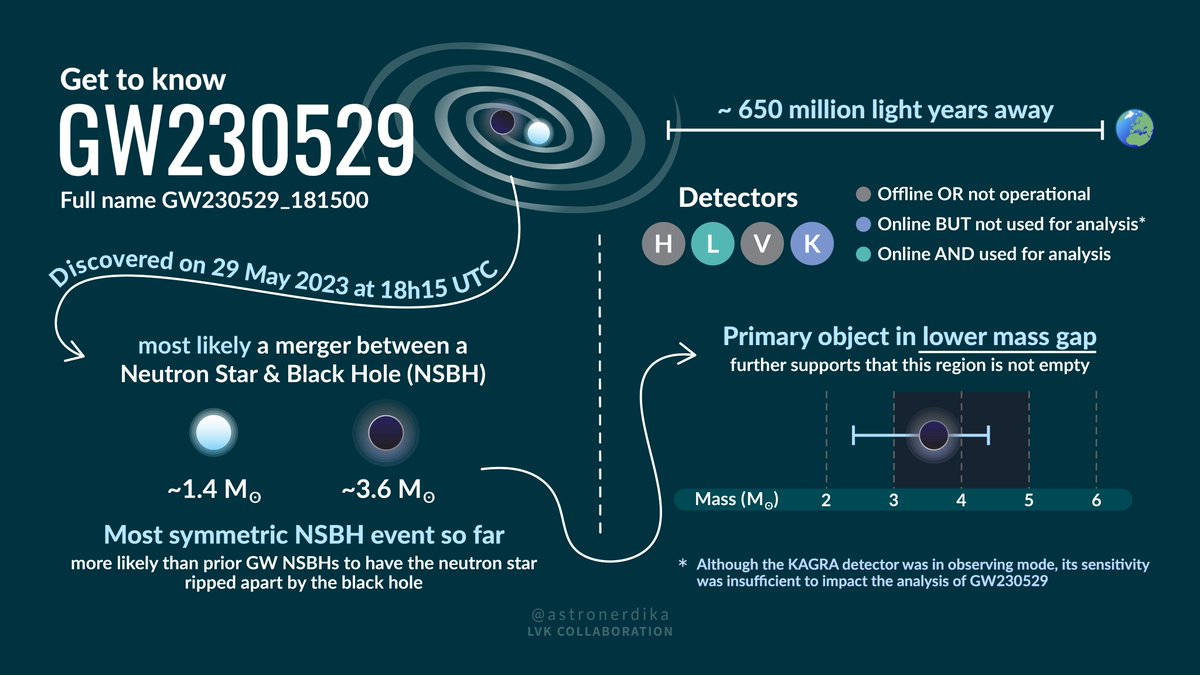
Today the LIGO-Virgo-KAGRA Collaboration is proud to announce GW230529, the first exceptional #GravitationalWaves event from our fourth observing run (#O4). You can learn more from @astronerdika's excellent infographic, or by visiting our detection page! https://t.co/oGH4baLlss






![CERNpress's tweet photo. [Press Update] BASE experiment at CERN succeeds in transporting antimatter
Find out more: https://t.co/VIXYkTlo8N https://t.co/B0mJj2n1Kf](https://pbs.twimg.com/media/HELT9_GboAAspZK.jpg)