Bitcoin knows no borders.
@Strike is now authorized under MiCA, live across all 27 EU member states, now including Italy and Spain.
Many had the chance to build the global Bitcoin company. Most chased altcoins and gambling. We didn't.
One company. One focus. Bitcoin. 🇪🇺
My attempt to protect users from scam apps on the @AppStore has gotten my Apple Developer account flagged for termination - ironically, for "dishonest activity".
Unless it's reversed by June 30, all new installs of Sparrow Wallet will fail, and development on macOS will end.
The context: since 2023, more than a dozen fake "Sparrow" apps have appeared on the App Store, as recently as April this year. Users have contacted me after losing their savings, in some cases their life savings, to these impersonators.
I'm the developer of the real Sparrow Wallet, a desktop app, and I hold the registered US trademarks for the name and logo. I have publicly warned @Apple and the community about these fake apps from early 2024, but they keep appearing.
The app @Apple flagged was a placeholder that was never published. Its only purpose was to warn users that Sparrow is desktop-only and that other "Sparrow" apps aren't mine. This approach may have been misguided, but there was nothing dishonest about it.
I'm confident this is an automated misclassification that Apple would reverse on review - but I may be terminated before a human ever looks at my appeal. The cost would fall on @Apple's own users: blocked installs and no updates for a tool people rely on, which opens the door for more fakes.
If you value Sparrow, a repost would help. @AppleSupport
I did not see this coming, but my election has become an inflection point for our whole country. Today we make history.
Will you be part of this historic day by voting, calling friends who can vote, posting to social media, or making a donation?
Spread the word fellow patriots!
Wondering what it would be like to relocate to El Salvador?
Here is @LinaSeiche and I discussing it from a view of somebody who's done relocation before.
For the first time in human history
we can accurately MEASURE value.
We've never had this... before Bitcoin!
Share these 465 floating seconds
with pre-coiners who enjoy loud music
and an excessive use of editing effects
(to bring them to Bitcoin❤️)
Did you know virtual money
existed over 1,500 years ago🤯
"Flintstones Bitcoin" demonstrated
how Bitcoin works... before Bitcoin!
This story was an AHA moment
for many Bitcoiners.
(920 seconds of floating story
might help others see what we see!)
Fiat money is why French-Canadians did not join the United States during the American Revolution
In 1776, Benjamin Franklin led a diplomatic mission to Montreal to persuade French Canadians to join the American Revolution. A primary reason for the mission’s failure was the worthlessness of the Continental dollar, the paper currency issued by the Continental Congress to fund the war. The currency’s depreciation, due to overprinting and lack of gold or silver backing, made it nearly valueless in Quebec, where specie like British pounds or French livres was preferred, severely undermining American efforts. The Continental Congress, unable to tax, printed over $200 million in Continental dollars by 1779, causing rapid depreciation. By early 1776, the currency’s value had collapsed, with exchange rates in some areas requiring 10 or more Continental dollars for one Spanish silver dollar.
In Quebec, French Canadian merchants and habitants distrusted the notes, refusing them or demanding steep discounts. American troops occupying Montreal since November 1775, paid in Continental dollars, struggled to buy supplies, leading to requisitions that alienated locals. General David Wooster, commanding in Montreal, wrote, “Our paper money is received with great reluctance, and provisions are not to be had but at extravagant prices, if at all.” The *Papers of the Continental Congress* noted, “The paper money issued by Congress was so depreciated that it was almost impossible to procure provisions” in Quebec.
Franklin’s delegation, arriving in April 1776, faced this economic barrier head-on. Merchants rejected Continental dollars, and Franklin’s promises of future payments in specie or trade concessions lacked credibility. He reported to Congress in May 1776, “The people are not inclined to take our paper money, and it passes with great difficulty, if at all, among them.” Historian Francis Wharton later wrote, “The want of hard money, and the discredit of our paper currency, made it impossible to procure supplies or gain the confidence of the Canadians.”
Franklin even spent his own money to ease tensions, but this could not offset the widespread distrust of the currency. French Canadians, pragmatic after the stability offered by Britain’s 1774 Quebec Act, saw no reason to accept worthless paper. A merchant’s account in the *Papers of the Continental Congress* stated, “The American money is no good here; it buys nothing, and we cannot trust it for future payment.” The Catholic clergy, influential in Quebec, further discouraged acceptance of “the rebels’ paper,” as noted in letters from John Carroll to Congress. This economic skepticism crippled Franklin’s diplomacy.
As he wrote to John Hancock on May 8, 1776, “Our credit and cause suffer greatly from the want of hard money, and the people here will not be persuaded to join us while our money is discredited.”
The currency’s worthlessness, symbolizing the revolution’s economic instability, was a key factor in the mission’s failure. By May 1776, with British forces approaching, Franklin left Montreal, and the American campaign in Quebec collapsed by June. The Continental dollar’s rejection underscored the revolution’s early economic fragility, hampering diplomatic and military efforts in Canada.
(ai-generated summary)
What's the Boomer FUD we can debunk? Lay it on us.
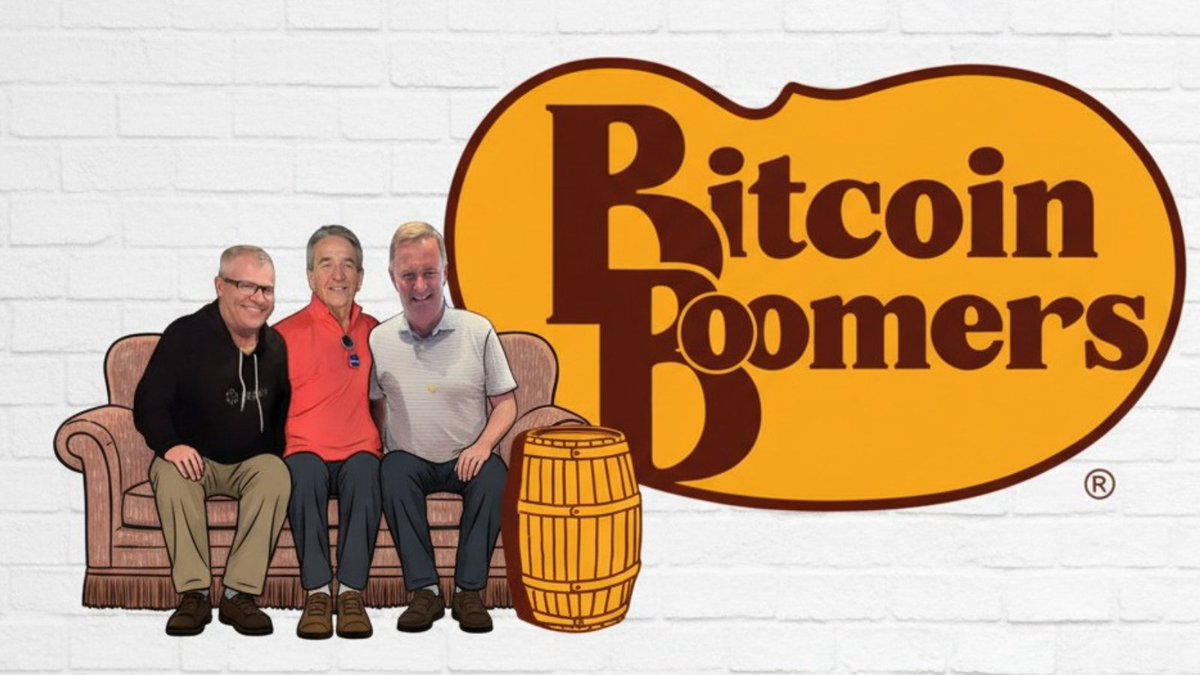
The Bitcoin Boomers Podcast premieres on September 14, will you be listening? @GaryLeland@boomer_btc@LawrenceLepard