A production schedule draft should never quietly drop a run. If a job is in scope, you need to see it in the draft or have a clear, evidence-backed reason why it was left out.
If a manufacturing answer has partial evidence, it should say what is confirmed and what still needs review.
Hiding uncertainty is worse than a short answer. DashboardGenius is built for that kind of evidence discipline.
A manufacturing answer should not invent a friendly label for a SKU just because the number looks familiar.
If the evidence only returned the code, the answer should say that and keep the follow-up honest.
Inventory risk changes depending on the question: weeks on hand, inventory turns, available stock, inbound supply, or open orders.
A useful manufacturing answer should say which basis it used before ranking the risk.
Packaging changes can touch material availability, open orders, quality checks, and line instructions at the same time. DashboardGenius helps plant teams line up the evidence before the run is waiting.
An allergen changeover is not just a schedule note. It touches ingredients, sanitation checks, inventory lots, QA holds, and line readiness. DashboardGenius helps plant teams line up the evidence before the run starts.
A spare-part shortage can look like a maintenance issue until the schedule moves. The useful review lines up work orders, parts inventory, downtime risk, and line priority before the run is at risk. DashboardGenius helps plant teams pull that evidence together.
A customer issue review gets messy when the note, lot history, production run, QA checks, and shipment record live in separate places.
DashboardGenius helps manufacturing teams line up the evidence so the answer is grounded before the follow-up meeting starts.
Customer promise dates get risky when the order, inventory, schedule, QA hold, and shipment notes are checked one tab at a time.
DashboardGenius helps manufacturing teams line up the evidence before “can we ship this?” turns into another reporting scramble.
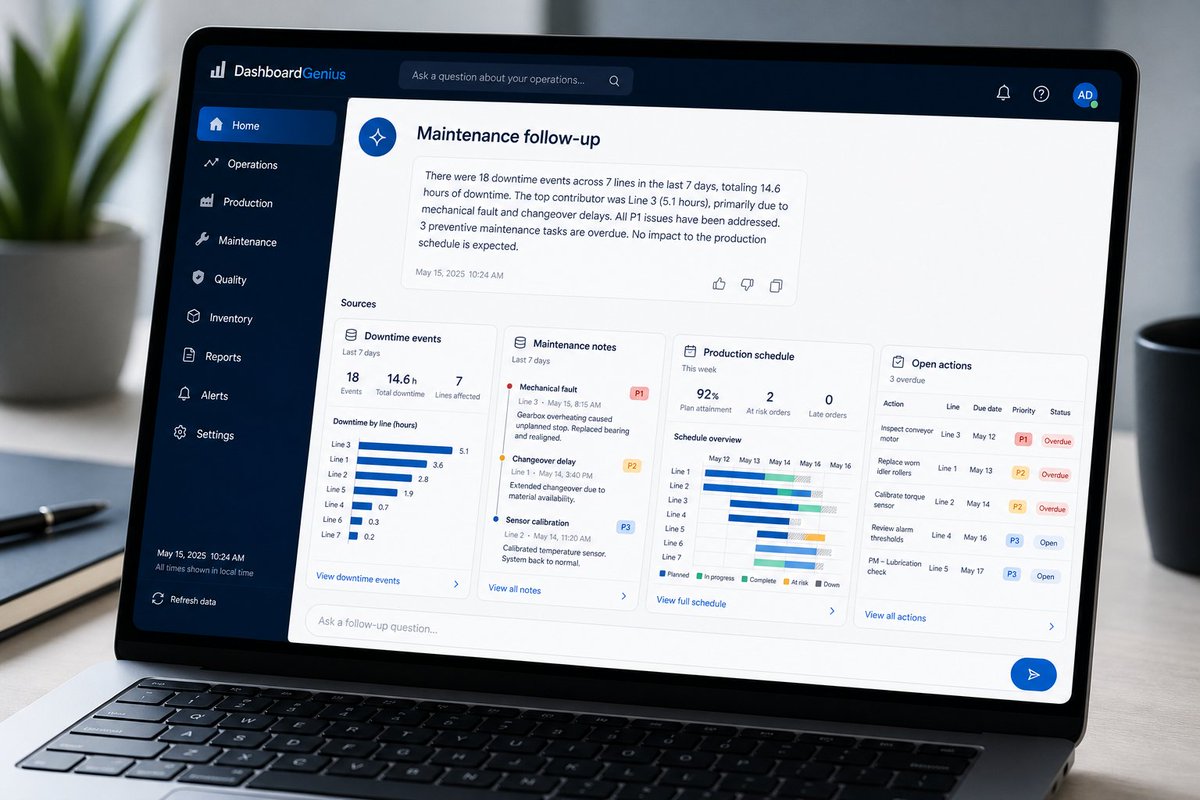
Maintenance reviews go sideways when downtime, work orders, schedule changes, and open actions live in separate places.
DashboardGenius helps manufacturing teams line up the evidence before the follow-up turns into another export chase.
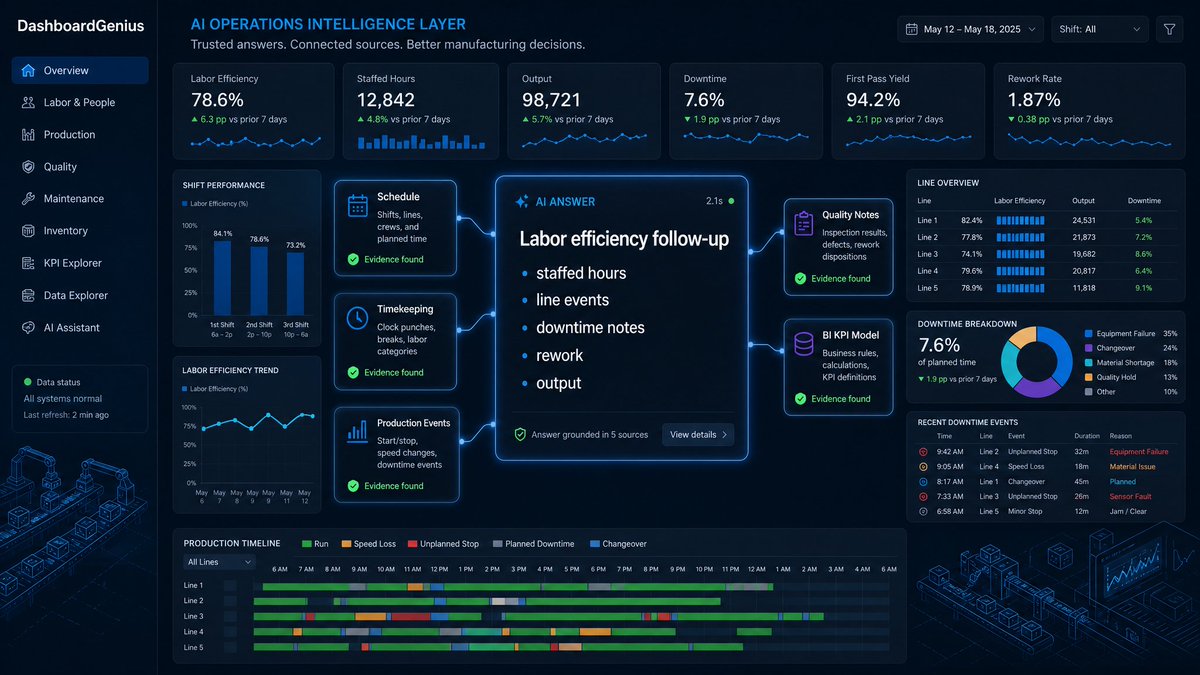
plant reviews move faster when the team can line up plan, staffed hours, line events, downtime, rework, and output in one place. DashboardGenius helps manufacturing teams pull that evidence together without the export chase.
when a plant review starts, the evidence is usually split across lot history, production events, qa notes, and inventory status. DashboardGenius pulls those signals together so teams can answer faster.
Operating reviews should not create a second meeting just to explain the first one. DashboardGenius helps manufacturing teams ask follow-ups across approved sources and bring the evidence back into the room.
schedule risk usually shows up as five half-answers: demand, inventory, production, labor, and plant context. DashboardGenius helps teams ask across approved sources and see the evidence.
your BI team should not become the help desk for every second question. DashboardGenius helps manufacturing teams ask follow-ups across approved sources, with evidence attached.
Manufacturing AI does not start with a chat box.
It starts with approved sources, mapped context, and answers your team can trace back to evidence.
That is the DashboardGenius wedge.