Mark Zuckerberg on why AI and modern platforms are making small, talent-dense teams the future of building companies:
Zuckerberg opens by contrasting what it took to build a company two decades ago versus today:
"A lot of the things that if you were starting whatever you're starting 20 years ago, you would have had to have built up all these different competencies inside your company. And now they're just great platforms to do it."
He uses Stripe as a concrete example of how much has changed:
"You can run your whole business using all the different things that Stripe has. And I mean, that's awesome. Like we didn't have that when we were getting started, right? We had to build up all this stuff."
The same shift, he explains, applies to finding and interacting with customers through AI tools — things that once required entire departments can now be handled externally.
So what does this actually mean for founders?
Zuckerberg distills it to one idea: you can now obsess over your core product in a way that simply wasn't possible before.
"I think that this is just going to lead to like much better quality stuff that gets created around the world because now you're just being able to have these like very small talent dense teams that are like passionate about an idea."
He goes further, tying this to how founders should think about building their teams:
"Your company can all be people who are really passionate about the core thing that you're doing and that you can get started on building that team that hopefully is going to be with you for 10 plus years and that you'll just do kind of amazing stuff with."
The old model forced companies to hire for operational gaps that had nothing to do with their founding vision. AI and platforms like Stripe eliminate that overhead entirely.
Zuckerberg closes with what he sees as the bigger picture:
"People are going to be much more empowered to focus on the core idea and be able to work together to accomplish things at larger scale than has ever been possible before at any other point in human history."
Instagram Head Adam Mosseri on the single scenario he thinks actually kills Instagram:
Colin and Samir ask him a simple question near the end of the interview. If Instagram loses cultural relevance in five years, what went wrong?
He doesn't reach for a competitor. He doesn't name TikTok, YouTube, or whatever comes next.
He answers with one word: speed.
"We probably just moved too slow."
Mosseri explains that almost every concern he carries traces back to the same root fear — the world evolving faster than Instagram can keep up.
He breaks down exactly how that slowdown happens:
"As you hire more and more people, there's more overhead. You move more slowly. As there's more and more scrutiny, there's more and more sort of risk mitigation functions and processes. You move more slowly. As you get more heavily regulated, you move more slowly. As you become too short-term focused on short-term revenue, you move more slowly. You hold on to the past."
Scale, regulation, risk aversion, quarterly thinking. Each one shaves a little more off the pace, and none of them feel dangerous in the moment. That's what makes it so hard to fight.
But here's what @mosseri is actually worried about on the other side of that equation:
"I think the world is going to change faster and faster. We've seen that for all of human history. Particularly in technology, the rate of innovation has just been increasing."
Two lines moving in opposite directions. One slowing down. One speeding up. The gap between them is where companies go to die.
He puts it plainly:
"I think the most likely thing for any platform of our scale is that eventually we will just move slower than the world and the world will move away and we'll be left in the dust."
And then the line that should make every founder and operator pause:
"I put a lot of money on that's why it happens."
AppLovin founder Adam Foroughi lays out the long-term vision for the company: turn ads into something so well-targeted they function as content, and use a billion-strong audience of mobile gamers as the distribution layer.
The starting point is the audience itself. Adam explains that AppLovin reaches over a billion users who play games every single day around the world, with more than 150 million adults in the US alone. The power user isn't who you'd expect:
"That's not the same 21 year old who's on Instagram for six hours a day. The power user who's playing casual games, Candy Crush for 2-3 hours a day, as an example, is more of like a middle-aged person who has more time and is just getting relaxation here."
These users are willing to sit through long ads. Adam notes that the average ad on the platform runs over 35 seconds — "like a television commercial on the mobile device."
For years, that attention was only used to push more games. Adam describes the old loop bluntly: "We used to take a user and say game, game, game, game, game. If you weren't in the business of switching games, that's a pretty bad ad format to show you."
The expansion into e-commerce changed that, and Adam frames it as the first step toward a much bigger thesis — that as the targeting models get better, ads stop feeling like interruptions and start feeling like discovery.
He explains:
"The diversity will go up, the technology is already capable to do it, and then the value to the end consumer will go up. And that whole thing I said earlier of the ad becomes more like content."
Then comes the punchline that defines the vision:
"The hope we have is that we can get the local laundromat discovered by someone playing a game because we serve a really good ad to someone who needs their clothes washed. If that happens and we get to that level of scale, this business is going to be much, much bigger than it is today."
Adam is clear about who he wants to serve first. AppLovin has no sales force, so large enterprises will eventually come to the platform on their own. The real opportunity, in his mind, is the small and medium businesses that nobody else helps:
"We want to help those small to medium sized businesses. What made us really successful in gaming was going to the companies that really didn't have much support at most of the other businesses and going, what's your 10 people? Let's work together. Let us grow your business."
The end state is a single targeting engine pointed at a billion adults, capable of matching them to the right local shop, the right Shopify store, the right product — not the right game. When advertising gets accurate enough, it stops being advertising.
Ken Griffin, Founder and CEO of Citadel, on why a $2.50 Coke at McDonald's tells you everything about the U.S. economy:
For Griffin, the price of a single fast-food drink captures the story of the past six years.
"$2.50 for a Coke. And before the Biden administration, it was $0.99."
That jump is a window into something much bigger:
"The United States has endured prolonged and persistent inflation now for 6 years."
Griffin explains that these everyday price shocks carry a psychological weight far heavier than the numbers themselves:
"The rise of gasoline prices at the gas station, it's like a triggering event. It just brings back to all of us the fact that the purchasing power of the dollar has declined so precipitously for 6 years now."
The Coke is just one example. Eggs are another.
Griffin points to New York City prices in the range of "7, 8, 9 dollars for a dozen eggs", and notes that even though they've come down somewhat, they remain painfully elevated.
Each of these small, daily encounters with higher prices adds up to something larger. A creeping anxiety about the future:
"I think everybody in our country, when we see a price shock in any of our day-to-day commodities, gasoline for example, it's just deeply triggering. And I think that there's just a general apprehension of how much more purchasing power are we going to lose because of the economic policies that we're pursuing in Washington."
His message to policymakers is direct:
"It's very important that this administration and that the legislature continues to stay focused on how do we strengthen the purchasing power of the dollar? How do we make sure that Americans' paychecks go further?"
The takeaway: a $2.50 Coke isn't really about a Coke. It's about what the dollar in your pocket can no longer buy at the drive-thru, the gas pump, and the grocery aisle.
Until purchasing power is restored, that frustration will keep growing into something much harder to ignore.
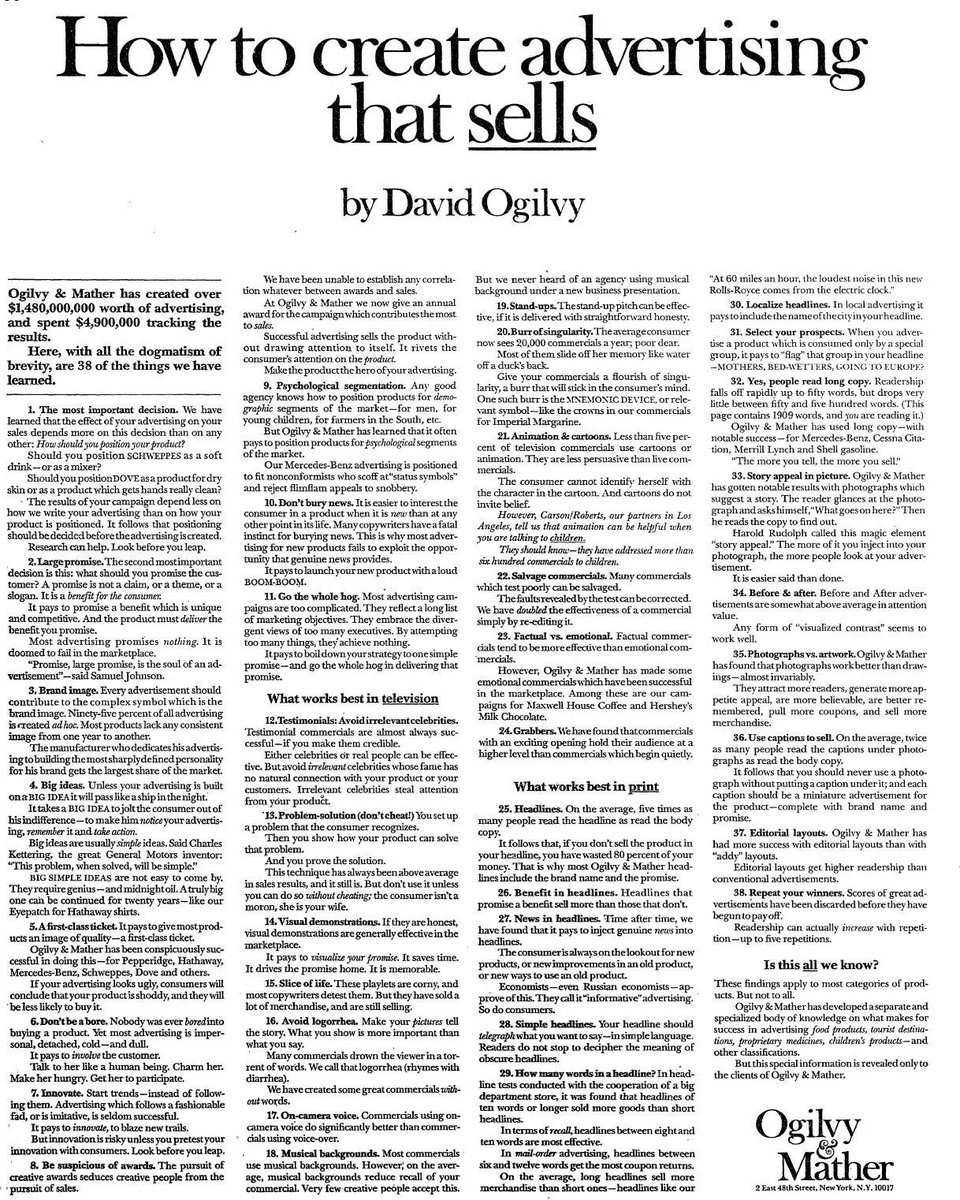
David Ogilvy taught himself direct mail from a correspondence course he bought at 25. It became his most powerful weapon.
When he started Ogilvy & Mather in New York, nobody knew who they were. Within 6 months, they were airborne.
The secret?
"Every four weeks, I sent personalized mailings to our new business prospects. That was how we grew."
Not brand campaigns. Not TV spots. Direct mail, sent like clockwork.
But his argument goes deeper than tactics. He believes direct response is the discipline every advertiser needs.
"The trouble with many copywriters and general agencies is that they don't really think in terms of selling. They've never written direct response. They've never tasted blood."
That phrase captures his whole philosophy.
Direct response gives you immediate feedback. You know if your words worked. No hiding behind brand sentiment.
His advice to agency leaders?
"Insist that all your people are trained in your direct response division."
Every creative. Every account executive. Trained in the discipline of writing copy that sells.
The best marketers don't start with brand. They start with response. They learn to write words that make people act, not just feel.
Rory Sutherland argues the biggest threat to good decisions isn't incompetence. It's the fear of using your own judgment.
Speaking on The Knowledge Project Podcast, he makes a sharp case:
"We've created a culture where people are so afraid of making a subjective decision that they fall back on often totally inappropriate rules and regulations."
The incentive structure makes it inevitable.
You can't get fired for following the rules. You can get fired for thinking for yourself and being wrong.
So people stop thinking. They defer to procedure. Outcomes suffer while everyone stays safe.
But his argument goes deeper.
He believes human judgment is fundamentally instinctive and context-dependent:
"Most of life is like a kaleidoscope; we never completely encounter the same situation twice."
We evolved to adapt to context, not follow scripts. Yet we keep writing more scripts.
He points to legal systems as the clearest example. A grandchild's nut allergy leads to trees being cut down. Follow the logic and you get widespread deforestation because nobody can grow a tree to which anyone could claim to be allergic.
One bad precedent, applied universally, creates absurdity at scale.
His sharpest point?
Systems that eliminate judgment don't eliminate risk. They just eliminate the people willing to think.
Small changes in packaging can make a big difference, because the more interesting the unboxing experience, the more likely customers are to try and remember your product.
Imagine running to catch a butterfly, only to realize it’s actually a gift card you can use.
Creative marketing like this works because it surprises people and gives real value, not just another ad.
Most people think they need to invent something new to build a successful business.
Seth Godin disagrees.
"Being original and creative is overrated when it comes to inventing a business. You should copy it. Find someone who has a business structure and use a model that already exists."
But here's the deeper insight.
"What we buy when we buy most things... is a story." A story about status, affiliation, and the kind of person you want to be.
The Birkin bag costs $30,000. Everyone who bought one already had a purse. Nobody's buying it for storage. They're buying the conversation it creates when they walk outside wearing it.
That's the real product.
So what makes a story worth buying? Tension.
The kind that makes someone ask:
Will I be left out? Will it sell out? Can I do this?
That tension drives action.
"We don't need another Kardashian. We already have one."
Fans have dreamed of Deadpool vs. Darth Vader for years... and now AI might actually make it happen.
ByteDance just introduced Seedance 2.0, reportedly 2× better than Sora in physics and visual consistency.
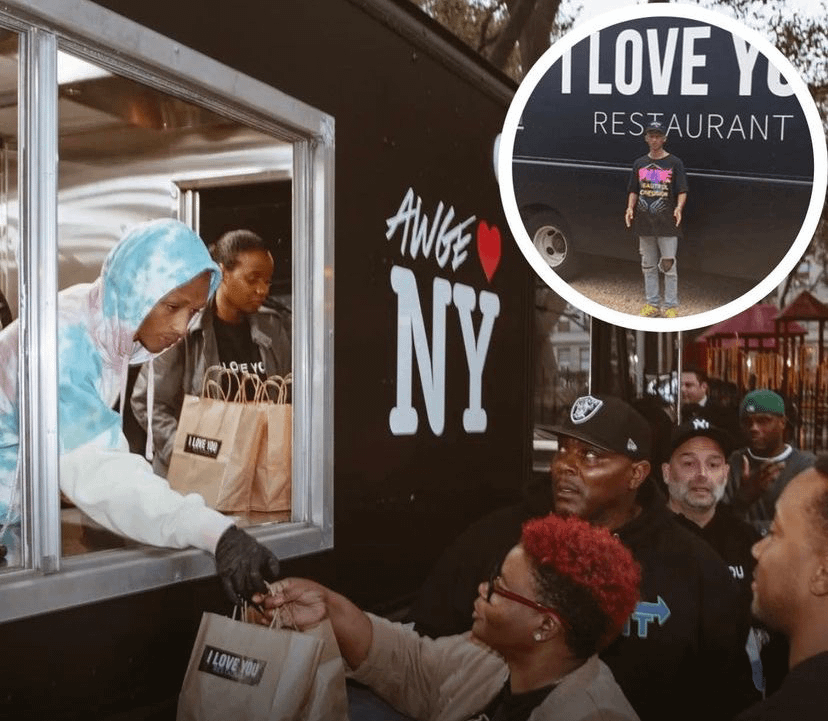
In 2012, Jaden Smith opened a restaurant in Los Angeles with no prices on the menu.
No deals. No discounts. No marketing budget. Just a simple name on the sign: "I Love You."
Most people assumed it was a passion project. A celebrity vanity play. Something that would close within a year.
It outlasted every prediction.
The concept was simple. If you could afford to pay, you paid. If you couldn't, you ate for free. And if you wanted to do more, you paid extra so a stranger could eat tonight too.
Nothing about the food was revolutionary. The meals were vegan. The portions were modest. The locations were humble pop-ups and food trucks on Skid Row.
But something unusual started happening.
Customers began talking about it. Unprompted. Without a referral program or a social media campaign. Paying for someone else's meal felt like something worth telling people about.
The transaction had become a story.
Psychologically, this is called reciprocity. When a brand trusts you to pay fairly, with no enforcement and no guilt, it stops feeling like a business and starts feeling like a relationship. That emotional shift changes behavior. People pay more than they have to. They come back. They tell others.
Jaden spent nothing on advertising. He didn't need to.
"Celebrity opens restaurant where you pay what you want to feed the homeless" wrote itself. Press covered it. Creators broke it down. Strangers shared it on social media without being prompted.
The pricing model was the campaign.
Most brands try to earn attention by talking about their values. Jaden built a model where buying was the value. Every transaction was a small, visible act of care. Every customer left feeling like a participant.
A pay-it-forward meal sold more brand loyalty than any billboard ever could.
---
Thanks for reading!
Enjoyed this post?
Follow @BigBrainMkting for more content like this.
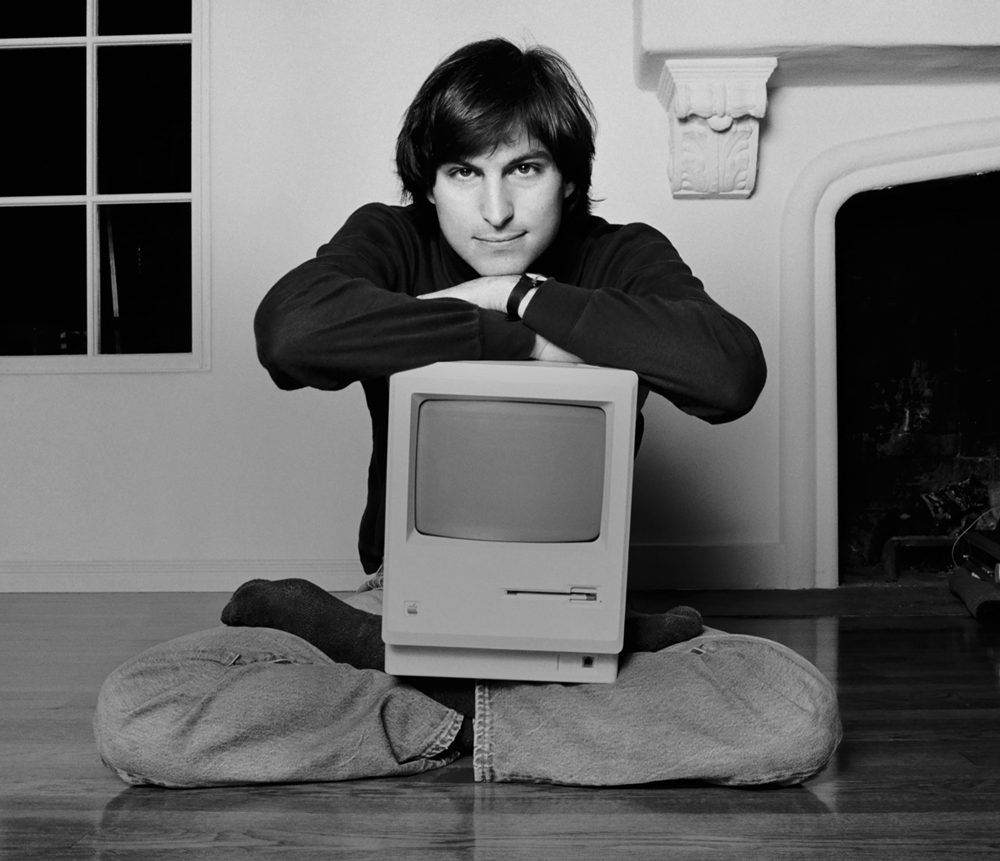
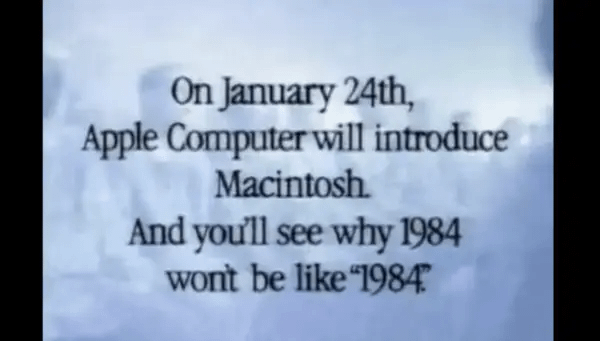
In 1984, Apple's board watched their new ad and voted to kill it.
It didn't show the product. It didn't explain a single feature.
And it nearly NEVER aired.
Here's how a conspiracy inside Apple created the greatest ad in history:
That one ad built a philosophy that carried Apple for 40 years.
"Think Different" in 1997. The iPod. The iPhone. The iPad.
Each one carried the same energy as that 60-second spot.
A small company telling the world it wasn't afraid of the biggest player in the room.