We are a global workforce, leading the industry with software security provisioning and data programming solutions serving diverse customers around the world.
When programming is tied to the SMT line, schedule changes, new product
introductions, and varying batch sizes all create friction. Every adjustment downstream ripples back into the programming process.
Moving programming offline creates separation. The upstream system handles device programming independently, so the production line can respond to changes without being constrained by programming throughput or fixture availability.
For manufacturers running high-mix or frequently updated product lines, that flexibility has real operational value.
Case Study: Employing Offline Programming Strategy https://t.co/5TthZC2LOA
ConneX is what connects the dots in a Unified Programming Platform.
MES integration, real-time dashboards, and device-level traceability across every PSV programming system, from NPI through volume production.
One platform. Full visibility. https://t.co/VTaBLlCkq9
#DAIO #UnifiedPlatform #DeviceProgramming
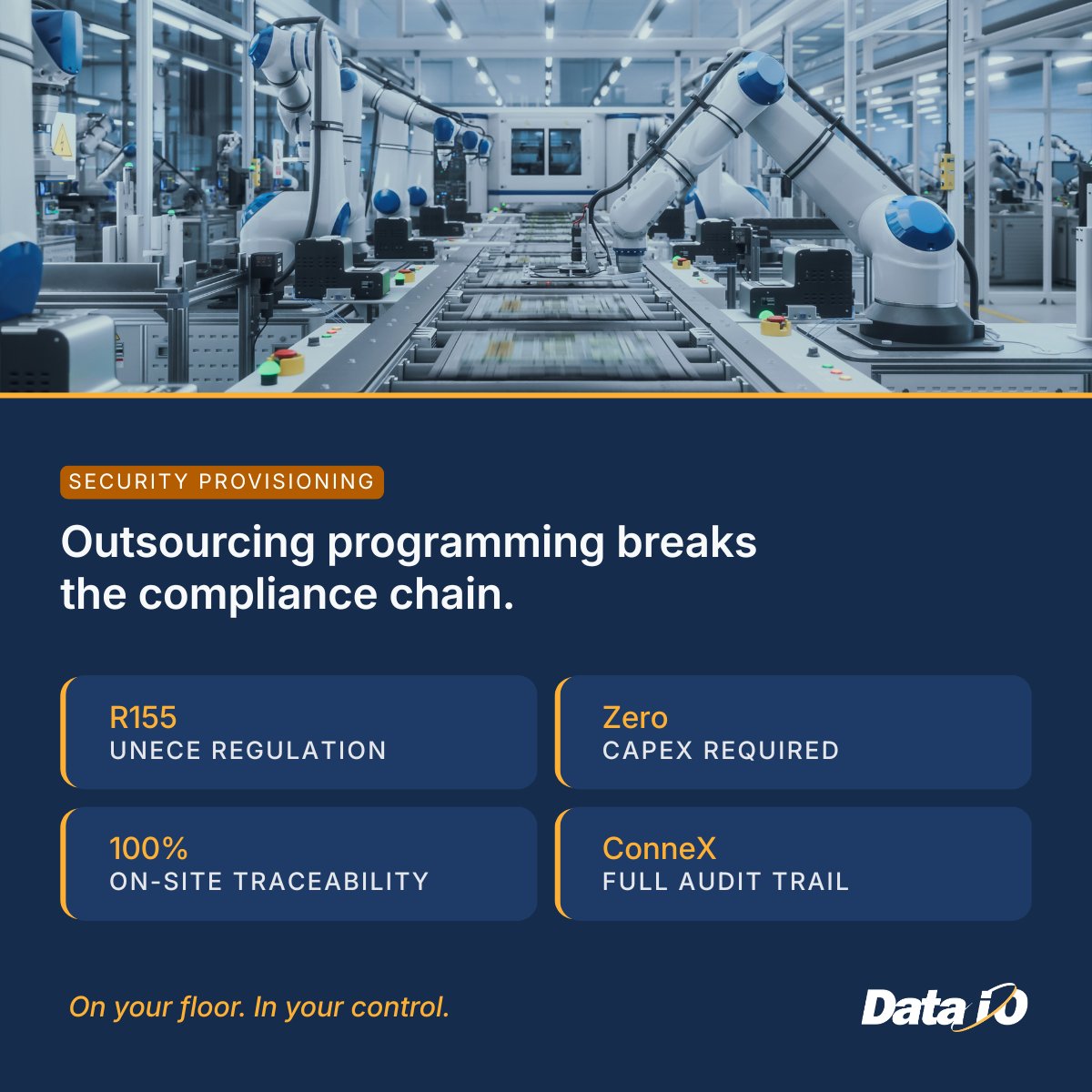
Outsourcing device programming creates a security problem for automotive and IoT manufacturers. Devices leave the facility. Traceability breaks. Keys and firmware leave the secure environment.
Programming-as-a-Service (PaaS) keeps programming on-site. Data I/O manages the equipment. Devices, keys, and audit trails never leave. https://t.co/20AT1P8A4B
#DAIO #SecurityProvisioning
Data I/O CEO Bill Wentworth joined @PlanetMicroCap to discuss platform strategy, new markets, and what is ahead for $DAIO. A good watch for investors and anyone following the electronics manufacturing space.
🎥 https://t.co/Prdt8DrTj6
#DAIO#Semiconductor
$200,000 in savings. An 8-month ROI. A 15% increase in production rate. Those were the results when a global automotive manufacturer moved from programming-at-test to an offline preprogramming strategy using a Data I/O PSV7000.
One system. Multiple SMT lines supported. Unplanned downtime reduced. Fixture costs eliminated.
The case study details how the transition worked and what it delivered: Case Study: Employing Offline Programming Strategy https://t.co/SBt9dBbtBW
#DAIO #SMT #DeviceProgramming
What's the most expensive part of a device programming operation? It isn't the capital investment. It's the ongoing operational burden.
Maintenance. Calibration. Software renewals. Algorithm updates. Adapters. And when a platform change is needed, the process starts over.
Programming-as-a-Service eliminates that entirely. Data I/O owns the equipment, manages all maintenance, and handles every update. Manufacturers pay per device programmed, nothing more. https://t.co/OyvUHl9r7F
#DAIO #Semiconductor
Data I/O is heading to NEPCON China 2026 in Shanghai, June 2 to 4. Visit the team to see the unified device programming platform in action and learn how the PaaS model converts CapEx into a predictable per-device OpEx.
https://t.co/9Lcjgoqgmx
#DAIO#NEPCONChina #DeviceProgramming
Programming infrastructure is a fixed asset. Production volumes are not.
Programming-as-a-Service (PaaS) converts device programming from capital expenditure to a variable operating expense. Zero CapEx. Predictable OpEx. Data I/O owns and manages the equipment.
https://t.co/tvcImxrHVc
#DAIO #ManufacturingInnovation
Most manufacturers think device programming means two options: own it or outsource it. Both come with real costs. Owned equipment locks in capital. Outsourcing breaks traceability and creates security risks.
Programming-as-a-Service (PaaS) from Data I/O is the third option. On-site. Managed by Data I/O. Pay per device.
It's the only offering of its kind in the programming industry: https://t.co/PjlL61HmVt
#DAIO #ElectronicsManufacturing
Every April 26, World IP Day recognizes the inventors, engineers, and innovators whose work shapes the technology we depend on.
In electronics manufacturing, intellectual property doesn't just live in a patent filing. It lives in the firmware loaded onto every device that ships. Protecting that IP across the supply chain, from design through volume production, is where security provisioning plays a critical role.
Secure firmware loading, key injection, and traceable provisioning processes help ensure that the innovation behind a product stays protected at every stage of manufacturing.
On World IP Day, it's worth recognizing that protecting ideas means protecting them all the way to the device.
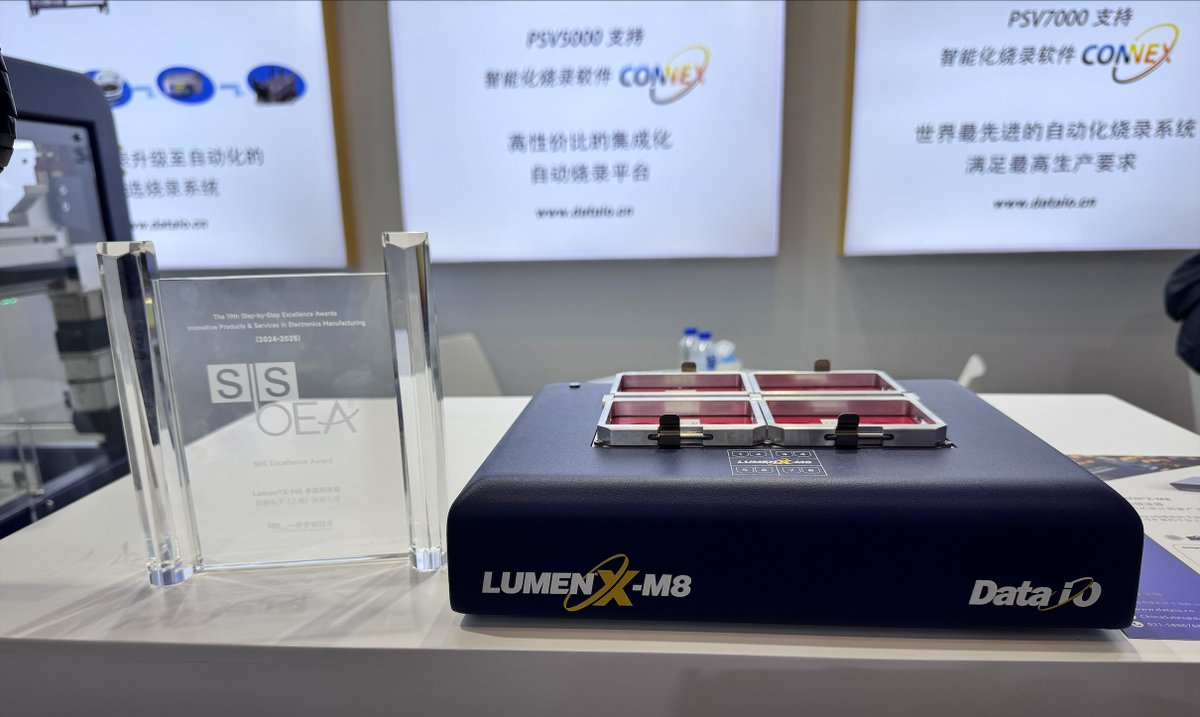
The programming job validated during design should be the same one that runs in production. The LumenX-M8 makes that possible, supporting design validation, engineering, and NPI on the same platform technology that powers volume production.
One platform. One validated job. Consistent results from design through production. https://t.co/rt56mM4Oi2
Did you know checksum mismatches can delay production by weeks and add unexpected costs to NPI cycles?
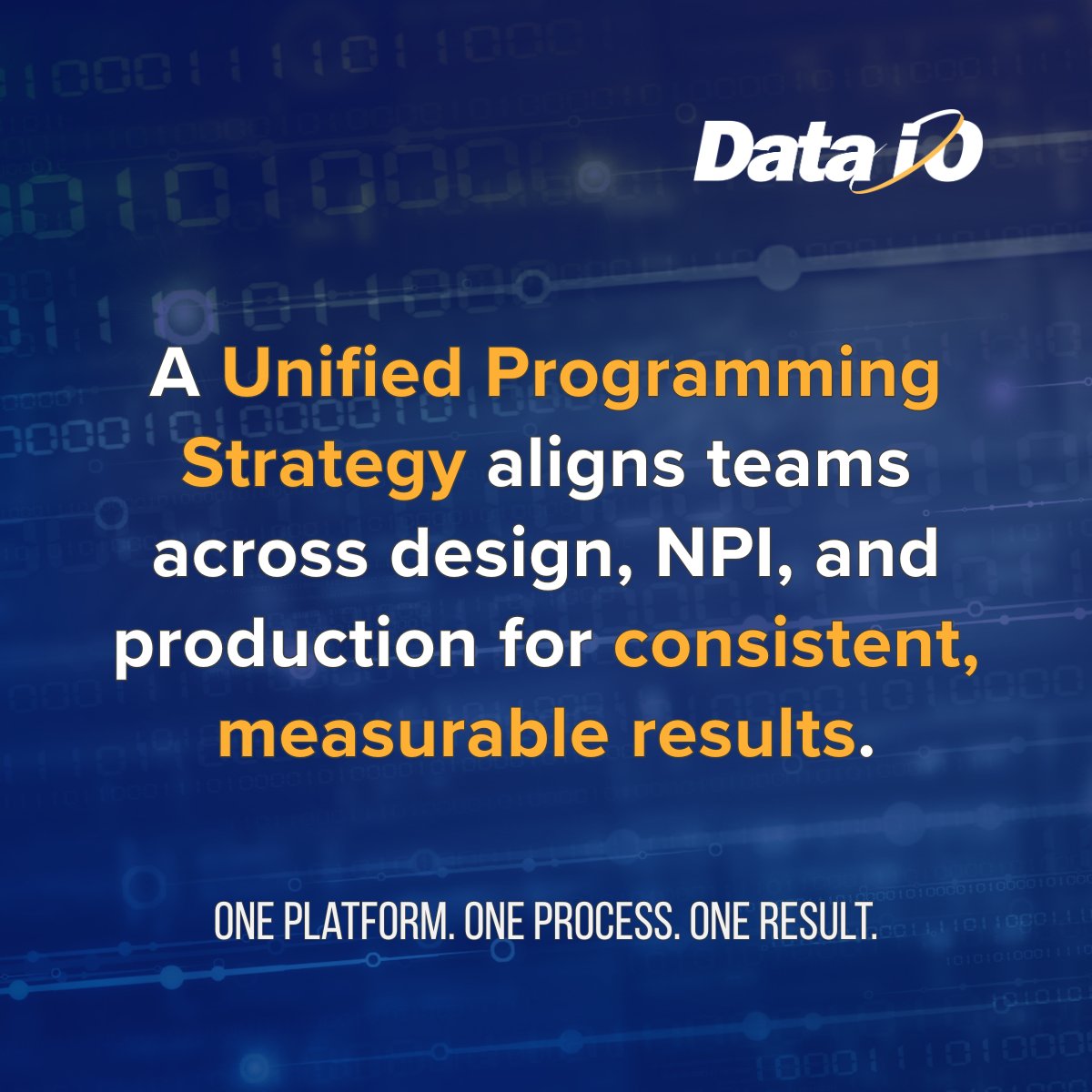
A Unified Programming Strategy eliminates that risk by using one validated job file across design, NPI, and production, ensuring reliability from the first article to full-scale manufacturing.
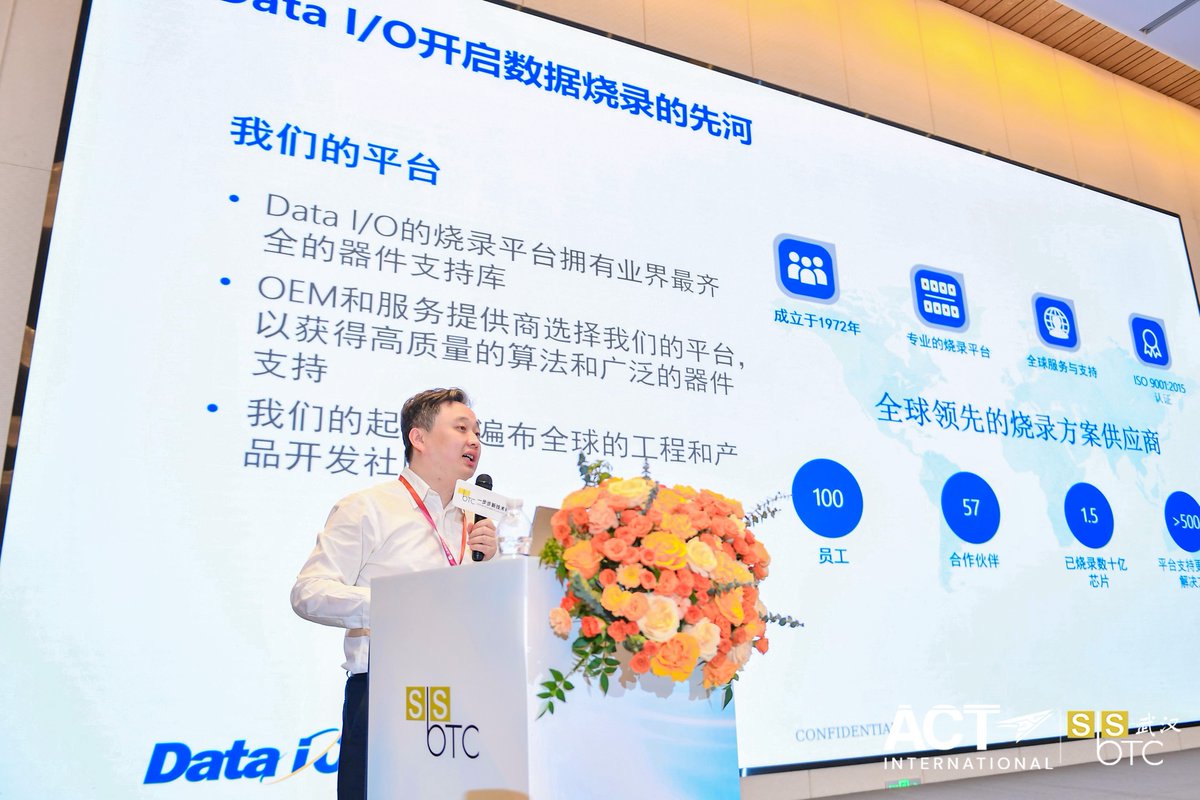
Data I/O has been on the road. 🗺️ Dean LoPresti and Paul Connolly of Rich Sales International represented the team at SMTA Dallas, while China Sales Manager Tony Zhu spoke at the Step-by-Step New Technology Conference in Wuhan on the growing demands facing electronics manufacturers and the role of automated programming in meeting them.
Our Programming-as-a-Service offering is built for exactly these challenges. Learn more here: https://t.co/SaRrmDisCl
#DAIO #ProgrammingAsAService #Manufacturing #Technology
The NEW Data I/O is here: https://t.co/JI85OiG5PR
New website. New tools. New capabilities. See what we launched:
🖥️ Customer Service Portal
⚙️ Programming-as-a-Service (PaaS)
🤖 AI-Powered Chatbot
🔍 Expanded Device Search
Plus a preview of our next-gen programming platform. 2,200+ devices per hour. Coming second half of 2026.
Over 50 years of expertise. A new pace of innovation.
#DAIO #DeviceProgramming #ElectronicsManufacturing
Think about the journey of a programming job:
Design → NPI → Production → Service/EOL.
Too often, that journey is disrupted by rework, mismatched systems, or errors when jobs are recreated manually.
With a Unified Programming Strategy, that journey becomes seamless. One platform, one process, one validated job file that flows across every stage without disruption.
This is how manufacturers maintain consistency, speed, and quality.
A global automotive infotainment manufacturer was running into a familiar problem.
Growing firmware file sizes were bottlenecking their SMT lines. Programming at ICT required expensive fixtures across multiple lines. And any disruption to the programming process brought everything to a halt.
After transitioning to an offline PSV7000 preprogramming system:
◆ SMT lines were decoupled from the programming process
◆ A single system replaced fixtures across multiple lines
◆ Every IC entered the SMT process already verified and defect-free
◆ Production rate improved by 15%
The result was a more resilient, more flexible manufacturing operation, with a cost savings of $200,000 and a return on investment realized in 8 months.
To learn how an offline preprogramming strategy could impact your operation, schedule time with the Data I/O team.
📲 https://t.co/AkeFf9CclL
On-board programming works until it doesn't.
As firmware files grow larger and product complexity increases, programming devices on the SMT line introduces real risk. A bottleneck in programming stops the entire line. Fixture costs multiply across every line that needs them. And when a disruption hits, there's no buffer.
Offline preprogramming moves that risk upstream. Devices are programmed, verified, and ready before they ever enter the SMT process. The line keeps running. Fixture costs are consolidated. And manufacturing becomes more flexible, not less.
It's a process change that pays for itself quickly, and one more manufacturers are making as file sizes continue to climb.
Data I/O President and CEO Bill Wentworth sat down with Claire Saunders of @WhatsNewInElec for a conversation on the state of the electronics manufacturing industry and where Data I/O is headed.
Bill shared his perspective on the shift in momentum he observed on the show floor this year, noting that conversations felt more engaged and that manufacturers appear to be moving forward with investments after a period of uncertainty. He also spoke to Data I/O's outlook for the year ahead and the company's focus on growth in 2026.
Watch here: https://t.co/9xeF0H1ioX
Programming large firmware files directly on the SMT line creates a hidden bottleneck many manufacturers don't catch until it's too late.
For one automotive infotainment manufacturer, files 4Mb and larger were slowing their lines, driving up fixture costs, and creating unplanned downtime whenever a programming disruption hit.
The fix was a shift to an offline automated preprogramming strategy. One PSV7000 system, installed upstream of their SMT lines, replaced multiple expensive ICT fixtures and ensured every IC was defect-free before it ever touched the board.
The full story is worth a read. ⤵️
Case Study: Employing Offline Programming Strategy https://t.co/R0FEYSfSVT
In consumer electronics, speed and cost efficiency are critical.
From design to high-volume manufacturing, Unified Programming streamlines the NPI process and accelerates ramp to production.
While disconnected programming tools often slow transitions between prototype and production phases, a Unified Programming Strategy ensures each job is validated once and reused everywhere, improving efficiency and product reliability at scale.
#DAIO #ConsumerElectronics #UnifiedPlatform