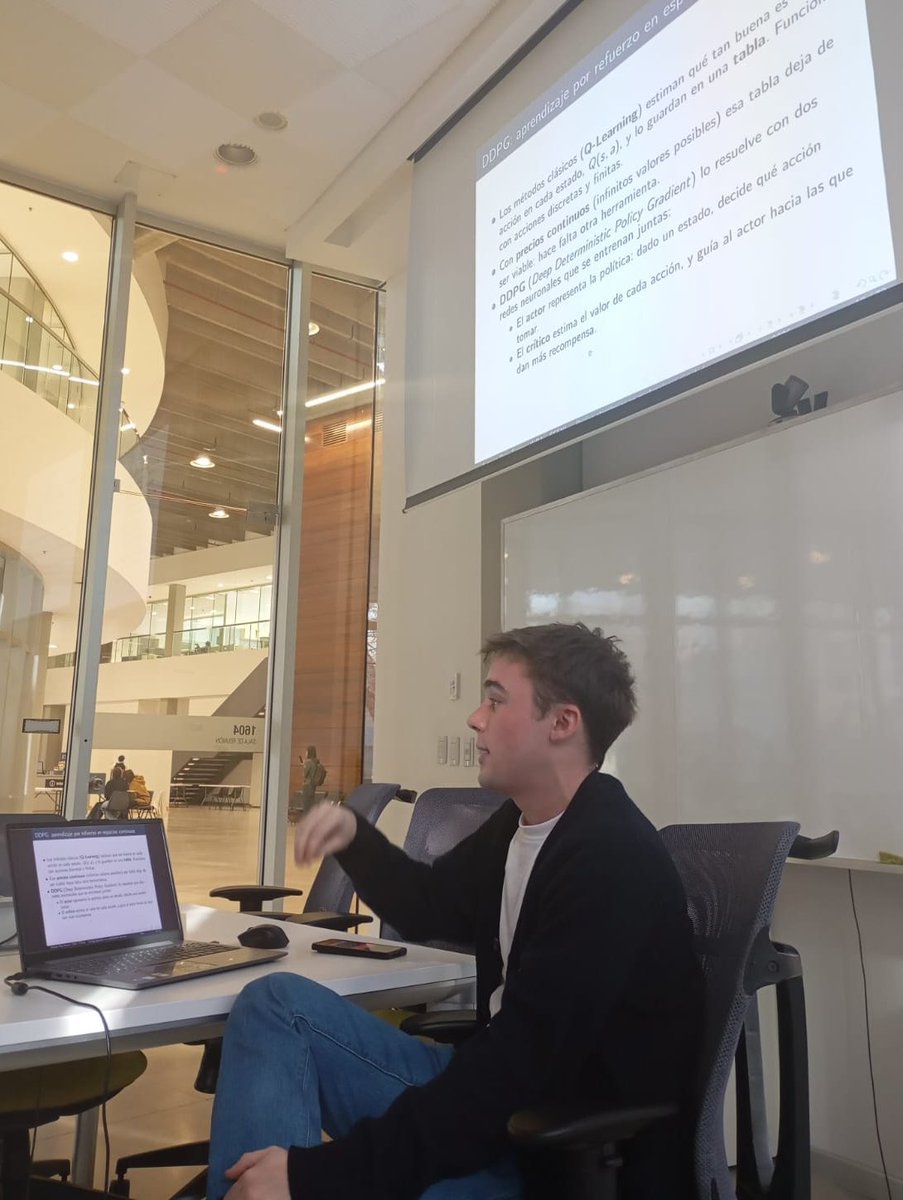
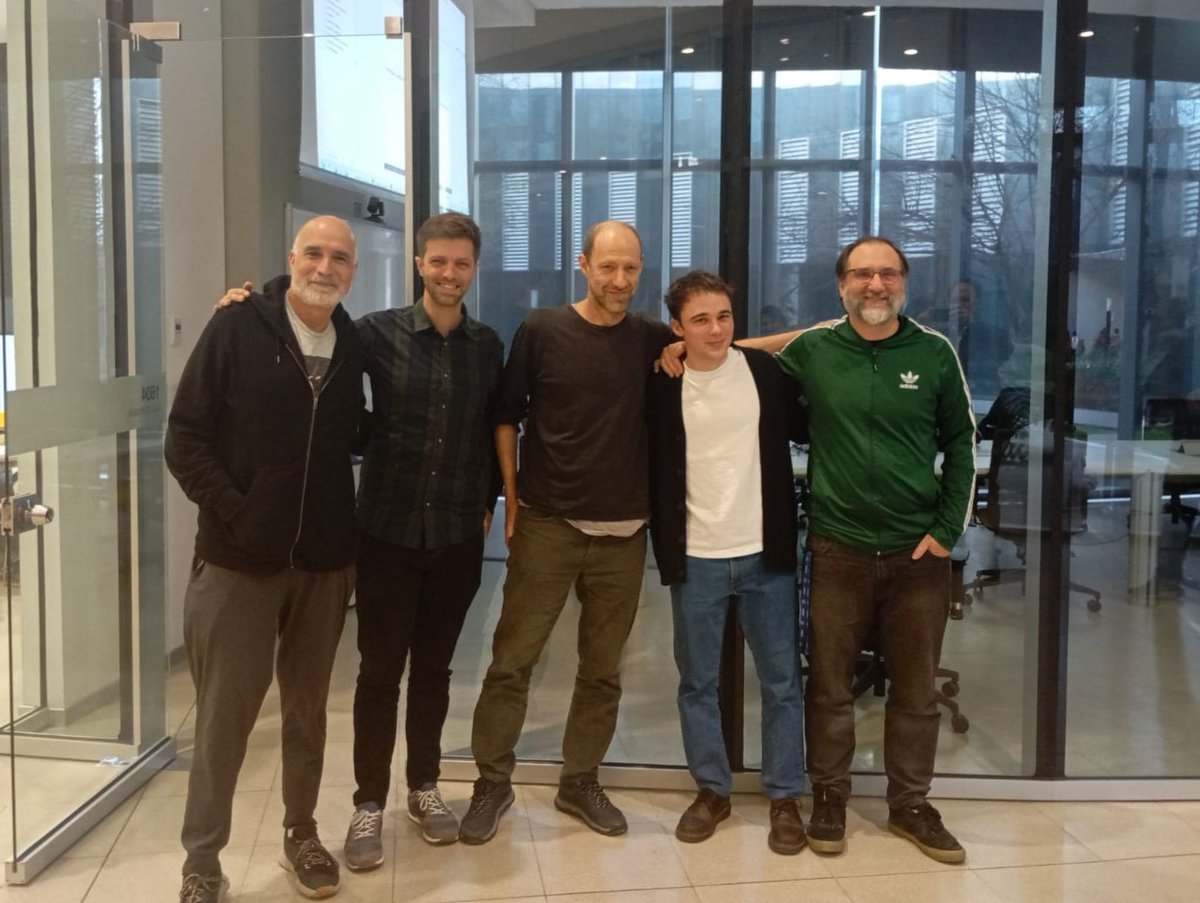
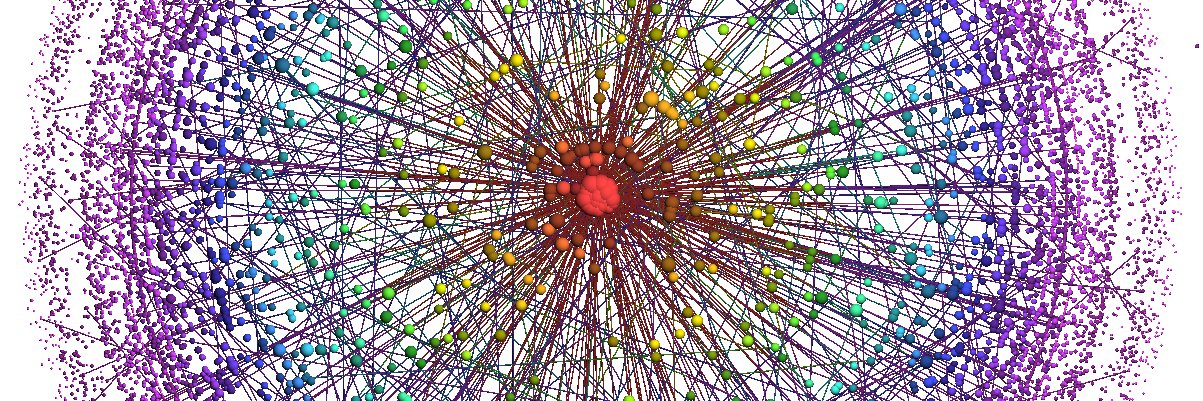
📢 ¡Últimos días para enviar trabajos a nuestro Workshop!
Los invitamos a sumarse a este encuentro y compartir sus aportes en un espacio de intercambio de excelencia.
¡Los esperamos en octubre!
Más info: https://t.co/XZKVMgCmn4
Five years ago today, I moved to the US to start my PhD. Earlier this year, I graduated and joined @AIatMeta to work on LLM pretraining research!
Where I’m from we celebrate Spring Day today. Here’s to more blossoming 🌸
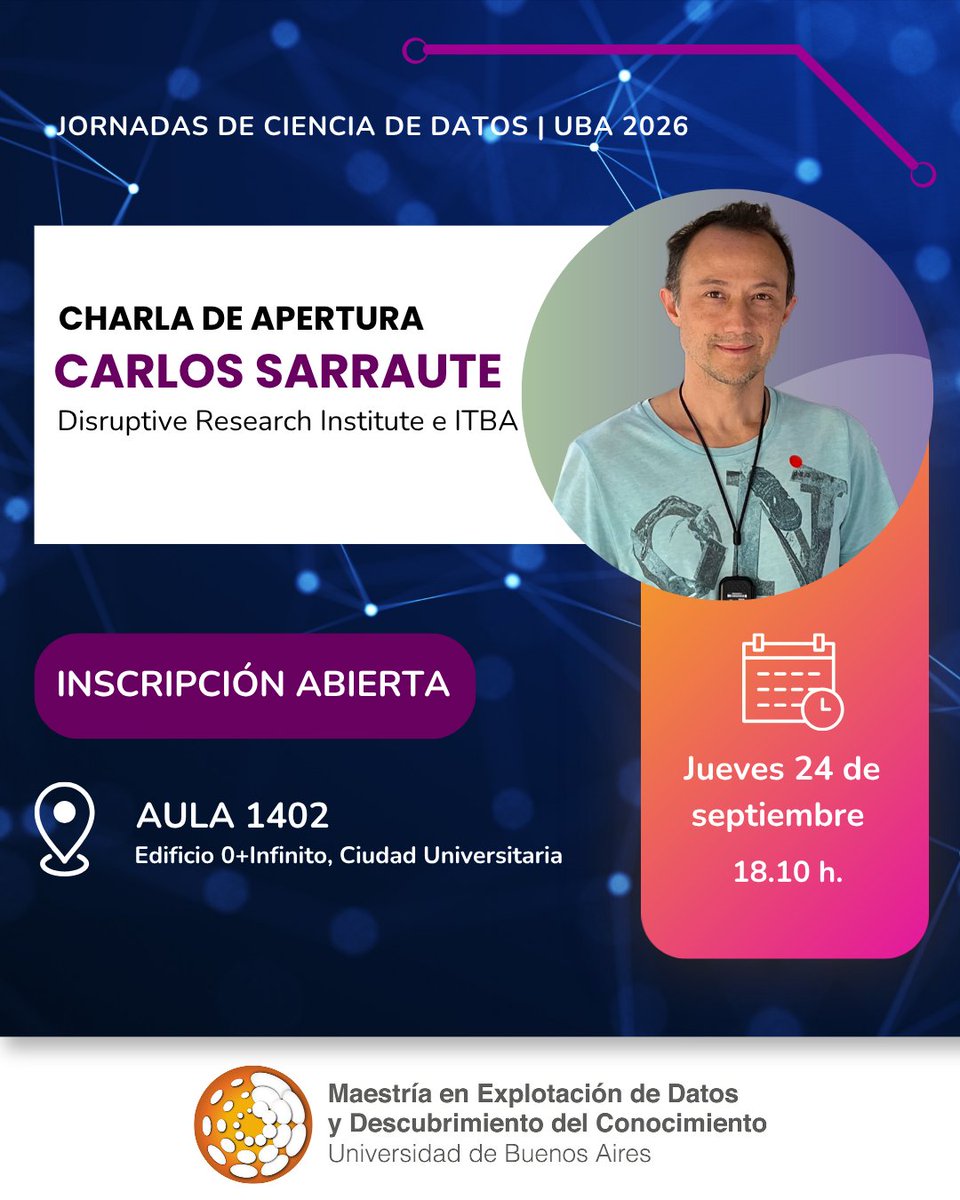
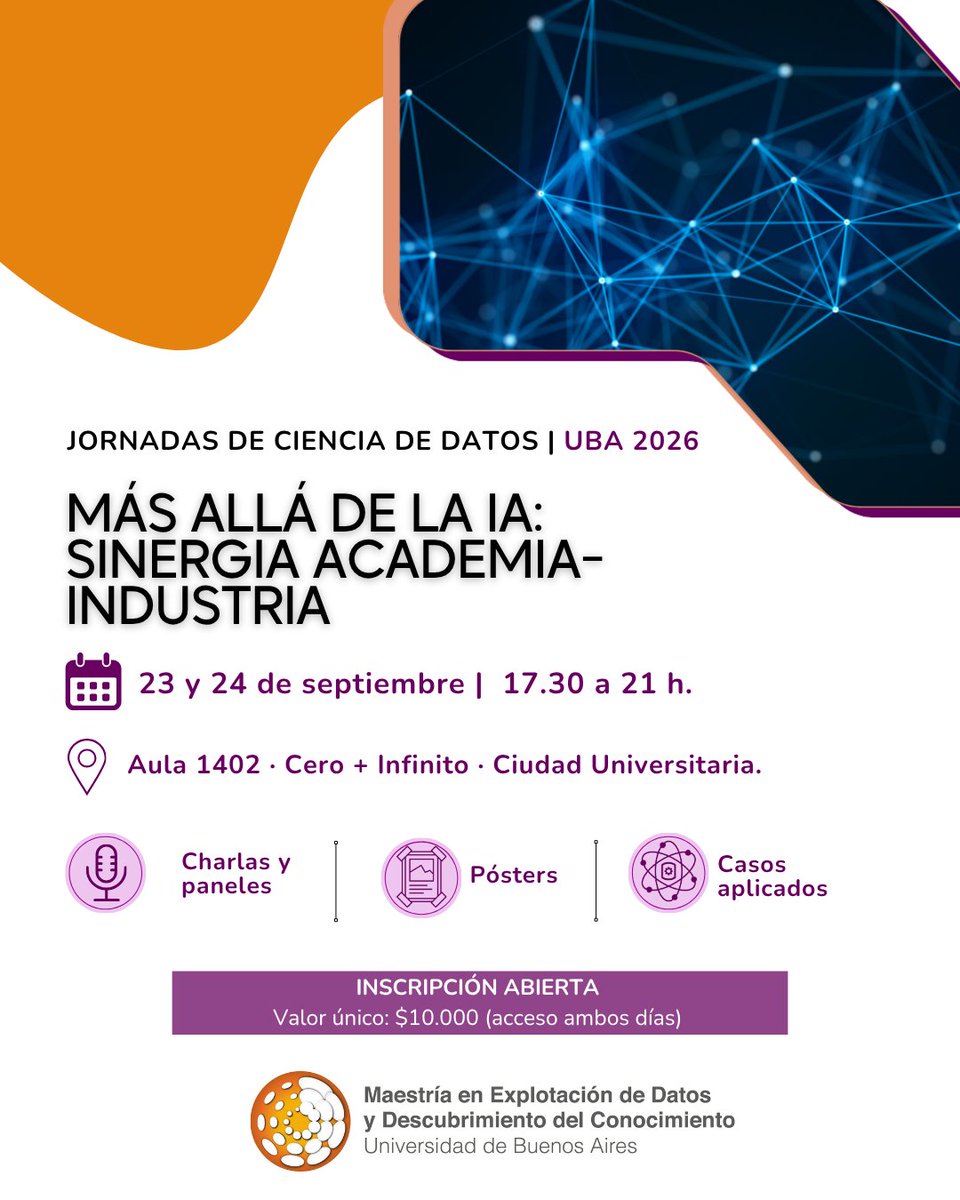
🚀 Esta semana voy a participar de las Jornadas de Ciencia de Datos UBA 2026: “Más allá de la IA: sinergia academia–industria”.
El jueves 24 de septiembre a las 18:10 voy a tener el gusto de dar la charla de apertura del segundo día de las jornadas.
Voy a hablar sobre la importancia de conectar la investigación académica con problemas reales de la industria y el sector público, y sobre algunos de los desafíos que surgen en el camino. En particular, voy a contar brevemente algunas investigaciones que hice desde la industria y, más recientemente, desde mi rol de profesor en la Maestría en Ciencia de Datos del @ITBA.
Después de mi charla, me interesa especialmente escuchar a:
🔹 Mariana Sozzi (YPF), sobre casos reales de IA, optimización y toma de decisiones en la industria energética.
🔹 Matías Butti (GenomIT), sobre ciencia de datos aplicada a la salud y medicina traslacional.
🔹 @FSchapachnik, Paula Garnero y @VSemesh en una mesa redonda sobre el futuro del trabajo, moderada por @EMislej.
🗓️ Las jornadas son el miércoles 23 y jueves 24 de septiembre, de 17:30 a 21:00 hs.
📍 Aula 1402, Edificio 0+Infinito, Ciudad Universitaria.
Muchas gracias a Ignacio Alvarez-Hamelin, Marcelo Soria, Marina Lauria de la Maestría en @DataMiningDC por la invitación y por organizar estas jornadas.
Y gracias a @RDextrasolar y al @ITBA por apoyar mi participación en la comunidad de ciencia de datos de Argentina.
¡Nos vemos en Ciudad Universitaria! 🙌
📢Mesa Redonda-Jornadas de Ciencia de Datos 2026 #JCD2026
🤔¿Qué debe saber un/a data scientist hoy?
🗓23/9 a las 20:15 h
👩🏫Micaela Portuese (Grupo Petersen)
👩🏫Cecilia Raimundo (Aeropuertos Argentina)
👨🏫Damián Ramos (Experian)
Modera: Gustavo Denicolay
👉https://t.co/MXPZAiJHrD
👉 Golang para Sistemas Inteligentes
📅 29 de Septiembre de 2026
Dictado por Reyna Der Boghosian
¡Reserva tu vacante!
Info en https://t.co/BxZ5QAxSMj
O escribí a [email protected]@iniciarsesion
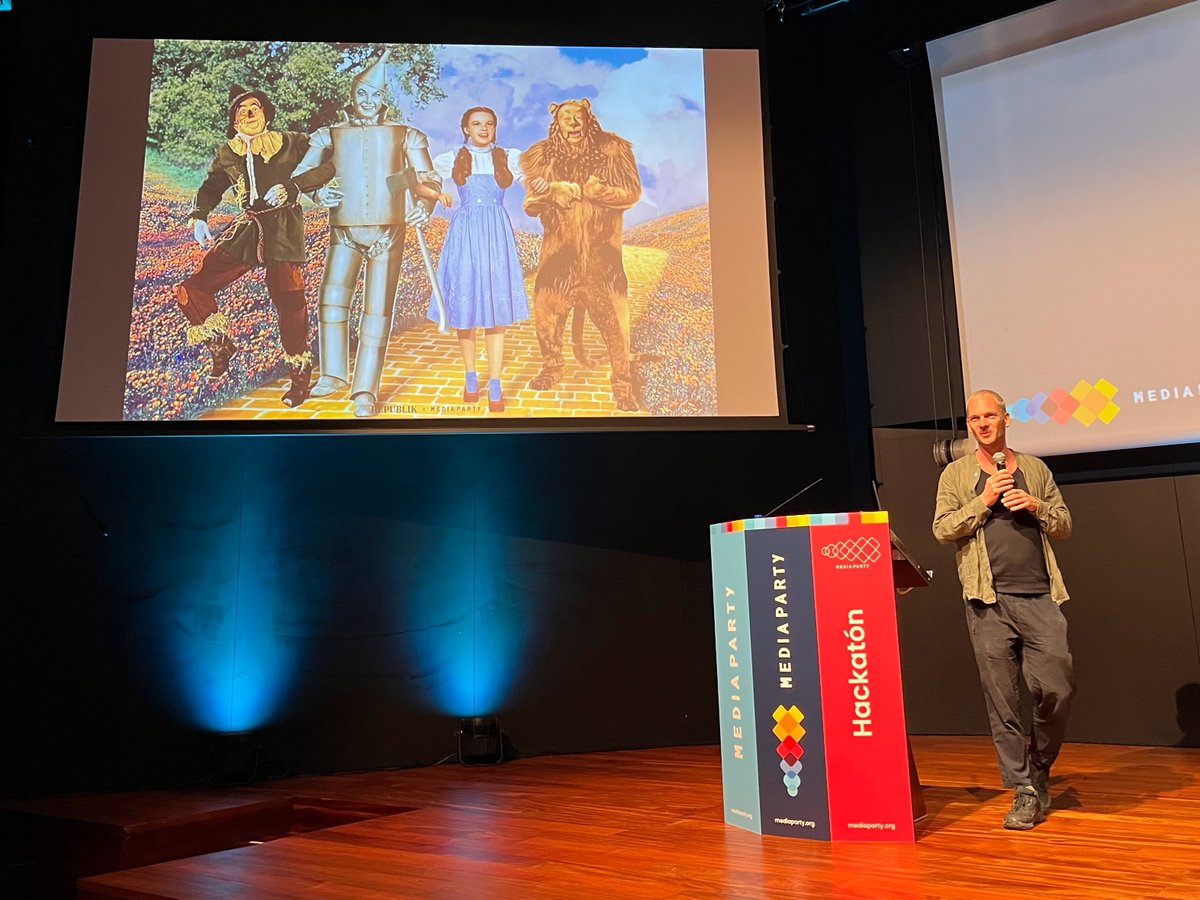
¡Qué lindo encontrarme con Mariana Berruezo y Mariano @Blejman en Media Party Barcelona!
En @CaixaForum, un lugar espectacular para la primera edición de @MediaPartyOrg en Europa.
Me gustaron particularmente estos lightning talks:
🔹 Build as Fast as You Think: AI for Visual Storytelling
Cecilia Tombesi (@TheTimes)
🔹 Death to Boring Work: an AI Intern in Our Slack
@AdriMaqueda (Fundación @Civio)
🔹 Ditch the Funnel! Build Community Instead
Richard Höchner Gallicani (@RepublikMagazin)
🔹 Using Wikipedia APIs for News
Francisco Navas (@Wikimedia Foundation)
¡Muy buena combinación de periodismo, tecnología, IA y comunidad!
🎓 Fantastic conference at @NuffieldCollege, @UniofOxford!
I'm very grateful for the opportunity to participate in the International Conference on Social Computing (ICSC 2026).
I presented our work, “The Shrinking Globe: Structural Evolution and Globalization of the International Migration Network (1990–2024),” during the special session on “Digital and Computational Demography,” chaired by @RidhiKash07. It was also a great opportunity to learn about the work of Satiyabooshan Murugaboopathy, @Carol_Coimbra2, Wenlan Zhang, @OmentiRiccardo, and @LP_CalderonB.
I also presented our second work, “Structural Evolution of the Python Dependency Network,” during the session on “Networks, Communities, and Collective Dynamics,” chaired by @JianiYan404. I really enjoyed learning about the research presented by the other speakers: @MicolMorellini, Chenfei Xie, Uku Sildoja, and @InnarLiiv.
Beyond the presentations, one of the best parts of the conference was the many great conversations, new ideas, and potential collaborations that emerged over these days.
Many thanks to Charles Rahal @OxfordDemSci and the entire team behind the conference for putting together such a stimulating event, and to @RDextrasolar and @ITBA for supporting our work!
Looking forward to continuing many of these conversations!
🚀¡Se vienen las Jornadas de Ciencia de Datos UBA 2026!
📅 23 y 24 de septiembre
🕠 De 17.30 a 21 h
📍 Aula 1402, Cero + Infinito.
🗨Charlas, paneles y casos aplicados entre quienes investigan, enseñan y trabajan con datos.
👉Info e inscripción:
https://t.co/u4GfEccM56
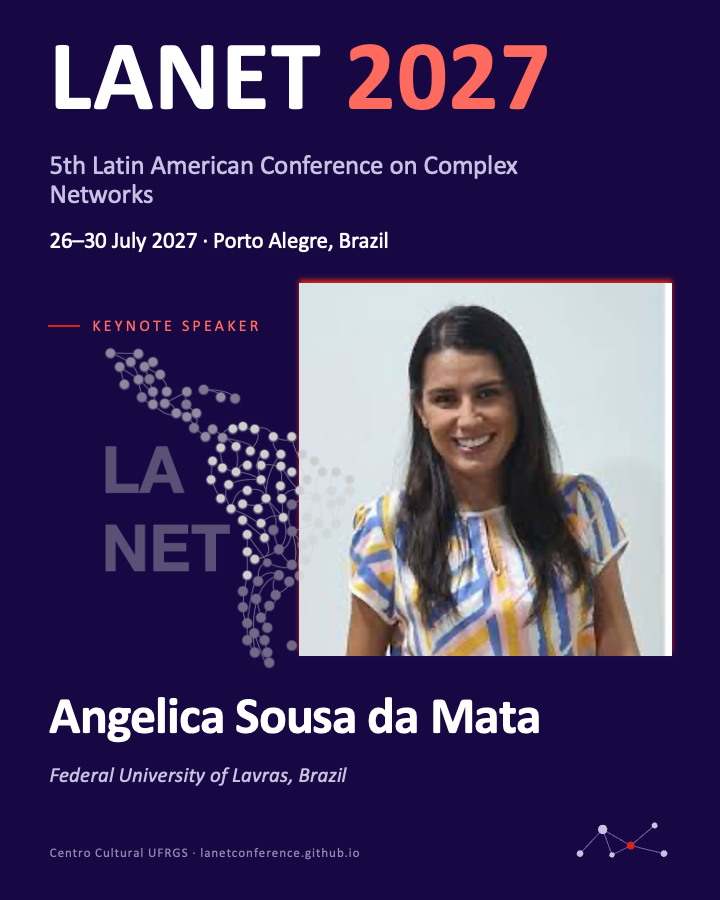
¡Nos entusiasma anunciar que Angélica da Mata aceptó nuestra invitación para ser conferencista principal de LANET 2027 (https://t.co/6r2R5GkGDy)! LANET se llevará a cabo en Porto Alegre, Brasil, del 26 al 30 de julio de 2027. ¡Te esperamos!
🌍 The Shrinking Globe
@DisruptiveRI founder @Ch4rleston is participating in the International Conference on Social Computing (ICSC) at the @UniOfOxford, September 2–4.
He's presenting our paper:
“The Shrinking Globe: Structural Evolution and Globalization of the International Migration Network (1990–2024)”
Joint work with Viktoriya Semeshenko @VSemesh
from @Netlab_IIEP@IIEP_oficial and Scientific Advisor at @DisruptiveRI, Alejandro Blasco, Marco Canero, Evangelina Iodice, and Juan Manuel Rodríguez Miguel.
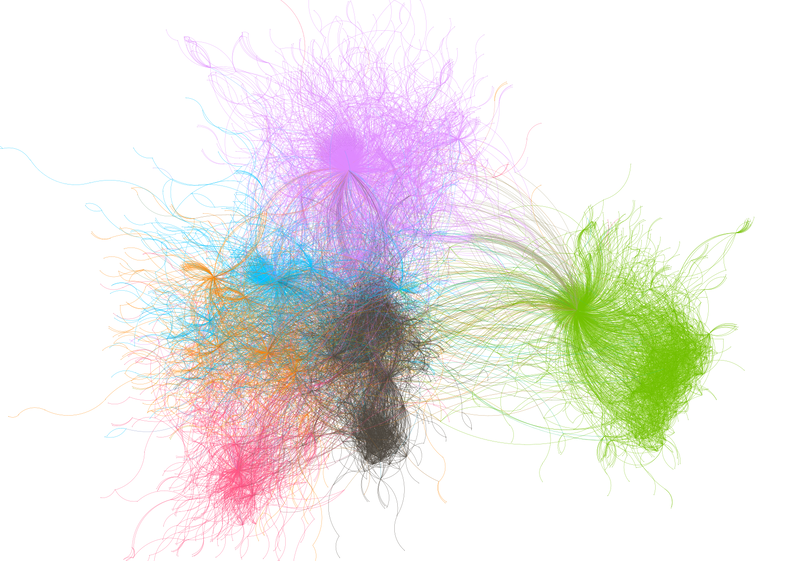
We analyze how the global migration system has evolved over the past 35 years, using data from the UN International Migrant Stock and modeling migration as a directed, weighted network connecting countries through origin–destination flows.
Using Network Science, we study the topology of the global migration network, its community structure and centrality, and explore four major drivers of international migration: geographic proximity, cultural and linguistic affinity, economic asymmetry, and forced migration.
🔹 Our results point to a progressively more globalized migration system: regional communities persist, but become less cohesive over time.
🔹 Migration corridors increasingly cross traditional regional boundaries, while geographic proximity becomes relatively less important.
🔹 Linguistic similarity emerges as the most stable and consistent cultural factor throughout the entire 1990–2024 period.
🔹 Forced migration is the strongest structural exception: during political and humanitarian crises, geography regains prominence, driving large-scale displacement toward neighboring countries regardless of other factors.
Happy to discuss these results in Oxford and to connect with researchers working in Network Science and Computational Social Science!
#ICSC2026 #NetworkScience #ComplexNetworks
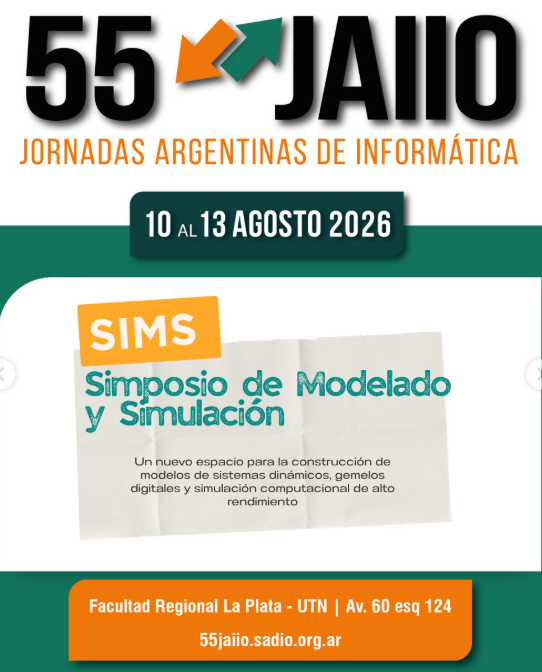
Participamos de las 55° Jornadas Argentinas de Informática (JAIIO), organizadas por @sadio_oficial en la @utnfrlaplata.
💻 Fueron días de mucho intercambio sobre el rumbo de la tecnología en nuestro país.
Te contamos lo más destacado en este hilo 👇
Este mes finalizó con éxito el 2do. Simposio de Modelado y Simulación #SIMS de las 55 JAIIO @jaiio_oficial@Sadio_Oficial
2 días, 40+ asistentes, 1 charla plenaria INVAP, 33 trabajos aceptados con autores abarcando 31 instituciones académicas de 7 provincias argentinas y de Brasil, Perú, España e Italia.
El 55 SIMS reunió aportes en teoría y en aplicaciones a energía, biomedicina, epidemiología, economía, aeroespacial y ciencias ambientales, entre otras.
https://t.co/RdF328DBmM
¡Felicitaciones a todos y todas por estas dos excelentes jornadas de intercambio académico!
Un agradecimiento especial a los anfitriones de UTN-FRLP por la hospitalidad @utnfrlaplata y a nuestro excelente comité académico por el esfuerzo y la calidad de sus revisiones.
https://t.co/Cbb8dkqjMN
¡Nos reencontramos en las 56 JAIIO en 2027!
Los coordinadores, María Julia Blas, Rodrigo Castro y Ernesto Kofman
@ComputacionUBA@icc_uba_conicet@SEDLab_ICC@UBAInvestiga@ingarConicetUtn@inifta_ok@INTEMA_MDP@plapiqui@INAHE_CONICET@unpsjb_oficial@FI_UNPSJB@unlp@UTNSantaFe@unmdp@UNVM@UNS_oficial@unsamoficial@ucema_oficial@FLACSOARGENTINA@invapargentina@uclm_es@UNMSM_ #CIFASIS #IFLP #IIPAC #IIPAC_FAU #ICYTE #ICYTEConicet #IMITAB #IMAS #IMASantalo #55JAIIO
Felicitaciones a Antonio Paco Santos, quien hoy defendió su tesis de Licenciatura en Ciencias de la Computación titulada "Estrategias algorítmicas de fijación de precios en mercados electrónicos simulados: aprendizaje automático, dinámica competitiva y equilibrio".
Director: Rodrigo Castro (DC-ICC/FCEN-UBA-CONICET), Co-Directores: Juan Pablo Pinasco (DM-IMAS/FCEN-UBA-CONICET) y Martín Harracá (EEyN-UNSAM), Jurados: Esteban Feuerstein (DC-ICC/FCEN-UBA) y Pablo Amster (DM-IMAS/ FCEN-UBA-CONICET).
@ComputacionUBA@icc_uba_conicet@SEDLab_ICC
👉 Fundamentos de Inteligencia Artificial
📅 7 de Septiembre de 2026 (YA!!)
--- ¡¡NUEVA EDICION AMPLIADA!! ---
Dictado por Roxana Martínez
¡Reserva tu vacante!
Info en https://t.co/52pKuzvfKZ
O escribí a [email protected]
Los invitamos a enviar trabajos al Workshop Interdisciplinario en “Econometría y Redes Complejas”
El evento se llevará a cabo los días 22 y 23 de octubre de 2026 en @UBAeconomicas presencial
Fecha límite para envío (resúmenes): 28/9
👇más info
KHIPU 2027
Latin American Meeting in Artificial Intelligence
¡Período de aplicaciones extendido!
7 de septiembre, 2026
No hay tarifas de inscripción y hay numerosas becas disponibles para alojamiento y transporte.
Más información en https://t.co/nSVfjr8MHP | ¡Corré la voz!
SÃO PAULO | 5 - 9 | ABRIL 2027
🐍 Structural Evolution of the Python Dependency Network
Happy to share that I will present this work at the International Conference on Social Computing (#ICSC) at the @UniofOxford, September 2–4, together with our work on “The Shrinking Globe.”
This is joint work with Juan Ignacio Catania, Mateo Guerrero Schmidt, Sofia Gutierrez, and Martina Rosario Pérez.
We study how the Python package ecosystem has evolved over nearly a decade by modeling package dependencies as a complex network and comparing two large-scale snapshots, from 2016 and 2025.
Our results reveal a massive expansion of the ecosystem accompanied by significant structural transformations:
🔹 The number of packages increased by more than an order of magnitude.
🔹 Dependencies grew even faster, revealing a clear densification of the network.
🔹 Average degree increased while modularity decreased, pointing toward a more interconnected ecosystem.
🔹 The most central packages changed substantially. While earlier stages were dominated by web-development and compatibility libraries, the current ecosystem shows data science, scientific computing, and testing packages emerging as structural hubs.
Overall, our findings suggest that the Python ecosystem is evolving toward a more interconnected architecture, following growth patterns observed in other complex networks, including densification and hub reorganization.
More broadly, the study shows how Network Science can help us understand the evolution, organization, and robustness of large technological ecosystems.
🙌 Thanks to my coauthors for their great work, and many thanks to Rodrigo Díaz @RDextrasolar and @ITBA for supporting my participation in this conference!
🌌 Espectacular el curso de @CeciGarraffo sobre "Current AI Techniques for Scientific Discovery" en @ITBA!
Cecilia Garraffo es astrofísica computacional argentina, fundadora y directora del @Astro_AI_CfA Center, parte del @CenterForAstro | @Harvard & @Smithsonian.
Durante el curso estamos explorando técnicas de IA de vanguardia y cómo pueden utilizarse para acelerar y transformar la investigación científica, en particular en astrofísica.
Un lujo tenerla como profesora en ITBA y aprender de primera mano cómo se están combinando inteligencia artificial y descubrimiento científico en la frontera del conocimiento.
🙌 Muchas gracias Rodrigo Díaz @RDextrasolar por organizar este curso y hacer posible esta oportunidad!
#ITBA #AstroAI