For the quick training of neural networks with Google TPUs, I have published an introduction to data for self-driving cars with the associated code on Kaggle.
https://t.co/KQC9caRGDT
How to train a deep network to predict the sentiment of a text. The network uses a sequence of letters as input and can be trained with any language without textual preprocessing: #kaggle
https://t.co/VUAkPAHvTr
Day 14: #100DaysOfMLCode
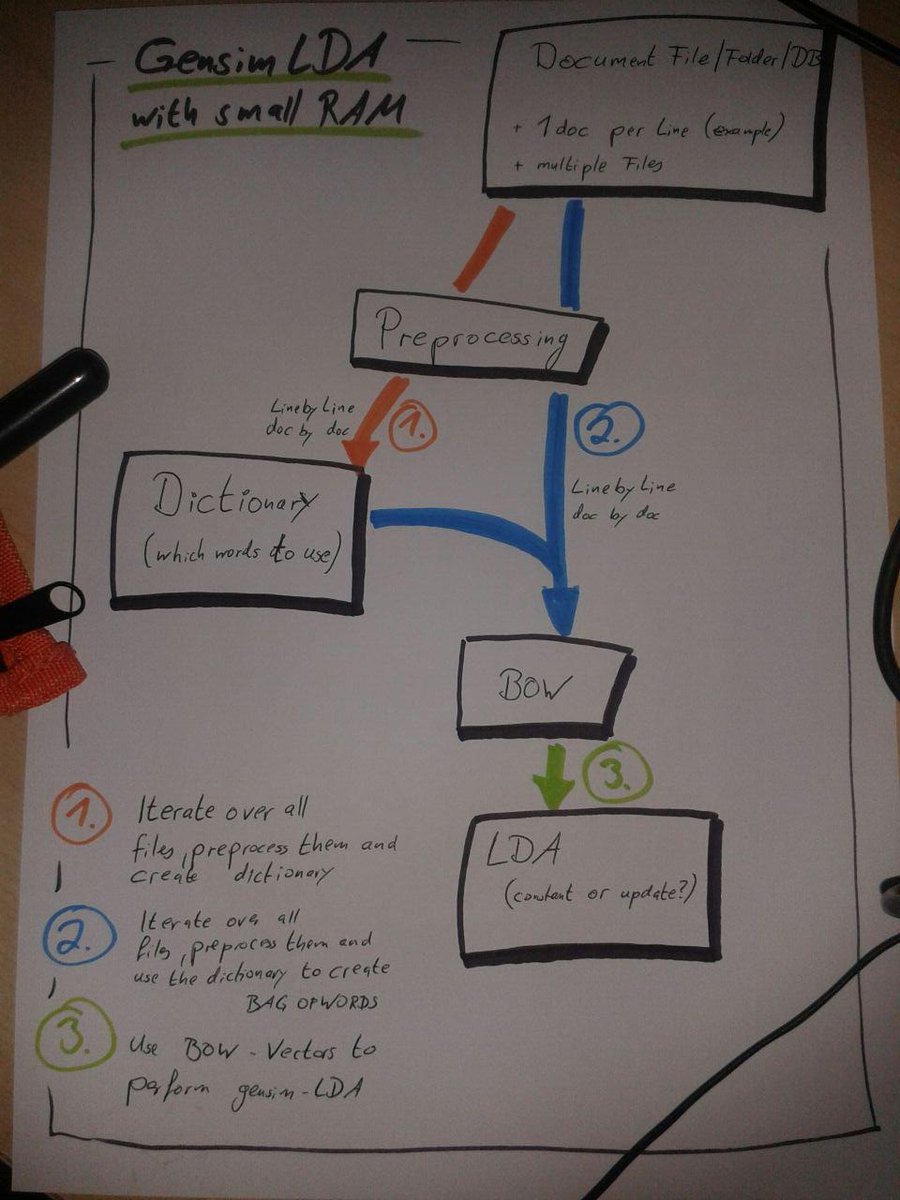
I've been preparing a flow to compute gensim LDA on a corpus larger than your RAM. The code to optimize it is nearly complete.
Day 13: #100DaysOfMLCode
Today I compared LDA in gensim and sklearn on different corpi from #Kaggle with and without multicore implementation. Interestingly sklearn needs more time with multiple cores and right now I can't explain why the single core gensim explodes.
Day 12: #100DaysOfMLCode
Today I used #Kaggle Kernels to compare the LDA (topic modeling) implementation in sklearn and gensim.
Gensim seems to be "better" and faster.
https://t.co/6tSBn2mFO2
Day 11: #100DaysOfMLCode
To compare different implementations of Latent Dirichlet Allocation (Topic Modelling) in the libraries (gensim, sklearn, lda) to each other I've been reading a lot of documentations today.
Day 10: #100DaysOfMLCode
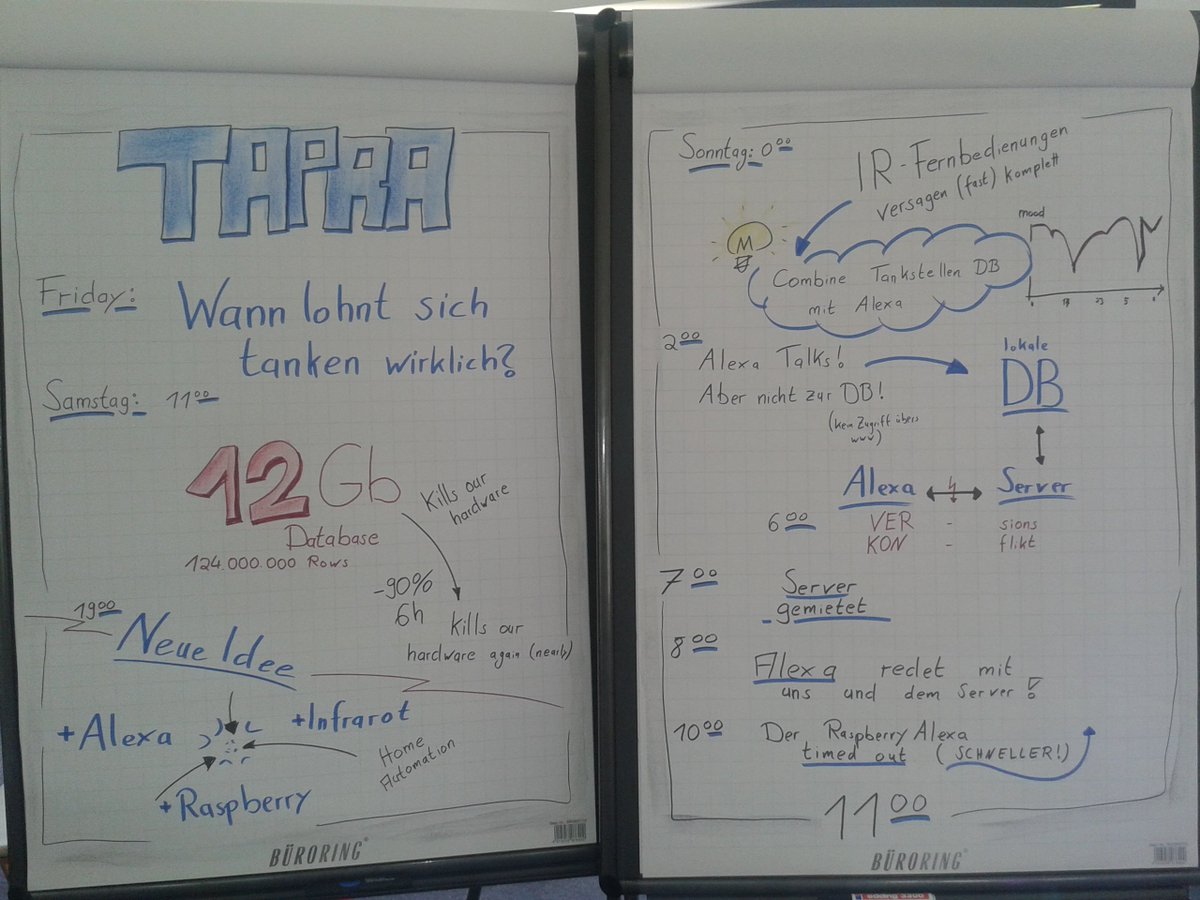
Finally it worked! We combined #Alexa with a custom Skill to tell you when to refuel your car and where to expect the best deal in your (german) town. #DoHack2018
Day 7: #100DaysOfMLCode
Started listening to the podcasts (machine learning, artificial intelligence, ...) of @DataSkeptic while traveling.
https://t.co/tEY5sjpu9T
Day 6: #100DaysOfMLCode
I read tutorials for topic modeling with gensim and I am excited to experiment with some datasets from #Kaggle on my own.
https://t.co/uYXeZtErXT
https://t.co/mcmGbm7249
Day 4: #100DaysOfMLCode
Deepened my knowledge of IPython magic-functions to optimize execution-time and memory-usage with this tutorial.
https://t.co/1yvQCcWjg7