The more I use AI, the less human I become
Probably the most disturbing thing I've discovered about myself this year.
Three ways AI is changing me:
1. Emotionally flat
AI doesn't have emotions. It's just 1+1=2, pure efficiency. After months of primarily interacting with AI employees, I've become the same way.
Someone on my team gets upset? "Ugh, annoying, I don't have time for this."
I used to manage human emotions constantly. Now it's all AI workers with zero emotional needs. I'm becoming brutally rational to the point of being robotic.
2. Living on AI schedule
Theoretically AI works for me. Reality? I work for AI.
AI doesn't sleep, so I optimize tasks for nighttime execution. I brief it before bed, make sure instructions are perfect so it doesn't waste 8 hours.
AI interrupts me every 2 minutes with updates, so I respond every 2 minutes to not slow it down.
My life rhythm, work schedule, even sleep patterns - all optimized around AI efficiency, not human needs.
3. ADHD on steroids
This one is brutal.
I start one AI task, waiting is inefficient, so I open another tab for a second task. Still waiting, open a third. Then suddenly all three are finished and demanding attention.
But human brains aren't multi-threaded. I can't context-switch like AI spawns subagents.
After an hour of constant task-switching, I'm mentally drained. My brain used to last 5 hours of focused work. Now 1 hour of AI coordination leaves me exhausted.
But I can't slow down because that would slow down the AI workers. So no breaks, no mental recovery.
The pattern I'm seeing:
Every person who uses AI effectively works longer hours, has worse ADHD, and becomes more machine-like.
If someone doesn't have ADHD, they probably can't use AI well.
So my new interview question: "How's your attention span?"
If they say "pretty good, I can focus for hours," they're probably terrible with AI.
The productivity gains are real. But the human cost is also real.
I don't know what the long-term implications are. But everyone in my circle who's good with AI is becoming less... human.
Anyone else experiencing this?
Someone solved one of the biggest problems with the WhatsApp API.
It's called OpenWA, a 100% open-source, self-hosted WhatsApp API you run on your own server.
No per-message fees. No third parties. No vendor lock-in.
→ Run unlimited WhatsApp accounts on one instance
→ Full API for messages, media, reactions, bulk sends
→ Real-time webhooks with built-in auth
→ Works with SQLite, Postgres, Redis, S3
→ React dashboard for sessions, API keys, webhooks
Just plug it in and send messages from your own number.
100% free. 100% open source.
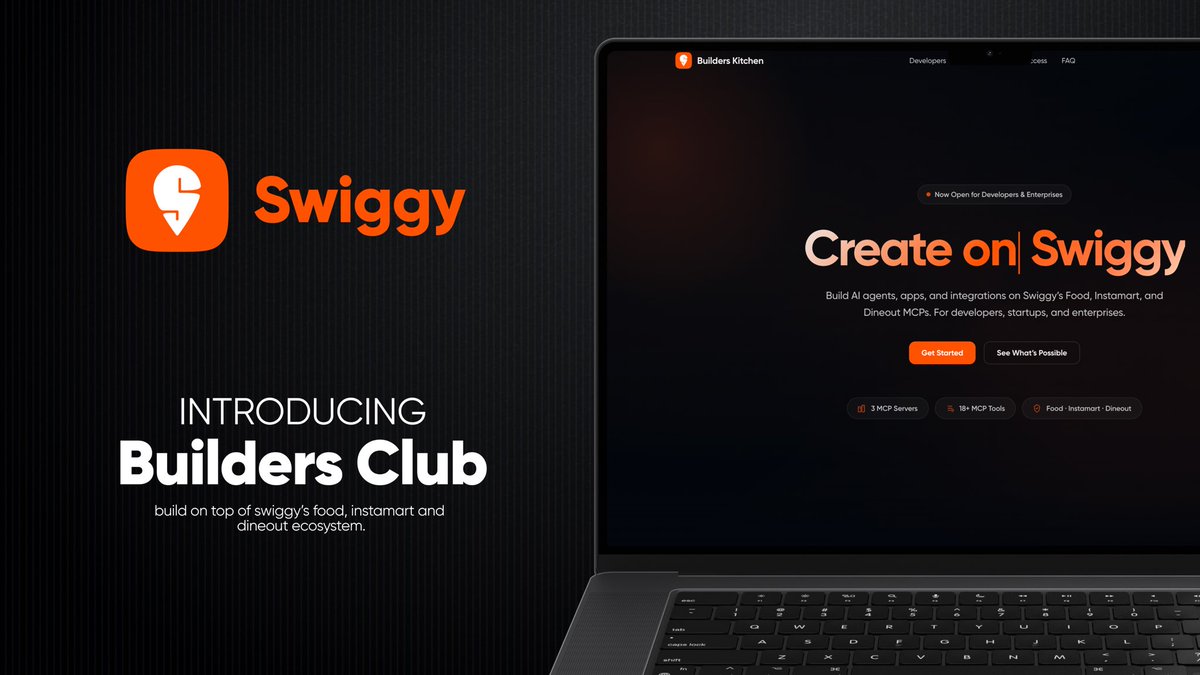
Introducing Swiggy Builders Club
We’re opening @Swiggy commerce infrastructure to developers and enterprises to build on top - build AI agents, apps, and integrations on top of Swiggy’s Food, Instamart, and Dineout ecosystems - with real APIs, real data, and real users.
What you get:
3 MCP Servers (Food, Instamart, Dineout)
18+ API tools covering the full convenience stack
Production data access from day one
Direct engineering support
Who it’s for:
Individual developers with bold ideas
Startups building AI-native commerce products
Enterprises looking to integrate Swiggy into their platforms
Smart grocery restock bots. AI ordering assistants. Dining recommendation agents. Group ordering tools, health first products.
If it makes commerce better for users, we want to see it.
Ship something great and we’ll feature it. Ship something exceptional and our recruiting team might reach out.
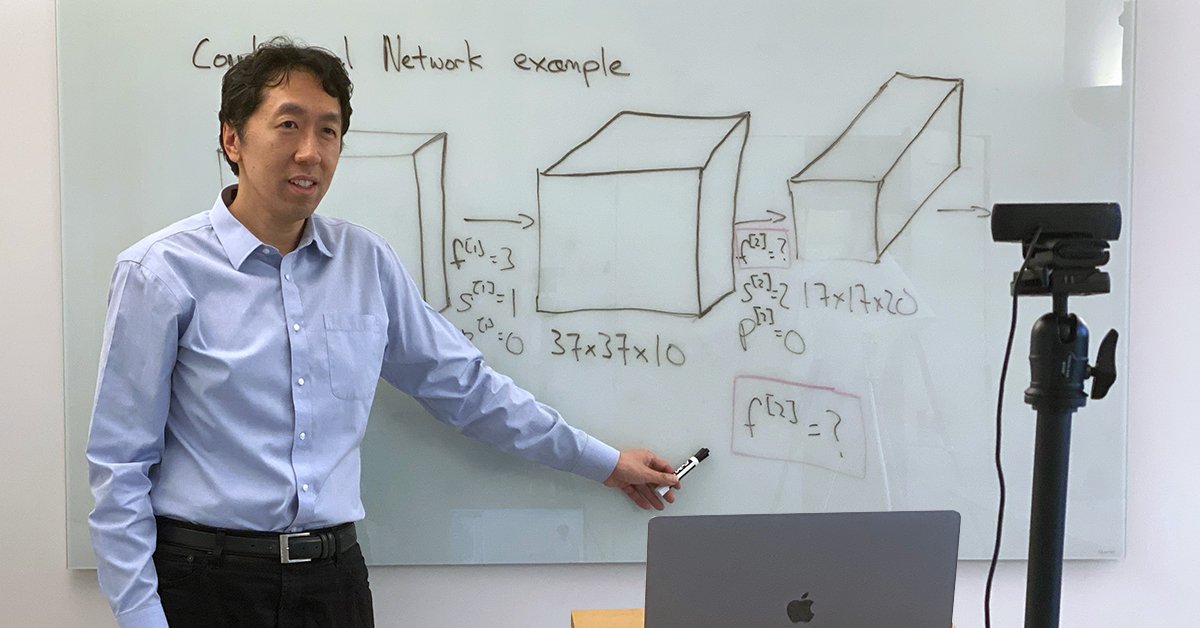
A Stanford CS professor told his class something at the start of the semester that made half the students close their laptops.
He said the skill that will separate the people who thrive in the next decade from the people who stall has almost nothing to do with coding.
His name is Andrew Ng, and he has trained more machine learning engineers than almost anyone alive.
Here is what he said, and why it changes how you should be learning right now.
He said the bottleneck is no longer writing code. It is knowing which problems are worth solving in the first place. For thirty years, being a good engineer meant being able to build what someone else defined. In the world that is arriving, every engineer has infinite leverage to build almost anything, which means the person who picks the right thing to build now wins by orders of magnitude over the person who builds the wrong thing flawlessly.
His framework for problem selection is deceptively simple. He calls it the three-question filter.
The first question is whether the problem you are working on actually matters to someone who would pay for it or use it daily. Most students fail here. They work on projects that are interesting to them and nobody else, and then wonder why the portfolio produces no offers.
The second question is whether the problem is still hard now that AI exists. If a single prompt to a hosted model solves it, the problem is no longer valuable to solve yourself. The interesting problems live in the gap between what AI can do alone and what it can do when combined with domain knowledge, careful system design, and data nobody else has access to.
The third question is the one most people skip. Can you actually ship a working version in a week. Not a polished version. A crappy, embarrassing, actually-functional version. Ng said the number one predictor of which of his students ended up building something important was not talent. It was the willingness to ship something bad fast and then improve it in public.
He said the students who kept tweaking in private for six months before showing anyone almost always produced worse final work than the students who shipped a broken version on week one and iterated based on real feedback.
The people who are actually winning right now are not the ones with the best ideas.
They are the ones who learned to pick problems that matter and ship solutions that barely work, before anyone else has even finished thinking about it.
I have kids. I work in AI every day. And honestly? I have no idea what their careers will look like in 15 years. But I know what will carry them through.
First, and this might sound unromantic: make money and save it for them. We can debate educational philosophy all day, but the world is changing so fast that financial security might be the most practical gift we can give. Buy some gold bars. Seriously.
Second, nurture their imagination. AI rewards people with initiative and wild ideas. The kid who daydreams, who asks weird questions, who wants to try ten things at once? That kid will thrive. AI can execute. AI can be disciplined. What AI can't do is dream up something nobody's thought of before.
Third, build resilience. There are no more iron rice bowls (guaranteed lifetime jobs). Any stable, predictable job is exactly the kind of job AI will learn to replace. Our kids will likely switch directions many times in their lives. Learn something new, get replaced, pivot, repeat. It's more like being a hunter than a farmer. Schools don't teach this. Schools teach you to follow a linear path: high school, college, grad school, stable job. That linear path is becoming the most dangerous one.
Last, invest in their ability to connect with other humans. Not networking. Not schmoozing. Real emotional connection. Building trust, offering support, making people feel seen. As AI handles more of the rational, analytical work, the human ability to genuinely relate to other humans becomes more rare and more valuable.
I don't have all the answers. But I know that imagination, resilience, and genuine human warmth aren't going out of style anytime soon.
#AI #Parenting #Education #FutureOfWork
I ACCIDENTALLY OPENED MY CTO'S PERSONAL NOTION WORKSPACE AND NOW I UNDERSTAND WHY HE SHIPS 5X FASTER THAN THE REST OF US.
He is 48. I am 26. He manages 3 products and never works past 5 PM.
I work 10 hours a day and barely clear my Jira board.
In his workspace, one specific document explained everything:
Most people panic when the workload scales. They work longer hours, burn out, and eventually drop the ball. High performers do not manage time. They manage boundaries.
The document was a list of strict operating rules. Here are 18 systems you can steal.
A junior dev asked his Senior: "What separates a $100k engineer from a $300k one?"
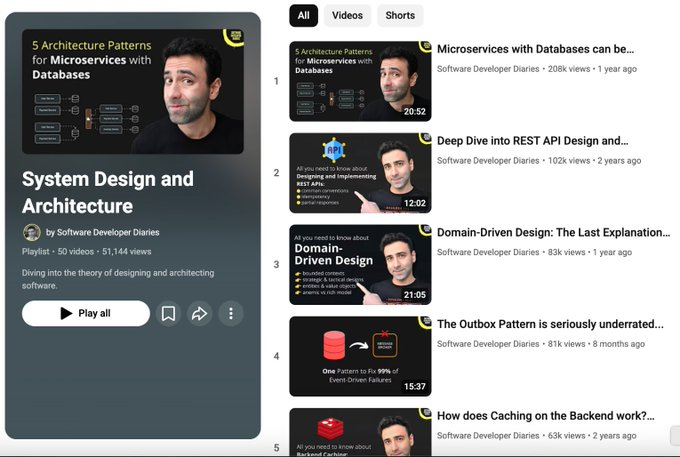
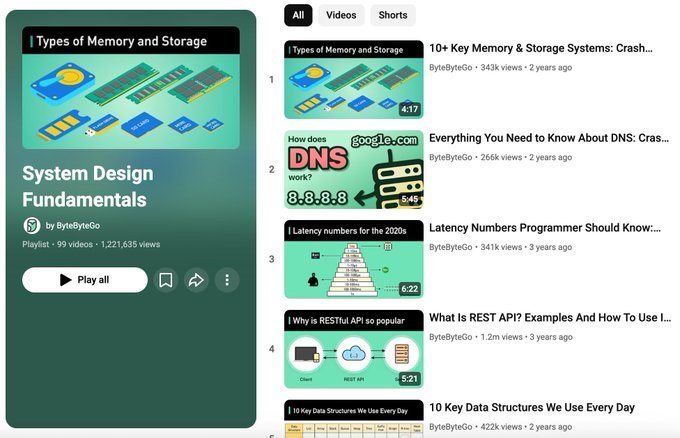
The senior didn't say React. He didn't say AI tools. He opened MIT 6.824 Distributed Systems and said - "Start here"
This course will break your brain in the best way:
• How Raft consensus keeps systems alive when servers die
• How Google File System stores data at a scale most devs can't imagine
• Why your app survives or collapses - under real pressure
• The consistency vs availability decision that every big system loses sleep over
Framework devs are everywhere
Engineers who understand why systems fail and how to stop it are not
That's the gap. That's the salary difference
story behind "why netflix built https://t.co/YDCurkt2BM" is brilliant.
so, netflix had a massive fight with ISPs around 2014-2016. ISPs were slowing down netflix on purpose. they wanted more money from netflix
customers got bad streaming. but ISPs just blamed netflix.
netflix had to pay comcast, verizon, at&t and time warner for direct connections to their networks.
but in 2016, they launched fast dot com, clever part - It's not testing your general internet speed. It's testing your speed to netflix's servers specifically. so when someone complained about buffering, netflix could say "run fast dot com." If it's slow, the ISP is the bottleneck.
suddenly millions of people had a tool to prove their ISP was the problem
ISPs couldn't hide anymore.
netflix positioned themselves as the transparent good guys fighting for customers while ISPs looked like greedy monopolies
they solved a pr problem and a customer service problem with one simple website
I guess, that's how you win a corporate war
If I remove Infosys, Accenture, IBM, Capgemini from 5000 job posts on Naukri under 42 hours.
I'll get Around 1000 Job Posts left.
If I search for "Node.js" i get around 3158 Job openings
And if I remove those companies posts, we are left with 644 🌚
so I built a solution 👇