Ever heard of the five-number summary?
If you know the mean and median, you already know your data’s skewness.
Real analysts know when and why to use it. 📊
👉 Enroll now https://t.co/Ei2c03O5NU
Learn the language of data.
#DataPhonics#DataAnalytics
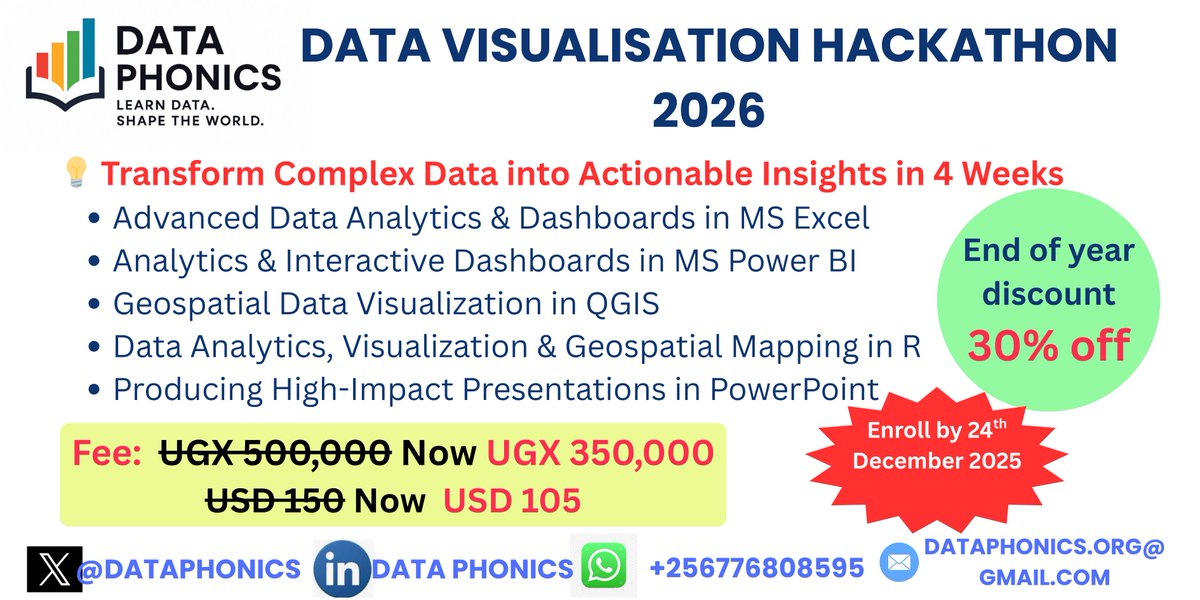
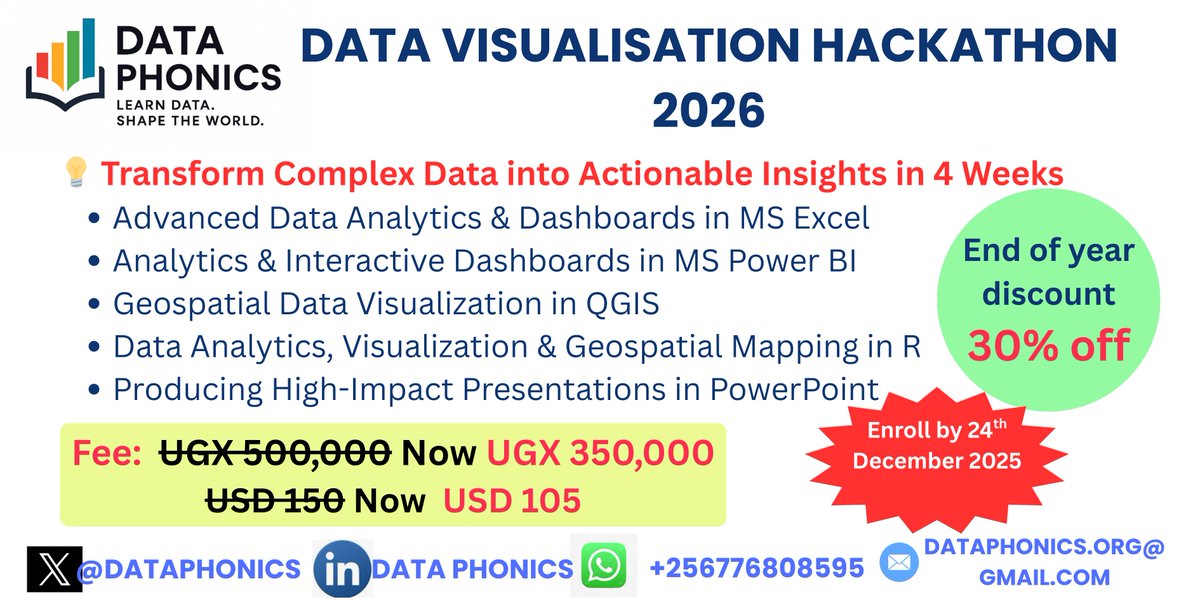
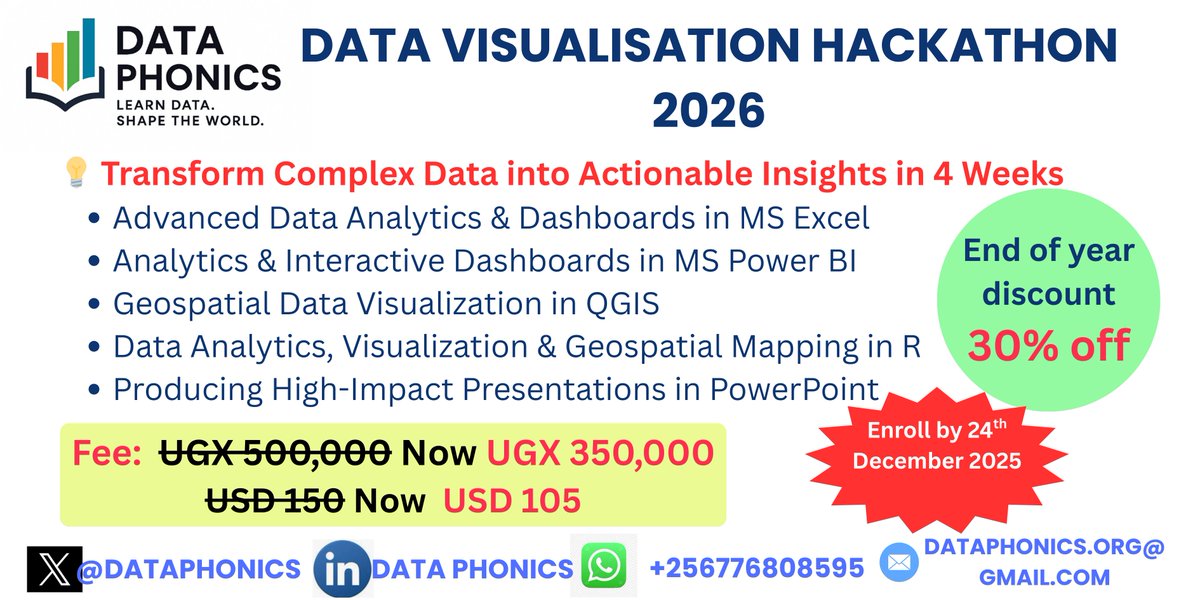
🔥 Your Excel, Power BI, QGIS & R skills are still in “default mode.” Time to upgrade. Most people only scratch the surface of data tools, time to upgrade your skills.
🔥 Join the Data Phonics Visualisation Hackathon
👉 https://t.co/Ei2c03O5NU
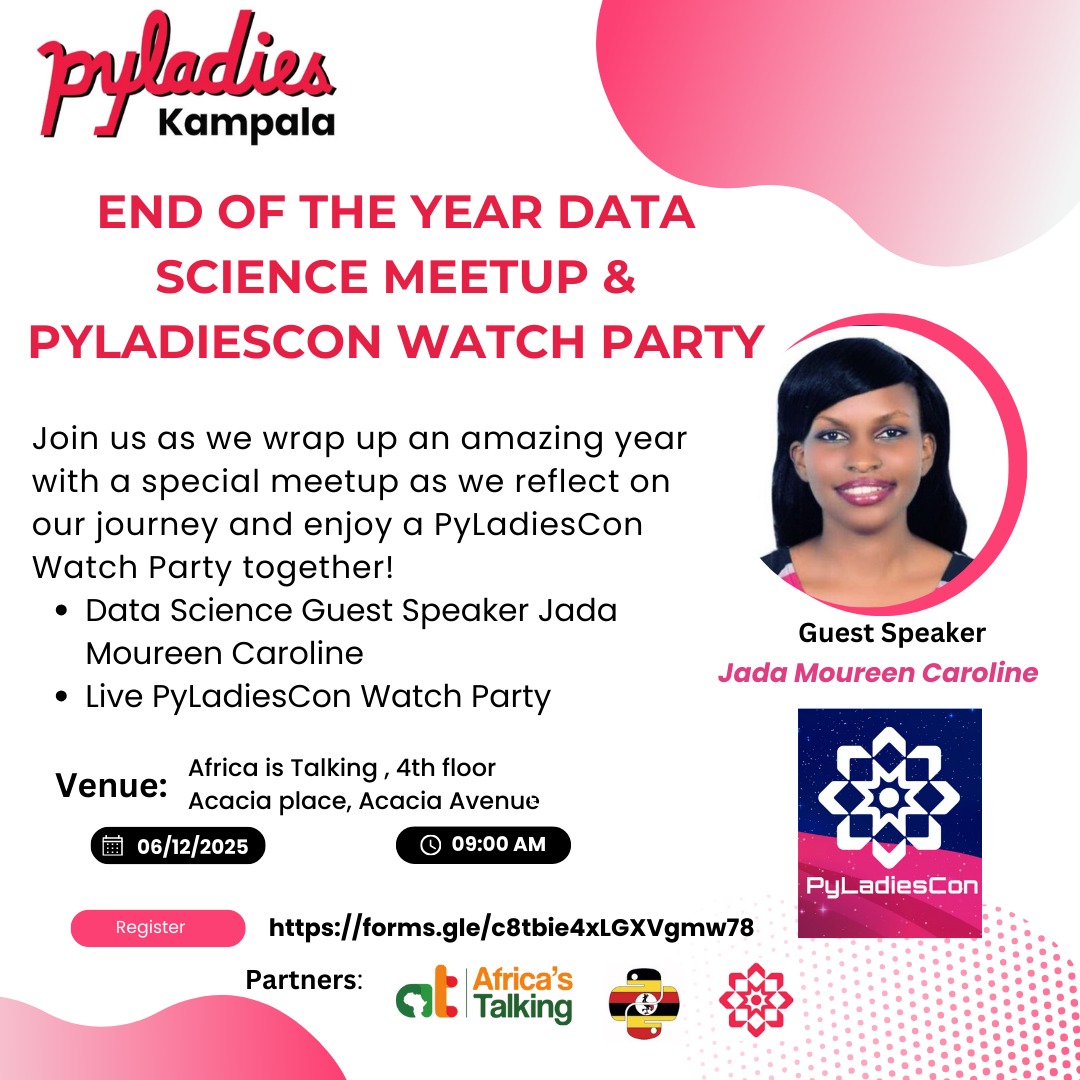
We invite you to join us with a special meetup and enjoy @pyladiescon Watch Party together!
Speaker Jada Moureen Caroline a Data Scientist.
PyLadiesCon Watch Party
📅 Sat 06/12/2025
🕒 09:00 AM – 1:00 PM
📍Africa's Talking, 4th floor Acacia Place
Sign up: https://t.co/RRrczejkBo
“We live in a world where data knows more about us than we know about ourselves.
But here’s the catch, most people don’t understand the language it speaks.”
“At Data Phonics, we don’t teach numbers. We teach fluency. We help people see what data hides, hear what it whispers, and turn confusion into clarity.”
“We scroll past headlines built on shaky samples.
We share ‘studies’ that would collapse under scrutiny.
That’s not ignorance, it’s illiteracy in a new language of power.”
https://t.co/GwFRczzkJU
At Data Phonics, we believe data is not just numbers, it’s a language.
Our mission is to humanize data learning, helping people not only use data, but trust it, to drive real change in their work, communities, and world.
At Data Phonics, we learn with integrity, curiosity, and impact. By signing up, you’re joining a movement that believes data, when understood, can change the world.
Data Phonics exists to humanize data learning, transforming how people see, use, and trust data to drive change. We make data learning as simple as phonics, step-by-step, story-driven, and human-first.
At Data Phonics, we teach people to move from data noise to data voice — to turn raw numbers into meaning, insight, and impact.
Because learning data should be as simple as learning to read — and as powerful as learning to think.
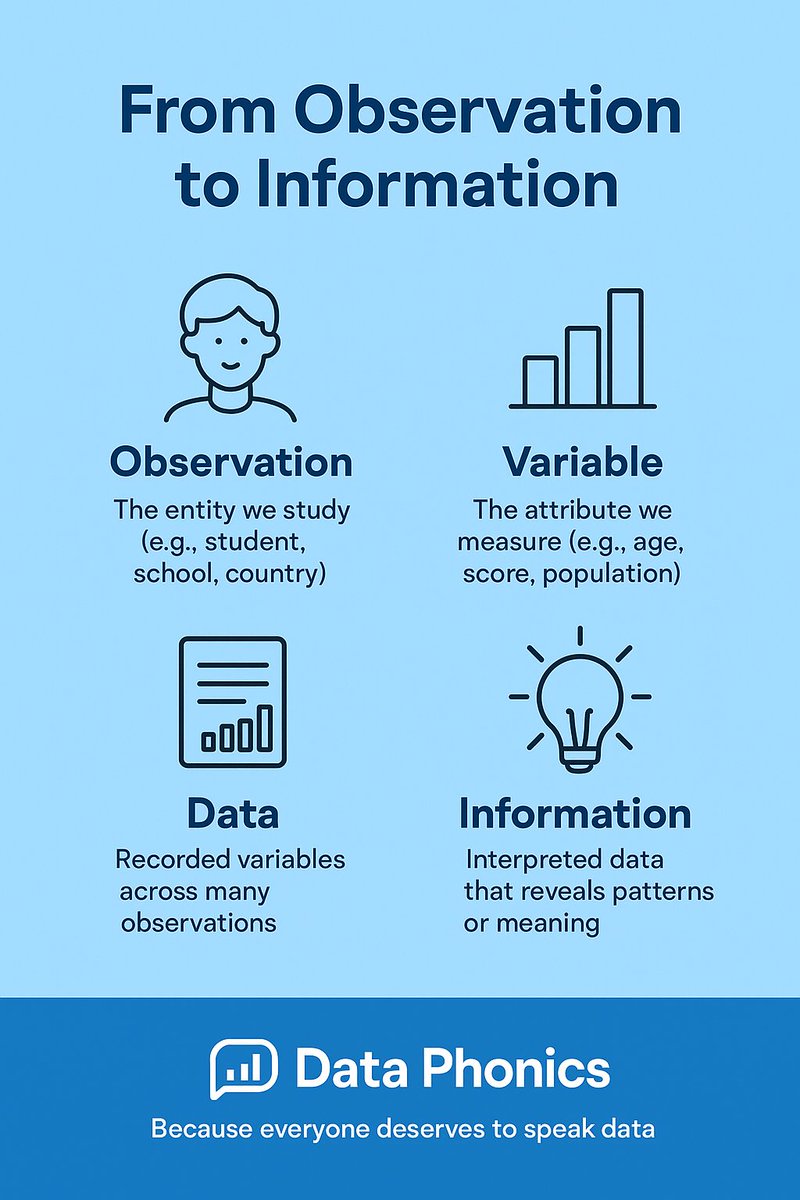
From Observation to Information — The ABCs of Understanding
Think of the world as one big classroom.
Every person, school, country, or tree — that’s an observation.
It’s the “who” or “what” we’re studying.