Still waiting for the “right time” to invest?
Start your SIP & mutual fund journey with expert guidance and support.
👉 Do connect on WhatsApp now: https://t.co/RNGws9ZPF8
#SIP#MutualFundsIndia#InvestSmart#FinancialPlanning
More funds ≠ better diversification.
Overlapping funds can hide concentration risk
More funds often means more paperwork, not more safety
Fewer, differentiated funds can spread risk better
Check underlying holdings, not just fund name
#Diversification#AssetAllocation
Thinking of stopping your SIP?
Future SIPs stop, no more deductions
Existing investment stays until you redeem
Your units remain in the market, and value can rise or fall
#SIPFacts#DatesFinserv
Before choosing a fund, choose your goal.
Different goals, different time horizons
Short-term needs: stable, lower-risk options
Long-term goals: can potentially handle higher risk
Align your choice with timeline and risk
#GoalBasedInvesting#DatesFinserv
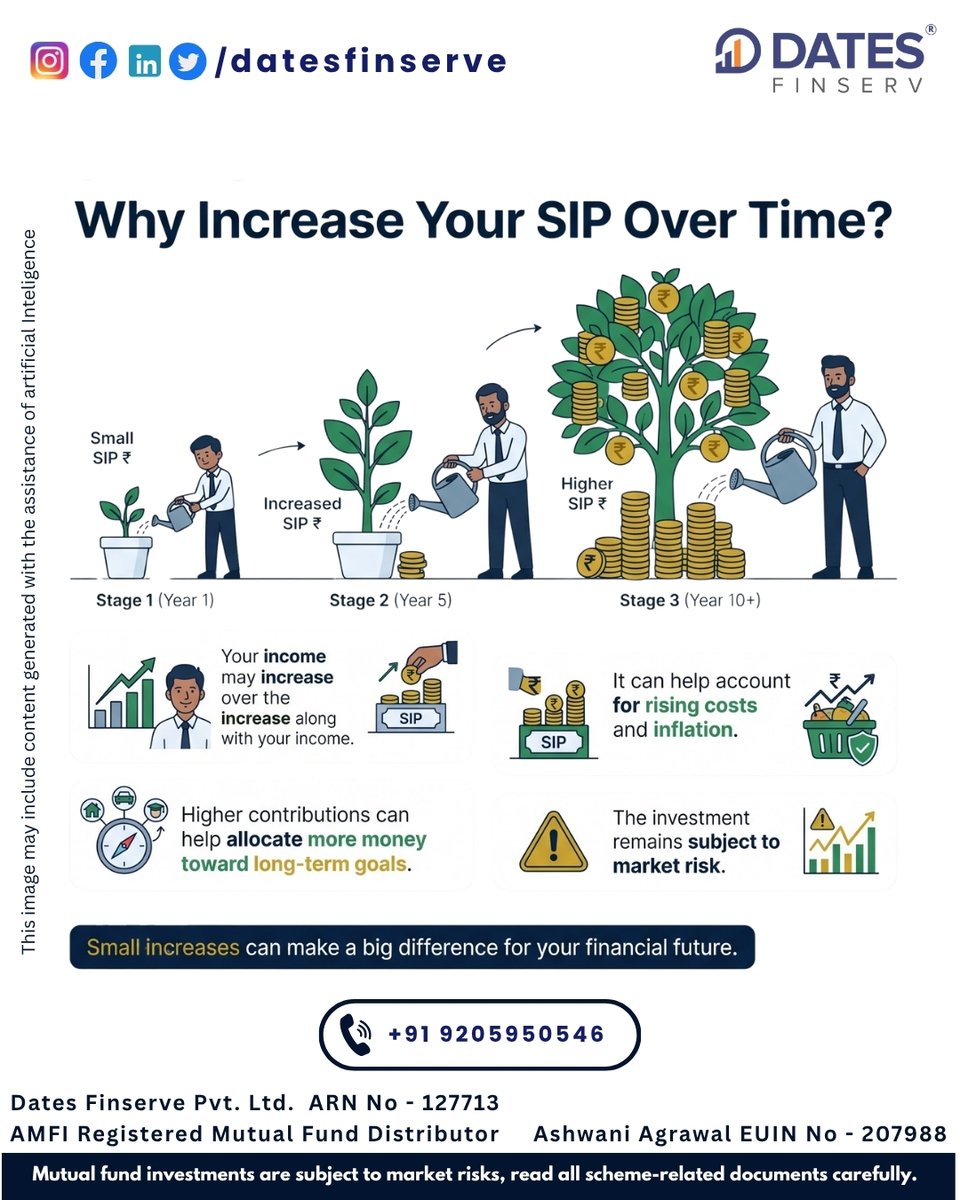
Why step up your SIP:
Income may grow, and your SIP can grow with it
Helps account for rising costs and inflation
More money toward long-term goals
Still subject to market risk
Small increases can make a big difference.
#StepUpSIP#DatesFinserv
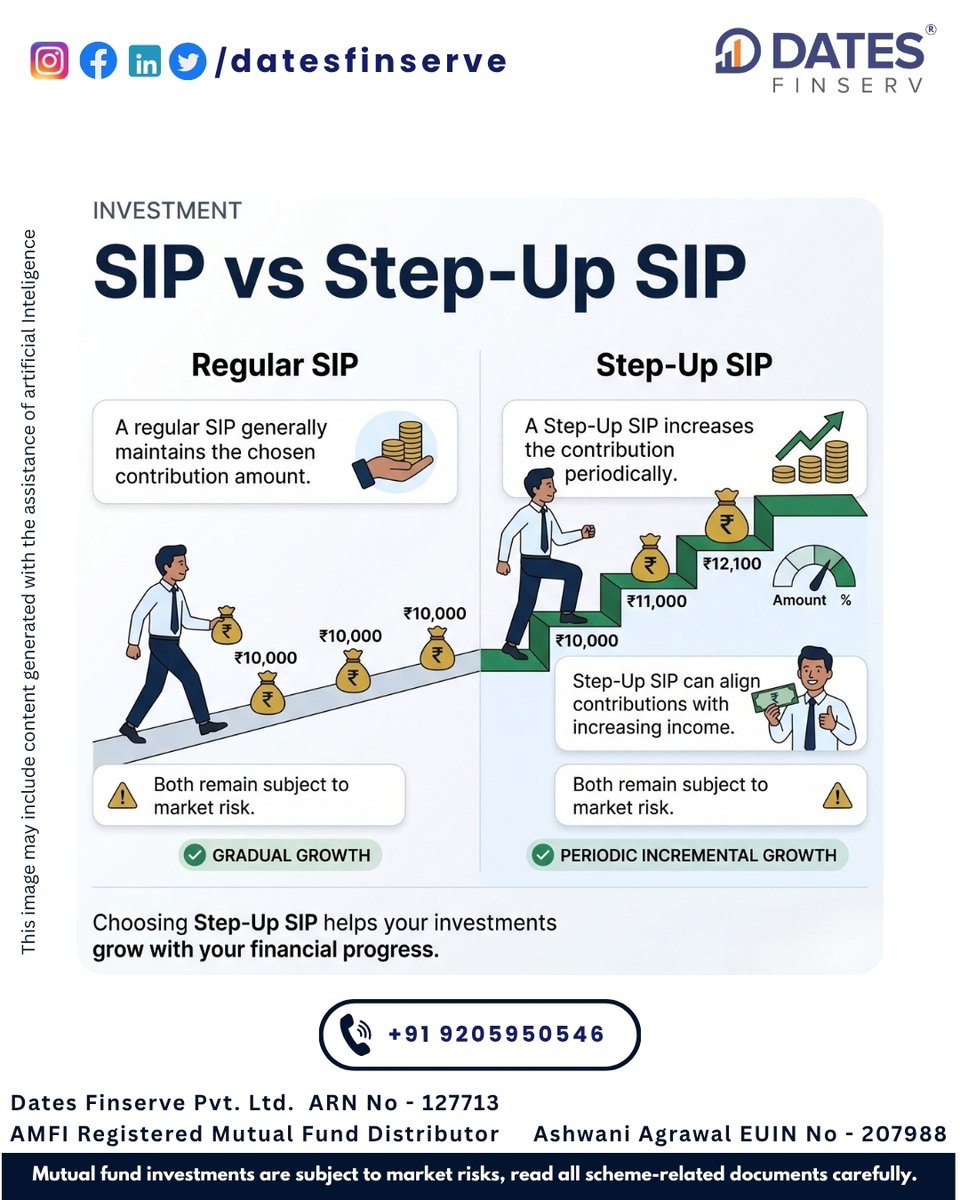
Regular SIP vs Step-Up SIP:
Regular: contribution generally stays the same
Step-Up: contribution increases periodically
Step-Up can align with rising income
Both carry market risk
Let your investments grow with your financial progress.
#StepUpSIP#DatesFinserv
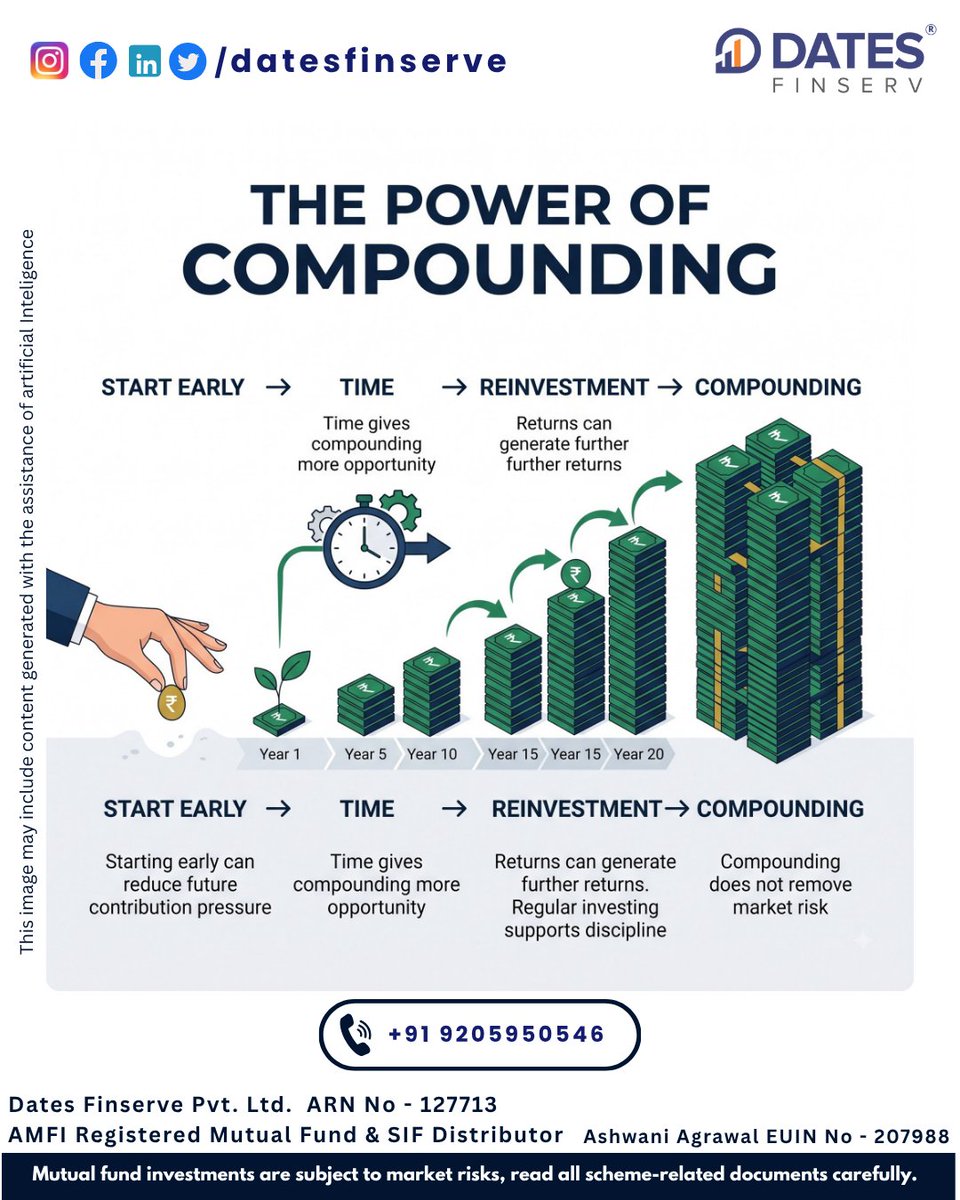
How compounding works:
Returns can generate further returns
Longer periods give it more time
Regular investing adds to the base
Returns are market-linked, not guaranteed
Patience and consistency drive compounding.
#PowerOfCompounding#DatesFinserv
4 common SIP myths, cleared up:
SIP is a method, not a separate product
SIP doesn’t guarantee returns
SIP doesn’t eliminate market risk
SIP isn’t only for small investors
Pick an amount that suits your circumstances.
#SIPMythsVsFacts#DatesFinserv
Diversification, in short:
Spread investments across securities or asset classes
Reduces dependence on a single investment
Investments may perform differently in different markets
It does not eliminate market risk
#Diversification#DatesFinserv
Inflation, in simple terms:
Prices rise over time
The same money may buy less
Future goals can cost more
Long-term plans should factor it in
Review your goals periodically to keep pace.
#Inflation#DatesFinserv
Budgeting starts with knowing the difference:
Needs: essentials for everyday living
Wants: lifestyle and preference spending
Investments: money set aside for future goals
Review your spending before deciding how much to invest.
#FinancialPlanning#DatesFinserv
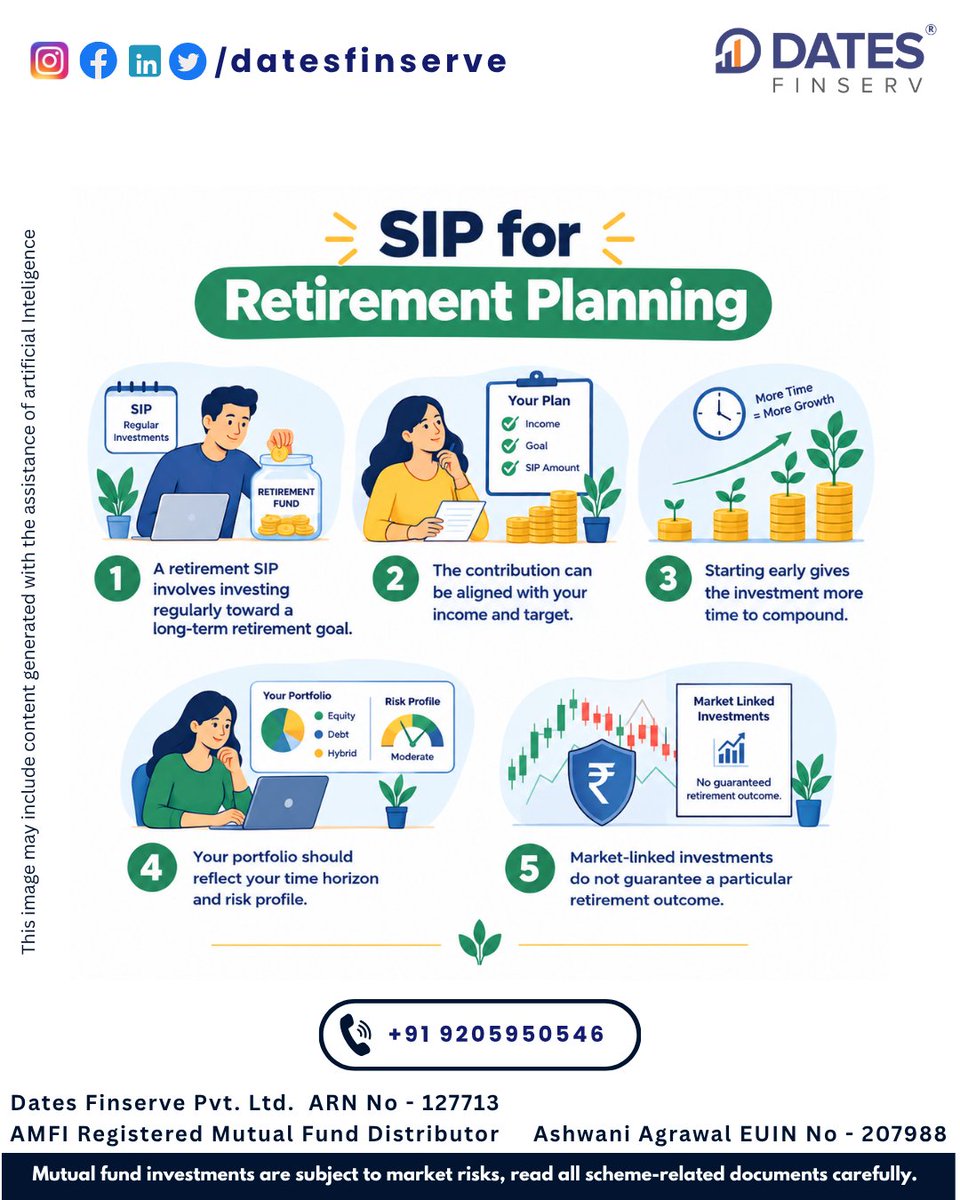
Retirement through SIP:
Invest regularly toward a long-term goal
Align contributions with income and target
Start early, give compounding more time
No guaranteed outcomes
Match your portfolio to your time horizon and risk profile
#SIP#RetirementPlanning#DatesFinserv
5 common retirement planning mistakes: relying on one income source, underestimating healthcare costs, skipping diversification, ignoring withdrawal taxes, and not planning for a longer life.
#RetirementPlanning#DatesFinserv
Past performance is a reflection, not a guarantee.
Check your goal, risk, time horizon, and cost before investing.
#MutualFunds#InvestSmart#DatesFinserv
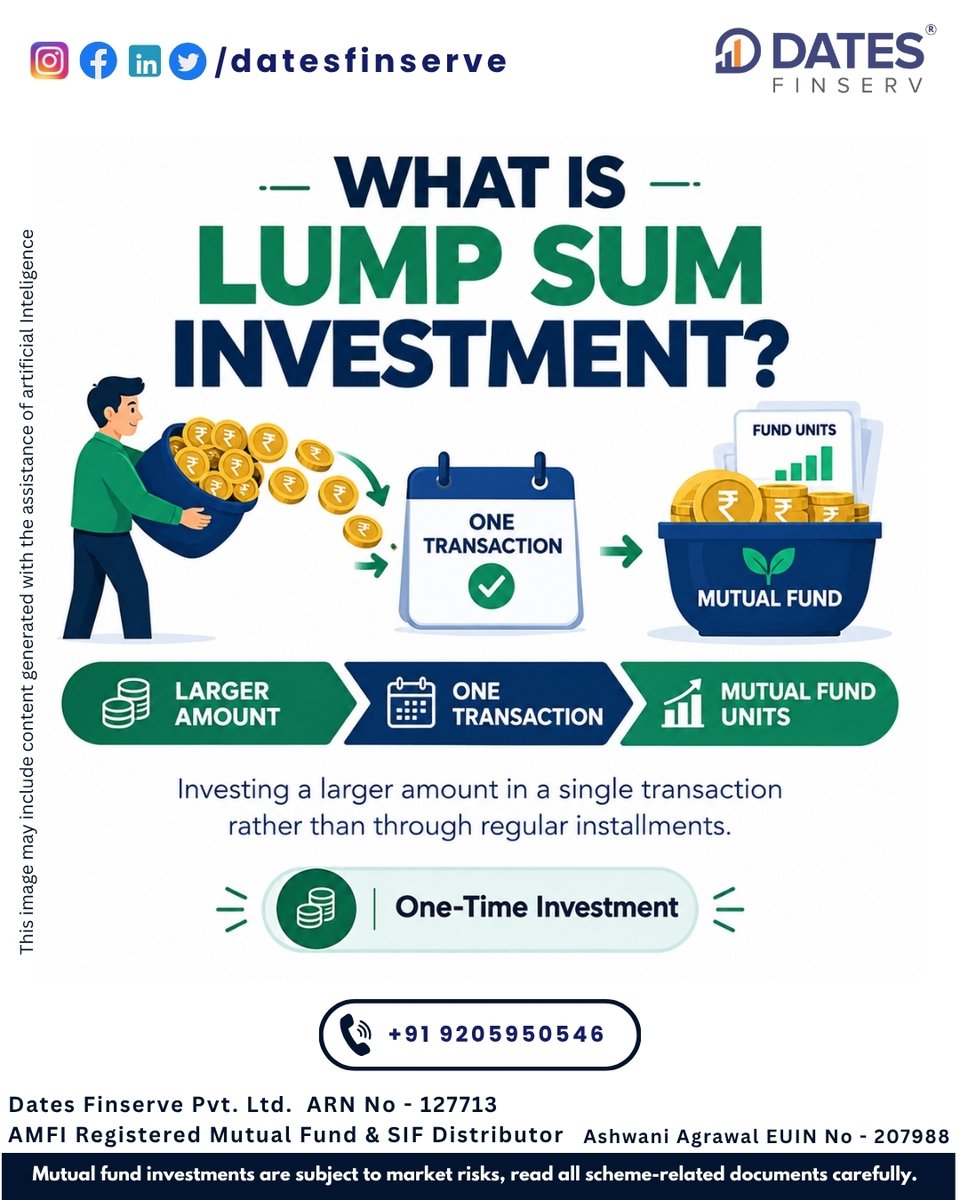
What is Lump Sum Investment?
Investing a larger amount in a single transaction, rather than regular installments.
Larger Amount → One Transaction → Mutual Fund Units
Ideal when you have a larger sum available at once.
Have you made a lump sum investment?
How does a mutual fund actually work?
Investors contribute → money is pooled → the fund manager invests → diversified across equity, debt & more → NAV changes with performance.
You get units; their value moves with the underlying investments.
Did you know these 5 steps?
Why do people invest in mutual funds?
Professional management. Diversification across equity, bonds, gold & more. Planning for home, education, retirement. Flexibility via SIP or lump sum. Choice of equity, debt, or hybrid funds.
Depends on your goals, risk & horizon.