Is a licensed real estate broker, an international member of National Association of Realtors, and Certified International Property Specialist Designee
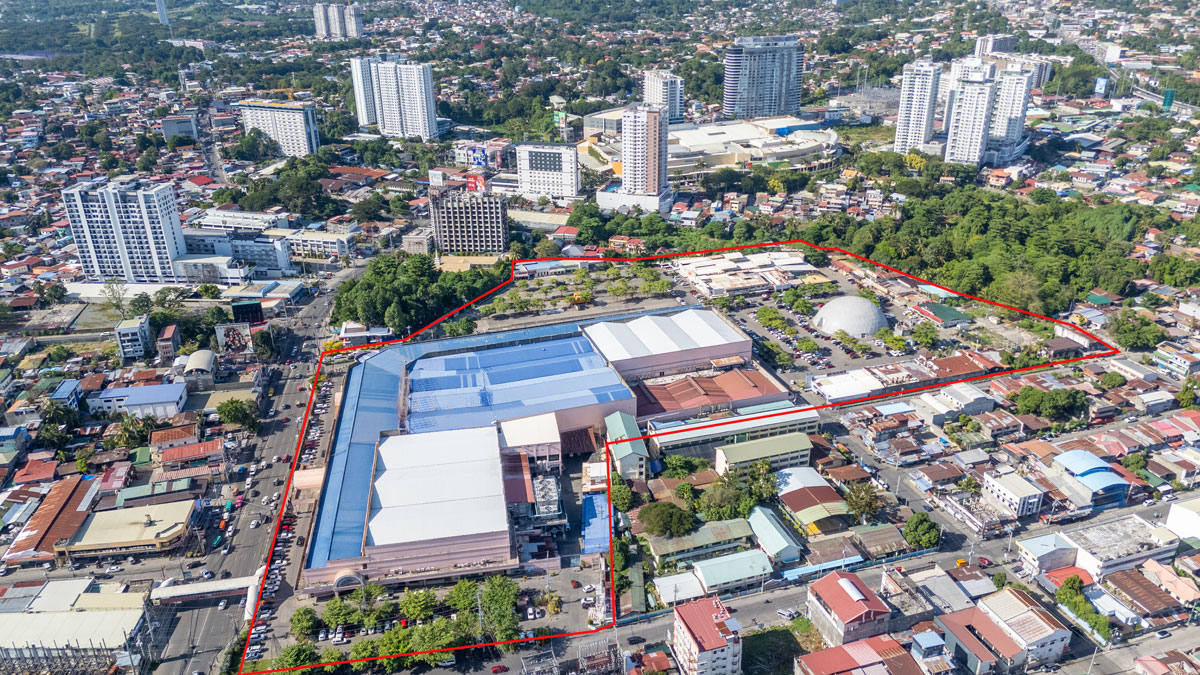
Today marks the final day of operations for Victoria Plaza Mall. A true pioneer of Davao’s retail landscape makes way for the new Robinsons Land development. Bitterweet for many, but a major step forward for Davao real estate. #VictoriaPlaza#DavaoRealEstate#DakbayanRealty
MiMo Masterpiece in Ladislawa Garden Village.
702 SqM Main Road Lot, 4 Bed Luxury. Unbeatable location near Abreeza, Lanang, & Davao Airport. Architectural statement in Davao's premier village.
Walk through now! https://t.co/bJVo3xwHpq Contact 𝐃𝐨𝐧𝐚𝐭𝐨 at 0917 300 5022
MiMo Masterpiece in Ladislawa Garden Village.
702 SqM Main Road Lot, 4 Bed Luxury. Unbeatable location near Abreeza, Lanang, & Davao Airport. Architectural statement in Davao's premier village.
Walk through now! https://t.co/1xOO3rrZuq Contact 𝐃𝐨𝐧𝐚𝐭𝐨 at 0917 300 5022
We proudly announce that our #davaorealtor, Donato Te Esparrago II, earned the prestigious Real Estate Negotiation Certification from the Real Estate Business Institute (REBI) - an affiliate of NAR
https://t.co/P4CPoWgFHC
#realestatenegotiationexpert#dakbayanrealty
The #SupremeCourtPH has taken an important step towards modernizing legal processes by approving the Rules on Electronic Notarization (E-Notarization Rules) – a significant reform that leverages technology to make notarial services more accessible and efficient nationwide.
Under A.M. No. 24-10-14-SC, the Supreme Court En Banc approved the E-Notarization Rules and the Guidelines on the Accreditation of Electronic Notarization Facility Providers (Accreditation Guidelines). These rules introduce Electronic Notaries Public (ENPs), who are authorized to perform notarial acts for individuals located anywhere in the Philippines and, in certain cases, even abroad.
This expanded jurisdiction addresses a key limitation of the 2004 Rules on Notarial Practice (2004 Notarial Rules), where traditional notaries public were restricted to performing notarizations only within their territorial jurisdiction. By allowing ENPs to provide services across the country, the new rules ensure greater accessibility, particularly for those in remote or underserved areas.
The updated framework enables 3 forms of electronic notarization:
- In-Person Electronic Notarization (both principals and witnesses must be physically present)
- Remote Electronic Notarization (principals and witnesses may connect virtually to ENP via videoconferencing)
- Mixed In-Person and Remote
To enhance security, the E-Notarization Rules implements Multi-Factor Authentication (MFA) such as facial recognition, biometrics, and one-time passwords, in compliance with regulations set by the Bangko Sentral ng Pilipinas. The integrity of the electronic notarial book, or the register showing the chronological record of electronic notarial acts, is also safeguarded against tampering. Additionally, all data stored in the ENFs are protected under the Data Privacy Act.
The E-Notarization Rules applies exclusively to electronic documents in Portable Document Format (PDF) or Portable Document Format Archival (PDF/A). Paper documents with handwritten signatures, notarial wills, and depositions will continue to follow the 2004 Notarial Rules.
A part of the Strategic Plan for Judicial Innovations 2022-2027 (SPJI), this initiative aligns with the Supreme Court’s commitment to innovation and expanded access to justice by allowing notarization for electronic documents, including remote notarization through accredited software applications. This reform supplements the traditional mode of notarization under the 2004 Notarial Rules and marks a key milestone in the Court’s ongoing digital transformation.
The E-Notarization Rules takes effect 15 days after its publication on March 9, 2025.
Read the press release in full at https://t.co/VRgzhj5ZCl.
Read the full text of A.M. No. 24-10-14-SC, Rules on Electronic Notarization, at https://t.co/fsjHeiAmjb.
Copying of this content is subject to the SC PIO’s Credit Attribution Policy: https://t.co/F48RF1vtzZ.
The #SupremeCourtPH (SC) has ruled that land buyers must verify ownership by checking the certificate of title and reviewing the records in the Registry of Deeds to avoid fraudulent transactions.
In a Decision penned by Associate Justice Alfredo Benjamin S. Caguioa, the Court’s Third Division upheld the rulings of the Regional Trial Court and Court of Appeals which voided the land titles of a married couple who failed to conduct due diligence when they bought the properties from someone who acquired her titles through fraud.
Orencio and Eloisa Manalese purchased two parcels of land from Carina Pinpin, who presented certificates of title in her name and claimed to have bought the properties from the original owners, the late Narciso and Ofelia Ferreras.
However, the administrator of the Ferreras estate, alleged that Pinpin fraudulently obtained duplicate titles by submitting a false affidavit of loss and a forged deed of sale. Pinpin then used these to sell the properties to Spouses Manalese a year later.
The Supreme Court upheld the lower courts’ findings, stressing that buyers must check both the certificate of title and the Registry of Deeds records before purchasing land. Relying solely on a certificate of title is insufficient, especially if there are signs of fraud or irregularity.
In this case, the Spouses Manelese failed to investigate despite multiple warning signs, making them liable for not exercising due diligence. Several key documents were already on record, including the affidavit of loss procured by Pinpin, the issuance of another set of duplicate titles, a second affidavit of loss by a certain Zenaida Ferreras, and the nearly simultaneous registrations of these three annotations on the titles.
Said the Court: “Since petitioners did not inquire into the register, and even without such inquiry, they are nonetheless constructively notified of every registration affecting the said subject properties, they cannot feign ignorance of such
registrations.”
Read the full text of the Press Release at https://t.co/zYMAeGzoMp.
Read the full text of the Decision at https://t.co/moMHOSh6y4.
Read the Separate Concurring Opinion of Associate Justice Henri Jean Paul B. Inting at https://t.co/ZMiv4ULhWC.
Copying of this content is subject to the SC PIO’s Credit Attribution Policy: https://t.co/F48RF1vtzZ.
The #SupremeCourtPH (SC) has reiterated that a notice to cancel a contract to sell real estate must be notarized under Republic Act No. 6552, popularly known as the Maceda Law.
In a Decision written by Associate Justice Antonio T. Kho, Jr., the SC’s Second Division upheld the validity of contracts to sell between State Investment Trust, Inc. (SITI) and spouses Carlos and Victoria Baculo (Spouses Baculo) after SITI failed to meet the Maceda Law’s cancellation requirements.
The Maceda Law’s purpose is to protect real estate buyers on installment payments against one-sided conditions in contracts.
SITI owned two parcels of land, which it offered to sell to Spouses Baculo through two contracts to sell. When the latter failed to complete payments, SITI sent letters demanding payment and, later, declaring the contracts to sell cancelled. The Spouses Baculo refused to vacate the property, leading Siti to file an ejectment case.
The SC ruled that while a seller may cancel a contract to sell under the Maceda Law on its own without going to court, it must still comply with Section 4 of the law, which requires: (1) a 60-day grace period for the buyer to settle overdue installments; (2) a notarized notice of cancellation from the seller; and (3) cancellation only after 30 days from the buyer’s receipt of the notarized notice.
In this case, the SC found that SITI’s letters were not notarized, and it failed to provide the required 60-day grace period, giving only five days to settle the balance.
Read the full text of the Press Release at
https://t.co/2tfpEBxzjm.
Read the full text of the Decision at https://t.co/fF82Vb4y2G.
Copying of this content is subject to the SC PIO’s Credit Attribution Policy: https://t.co/F48RF1vtzZ.