If you’re building something bigger than you… read this.
I break down entrepreneurs, businesses & crazy ideas that actually worked. From garage startups to empires — every story leaves clues.
For builders & dreamers.
Follow if you’re serious about winning.
Compete where you are overqualified to compete. Once it is too easy, move one level up where you can still win, but it's a bit harder. Keep doing that.
You are not growing if it's not a bit hard, but you stay motivated when you win.
Forget another business book for today.
If you have 50 minutes, spend them with Jeff Bezos.
This lecture is packed with practical lessons on building companies, making better decisions, thinking long term, and creating lasting competitive advantages.
Bookmark it, watch it from start to finish, and take notes. It's time well spent.
Skip the next movie night.
Spend that time learning a skill that's reshaping the future of finance.
This Anthropic Claude for Finance lecture breaks down how AI is transforming quantitative research, financial modeling, and investment analysis—all in just one hour.
Save it now, watch it today, and thank yourself later.
Most people spend tonight consuming entertainment.
Spend yours building a skill that pays for the rest of your life.
Joel Peterson's 1-hour Stanford lecture is packed with practical lessons on negotiation, persuasion, and creating win-win outcomes.
Set aside 60 minutes, save it for later, and watch it without distractions.
It may change the way you approach every conversation that matters.
This 45-minute Stanford lecture, delivered by @elonmusk, will teach you more about building successful companies than many startup books combined.
If you're an entrepreneur, founder, or aspiring business owner, this is one of the best 45-minute investments you can make in yourself.
Bookmark it, watch it today, and take notes. You'll walk away with insights that could change how you build your business.
When Persistence Beats Talent
Talent is an advantage. It is not a guarantee.
We've all seen people with incredible natural ability who never reached their full potential. We've also seen ordinary individuals achieve extraordinary success—not because they were the most gifted, but because they refused to quit.
Talent may help you start faster. But persistence determines how far you go.
The people who succeed over the long term aren't always the smartest, the strongest, or the most naturally gifted. They're the ones who keep showing up long after excitement fades. They continue learning when others stop. They adjust after failure instead of surrendering to it. They understand that every setback is feedback, not a final verdict.
Success is rarely about one spectacular moment. It's about thousands of ordinary days where you choose discipline over excuses. Where you continue working when no one is watching. Where you improve, even if only by one percent.
Because those small improvements compound into remarkable results. If you're worried that someone else has more talent than you, don't be discouraged.
Talent may open the first door. Persistence builds the house. Outlast your doubts. Outwork your excuses. Outgrow the person you were yesterday.
Because in the end, the people who refuse to give up often achieve what the naturally gifted never do.
Success doesn't always belong to the most talented. It often belongs to the one who simply refuses to stop.
When One Man Changed the Game
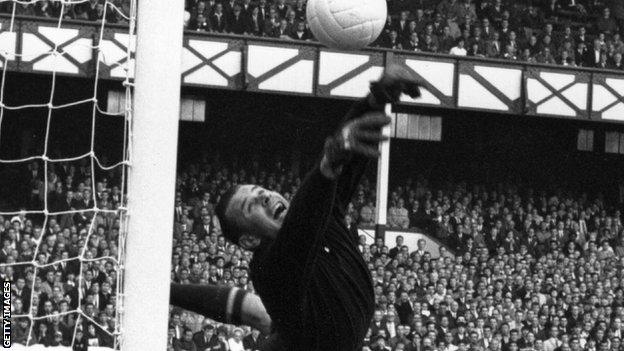
Most people become great by mastering the rules. Lev Yashin became legendary by rewriting them.
Long before modern goalkeepers were expected to sweep behind their defenders, organize the backline, or launch attacks with precise distribution, Yashin was already doing it.
He wasn't content with standing on his goal line waiting for danger to arrive. He attacked the danger first.
Born in Moscow in 1929, Yashin spent part of his childhood working in a weapons factory during World War II. Football became more than a sport—it became his escape.
Over the next two decades, he devoted his entire professional career to Dynamo Moscow, rejecting lucrative opportunities abroad to remain with the club he loved.
On the pitch, he looked different. Dressed entirely in black, he seemed to cover every corner of the goal. Opponents celebrated scoring against him as though they had won a trophy.
He saved more than 150 penalties. He kept over 270 clean sheets. He won Olympic gold, a European Championship, and in 1963 achieved something no goalkeeper has repeated.
He won the Ballon d'Or. Not as the best goalkeeper. As the best footballer in the world.
But perhaps his greatest achievement wasn't the trophies. It was changing how the position itself was played.
Every modern goalkeeper who confidently leaves the goal line, commands the penalty area, and starts attacks owes something to Lev Yashin.
Real leaders don't just excel within existing systems. They build better ones. Innovation isn't always about creating something new. Sometimes it's about having the courage to do something differently long before the world understands why.
History doesn't just celebrate greatness. It reminds us that true legends leave the game different from how they found it.
When the Impossible Becomes Reality: The Extraordinary Story of the 1950 USA vs England World Cup Upset
Some victories are so unbelievable that people refuse to accept them. This was one of them.
The Year is 1950, England arrived at the FIFA World Cup carrying the weight of expectation. They were considered the birthplace of modern football, packed with professionals, and widely expected to dominate the tournament.
Just weeks earlier, they had dismantled Portugal 10–0.
Standing across from them was the United States. A team few people took seriously. Most of the American players weren't full-time footballers. One was a schoolteacher. Another drove a hearse for his family's funeral home. Their goalkeeper, Frank Borghi, had never imagined he'd one day face England on football's biggest stage. Leading the attack was Joe Gaetjens, a Haitian student who washed dishes in a New York restaurant to support himself. Even their own coach reportedly described them as "sheep ready for the slaughter."
Everything suggested the match would be a formality. Football had other ideas. England attacked relentlessly. Shot after shot. Chance after chance. But Borghi refused to break.
Then, just before halftime, a long-range effort found Joe Gaetjens, whose diving header redirected the ball into the net.
USA 1. England 0.
There were still 45 minutes to play. England threw everything forward. The Americans defended with courage, discipline, and belief. When the final whistle sounded, one of the greatest upsets in sporting history had been written.
Back in England, some newspaper editors reportedly believed the result had been transmitted incorrectly. A scoreline that read USA 1–0 England seemed impossible. But impossible had just become reality.
There's a lesson here that extends far beyond football.
People will always measure you by your résumé. Your reputation. Your resources. Your past. But history reminds us that none of those things guarantee tomorrow's outcome. Preparation beats prediction.
Belief outlasts reputation. And sometimes, the people everyone overlooks become the ones everyone remembers.
History doesn't just preserve remarkable moments. It reminds us that the impossible often begins with someone willing to believe it isn't.
Thank you and God bless.
When Weakness Becomes Power: The Extraordinary Story of Garrincha
Most people spend their lives trying to hide their weaknesses. Garrincha built his legacy because of his.
Born in a poor town in Brazil, Garrincha entered the world with severe physical deformities. One leg was nearly six centimetres shorter than the other. One knee bent inward. The other bent outward. His spine was twisted. Doctors believed he might never walk properly.
No one imagined he would become one of the greatest footballers the world had ever seen. But life has a remarkable way of turning perceived disadvantages into extraordinary strengths.
Those unusual legs made Garrincha impossible to predict. Defenders couldn't anticipate his next move because his body didn't move like anyone else's.
He didn't just beat defenders. Sometimes he'd dribble past the same player…
Pause. Wait for him to recover. Then dribble past him again. Not to embarrass him. Simply because football was pure joy.
Then came the 1962 FIFA World Cup. When Pelé was injured early in the tournament, many believed Brazil's hopes had disappeared. Instead, Garrincha stepped forward.
He inspired Brazil to another World Cup title and produced one of the most memorable individual performances the tournament has ever witnessed.
Millions called him "The Joy of the People."
His later years were marked by personal struggles, reminding us that talent alone isn't enough to sustain success.
But his greatest legacy wasn't the trophies. It was proving that our greatest limitations can become our greatest advantages.
The world will always notice what makes you different. The question is: Will you spend your life hiding it… Or mastering it?
Sometimes your greatest weakness is simply a strength the world hasn't recognized yet. History doesn't just entertain us. It teaches us how to lead, think, build, and grow.
What's the lesson you'll take from Garrincha's story? Please write them in the comment section.
Maracanazo: The Defeat That Redefined Brazilian Football
Nearly 200,000 people filled the Maracanã Stadium in Rio de Janeiro, united by a single expectation—celebration. The atmosphere was electric, charged with anticipation as Brazil stood on the brink of what seemed like an inevitable World Cup victory.
All Brazil needed was a draw.
But football, as history has shown time and again, is never predictable.
Uruguay had other plans.
In a stunning turn of events, Uruguay overturned expectations and secured a 2–1 victory, silencing the massive crowd and delivering one of the most shocking upsets in football history. This moment would forever be remembered as Maracanazo—a defining chapter not only in Brazilian football but in the global sporting narrative.
The impact of that defeat went far beyond the final whistle. It reshaped Brazil’s football identity. The iconic white jersey worn that day was retired, replaced by the now-famous yellow kit that has since become synonymous with excellence and success.
Yet, beyond the heartbreak lies a powerful lesson.
Sometimes, a single loss does not define you—it transforms you.
Brazil’s journey after Maracanazo is a testament to resilience, reinvention, and the strength to rise again. From that painful defeat emerged a footballing powerhouse that would go on to win multiple World Cups and inspire generations.
In sport, as in life, setbacks are not the end of the story—they are often the beginning of something greater.
#Football #Leadership #Resilience #Mindset