This Man entered Amsterdam airport In 2016 and technically never stopped working till now. The man is a recording. Dutch designer Maarten Baas filmed a performer for 12 full hours behind a translucent screen, erasing and repainting the minute hand with a roller every minute.
I'm finally reading Dune. This quote, which is in the first few pages, hits hard:
"Once men turned their thinking over to machines in the hope that this would set them free. But that only permitted other men with machines to enslave them."
The AI numbers are starting to look very ugly.
Even under "best case" assumptions, FT's own data shows Microsoft AI ROI at -9%, Google at -15%, Meta at -28%, Oracle at -35%. Only Amazon barely comes out positive.
This is exactly why I keep comparing this to the dot-com era. Incredible technology does not automatically mean sustainable economics. The internet survived. Most internet companies didn't.
Right now hyperscalers are spending trillions hoping future demand catches up to present capex. That's not certainty. That's a leveraged bet.
I heard an interview today about AI in creative spaces and the man being interviewed said “AI is data, and Data can only look backwards. Creativity looks forwards.” And I need to sit with that in the best possible way.
Young boys are dressed as women, made up, and forced to dance sexually for wealthy Muslim men before being sexually exploited.
The widespread practice known as Bacha Bazi has countless underage victims💔
I’ve always believed the No.1 application of AI should be to improve human health.
That work started with AlphaFold, and now at @IsomorphicLabs with the mission to reimagine drug discovery and one day solve all disease!
We are turbocharging that goal with $2.1B in new funding.
France became the world's first country to make it illegal for large supermarkets to throw away or deliberately destroy edible unsold food.
Under the groundbreaking law (known as Loi Garot), stores over 400 square meters (about 4,305 square feet) must now partner with charities and food banks to donate still-safe surplus food rather than discard it. They are explicitly banned from spoiling items—like dousing them in bleach—to prevent dumpster diving. Non-edible food can go to animal feed, composting, or other recovery uses instead of landfills.
The measure tackled a glaring contradiction: France was wasting around 7 million tons of food annually while millions faced food insecurity. Supermarkets previously contributed significantly to that waste, sometimes for liability reasons or to avoid competition with discounted sales.
The policy has boosted donations—food banks report receiving far more usable goods—and forms part of a national push to halve food waste, including school education, business incentives, and supply-chain reforms.
While critics note it doesn't fully address overproduction upstream and compliance varies, the approach has inspired similar efforts in places like Italy and the Czech Republic.
“We are going to die, and that makes us the lucky ones. Most people are never going to die because they are never going to be born. The potential people who could have been here in my place but who will in fact never see the light of day outnumber the sand grains of Arabia. Certainly those unborn ghosts include greater poets than Keats, scientists greater than Newton.
We know this because the set of possible people allowed by our DNA so massively exceeds the set of actual people. In the teeth of these stupefying odds it is you and I, in our ordinariness, that are here. We privileged few, who won the lottery of birth against all odds, how dare we whine at our inevitable return to that prior state from which the vast majority have never stirred?”
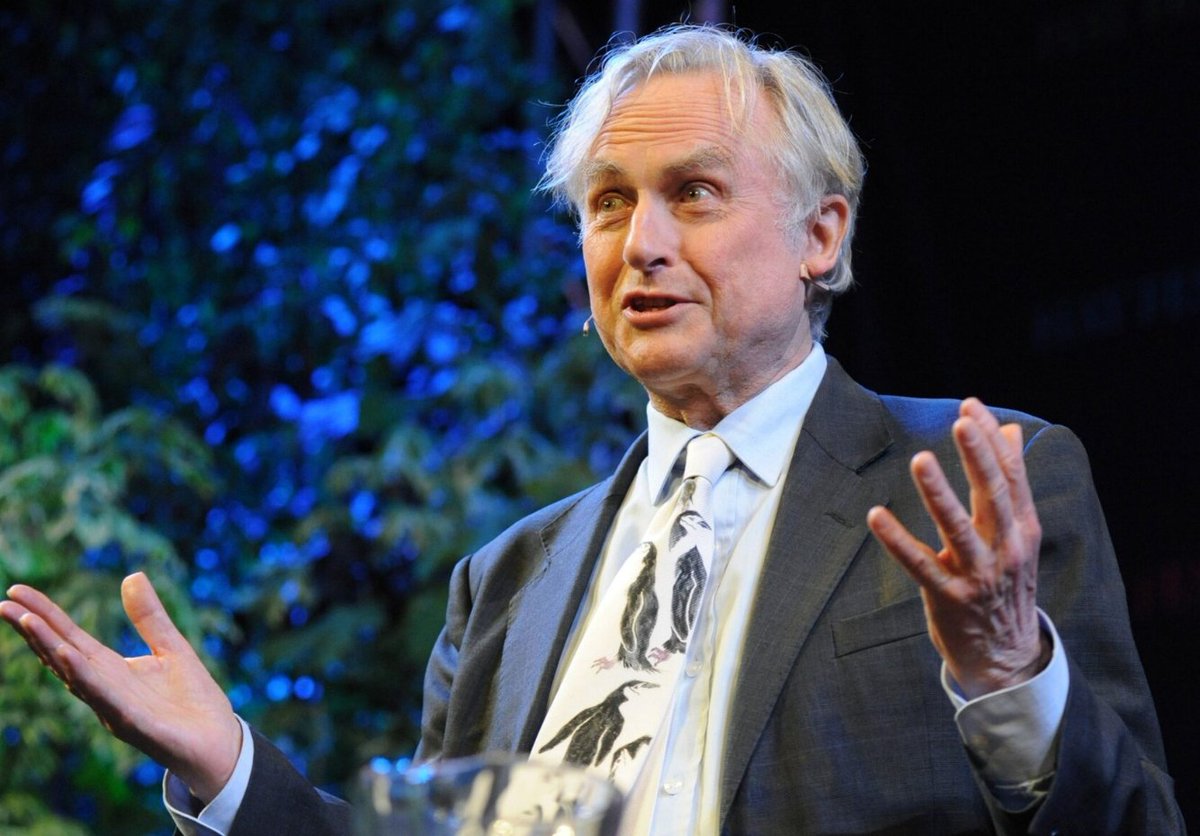
― Richard Dawkins, Unweaving the Rainbow