FROSTBYTES co-founder | Building advanced liquid cooling for data centers. Reduced power demand, greater compute density and reusing waste heat. Consensys alum
A Japanese immunologist spent 20 years proving that the chemicals trees release into the air walk into your bloodstream, hunt down your stress hormones, and arm your immune system in ways no therapist or pharmaceutical has ever matched, and most of the data has been sitting in Japanese medical journals for two decades waiting to be translated.
His name is Qing Li.
He is a clinical professor at Nippon Medical School in Tokyo and the president of the Japanese Society of Forest Medicine. The Japanese government has been funding his research since 2004, and the body of work he has produced is the reason forest bathing is now an officially prescribed clinical therapy in Japan and Korea.
The story actually starts in 1982, when the Japanese Ministry of Agriculture, Forestry and Fisheries coined the term shinrin-yoku to describe the practice of slow, mindful walking in a forest. They did it for a practical reason.
Japan was urbanizing fast, stress-related illness was climbing, and the country had thousands of square kilometers of forest sitting unused. The idea was to give people a reason to walk into the trees... They had no idea what was actually happening to the human body during those walks until Qing Li ran the first proper experiment in 2005.
He took twelve healthy adult men on a three-day, two-night trip to a forest park. They walked for a few hours each day. Nothing strenuous. No prescribed routes or breathing exercises. They simply walked slowly through the trees, breathing the air, looking at the forest.
Li drew blood and urine samples before the trip, on the second day, on the third day, on day seven after returning home, and again on day thirty.
The numbers that came back from the lab were not what anyone expected.
The activity of a specific type of immune cell called the natural killer cell, which is the cell your body uses to hunt down cancer cells and virus-infected cells before they can spread, had jumped by roughly 50 percent during the forest trip. The actual number of natural killer cells circulating in the bloodstream had increased significantly.
Three different anti-cancer proteins that those cells produce, called perforin, granzymes, and granulysin, had all risen sharply. And the effect did not disappear when the men went home. The immune boost was still measurable on day seven and was still partially present on day thirty.
Two hours a day in a forest had upgraded the immune system for a full month.
Li ran the same experiment with women a year later and found nearly identical results. Then he ran it with a control group who took a three-day trip through an urban area with the same amount of walking, the same hotel quality, and the same diet.
The urban group showed no measurable change in natural killer cell activity at all. The forest was doing the work, not the vacation.
The mechanism turned out to be a class of airborne molecules called phytoncides. Trees produce these compounds to defend themselves against insects, bacteria, and fungi. Pine, cedar, oak, and cypress trees release them in particularly large amounts, especially in warmer weather and after rainfall.
When you walk through a forest, you are inhaling those molecules into your lungs and absorbing them through your skin, and once inside your body they appear to directly stimulate the production and activity of the very immune cells Li was measuring in his lab.
Roughly 50 percent of the health benefit of a forest walk, according to Li's data, comes from the chemistry of the air itself. The other half comes from what the forest is doing to your nervous system.
This is where it stops being only about the immune system and starts being about stress.
A separate Japanese research team measured cortisol, the body's main stress hormone, in 84 participants across 35 different forest sites. They drew samples before and after a 30-minute walk in each forest and compared them to control walks in matched urban environments. The cortisol levels of the people who walked in the forest were lower than the cortisol levels of the people who walked in the city by a significant margin. Their heart rates were lower. Their blood pressure was lower.
The activity of their parasympathetic nervous system, which is the part responsible for rest and recovery, had gone up. The activity of their sympathetic nervous system, which is the part that drives fight or flight, had gone down.
Then a researcher at the University of Michigan named MaryCarol Hunter ran the cleanest version of this experiment ever done. She recruited participants from a city and told them to take a nature pill three times a week for eight weeks.
They were free to choose the time, the place, and the duration of the nature experience, as long as it was outside, in daylight, and free of phones, conversations, and aerobic exercise. They sent her saliva samples before and after each session so she could measure cortisol changes accurately and rule out the normal daily drop in stress hormones that happens to everyone.
The result was that participants experienced a 21.3 percent drop in cortisol per hour spent in nature, with the biggest payoff happening between minutes 20 and 30 of the walk.
After that, the cortisol kept dropping, but more slowly. The threshold dose for measurable stress relief was just 20 minutes outside in something that looked and felt like nature.
What none of this means is that nature is a substitute for therapy or for medication when someone genuinely needs them. Therapy treats different things than a walk does, and Li himself has been careful in interviews to call forest bathing a complementary intervention rather than a replacement for clinical care.
But what the research has settled is that the human body has a physiological response to being among trees that operates on the same biological systems modern medicine is trying to reach with drugs and clinical protocols, and that response is fast, measurable, and free.
The strangest part of Li's work is the implication he keeps repeating in interviews. The average person now spends more than 90 percent of their life indoors. Their cortisol stays elevated. Their natural killer cells stay sluggish.
Their parasympathetic nervous system rarely gets a chance to take over. The system that was tuned by millions of years of life under a canopy of trees is being asked to run permanently inside a box made of drywall and screens.
Your body has not forgotten what it is supposed to do in a forest. It is waiting for you to walk into one.
The new Fed Chair just went on record saying AI is the biggest economic shift of his lifetime and markets are completely missing what that means (Save this).
Kevin Warsh, the newly confirmed Fed Chair declared that artificial intelligence is "perhaps as important a change in the economy, business, and households as we've had in my adult lifetime."
Before being nominated, Warsh called the current moment the most productivity-enhancing wave of our lifetimes, past, present, and future and argued in a Wall Street Journal that AI would be a significant disinflationary force that bolsters American competitiveness for decades.
Warsh's core thesis is built on a direct parallel to the 1990s internet boom.
He argues that the internet took a decade to show up in official productivity data, but the Fed under Greenspan took the bet early allowing the economy to run hotter than conventional models suggested and the result was a historic expansion with low inflation and rising real wages.
Warsh wants to make that same bet on AI, and has said "the anecdotes will be there before the data. Policymakers will have to take a chance."
But his first meeting as Fed Chair tells the more complicated near-term story.
Today, Warsh held rates steady at 3.5 to 3.75%, the fourth consecutive hold and nearly half the committee signaled they want to hike rates before year end, with nine officials forecasting at least one increase.
The reason AI infrastructure spending is currently inflationary before it is disinflationary, the $4 trillion global data center buildout is consuming steel, electrical equipment, land and skilled labor faster than it is producing productivity gains.
Warsh notably did not submit a rate forecast dot at all, the only FOMC member not to, a deliberate signal that he refuses to box himself in.
He also made a sweeping structural change to how the Fed communicates.
Warsh stripped forward guidance from the policy statement entirely and has reduced the frequency of public Fed commentary, his philosophy being that markets should react to data, not to Fed predictions.
This is a fundamental shift from the Powell era, and it means volatility around economic data releases goes up substantially from here.
🚨 SHOCKING: LISA SU’S $1,499 LUNCHBOX ANNIHILATES NVIDIA’S $4K AI BEAST!
AMD CEO Lisa Su walked on stage, held a lunchbox sized PC in one hand, and ran a 235 billion parameter model live.
No data center. No cloud. No rented GPU.
The chip inside is the AMD Ryzen AI Max+ 395. It is the first x86 chip where the CPU and GPU share the same pool of memory. Up to 128GB of unified memory. That one design choice is what changes everything.
An RTX 5090 gives you 32GB of video memory. A 4090 gives you 24. This box gives you more than three times either of them in a chassis you can carry in a backpack.
On DeepSeek R1 inference, AMD's chip beat an Nvidia RTX 5080 by more than 3x. A desktop the size of a thick paperback outrunning a dedicated graphics card that costs over a thousand dollars on a real AI workload.
Now do the math on your subscriptions.
Claude Code Max is $200 a month. ChatGPT Pro is another $200. Cursor is $20. Gemini is $20. That is $5,280 leaving your account every year before you build a single thing.
The 128GB version of this machine starts at around $2,399. At that run rate it pays for itself in under a year and then runs free.
Install Ollama. Pull Qwen3 235B. Point Claude Code at localhost. Same interface you already use. Nothing leaves your machine. Nothing costs per request. No throttling at 3am when you finally have time to build.
Lawyers stop worrying about what OpenAI does with their files. Developers stop watching the token counter. Founders stop killing prototypes because the cloud bill scared them off.
Private AI just became something a normal person can own.
The reason we think dandelions are weeds is because of a 1950s marketing campaign.
Dandelions, native to Europe and Asia, were brought to North America in the 1600s by European colonists who grew them deliberately.
Every part is edible. The leaves are a salad green, the flowers were made into wine, and the roots were roasted as a coffee substitute and used medicinally for liver and kidney conditions for thousands of years. They were a kitchen-garden staple well into the 1800s.
The shift happened after World War II, when 2,4-D (originally developed for chemical warfare research) was approved as a residential herbicide. Companies like Scotts built the modern lawn-care industry around the idea that a perfect green lawn meant zero broadleaf plants.
Dandelions, being bright yellow and resistant to mowing, became a visible enemy, and the campaign worked. By the 1970s, "dandelion-free" was synonymous with "well-kept."
They aren't native, but they aren't doing significant ecological harm either. The herbicides used to kill them, on the other hand, kill bees, contaminate groundwater, and have been linked to non-Hodgkin lymphoma in humans.
If you hate dandelions, it's most likely due to a marketing campaign that ran before you were born.
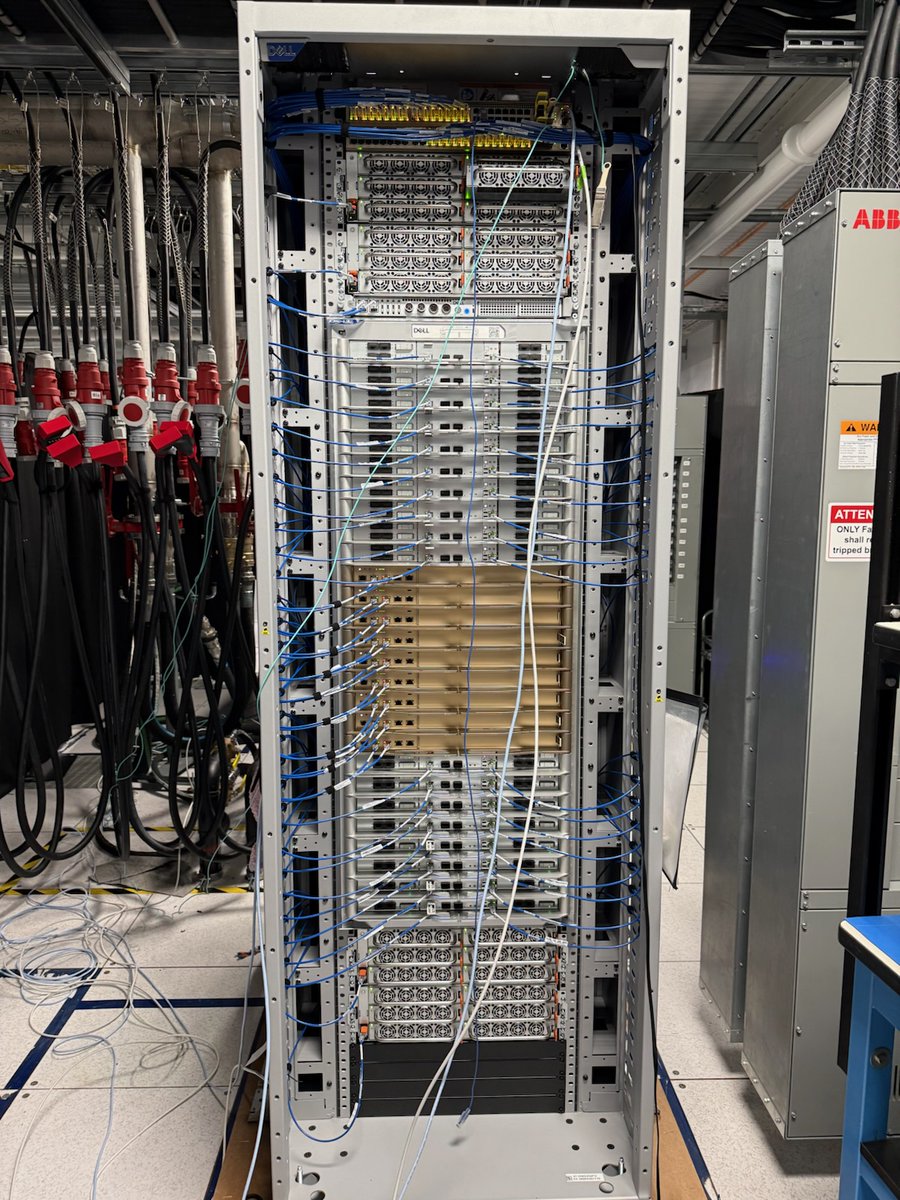
The world’s first @nvidia Vera Rubin NVL72 server rack is here.
We’re thrilled to deliver the first working, liquid-cooled @Dell PowerEdge XE9812 for @CoreWeave.
Built for the next era of AI infrastructure. 🚀🤝
Ethereum is not a company. It is global infrastructure controlled by no entity or consortium — like the Internet
That’s why institutions bring the most assets onto Ethereum
ETH is not a stock or valued on fees
ETH is productive money — and that’s the exponential case for ETH
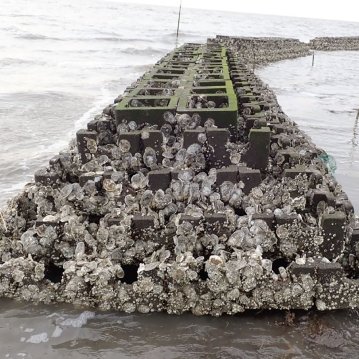
Coastal cities are replacing concrete seawalls with oyster reefs. The oysters are better at the job.
Seawalls start degrading the day they're installed. Waves chew them up, storms crack them, and the repairs never stop.
An oyster reef, on the other hand, doesn't break down. It actually grows. The oysters stack, reproduce, and fuse into living rock that gets stronger every year. A mature reef can cut incoming wave height by up to 83%, trap sediment, rebuild the shoreline behind it, and shelter fish, crabs, and shrimp while it does the work.
A hectare of reef provides up to $85,000 a year in shoreline protection. Concrete costs over a million dollars a hectare to build and only weakens.
Once again, working with nature instead of against it is the answer.
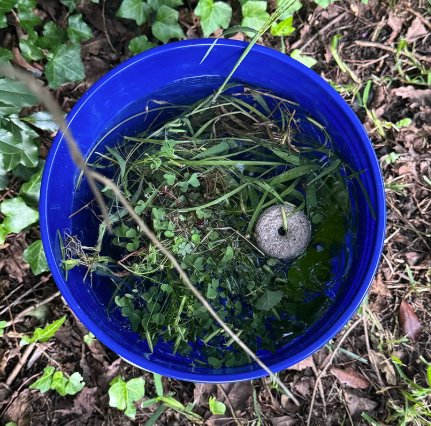
You can crash your yard's mosquito population without spraying a single chemical with a Mosquito Bucket of Doom.
Fill a 5-gallon bucket about two-thirds with water. Drop in a handful of grass clippings, leaves, or hay. Let it sit for a day, then drop in a Bti dunk (also called Bacillus thuringiensis israelensis, sold at any hardware store as "mosquito dunks," about $10 for six).
Mosquitoes are powerfully attracted to fermenting water and will lay their eggs in your bucket. Bti is a naturally occurring soil bacterium that produces a toxin that kills mosquito, blackfly, and fungus gnat larvae only.
This method doesn't harm bees, butterflies, fireflies, fish, frogs, birds, pets, or people. BTI dunks are EPA-approved for organic use and safe in animal water troughs and birdbaths.
One dunk lasts about 30 days. Top off the water as it evaporates. Cover with 1/2-in Mesh Hardware Cloth to prevent animals from getting trapped and put the bucket somewhere shady where pets and kids won't get into it.
The bucket becomes a mosquito magnet and a dead end. Compare that to fogging the entire yard with pyrethroids, which kills every insect in it, including the predators that eat mosquitoes.
Doug Tallamy's Homegrown National Park has been running the "Mosquito Bucket Challenge" since 2021. The more buckets in a neighborhood, the bigger the dent. One bucket per yard is a great start.
The Boston Big Dig stands as a monument to government economic calculation; a $2.6 billion highway project that devoured $24 billion and took 30 years to complete. You witnessed the largest cost overrun in American history, a 923% explosion that would bankrupt any private firm within months.
When politicians spend other people's money on other people's problems, they face none of the profit-and-loss signals that discipline private actors. The Massachusetts Turnpike Authority had zero incentive to control costs because taxpayers bore the burden while contractors captured the gains. Cost overruns became profit opportunities. Delays meant extended contracts. The very mechanisms that create efficiency in markets (bankruptcy, competition and ownership) vanished entirely.
Private highway companies in 19th-century America built transcontinental railroads faster and cheaper than government agencies repair potholes today. Entrepreneurs risk their own capital. When James Hill built the Great Northern Railway, every dollar wasted was his own dollar lost. When government builds infrastructure, every dollar wasted is someone else's tax burden.
Free market insight cuts straight to the heart: without market prices for capital allocation, bureaucrats cannot perform economic calculation. They operate blind, spending resources they did not earn toward goals they did not choose, accountable to voters who cannot monitor their daily decisions. The Big Dig represents this knowledge problem in concrete and steel.
You pay $24 billion for a tunnel that private investors priced at $2.6 billion. That is if they would have built it at all.
Let me trace the timeline here because nobody's connecting it.
Step 1: Scrape the entire internet. Every book, every article, every conversation, every piece of art, every forum post. Do it without asking. Do it without paying.
Step 2: Train a model on all of it. Call it "artificial intelligence."
Step 3: Go to BlackRock's Infrastructure Summit and announce: "We see a future where intelligence is a utility, like electricity or water, and people buy it from us on a meter."
Step 3 is where you sell people's own knowledge back to them. On a meter.
They took the collective output of human thought, compressed it into a model, and now they want to charge you by the token to access a version of what you and everyone you know already created.
One Reddit user put it perfectly: "They stole all this data from us, the people, our life's work, creativity, art, by devouring the internet and blowing through all copyright laws. Now they want to sell it back to us in the form of a utility."
Imagine if someone photocopied every book in the public library, burned the library down, and then opened a subscription service for the copies.
That's the metered intelligence business model.
And they're pitching it to infrastructure investors as though they invented water.
AMD is said to command 33.2% unit share in the x86 server CPU market but see 46.1% of revenue, suggesting its server CPUs carry substantial pricing power over Intel.
$AMD $INTC $ARM
Nvidia on Blackwell demand: “Demand for GB300 NVL72 was particularly strong with frontier model builders and hyperscalers each having cumulatively deployed hundreds of thousands of Blackwell GPUs, marking the fastest product ramp in our company's history.”
$NVDA $AMD $AVGO
No one should have to beg the government to exercise a constitutionally protected right anywhere in the country.
Thank you @AustinScottGA08 for cosponsoring HR 645, the National Constitutional Carry Act.
Cloudflare CEO Prince on how AI changes who gets laid off first:
Two weeks ago I laid off more than 20% of my workforce. I didn’t do it because Cloudflare is struggling. We posted record revenue growth, have strong free cash flow and are adding an unprecedented number of customers around the world. I did it because business is changing, and to win the future, Cloudflare needs to change with it.
We haven’t found another example in U.S. business history of a public company growing at more than 30% that laid off more than 20% of its workforce. Yet what we did is likely going to become the norm over the next year. This is a story about artificial intelligence, but executives and commentators are misunderstanding how it will disrupt business and who will be affected.
AI isn’t coming for builders or sellers, but it is coming for measurers. Tireless, independent, efficient and available, AI systems can now measure an organization with a level of objective detail and precision that was previously impossible even for the best employees.
For Cloudflare, internal audit previously picked a handful of business risk areas to scrutinize each quarter. Now we’re moving to a system in which every business risk is audited continuously. We’re closing our books faster. We’re making fewer mistakes and catching the ones we do more reliably. And, as CEO, I’ve never had better tools to measure exactly how the business is performing, including identifying our rising stars.
The vast majority of those we laid off last week were measurers. We cut middle managers across the organization because AI allows us to have more direct reports per manager while still measuring and mentoring our teams effectively.
We consolidated our operations functions into a single group that can support teams across the business, using AI to gain specific expertise when needed. We significantly reduced our marketing team, which, like in most companies, was teeming with measurers. Across our finance team, we found opportunities to consolidate and automate.
We received almost a million applicants for 1,111 paid internships this summer. The interns we hired are extremely qualified and AI-native. They’re all builders or sellers, and we expect that the majority will get full-time offers.