@bitforth Entiendo la crítica, pero si hubiera alguien que enseñará conceptos técnicos complejos y le metiera conceptos filosóficos, humanistas y esperienciales transversales para enriquecerlos, sería para mí un gran contenido. si lo hace bien y no como relleno.
@devruso@root_rat El caso de P=NP se sostiene: romper la criptografía actual tiene un coste sistémico enorme y hay precedentes reales de secretismo estatal en cripto.
La de la cura del cáncer no: los incentivos económicos empujan a patentarla y venderla, no a ocultarla.
Ya que está de moda decompilar juegos y apps que ya existen.
Este es REA, un MCP + CLI para que tu agente haga esa ingeniería inversa:
• Abre binarios con Hopper (tiene demo gratis) o Ghidra y saca pseudocódigo, strings y llamadas
• También analiza apps Electron y .NET
• Te explica cómo funciona una feature y te muestra la evidencia
• Luego tu agente construye su propia versión en tu proyecto
Y aunque No te da el código que escribieron sus creadores, sino una reconstrucción aproximada para entender la lógica.
Funciona con Claude Code, Codex, Cursor, y cualquier Agente que soporte MCP o CLI
https://t.co/pXQAVOEgpi
22 mistakes private equity makes with AI transformation:
1. Telling every portco CEO to “do something with AI.” Give them a business problem to solve, someone to help solve it, and a clear way to judge the result.
2. Assuming successful projects mean the portfolio has adopted AI. FTI found that 95% of surveyed funds reported initiatives meeting or exceeding their original business cases. Yet 43% of portfolio companies were still experimenting, using AI only in a limited way, or not using it at all.
3. Assuming a bigger budget will fix the problem. In the same survey, 35% cited AI talent and skills shortages as a barrier to scaling, compared with 20% citing budget.
4. Waiting to hire a dedicated AI engineer at every company before starting. Work out which companies need a permanent hire and which could get started with shared or embedded engineering support.
5. Taking a working pilot from one portco and expecting it to fit the next. Reuse what you can, but check the workflow, systems and data again.
6. Starting before anyone agrees on the baseline. Record what the work costs, how long it takes and how often it needs correcting. Get the people doing the work to agree on those numbers.
7. Putting “AI transformation” in the value creation plan without naming the work. Each project needs a business owner, a measurable result and a date to review progress.
8. Buying an assessment without agreeing what happens afterwards. It should help you decide what to build, what it will require and how you’ll measure the result.
9. Committing to a long project before testing the difficult assumptions. Break the work into stages so you can change direction when you learn something.
10. Comparing proposals on price alone. Ask when each team expects to deliver a working result, what could delay it and what that delay would cost the business.
11. Accepting a bigger delivery team as evidence of progress. More people may be justified by more work. If the scope is unchanged, ask what the extra headcount is delivering.
12. Renewing the development contract without reviewing what AI has changed. Ask whether delivery speed, quality or total cost have improved, and how the cost of AI tools is being handled.
13. Giving the CTO another responsibility without freeing up any capacity. Someone needs time to run the project, and someone on the business side needs to own the outcome.
14. Making portfolio decisions from reports that can’t be compared. S&P Global’s survey put operational improvement first among value creation levers, at 72%, while highlighting fragmented data as a barrier. Agree on the definitions behind the numbers.
15. Skipping the data work because it’s hard to show in a board update. Find the missing fields, conflicting records and unclear definitions before you depend on an agent’s answers.
16. Letting every add-on use a different definition of the same metric. Keeping two ERPs may be reasonable. You still need to reconcile what each system means by revenue, customer or order.
17. Assuming every AI project has to wait for the ERP migration. Check whether useful read-only work can start with the existing data. Account for permissions, data freshness and the changes the migration will require.
18. Choosing the first use case because it makes a good demo. Look for recurring work with enough volume to matter and a result you can measure. Include human review and rework when calculating savings.
19. Letting AI spending grow without a portfolio-wide view. Companies may need different tools, but the fund should be able to see what they’re buying, who uses it and what it delivers.
20. Treating launch as the end of the work. Rerun the tests when the prompt, model or tools change, and keep checking how the system performs on real work.
21. Leaving the vendor as the only team that can maintain it. Agree on access, documentation and handover while you’re building. Someone inside the portco needs to understand what they’re taking responsibility for.
22. Waiting until exit to collect the evidence. Only 9% of PE leaders in Grant Thornton’s survey were very confident they could pass an AI governance audit within 90 days. Keep the results, costs, tests and ownership documented as you go.
What else?
@bitforth como lanzar un producto da toda esta esperiencia si la mayoría productos que se da de ejemplo son con Bastantes usuarios, ni unos solo lo da lanzar el producto no Veo la relación lanzar el producto con los ejemplos
“A society that mocks virtue prepares its own collapse.”
- Plato
When a society begins to ridicule virtue, it gradually weakens the moral foundation it depends on to survive. In works such as The Republic, Plato emphasized qualities like justice, honesty, integrity, and self-discipline as essential principles that help create a stable and functioning society. These values are more than personal ideals; they help build the trust and responsibility necessary to hold a community together.
When integrity is treated as weakness and good character becomes something to mock, people can become increasingly cynical and distrustful of one another. As mutual trust disappears, corruption and self-interest can begin to replace responsibility toward others. Over time, a society that consistently places individual desires above the common good may weaken from within, making its institutions and communities increasingly unstable.
este fue el primer libro que leí sobre system design y me cambió la cabeza.
te enseña a pensar en sistemas de una forma muy clara y es fácil de leer.
por eso siempre recomiendo empezar por acá.
Un repo para buscar trabajo con Claude Code.
Lo clonas, rellenas tu perfil y la IA evalúa ofertas, adapta tu CV, escribe cartas y te prepara entrevistas.
Automatiza tu búsqueda de trabajo:
→ https://t.co/LkOuGYXbYd
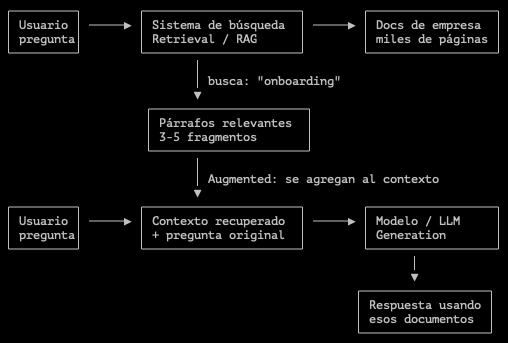
¿cómo hace un modelo para responder preguntas sobre un PDF?
si querés que responda sobre un documento, esa información tiene que estar en el contexto que recibe.
pero aparece un problema.
imaginá que tenés miles de páginas. ¿se las vas a enviar cada vez que hacés una pregunta?
además de ser costoso, llegarías al límite de contexto muy rápido.
para resolver esto se usa RAG.
RAG agrega un sistema de búsqueda entre vos y el modelo. cuando hacés una pregunta, ese sistema busca en tus documentos las partes relacionadas con ella y se las pasa al modelo antes de responder.
por ejemplo, preguntás:
"¿cómo funciona el proceso de onboarding?"
1) el sistema busca en la documentación todo lo relacionado con onboarding.
2) encuentra párrafos relevantes.
3) se los pasa al modelo junto con tu pregunta.
4) el modelo genera la respuesta usando esa información.
ahí está el beneficio principal: en lugar de recibir miles de páginas, el modelo recibe solo los párrafos relacionados a la pregunta. y así, puede responderte.
para eso suelen usarse técnicas como búsqueda semántica mediante embeddings y sistemas de ranking.
el desafío está en encontrar los párrafos correctos, porque la respuesta va a ser tan buena como la información que el modelo vea.
Si querés mejorar la velocidad de tu aplicación, pedile a Claude que haga una auditoría de performance.
Que revise:
1) Indexes → consultas lentas, filtros frecuentes y joins.
2) Cache → datos que se recalculan o consultan repetidamente.
3) Payloads → información que se trae o envía sin necesidad.
4) Rendering → renders innecesarios, requests duplicadas y trabajo de más en el cliente.
Y que te muestre los principales cuellos de botella.
Es uno de mis usos favoritos de Claude.
@isa13sanchez Porque que si ella hace parte de ese vacas sagradas qué se cuidan entre ellas, acaso no es corresponsable moral de los acosos cree que no sabía, el ejemplo que da abelardo es perfecto ?
Si se quedan sin créditos en Claude, ya saben, van a hablar con el chatbot de soporte tercerizado "Fin" contratado por Anthropic y problema resuelto: te contesta cualquier pregunta de cualquier tema.
Es increíble que hagan estas cosas. 🤦♂️
Anthropic paga más de 750.000 $ al año para entender los LLMs.
Stanford ha publicado una conferencia de 2 horas que cubre el 80% gratis.
Puede ser lo más rentable que hagas este mes.
(Guárdalo, te servirá)
@bitforth Veo falacia de generalizacion es imposible demostrar que pasa en todas las industrias quisiera verlo. los que "de verdad" juicio subjetivo también quisiera saber como se prueba ,los que estaban por el Cheque podrian a ver adquirido esas habilidades precisamente motivados por eso
@JackDeLaConcha Lo de la señal ya lo arreglo starlink, el trabajo remoto, la electricidad paneles solares y baterías, en el campo racionamiento de agua? quien compra una finca sin manantial propio o acueducto verededal ? Vias malas depende, único debatible por el lugar.