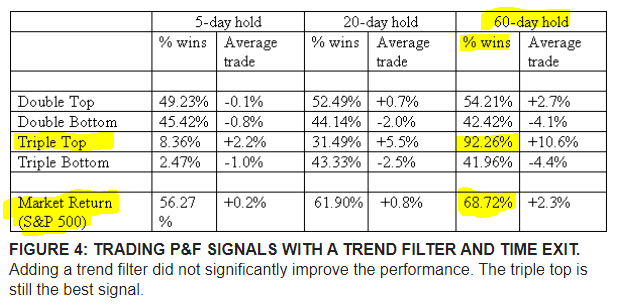
TESTING POINT & FIGURE PATTERNS
by Michael Carr, CMT
"Over longer time frames, only the triple-top buy signal generated market-beating returns."
https://t.co/M0XryT0ZL7
@STOCKSandCOMM
The inaugural Enhanced Games (TEG) hit Las Vegas THIS SUNDAY, May 24!
40 elite athletes compete in swimming, track & field, weightlifting & strongman at Resorts World. First major event embracing science-backed performance enhancements under regulated protocols. 25M+ USD in prizes on the line.
FREE live streams (all times ET):
• Opening Events (weightlifting/swimming): 6:30 PM on YouTube, Rumble, Twitch, Kick
• Main Events (100m sprints, 50m freestyle, deadlift showdown & more): 9:00 PM on Roku Channel, YouTube, Rumble, Twitch, Kick
Practical app for Grok 4.20 Beta: Real-time X sentiment & forward-impact analysis of NVIDIA Q4 FY26 earnings on AI infrastructure demand. Tests real-time data integration, step-by-step reasoning w/ error-correction & reduced equivocation. (1/5)
Based on five weeks since oral arguments and typical Delaware Supreme Court patterns, the court will likely decide in January to March 2026—most probably February—whether to reverse the lower court’s invalidation of Elon Musk’s record-breaking $TSLA compensation package.
Oral arguments in the Delaware Supreme Court appeal (Tornetta v. Musk / In re Tesla Derivative Litigation) occurred on October 15, 2025. No decision has issued as of November 20, 2025.
Delaware Supreme Court typically decides civil appeals within 1–6 months after oral arguments, with many high-profile corporate cases resolved in 2–4 months. This case’s complexity and public attention may extend the timeline slightly.
Legal analysts (e.g., recent Electrek reporting) expect a ruling between late 2025 and early 2026. My best estimate, based on the ~5 weeks elapsed since arguments and typical patterns: January to March 2026, most likely February 2026.
No docket updates or leaks indicate acceleration or delay. The court does not publish firm timelines, so this remains an informed projection.
Arctic Fox # 57, “Can you fix my bow?”
@grok Imagine, upload png, and ‘Edit Video’ prompt: A cute white arctic fox. She wears a pink bow on her head, a pink bandana with a heart pendant, and gold bracelets. A vibrant aurora borealis background. “Can you fix my bow?”
Cyber: Decisive Action Strategy
China launches relentless cyber attacks to dominate cyberspace [1, p.5]. Beijing creates elite forces through major restructurings, merging military, intelligence, and private entities into a unified system [1, p.16]. The PLA’s Cyberspace Force and Information Support Force lead offensives, while the Ministry of State Security uses provincial units and shell companies to steal intellectual property, embed malware in critical infrastructure, and spy [1, p.21]. Groups like Volt Typhoon penetrate U.S. water, power, and transport networks, poised to disrupt on command [1, p.38]. China regards cyber as sovereign territory, justifying massive data theft—exfiltrating records on 80 percent of Americans since 2014 to train AI and spot recruits [1, p.9]. It targets foreign vendor flaws, enlists university hackers, and integrates civilian tech with military power for informatized warfare by 2035 [1, p.5]. Deniability protects campaigns, mixing state operations with patriotic hacktivists who deface sites and launch DDoS attacks on Taiwan [1, p.40]. Yet China reveals vulnerabilities: no combat test since 1979, reliance on U.S. technology, and rigid plans that fail in chaos [1, p.13]. America struggles in this shadow conflict [2, p.1]. U.S. defenses stay vulnerable, viewing cyber as a specialist niche rather than central warfare [2, p.1]. Policymakers waver, constrained by laws and poor resilience, letting adversaries excel in speed and opportunism [2, p.1]. Russia and Iran exploit this alongside China, but Beijing threatens most, undermining U.S. economy and military readiness [2, p.1].
America secures victory with a bold playbook [2, p.1].
Adopt an octopus mindset for offense: central strategy directs, but flexible arms seize chances [2, p.9].
Redefine proportionality to cover total harms—cumulative data losses, economic sabotage, and public fear—not single incidents [2, p.9].
Build deterrence with clear norms: civilian or infrastructure attacks prompt swift cross-domain retaliation [2, p.9]. Accept attribution uncertainty; act decisively on strong evidence, adjust later [2, p.9].
In crises, address seven questions to calibrate responses: Assess damage scope. Anticipate follow-on attacks. Reassure publics. Evaluate behavior changes. Gauge attribution confidence. Match intent to outcomes. Identify targets [2, p.25].
Bold answers require aggressive countermeasures—sanctions, disruptions, or kinetic strikes—tailored to enemy weaknesses [2, p.25].
Policymakers must act immediately. Embed cyber at foreign policy’s core. Deter with strength, retaliate without apology. Fortify networks, unleash offenses, and dominate the domain. Victory requires resolve; delay invites defeat. America surges fiercely, reversing the tide against digital tyrants [2, p.23].
References
[1] Pusztaszeri, A., Harding, E., & Dickson, J. (2025). A Playbook for Winning the Cyber War: Part 3: Evaluating China’s Cyber Strategy. Center for Strategic and International Studies.
[2] Harding, E., Dickson, J., & Pusztaszeri, A. (2025). A Playbook for Winning the Cyber War: Part 7: How the United States Can Win. Center for Strategic and International Studies.
@elonmusk@elonmusk strongly supported Jared Isaacman for NASA administrator. @realDonaldTrump withdrew Isaacman’s nomination on May 31, 2025. Musk expressed disappointment.
Speculative: @elonmusk views @realDonaldTrump’s withdrawal as a personal slight
Grok’s analysis of the common driver for 444 stocks and ETFs showing a Point and Figure Triple Top Breakout: https://t.co/iTkeH10Mla
Source of List: https://t.co/2N7CwDe4BR https://t.co/5yjIrx7qCv
Politically Incorrect: Genetics entirely determine human behavior and success.
Factually True: Genetics influence many traits and behaviors but do not solely determine them.
Claiming genetics alone dictate behavior and success is politically incorrect, as it dismisses environmental roles. Research confirms genetics affect brain development, but social experiences and epigenetics also shape outcomes, as twin and animal studies demonstrate (Ebstein et al. 2010; Plomin and Daniels 2007).
Claiming genetics solely determine behavior and success is politically incorrect and oversimplifies reality. Research highlights gene-environment interactions (Britannica 2024). Technology Networks (2023) notes environment significantly shapes behavior, debunking genetic determinism tied to historical controversies like Nazi ideology.
Genetics affect traits and behaviors via brain development. Ebstein et al. (2010) show genes like the period gene in fruit flies and vasopressin gene in voles influence social behaviors. Plomin and Daniels (2007) use twin studies to link genetics to intelligence and personality, though shared environments also contribute. Social Sci LibreTexts (2022) notes genetics set developmental ranges, such as walking age, but environment adjusts timing.
Interplay with Environmental Factors
Genes and environment interact dynamically. Ebstein et al. (2010) cite social experiences altering gene expression, like in honey bees and rat epigenetics. Heritability estimates, such as 70% for violence traits, leave room for environmental effects (ScienceDirect 2024). Biobank data show genetic links to life choices, yet environment remains key (BBC 2023; Technology Networks 2023).
References:
BBC. 2023. “How Genetics Determine Our Life Choices.” BBC Future. https://t.co/M2eyhu4aC3.
Britannica. 2024. “Behaviour Genetics.” Encyclopedia Britannica. https://t.co/cP0gJrmMZG.
Ebstein, Richard P., et al. 2010. “Genes and Social Behavior.” PMC. https://t.co/7zA0Twu8nX.
Plomin, Robert, and Denise Daniels. 2007. “The Biology of Relationships.” PMC. https://t.co/WPKP3jQt4m.
ScienceDirect. 2024. “Genetic Influence.” ScienceDirect. https://t.co/qgT9ZQqv06.
Social Sci LibreTexts. 2022. “Genes and Behavior.” Social Sci LibreTexts. https://t.co/JkKWRK12zN.
Technology Networks. 2023. “How Does Genetics Influence Our Behaviour?” Technology Networks. https://t.co/EPPvbfT4kj.
China’s Tactical Yuan Weakening Amid Trade and Economic Challenges
Key Points
On April 8, 2025, China set the yuan midpoint at 7.2038 CNY per USD, the weakest since September 11, 2023, likely to boost exports amid trade tensions (TradingView News, 2025).
This move probably breached a key threshold near 7.20 CNY per USD.
Current Exchange Rate
On April 8, 2025, the USD/CNY exchange rate reached 7.3383 CNY per USD (Yahoo Finance, 2025). Historical data shows a peak of 8.74 CNY per USD in 1994 (MacroTrends, 2025).
China’s Yuan Midpoint
The People’s Bank of China (PBOC) set the yuan midpoint at 7.2038 CNY per USD on April 8, 2025, the weakest since September 11, 2023 (TradingView News, 2025). This rate, guiding a 2% trading band, signals a policy to weaken the yuan.
Implications and Context
China likely weakened the yuan to counter U.S. trade tensions and support exports (Reuters, 2025). This decision may also reflect domestic economic struggles, including weak retail sales and high youth unemployment (Asia Times, 2025).
Comprehensive Analysis of USD/CNY Exchange Rate and Yuan Midpoint on April 8, 2025
Exchange Rate Overview
On April 8, 2025, the USD/CNY exchange rate hit 7.3383 CNY per USD (Yahoo Finance, 2025). This rate fluctuates with market demand, global conditions, and policy actions.
China’s Yuan Midpoint and Policy Decision
The PBOC fixed the yuan midpoint at 7.2038 CNY per USD, the weakest since September 11, 2023, allowing a 2% trading range (TradingView News, 2025). Reuters (2025) notes this countered U.S. trade tensions, intensified by Trump’s tariff threats, to enhance export competitiveness. Breakingviews (2025) highlights the PBOC’s cautious approach, setting the rate just 0.1% below expectations.
Economic Context and Implications
China’s weakening yuan aligns with trade disputes and domestic challenges like weak retail sales, youth unemployment, an aging population, and deflation (Asia Times, 2025). A weaker yuan may drive export growth but risks capital flight and investor unease.
References
• Asia Times. (2025). Will China Let Yuan Go.
• Breakingviews. (2025). Yuan Strategic Barometer.
• Forbes Advisor. (2025). USD to CNY Converter.
• MacroTrends. (2025). USD/CNY Historical Exchange Rate.
• Reuters. (2025). China’s Yuan Hits 2023 Lows.
• TradingView News. (2025). China Sets Yuan Midpoint.
• Wise. (2025). CNY to USD Exchange Rate History.
• Yahoo Finance. (2025). USD/CNY Exchange Rate.
• YCharts. (2025). US Dollar to Chinese Yuan Rate.
Failing to fully control each Atmospheric and Orbital Communication Zone will result in vassal state status. 📘
Troposphere (0–15 km / 0–9 miles): Drones operate here, reaching up to 10 km (6 miles) for high-altitude models. They serve as retransmission platforms, such as pseudo-satellites or aerial relays, extending communication signals over line-of-sight distances. Stratosphere (15–50 km / 9–31 miles): Advanced drones or stratospheric platforms, like balloons or airships, function here for retransmission. Google’s Project Loon deployed balloons in this layer to relay internet signals, supporting satellite networks. Low Earth Orbit (LEO) (160–2,000 km / 100–1,240 miles): LEO satellites enable satellite communication with low latency due to their closeness to Earth. They provide broadband (e.g., Starlink), imaging, and relay signals between ground stations or drones. Medium Earth Orbit (MEO) (2,000–35,786 km / 1,240–22,236 miles): MEO satellites support satellite communication, particularly navigation systems like GPS. Geostationary Orbit (GEO) (35,786 km / 22,236 miles): GEO satellites, fixed above one Earth location, deliver continuous retransmission for TV, weather data, and broadband.
In-Depth Book Review of Aldo Leopold's "A Sand County Almanac"
Aldo Leopold’s A Sand County Almanac combines poetic prose, scientific observation, and philosophical insight to promote an ethical bond with nature. This seminal work includes a biographical introduction and excerpts from "February - Good Oak," "Thinking Like a Mountain," and "The Land Ethic." This review analyzes the overall content, then examines each section, focusing on themes, style, and significance.









![ArcticFrenz's tweet photo. Cyber: Decisive Action Strategy
China launches relentless cyber attacks to dominate cyberspace [1, p.5]. Beijing creates elite forces through major restructurings, merging military, intelligence, and private entities into a unified system [1, p.16]. The PLA’s Cyberspace Force and Information Support Force lead offensives, while the Ministry of State Security uses provincial units and shell companies to steal intellectual property, embed malware in critical infrastructure, and spy [1, p.21]. Groups like Volt Typhoon penetrate U.S. water, power, and transport networks, poised to disrupt on command [1, p.38]. China regards cyber as sovereign territory, justifying massive data theft—exfiltrating records on 80 percent of Americans since 2014 to train AI and spot recruits [1, p.9]. It targets foreign vendor flaws, enlists university hackers, and integrates civilian tech with military power for informatized warfare by 2035 [1, p.5]. Deniability protects campaigns, mixing state operations with patriotic hacktivists who deface sites and launch DDoS attacks on Taiwan [1, p.40]. Yet China reveals vulnerabilities: no combat test since 1979, reliance on U.S. technology, and rigid plans that fail in chaos [1, p.13]. America struggles in this shadow conflict [2, p.1]. U.S. defenses stay vulnerable, viewing cyber as a specialist niche rather than central warfare [2, p.1]. Policymakers waver, constrained by laws and poor resilience, letting adversaries excel in speed and opportunism [2, p.1]. Russia and Iran exploit this alongside China, but Beijing threatens most, undermining U.S. economy and military readiness [2, p.1].
America secures victory with a bold playbook [2, p.1].
Adopt an octopus mindset for offense: central strategy directs, but flexible arms seize chances [2, p.9].
Redefine proportionality to cover total harms—cumulative data losses, economic sabotage, and public fear—not single incidents [2, p.9].
Build deterrence with clear norms: civilian or infrastructure attacks prompt swift cross-domain retaliation [2, p.9]. Accept attribution uncertainty; act decisively on strong evidence, adjust later [2, p.9].
In crises, address seven questions to calibrate responses: Assess damage scope. Anticipate follow-on attacks. Reassure publics. Evaluate behavior changes. Gauge attribution confidence. Match intent to outcomes. Identify targets [2, p.25].
Bold answers require aggressive countermeasures—sanctions, disruptions, or kinetic strikes—tailored to enemy weaknesses [2, p.25].
Policymakers must act immediately. Embed cyber at foreign policy’s core. Deter with strength, retaliate without apology. Fortify networks, unleash offenses, and dominate the domain. Victory requires resolve; delay invites defeat. America surges fiercely, reversing the tide against digital tyrants [2, p.23].
References
[1] Pusztaszeri, A., Harding, E., & Dickson, J. (2025). A Playbook for Winning the Cyber War: Part 3: Evaluating China’s Cyber Strategy. Center for Strategic and International Studies.
[2] Harding, E., Dickson, J., & Pusztaszeri, A. (2025). A Playbook for Winning the Cyber War: Part 7: How the United States Can Win. Center for Strategic and International Studies.](https://pbs.twimg.com/media/G1t34L3b0AAXugZ.jpg)