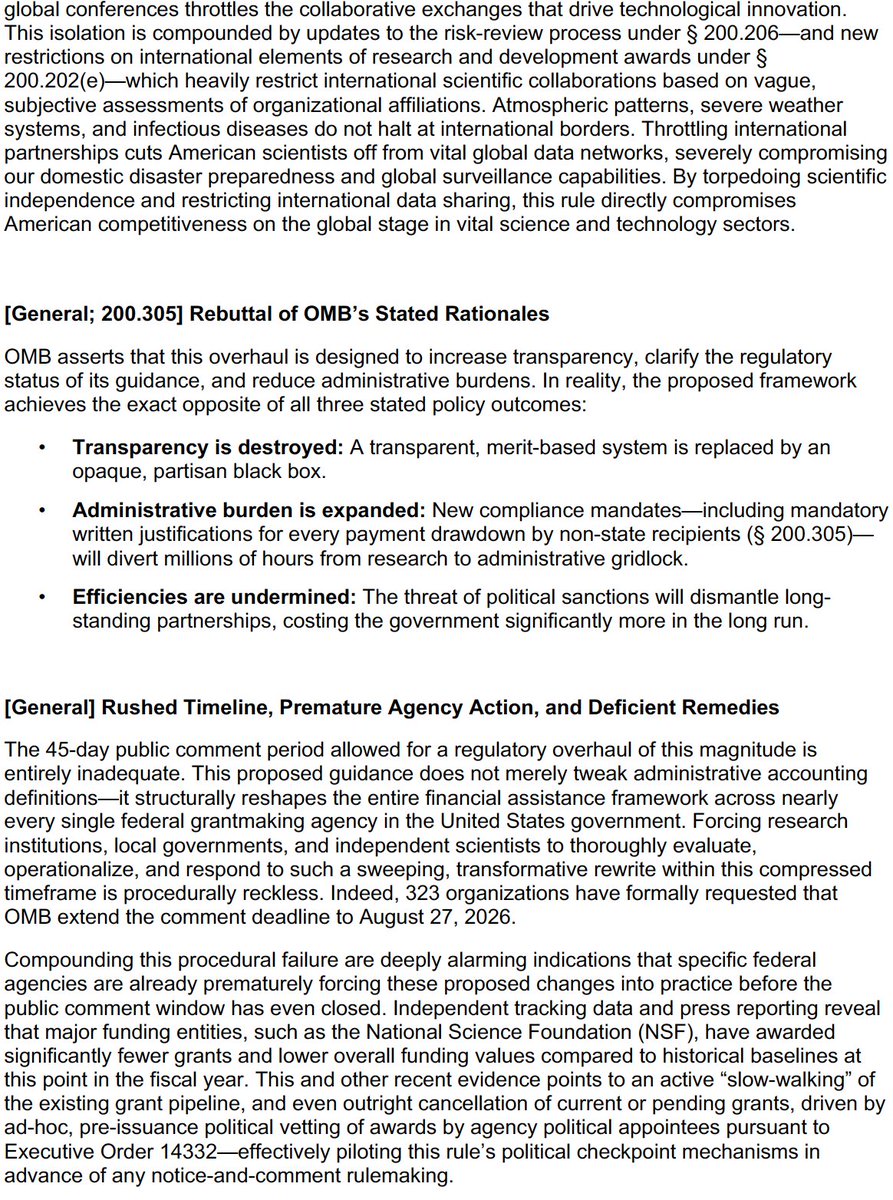
I just submitted my formal comment on the disastrous proposal to transform essentially all U.S. federal grantmaking--affecting every sector of American science, technology, education, & health--into an overtly partisan political process. Full text here: https://t.co/9ZZmQcTmSP
The golden mussel is invasive species that poses a significant threat to infrastructure, the health of our waterways and our holiday weekend!
Left unchecked, they can alter aquatic ecosystems, impact water delivery systems and recreation. Let’s take a closer look at golden mussels and examine how these destructive invasive species can damage our infrastructure.
Learn more at https://t.co/i6TTj8d15H
If your company is working in the wildfire mitigation space, especially in home hardening or fire-resistant building materials, The Lookout is interested in advertising your products or services. Our ongoing coverage of the fires in Colorado in Utah is reaching thousands of fire-impacted or fire-curious viewers across the American West on YouTube and on https://t.co/g0D3VjrsC7.
We have several annual sponsorship spots available. Contact me here or via https://t.co/g0D3VjrsC7 for details!
Looking at the supply numbers for electric generation in Texas right now, according to https://t.co/H71DKipsSx,wind and solar are supplying 49.3%, gas and coal are supplying 44.9%—in Texas! In CA, according to CAISO, it’s 86.7% renewables, 2.6 % gas. Go Texas!! Go Cali!
Among other very bad things, the proposed and imminent rules would cause "reduced public access to weather, water, and climate information as recipients of federal funding face new restrictions on public communication of their scientific knowledge and understanding."
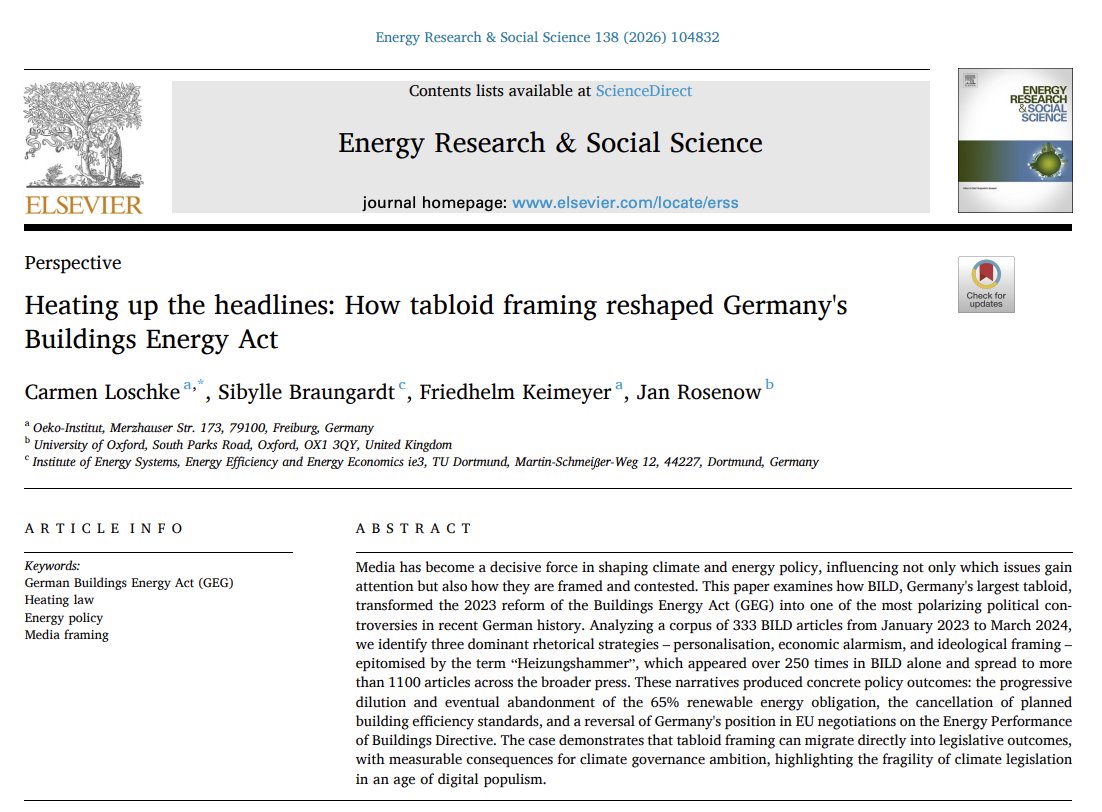
NEW RESEARCH: One German tabloid coined one word. "Heizungshammer" spread to 1,100+ articles and helped to effectively kill Germany's heating law.
We analysed 333 BILD articles to trace how tabloid framing became legislation.
Out today, open access:
https://t.co/Hcq0ZoUAjf
The World Cup has been a nice diversion from Trumpism—but he’s been busy w/ a Balkan pipeline project, Trump’s putting USA pressure to favor a company controlled by cronies involved in Jan. 6 defense. Founded 11/2025, has 0 experience in pipelines. Hmm. https://t.co/9Hd2a122fN
Highlighting cheirolepid conifers in this thread! Extinct but important family of conifers that dominated many dinosaur habitats during Mesozoic times. Deinonychus, cheirolepid trees and cycadeoids, colored pencil on paper #paleobotany#paleoart 🧵
El Niño development is currently more advanced than at the same stage of previous super El Niño events in 2015, 1997 and 1982.
But the oceans are much warmer now, and that means the atmospheric response to El Niño this year will be different from the past.
En 45 años de monitorización nunca se había registrado una temperatura de más de 29° en el área de Elniño 3.4 en junio, entramos en terreno desconocido. 🌡🌊
Hmm. What about the new piece out from Pro Publica about Trump donor Jeffrey Hildebrand and his empire of thousands of old stripper wells in a company called Hilcorp? And an ex-Hiller employee leading the rollback of Biden-era rules on fugitive methane emissions?
American oil and gas production practices are the cleanest and safest in the world—not producing it here doesn't make the demand for oil go away, it just means it's produced overseas.
In a WSJ op-ed Rahm Emanuel touts *Texas* on grid buildout and ignores California’s progress. How could California’s energy policies be cost-effective, reduce GHG emissions and make the grid more resilient? Lede should be “Never let the facts get in the way of a good story”.
How fast are batteries being added to electricity grids and at what cost?
Solar, wind, and batteries are replacing fossil fuels on electricity grids worldwide. But what is their impact and at what cost? Let’s look at data from the U.S. states with the most batteries.
California has added enough batteries in the last five years to shift the time of 10.6 percent of its yearly grid electricity demand from day to night, for example. Arizona is at 7.9 percent, Nevada is at 5.7 percent, and Texas is at 2.1%.
Alternatively, California can meet two-thirds of its annual-average demand for 4 hours per day or one-third of its highest demand for 4 hours per day with battery output.
California and Texas can produce similar peak discharge rates from batteries, but California batteries are 4-hour batteries on average so store twice the electricity as Texas batteries, which are 2-hour batteries.
What about cost? If bought new, all of California’s batteries cost only 0.27 cents per kWh of grid electricity produced, or less than 0.9% the retail price of grid electricity. Installed batteries in other states similarly cost between 0.3 and 1.3% of the price of grid electricity, so not very much.
What about impact. Californias growths in batteries, wind, and solar have reduced its use of fossil gas by 61 percent in 2026 versus 2023 and have resulted in the state having the lowest wholesale electricity price in the U.S., thus the most stable U.S. grid. Similarly, batteries in Texas, Arizona, and Nevada have helped stabilize their grids and reduce the need for fossil-fuel backup.
Battery installations and their costs in U.S. states
https://t.co/vzKmG147w8
Grids with the lowest U.S. wholesale electricity price
https://t.co/GWDfh1nWlQ
Video
https://t.co/RgcpwHlrv6