Real world AI example #20
A plumbing client of mine has over 100 employees. Their problem? All the knowledge on standard operating procedures sat in the heads of one or two key people.
Every day, plumbers on site would call these people with questions. "How do I install this?" "What's the standard for that?"
Those key people were spending 80% of their time answering the same questions.
So we built them an AI knowledge base.
We loaded in every SOP, internal document and Australian standards manual. Now when a plumber has a question, they ask the bot first. Instant answer, on site, 24/7.
The results have been huge:
- Key staff freed up to do actual work
- Plumbers get answers in seconds instead of waiting for a callback
- SOPs are followed more consistently across the team
Here's why I love this use case.
Every business has key people who hold vital knowledge. If they leave, resign or retire, that knowledge walks out the door.
An AI knowledge base captures it once, makes it instantly available to everyone, forever.
If you've got expertise trapped in a few heads, this is a no brainer.
#ai #business #automation #knowledgemanagement
Real world AI example number 19.
A builder I have started working with recently is in great shape. Business growing well, plenty of work, leads keep coming. When I asked what was getting in the way, his answer caught me off guard.
"I don't have a lead problem. I have a lead filtering problem."
His leads sit at completely different stages of the buying cycle. Some are three years out, no land, no finance. Others have the block, the loan pre-approved, and want to sign this month. His sales team was treating both the same, and he could not afford it. Every hour spent on someone three years away was an hour stolen from a buyer ready to commit today.
So here is what we are rolling out.
When a new lead comes in, an AI bot sends a friendly text within minutes. Text only, deliberately not voice. A voice bot feels like a cold call. A text feels like genuine interest.
The AI asks five quick questions:
- Where are you thinking of building?
- Do you already have a block of land?
- What are you looking to build?
- What is your time frame?
- Have you spoken to finance yet?
Two minutes of the lead's time, and we know exactly where they sit.
The AI then sorts each lead. Hot leads go straight to the sales team. Warm leads get a sales chat at a sensible pace with nurture running in the background. Poor leads drop into a long-term nurture for when their situation changes.
Same spend. Same volume. The sales team only sees the leads worth their time.
AI sorts. Humans close. Use each for what they do best.
#ai #building #construction #leadgeneration
Real world AI example number 18, and this one is a perfect lesson in why "more leads" is almost never the right answer.
I've just started working with a builder who gets around 15 leads a day from Facebook, plus a steady flow from contact forms on the website. Every single one of those leads, no filtering, no qualification, gets dumped straight to the sales team.
Now there's a rule that holds true in pretty much every lead funnel I have ever looked at. If you generate 100 leads, around 50 will be poor, 30 will be good, and 20 will be red hot.
So you can see the problem right away.
Half of the sales team's time is being spent on leads that were never going to buy. People who are not ready, not financed, not serious, or just curious. And sure enough, when I sat down with the team, the first thing they said was that the lead quality felt poor and they felt like they were wasting their time on a lot of them. Which makes complete sense, because they were.
So we are completely revolutionising this for them.
Here is what we are rolling out.
When a lead comes in from Facebook, the website, or any other channel, an AI bot fires a friendly text message to the person within two minutes. It asks two or three qualifying questions. Are you looking to build now, or in the next 24 months. Have you got the budget and finance ready to go. Nothing probing, nothing heavy, just enough to work out where the person actually sits.
The AI then sorts the lead in the builder's CRM into one of three buckets. Poor, good, or hot.
Poor leads drop straight into a nurture sequence so we stay in touch with them for when their situation changes. Good and hot leads get pushed through to the sales team to call.
Here is what changes the moment we flick this on.
The sales team only ever see good and hot leads. Same lead source, same volume, same spend. We have not changed a single thing about where the leads come from. We have just stopped the poor ones reaching the sales team. The first thing they will say is, "the lead quality has gone up". It hasn't. We have just stopped the rubbish coming through.
Three real benefits sit underneath this.
First, the sales team get their spring back. Every lead they look at is a real conversation, so they pick up the phone with energy and intent instead of dread.
Second, they have far more time in their day for deeper conversations with the people who actually matter. Quality of conversation goes up. Conversion goes up.
Third, speed to lead. Every lead gets a text within two minutes of submitting. That is the window where the person is still excited, still on their phone, still emotionally connected to the enquiry. Reach them in two minutes and they will talk to you. Reach them in two hours and they have already moved on to the next builder.
This is exactly where AI earns its keep. Let the AI do the heavy lifting on qualification. Shield your people from poor leads. Give them only the conversations they can actually win.
Humans are excellent at converting. AI is excellent at filtering. Use each for what they are best at, and your sales team's performance lifts overnight.
#ai #building #business #automation #chatgpt #construction #leadgeneration
Real world AI example: a new client of mine is a business coach who runs Facebook and Google ads.
The ads work. Plenty of leads come in. The problem was the mix.
Roughly 50% were poor leads. 30% were good. 20% were red hot.
He had an excellent BDM, but she was burning hours on the 50% that were never going to convert. She was getting frustrated, because she could often tell within a minute that the lead was a dead end.
So we built an AI filter.
The ads run as normal. When a lead comes in, instead of going straight to the BDM, our AI bot sends them a text message and starts a conversation. It asks a few simple qualifying questions:
- What are the biggest problems in your business right now
- How ready are you to take action on them
- Do you believe the right help could actually move the needle
Based on the answers, the AI sorts every lead into poor, good, or red hot.
Poor leads go straight into a nurture sequence. The BDM never sees them.
Good and red hot leads land with the BDM, along with the full chat transcript.
Two things have changed.
First, the BDM is now excited to pick up the phone, because every call has a real chance of closing.
Second, when she calls, she does not start from scratch. She opens with "I understand your issue is invoicing and cash flow" and goes straight to the heart of the conversation. The lead feels heard, not interrogated.
Bonus win, the lead got an instant response from the business. Speed to lead matters more than most people realise.
This is what good AI looks like in a real business. Not replacing people. Just protecting their time so they can do the high value work.
If your team is wasting hours on leads that were never going to buy, this is fixable.
#AI #LeadGeneration #BusinessCoaching #SalesAutomation #SmallBusiness
Another real world example of AI in action. #16
I had a car dealership owner reach out this week, and the conversation went straight to one of the most common pain points I hear in the dealership world.
Missed phone calls.
Not the odd one here and there. A lot of them. Sales enquiries, sure, but the bigger pain was on the service side. The receptionist is on another call, the service team is flat out with customers at the counter, or it is simply after hours or a weekend. The phone rings, nobody answers, and the caller is gone.
For a dealership, that is real money walking out the door, and worse, it is a customer experience problem. Service customers in particular do not call to chat. They call because they need an answer, often a fast one.
So here is what we are setting up for them.
The moment a call is missed, whether it is during business hours or out of hours, the AI sends a message straight back to the caller.
"Hi, sorry we missed your call at the dealership. How can we help?"
The AI then has a real conversation with the customer. It answers the question if it can, and it asks a few clarifying questions so we know exactly what the customer actually needs.
A classic example. A service customer messages, "I am running late, what is the latest I can come and pick my car up today?" The AI can answer that in seconds. Customer is happy, they have their answer, and nobody from the dealership needed to lift a finger.
That alone removes a huge volume of low value, time sensitive interruptions from the team.
Where the request needs a human, the AI does not pretend to handle it. Because it has already asked smart clarifying questions, it has captured a clean, useful summary of exactly what the customer is after. That conversation is dropped straight into the dealership's CRM as a follow up task.
And here is the part the team loves.
When a staff member picks up that follow up, they can read the full transcript of the AI's conversation with the customer. They are not calling back blind. They are calling back already knowing the customer's name, the car, the issue, the urgency, and the question. They can call with a direct answer ready.
That changes the entire feel of the callback. Instead of "hi, just returning your call, what was it about", it becomes "hi, I saw you were asking about a service slot for your Hilux next Thursday, here is exactly what we can do."
Customers feel heard. Staff stop wasting time on discovery calls. And the dealership stops bleeding service revenue out the back door every time the phone goes unanswered.
The lesson here is simple.
AI is not replacing the receptionist or the service advisor. It is making sure that no call ever falls into a black hole, and that when a human picks up the phone, they are picking up with context, not from scratch.
If your business misses calls, and most businesses do, the question is not whether you can afford to add AI to the front line. It is how much you are losing every week by not having it.
#AI #CarDealership #Automotive #CustomerExperience #SmallBusiness #Automation #BusinessGrowth #ServiceDepartment
Real-world AI example from a business where leads are expensive, the sales cycle is long, and most enquiries quietly go cold: a residential solar installer.
The business was spending around $14,000 a month on Google and Meta ads. Leads were coming in fine. The problem was what happened next. The sales consultant had about 45 minutes per quote appointment, and most of the working day was already booked. New enquiries would get a missed call, a voicemail, maybe a text back the next morning, and by then the homeowner had already spoken to two other installers.
The owner told me, "We are paying top dollar for leads and then losing them in the 48 hours it takes us to actually reach them."
So we set up an AI solar qualifier. The moment an enquiry comes in, the AI replies within 2 minutes by SMS. "Hi Greg, thanks for the enquiry about solar for your home in Kingsford. Just a few quick questions so we can give you an accurate quote."
It asks the things the sales consultant would normally ask on a first call. Rough daily power usage or the last quarterly bill, roof type, single or double storey, whether they own the property, whether they are exploring battery, and a realistic timeframe. It handles the common early questions too. "Do you do batteries only?", "Can I add an EV charger later?", "How long does install take?" The AI answers in plain, accurate language, and never guesses.
If the lead is clearly strong, the AI offers the next available site inspection slots and books one straight into the consultant's calendar. If the lead is not ready, for example they are 6 months out or just researching, the AI tags them for a nurture sequence and schedules a gentle check-in closer to the right time. If the lead is out of area or not viable, the AI politely says so and saves everyone's time.
After 3 months:
- Speed to first response dropped from an average of 7 hours to under 2 minutes
- Booked site inspections from the same ad spend went up 58%
- The consultant walked into each inspection with a full brief already on file
He said, "The AI is not closing the sale. It is just making sure the sale is still available by the time I get to it."
Many businesses can generate leads but the key issue is being able to respond to them fast. If you don't respond to a lead in 5 minutes the lead has moved on. AI is very good at being the first polite, helpful message a prospect hears, so the human can focus on the part only a human can do. Using AI over text is the key here.
How long does it take for your business to actually speak to a new enquiry?
#AI #Solar #SmallBusiness #LeadGeneration #Automation #BusinessGrowth #Sales
Real-world AI example from a trade where every missed call can be a missed job: plumbing.
A plumber I work with runs a 4-van operation. He and his team are in roof cavities, under houses, or flat on their backs under a sink for most of the day. Which means when the phone rings, they usually cannot answer it. The wife was fielding what she could from the office, but by 3pm the missed call list was very long. And half of the callers had already booked someone else.
He told me, "I am not losing jobs on price. I am losing jobs because I did not pick up."
So we set up an AI SMS assistant. The reason we went with SMS is simple. Customers respond to SMS extremely well. We deliberately did not use voice AI, because what we are finding is that a lot of people really do not like having a chat with a voice AI, particularly if they are new to the business. A text back feels natural and low pressure, and it gets replies.
Every missed call instantly triggers a text back. "Hi, sorry I missed your call, this is Dan from ABC Plumbing. How can we help?" The AI then has a real conversation. It asks what the issue is, how urgent it is, whether there is water coming through a ceiling or a toilet not flushing, and gets the address, best time for a visit, and whether it is a rental or an owner occupier.
By the time the plumber takes his lunch break, every enquiry is already categorised, prioritised, and sitting neatly in his mobile app with notes. Because the jobs are categorised and prioritised, the plumber knows exactly which jobs to call back first to maximise the chances of winning them. And on the customer side, the client feels like someone is actually listening and someone will respond.
After 8 weeks:
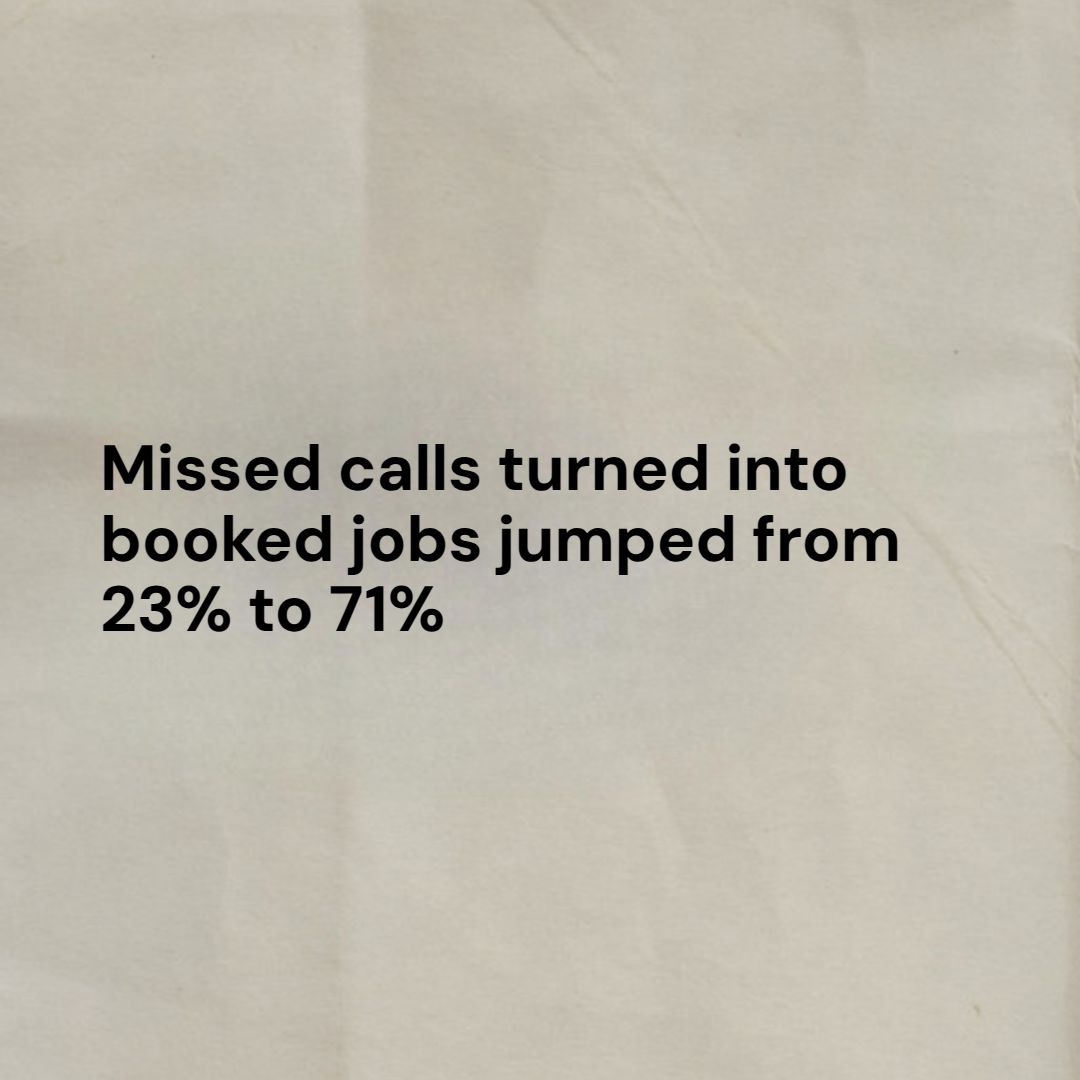
- Missed call to booked job conversion went from 23% to 71%
- 14 emergency call-outs were captured in week one that otherwise would have gone to a competitor
- Average response time to a new enquiry dropped from 4.5 hours to under 3 minutes
- His wife got her afternoons back and the stress in the business dropped noticeably
He said, "The AI is basically a receptionist that never misses a call and never forgets to write the details down."
Most trades businesses are walking past thousands of dollars in lost work every month, not because they are not good at the job, but because they physically cannot answer the phone while they are doing it. AI closes that gap without adding a salary to the business.
What is a missed call actually costing your business?
#AI #Trades #SmallBusiness #Plumbing #Automation #BusinessGrowth #CustomerService
Real world AI example #12
I sat down with a property manager recently who oversees about 180 rental properties. I asked her the same question I ask everyone: what is the one task that eats up most of your day?
Without hesitation she said voicemails.
On any given day she gets 20 to 30 voicemails from tenants. Leaking taps, broken locks, noise complaints, lease questions. The list never ends.
Her process was to listen to every single one, write down the details, categorise the issue, and then either action it herself or assign it to someone on her team. By the time she got through them all it was lunchtime and she had not started on any actual work.
So I put together a solution for her.
We set up an AI system that transcribes every voicemail as it comes in, pulls out the key details, and categorises it automatically.
Maintenance requests get sorted by urgency. A burst pipe goes straight to the top with an alert. A request to fix a squeaky door goes into the standard queue. Lease enquiries get flagged separately and linked to the relevant tenancy file.
Each morning she opens a clean summary instead of a voicemail inbox. She can see at a glance what is urgent, what is routine, and what needs her personal attention versus what can be delegated.
When I walked her through the system, her reaction said it all. She said "You have no idea how much I needed this. I am actually excited to start my mornings again."
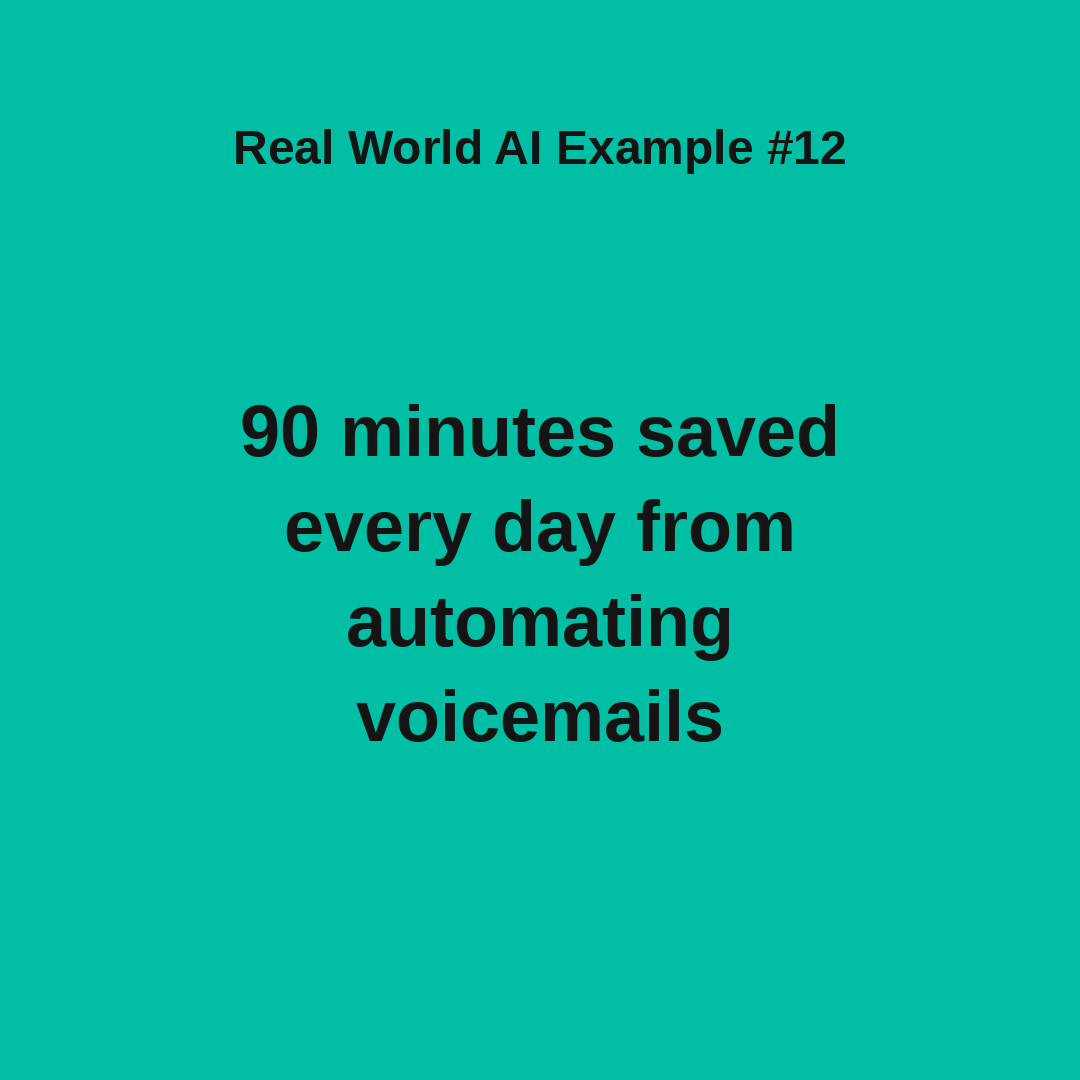
The time saving is around 90 minutes a day. That is nearly 8 hours a week she is getting back just by removing the manual processing of voicemails.
If you work in a role where messages and requests pile up faster than you can process them, AI can turn that chaos into a system. It is one of those changes where you wonder how you ever managed without it.
If there is something in your business you would like to automate, DM me or comment below and I will share some ideas.
#ai #propertymanagement #productivity #automation
Another real-world AI example.
One of my clients is a building company that gets a steady flow of enquiries through their website and social media. The problem was not lead volume. It was lead quality.
Their sales team was spending hours every week on calls with people who were just browsing, had no budget, or wanted something the company does not offer. That is time they could have spent with serious buyers.
So we introduced an AI qualification step.
When a new enquiry comes in, the AI starts a conversation over SMS or web chat. It asks a few key questions:
What type of project are you looking at?
What is your rough budget range?
What is your timeframe?
Do you own the land already?
The AI keeps the conversation natural. It does not feel like a form. It feels like chatting with someone helpful.
Based on the answers, the system scores the lead and sends the sales team a short summary with a recommendation: hot, warm, or not ready.
In the first month, the sales team reported they were spending 50 percent less time on unqualified calls. And their conversion rate on the calls they did take went up noticeably because they were only speaking to people who were genuinely ready.
The real win was not just saving time. It was giving the sales team confidence that every call on their list was worth making.
If your team is drowning in enquiries but struggling to convert, the issue might not be your sales process. It might be what happens before the sales process starts.
DM me or comment below if you want to explore this for your business.
#AI #LeadGeneration #SalesAutomation #BusinessAutomation #SmallBusiness #AIForBusiness
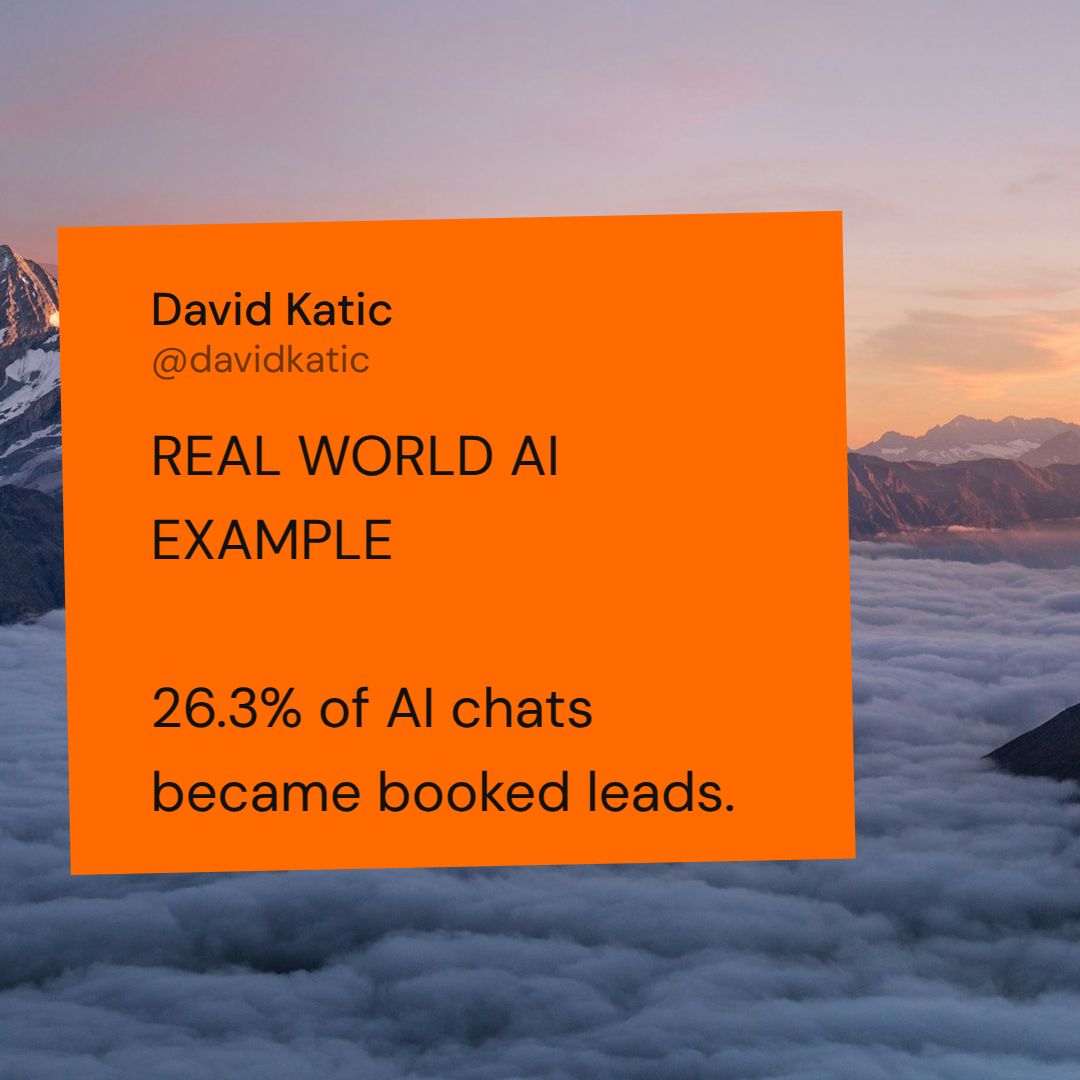
I pulled the numbers on a website AI chatbot we launched for a home services client 60 days ago. The result surprised even me.
26.3% of all chat conversations turned into booked leads.
Not website visits. Not newsletter signups. Actual leads sitting in their CRM ready to be quoted.
Here is why this works.
Most websites make people hunt for answers. They land on a page with a question in their head and a service menu in front of them. If the answer is not obvious in about 10 seconds, they leave.
The chatbot flips that. The visitor types their question the way they would ask a mate at a barbecue. The bot answers in plain English, asks a few natural follow up questions, and quietly captures the details my client needs to quote the job.
No forms. No "submit and we will get back to you within 48 hours". No friction.
The other thing I love about this setup is the data. Every conversation is a window into what cold traffic actually cares about. You see the real objections, the real confusion, the real buying signals. This allows us to change the website to make it easier to answer those questions because we know what people are looking for. That alone is worth the price of admission.
AI is not going to replace your sales team. But it will happily work the 8pm shift on a Tuesday while your sales team is at home eating dinner.
#ai #chatbot #leadgeneration
Real world AI use: a tradie client of mine was losing jobs he did not even know about.
Not because of pricing.
Not because of reviews.
Because of missed calls.
When you are up a ladder, you cannot answer the phone. And when a homeowner has a leak, they are not leaving a voicemail.
They are ringing the next name on Google.
We switched on a simple AI system last month. If a call is missed, an automatic text goes out within seconds:
"Sorry we missed your call, what can we help with?"
From there, the AI asks a few quick questions, captures the job details, and drops the full conversation into his phone.
Customer feel like someone is going to get back to them.
In the first three weeks, it recovered 14 jobs that would have otherwise walked.
Nothing fancy. No big platform. Just AI plugging the leaks between the phone and the inbox.
If missed calls are costing you work, this is one of the easiest wins in the whole AI space.
Happy to share how it is set up, just drop a comment or DM.
#AIForBusiness #Automation #SmallBusiness #Tradies