I have been told countless times over the last 48 hours that I am a conspiracy theorist.
That I do not know basketball.
That I do not understand the WNBA.
And that my articles are too long.
So I wrote this...
I do not believe there is some organized, calculated operation to take down Caitlin Clark.
That would be too simple.
The truth is deeper... and far more damaging.
Caitlin Clark walked into a league that spent nearly three decades convincing itself that its weaknesses were culture.
For years, the WNBA was not a mainstream sports product.
It was a cause.
A talking point.
A subsidized idea.
A league people were told they should support, even when the product on the floor often failed to earn that support from casual fans.
The empty seats were excused.
The financial struggles were excused.
The rough offensive flow was excused.
The poor spacing was excused.
The inconsistent officiating was excused.
The excessive physicality was excused.
The lack of mainstream interest was excused.
And anytime fans questioned the product, the answer was usually the same:
You just do not understand women’s basketball and you're racist.
That was the lie the league told itself for too long.
Because a lot of fans understood basketball perfectly fine.
They just did not like what they were watching.
Too often, the WNBA confused physicality with quality.
It confused survival with success.
It confused being protected with being excellent.
It confused an insulated culture with a strong one.
And then Caitlin Clark arrived.
She did not come in asking people to support the league out of obligation.
She made people want to watch.
That is the difference.
Caitlin brought range, pace, vision, passing angles, court gravity, creativity, and real basketball electricity.
She made regular-season games feel like events.
She made casual fans stop scrolling.
She made people who had ignored the WNBA for years suddenly care about matchups, rotations, officiating, coaching decisions, and league standards.
And that is where the collision happened.
Caitlin Clark exposed the gap between what the WNBA had convinced itself was good enough and what mainstream sports fans actually expect.
Fans want skill.
They want spacing.
They want pace.
They want shooting.
They want smart coaching.
They want fair officiating.
They want stars protected.
They want basketball that looks modern, intelligent, and entertaining.
They did not show up to watch Caitlin get grabbed, held, shoved, bumped, and treated like every possession needs to become a wrestling match in the name of “physicality.”
They also did not show up to watch the basketball constantly pushed into the background while social messaging, league-approved narratives, and cultural lectures compete for center stage.
That is not evolution.
That is a league clinging to old habits because it does not know how to handle the future standing right in front of it.
And Caitlin Clark is the future.
That does not mean she is perfect.
She is not.
That does not mean veterans have no value.
They do.
That does not mean physicality has no place in basketball.
It does.
But there is a difference between physical basketball and ugly basketball.
There is a difference between toughness and fouling.
There is a difference between defensive pressure and mugging someone off the ball.
There is a difference between culture and bad habits that went unchallenged because not enough people were watching.
Caitlin did not create the league’s problems.
She exposed them.
She exposed the officiating.
She exposed the coaching gap.
She exposed the outdated style.
She exposed the resentment toward new fans.
She exposed the discomfort some people have with a player becoming bigger than the system that was supposed to contain her.
And more than anything, she exposed a league that is still trying to force a generational player into an old version of basketball that she has already outgrown.
That is why this does not feel like a conspiracy.
It feels like resistance to change.
The WNBA finally got the player who could push the league into a new era, and too many people inside the ecosystem seem determined to make her prove she belongs in the old one.
That is backwards.
You do not take the most skilled, market-changing player your league has ever seen and ask her to shrink into the culture that failed to attract mainstream fans in the first place.
You build around her.
You modernize around her.
You protect what she represents.
Because she is not just another player.
She is the mirror.
She is showing the league what it has been, what it is, and what it could become if it would stop defending its flaws as tradition.
And the frustrating part is that the next generation is already here.
You can see it with Caitlin.
You can see it with Paige Bueckers.
You can see it with Sonia Citron.
You can see it with Aliyah Boston.
You can see it with JuJu Watkins.
The skill is changing.
The training is better.
The footwork is better.
The shooting is better.
The spacing is better.
The basketball IQ is better.
But too much of the league around them is still operating like nothing has changed.
Same coaching habits.
Same officiating problems.
Same marketing instincts.
Same defensive excuses.
Same resentment toward criticism.
Same belief that the old WNBA culture must be protected, even if it means slowing down the very players who could make the league bigger than it has ever been.
That is the real story.
Caitlin Clark is not being taken down by some secret plan.
She is being resisted by a league that still does not fully understand what she represents.
She represents a better product.
A bigger audience.
A more skilled game.
A more modern game.
A version of women’s basketball that does not need to be sold as charity, activism, obligation, or guilt.
It can be sold as basketball.
Great basketball.
But that requires the league to stop pretending its weaknesses are sacred.
It requires officials to clean up the game.
It requires coaches to modernize.
It requires veterans to adapt.
It requires media voices to stop protecting the old product from honest criticism.
And it requires the WNBA to stop resenting the very fans it spent decades trying to attract.
So no, I do not think there is a coordinated takedown of Caitlin Clark.
I think it is bigger than that.
I think Caitlin walked into a league that spent years convincing itself its flaws were culture.
And now that a generational player has arrived to expose the difference, too many people are trying to humble her instead of learning from her.
That is not Caitlin Clark’s failure.
That is the league refusing to recognize the future.
with the #Indy500 grandstands officially sold out, I would like to offer up two reserved tickets to someone who has never been, and who couldn't afford to go. no charge.
may in indy is the best time, no question. I would love for someone to experience it.
Jerry Hofmockel attended his first Indianapolis 500 in 1936 with his grandfather when he was 10 years old. Now at 100, he's planning to attend his 86th race this May.
MORE: https://t.co/C7eFUuqvSL
(📸: Hofmockel Family)
Another year, another grandstand sellout 😏👏
A massive and historic crowd will join us for the #Indy500 presented by @gainbridgelife next Sunday as the final reserved seat tickets will be sold today and the grandstands will be SOLD OUT.
The original plans for IMS have been found 😯
Behind the Bricks is back, and @jdouglas4 discovered 117-year-old blueprints that prove Carl Fisher's original plan for a 5-mile racetrack, not a 2.5-mile oval. DO NOT miss this episode! ⬇️
📺 >>> https://t.co/Z4euJW9OTU
@upstatefederlst I also had a similar experience recently , I built a man cave and hooked up my old. Stereo sound system with my cd player and record player and was blown away by how good the sound was, I was just used to streaming my music for so long.
Rick Carlisle on Pacers' $100K fine for violating the Player Participation Policy:
"During the interview (with the NBA), they also asked if we considered medicating (Aaron Nesmith) to play in a game when we were 30 games under .500."
Carlisle said that Nesmith could not hold onto a basketball but the NBA "unilaterally decided" he should have played in the game in question, without talking to Nesmith or Pacers' doctors.
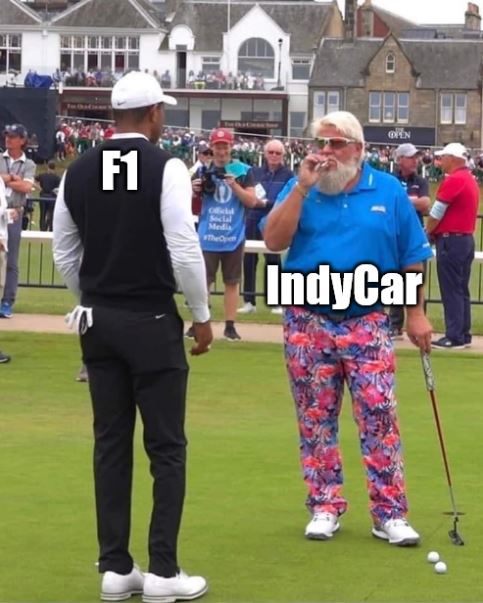
"President Trump said Friday that Senate Minority Leader Chuck Schumer is putting the brakes on his grand plans to hold an IndyCar race in DC. ... A Schumer spokesman said: 'Senator Schumer has not taken a position on the race.'" - @NYPost https://t.co/tIrU9SmTvQ
130 schools said no.
He led the losingest program in college football history to a national championship anyway.
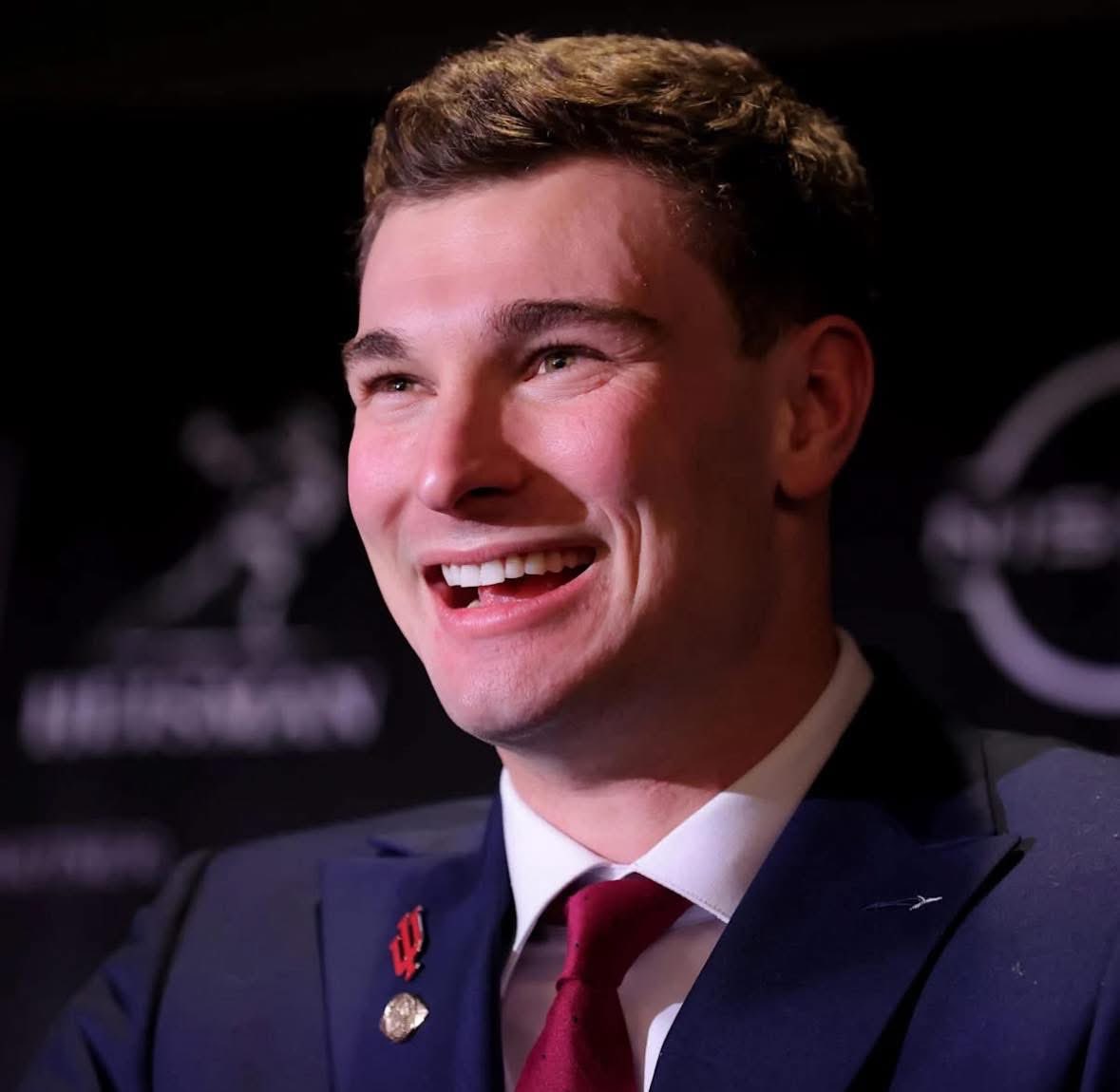
Fernando Mendoza was a 2-star recruit from Miami.
He tried to walk on at his hometown school. They passed.
So did FIU.
So did FAU.
So did everyone else.
At 17, he was sitting in his bedroom, crying over a silent recruiting inbox—after driving to 18 camps with his dad and sending highlights to more than 100 programs.
Not one FBS offer.
His only option? Yale. No scholarship. No NFL path.
Everyone told him to be “realistic.”
“Know your place.”
“Be grateful.”
He didn’t listen.
Because Mendoza understood something most people miss:
The worst outcome isn’t failing.
It’s never getting the chance to try.
Two weeks before signing day in 2022, his phone rang.
Cal needed a body. One offer. Out of 134 schools.
He took it.
He arrived as the third-string quarterback.
Spent a year on the scout team.
Lost his first four starts.
Got sacked 41 times behind a broken offensive line.
Still got up. Every time.
Then Cal brought in a transfer instead of building around him.
So Mendoza left the only school that had ever said yes.
He transferred to Indiana—the losingest program in college football history.
People laughed.
“Career suicide.”
“Graveyard program.”
“Nobody wins there.”
One coach told him something different:
“I’m going to make you the best Fernando Mendoza possible.”
That was enough.
Mendoza wasn’t just playing for football.
His mother has battled multiple sclerosis for 18 years.
Before every snap, he thought of her.
“My mother is my why.”
Indiana went 16–0.
Beat six Top-10 teams.
Won their first Big Ten title since 1945.
Mendoza threw 41 touchdowns.
Won the Heisman—first in school history.
First Cuban-American to ever do it.
Then came the title game.
Miami. Near his hometown.
Fourth-and-4. Season on the line.
Quarterback draw.
The kid 134 schools rejected spun through defenders and dove into the end zone.
Game over.
Indiana—national champions.
The losingest program became the best team in America.
All because a 17-year-old refused to believe “no” was the end.
Rankings don’t decide your ceiling.
Gatekeepers don’t write your ending.
Being overlooked isn’t a verdict—it’s a starting point.
Sometimes all you need is one shot…
and the courage to bet on yourself when nobody else will.
Don’t quit.
Credit: Barclay Mullins