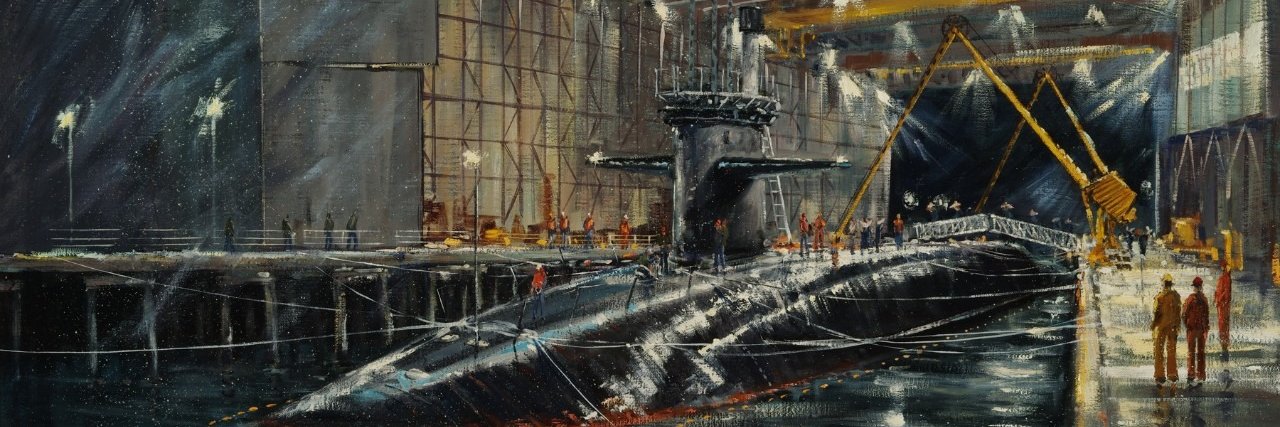
OTD in 1945: Fleet Admiral Chester W. Nimitz formally relinquished command as Commander-in-Chief of the US Pacific Fleet, lowering his flag aboard USS Menhaden (SS-377) at Pearl Harbor.
With the war won, Nimitz had no shortage of battleships or carriers to choose from. Yet he intentionally returned to the deck of a submarine to close his wartime command the exact same way he began it.
Washington lost a net 10,402 residents from $200K+ households in two years. Over $2 billion in income, gone.
Olympia's plan: a 9.9% tax on income over $1M, starting 2028.
Nothing like building a budget on customers who are already packing. 🚚
https://t.co/TZyRekuMlK
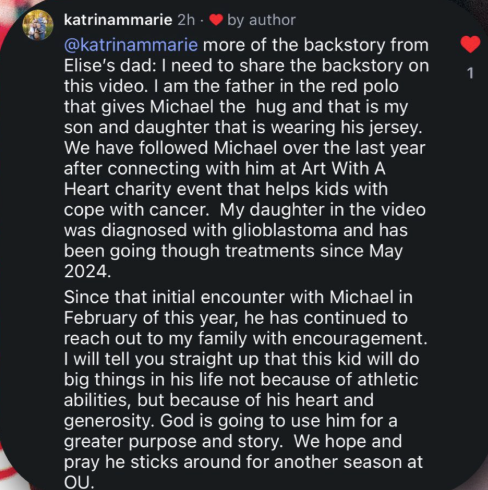
Reading the back story to this makes this interaction cool to absolutely wholesome.
That man's daughter has cancer and the player walked her down the red carpet at an event last year, and has kept in touch with the family ever since.
This goes back to the days when we played Squad Leader, The Russian Campaign and so on... there was always this mindset that the Soviets could win by just using massive force, with little regard to maneuver or causalities. In scenarios where casualty points weighed heavier than objectives, the Russians would always lose. If it was just about getting objective, they would almost always win.
The war in Ukraine is the only large scale show in town so people are justifiably obsessed with it. But here is the truth of the matter:
>Russia did not commit enough combat power to win initially, and poorly synchronized the forces they did have.
>Ukraine mounted a defense yet absolutely bungled the offense with disastrous offensives.
Now they are locked in a positional struggle where everyone is assuming this is what right looks like.
No, it is what WRONG looks like, and you are wrong here.
Don't confuse either belligerent's ability to strike targets in their rear area as signs of success.
Neither side can mass. Neither can synchronize effectively. The entire eastern bloc military apparatus has always been based on raw power, and they don't have it. Or refuse to commit it.
Their formations are historically incapable of executing combined arms to the level of their western counterparts. Hence why they need mass. It is because their civilizational core is largely descended from centuries of uninterrupted serfdom, and lack the ability to think independently for fear of upsetting their overlords. Mission command is not a tenet they observe the way we do.
Both sides are two clear examples of what ineptitude at the operational level looks like. Now everyone is fetishizing drone porn like its the answer to all of their future warfare prayers, it isnt. Watching individual soldiers and tanks running around the battlefield without mutual support. It's an abject disaster.
And frankly, I'm growing weary of the amount of obsession over it all. Drones and naval power projection do NOT constitute a revolution in military affairs. Everyone is losing the forest for the trees on this. And now I'm going to call it out before we start changing doctrine based on flawed pretenses.
At Sea-Tac, a father and daughter were already on the jet bridge when ICE agents moved in. The debate turned to what ID they showed at security. I keep coming back to a different question. How did ICE know exactly where to find the father, and why make the arrest there, with a plane boarding?
On Plausibly Live, I also look at reports of a strike on a Russian warship in Benghazi. The ship was reportedly in a Libyan port, and that detail matters if you’re trying to understand how far the war in Ukraine could spread.
Listen to Plausibly Live: The Dave Bowman Showwherever you get your podcasts.
https://t.co/wdsF7vLukL
I watch pregame shows every NFL week.... it's never been like this.... the man transcended the game. TJ was a leader not just for the Broncos, but for all the kids in Denver who looked up to him as an example of more than just a linebacker.
It is so fitting that today the Broncos face the Raiders. And TJ will be watching and cheering.
Wow. Tom Jackson came to ESPN three weeks ago to surprise Chris Berman.
ESPN captured it all.
Berman, in tears: "It was the last time we saw him."
Get your tissues for this. 🥹
“We’ve lost one of the best human beings to ever walk the planet.”
Chris Berman announces the death of his longtime broadcast partner and best friend, Tom Jackson.
What an iconic duo for all those years. Thank you, TJ ❤️
A submarine - an Ohio-class fast attack boat? - entering Port Canaveral at 8:33 AM yesterday. Viz was bad! Dealing with flooding issues, I failed to notice it, but in checking my camera logs, there it was on its way to the secure Trident basin.
Welcome, Bubbleheads. 🫡🇺🇸⚓️
What most of us will never learn is how many Cold War stories like this there are. If you think that the Cold war (1945-1991) was actually "cold," you are - someday - going to be in for some MAJOR surprises...
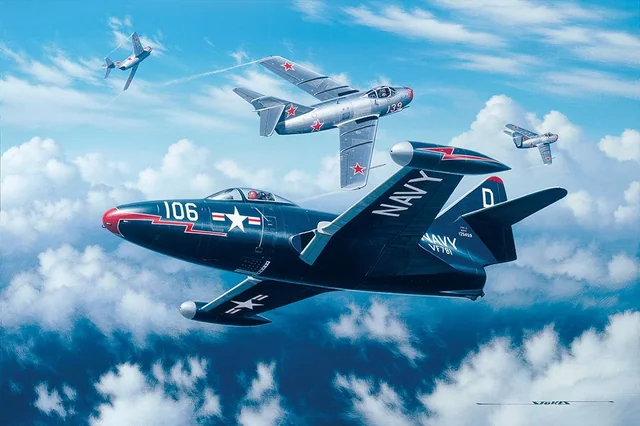
Nov 18, 1952. A U.S. Navy pilot fights seven Soviet jets alone over the Sea of Japan. He's ordered never to talk about it. The truth stays hidden for 50 years.
During the Korean War, the U.S. Navy carriers off North Korea operated dangerously close to the Soviet Union. The Soviets were officially neutral. Unofficially, Soviet pilots were already flying for North Korea, though both sides kept it quiet.
On Nov 18, 1952, Task Force 77 was operating in the Sea of Japan, not far from the big Soviet naval base at Vladivostok.
Lieutenant Royce Williams, a 27-year-old pilot from South Dakota, was flying an F9F Panther jet from the carrier USS Oriskany. He and three other Panthers were sent up to patrol over the fleet.
Seven MiG-15s came out from Soviet territory toward the American ships. They had red stars on their wings.
Two of the Panthers had to turn back. Williams and his wingman went after the MiGs. Then his wingman had to break off too.
Williams was alone against seven.
The MiG was faster and climbed better than the Panther. Williams knew he couldn't run. So he stayed close and turned with them, fighting as hard as he could. He shot down one MiG. Then another.
The fight went on for about 35 minutes, the longest dogfight in U.S. Navy history. A MiG's cannon shell tore through his Panther. His hydraulics failed. His controls barely worked. He ran out of ammunition.
Finally, with a MiG still on his tail, he made it back over the fleet. He landed his crippled jet on Oriskany.
Ground crews counted 263 holes in his plane. It was pushed over the side into the sea.
He had shot down at least three MiGs, and possibly four. Soviet records later showed four Soviet pilots never came back.
But there was a catch. American intelligence had been secretly listening to Soviet radio. If the battle became public, it could expose that program and risk turning the Korean War into a war with the Soviet Union.
Williams was told the fight never happened. He didn't even tell his wife. Officially, he was credited with one plane shot down and given the Silver Star.
The records were declassified in the early 2000s. Veterans and supporters spent years pushing for proper recognition.
In late 2022, his Silver Star was upgraded to the Navy Cross. Then, in February 2026, at age 100, Royce Williams received the Medal of Honor.
On this day in 1943, an American submarine was sunk in the Pacific, and a senior officer aboard made a terrible choice. He knew secrets so vital that he could not risk being captured and made to talk, so he rode the sinking submarine down to the bottom rather than let himself be taken alive. This is the loss of USS Sculpin and the sacrifice of Captain John Cromwell.
The Sculpin was a US Navy submarine on patrol near the Japanese stronghold of Truk, part of the great American push into the Central Pacific. Aboard her, in addition to her own crew and captain, rode Captain John Cromwell, a senior officer commanding a group of submarines, who was along to coordinate a coordinated attack. And Cromwell carried in his head some of the most dangerous knowledge in the Pacific. He knew the secret of the major Allied offensive about to open in the Gilbert Islands, and, far more sensitive still, he was aware of the Allied ability to break Japanese codes, the priceless intelligence secret that was helping win the war.
On November 19, after tracking a Japanese convoy, the Sculpin was caught by a Japanese destroyer and savagely depth charged. Badly damaged, she was forced to the surface, where she had no choice but to fight it out with her deck gun against a far more powerful warship. It was hopeless. The destroyer's fire smashed into the submarine, killing men and wrecking the boat, and the surviving crew were ordered to abandon ship and scuttle her, opening the valves to send her to the bottom.
Here Cromwell faced his decision. He could climb out and go into the water with the others and be taken prisoner. But he knew what he knew. If the Japanese captured him and realized who he was, they might torture or drug him and pull from him the secrets of the coming offensive and the broken codes, knowledge that could cost thousands of lives and undo one of the Allies' greatest advantages. He could not take that risk. So Cromwell chose to stay aboard the sinking submarine and ride her down into the depths, deliberately giving his life to make certain the secrets died with him.
The Sculpin went down, taking Cromwell and others with her. A number of the crew did survive and were captured, but their ordeal was not over, and here the story takes a final, almost unbearable twist. The prisoners were loaded aboard a Japanese aircraft carrier to be taken to Japan. That carrier was torpedoed and sunk on the way by another American submarine, the Sailfish, and many of the Sculpin survivors drowned, killed by their own side's torpedoes. And the Sailfish had once been the Squalus, a sunken submarine that the Sculpin herself had helped locate and rescue men from years before the war. The boat Sculpin had once saved now unknowingly sent Sculpin's survivors to their deaths.
For his supreme sacrifice, choosing death to protect the secrets that could have cost so many lives, John Cromwell was posthumously awarded the Medal of Honor, the most senior American submariner to receive it in the war. He had made the hardest choice a man can make, to go down in the dark with his ship so that others might live and the war might be won, on this day in 1943.
Thirteen states wanted independence. Paying for a national government was apparently somebody else’s department.
Dave Bowman joins Bill Mick as they examine the Articles of Confederation and a problem Americans couldn’t avoid for long: how do you restrain government power while giving it enough authority to do its job?
America’s first constitution deserves more than a footnote about failure. Listen as Dave considers what the Confederation accomplished, where it struggled, and what those experiences taught the people who gathered in Philadelphia in 1787.
Listen wherever you get your podcasts.
https://t.co/0laKkYXl3N
In 1968, a Soviet ballistic missile submarine vanished in the Pacific Ocean, setting off a massive Soviet search that ultimately failed.
The United States secretly knew exactly where the wreckage lay and launched a highly classified, 800 million dollar espionage mission, Project Azorian, to steal it right out from under them.
1/4🧵