🇯🇵 FUNNIEST THING: Japanese fans ran onto the famous Shibuya Crossing in Tokyo for 40 seconds to celebrate the 2:2 tie against the Netherlands.
They ran onto the crossing only for 40 seconds while it was green! The Japanese DID NOT BREAK TRAFFIC RULES!
After the light turned red, everyone went back and stopped the celebration.
They did not even break the traffic rules for this moment. lol
@jackcoder0 Falso. Puro clickbait: es un pre-print (no ha pasado por peer review) que cierra con los autores diciendo que identifican "una vulnerabilidad estructural, no un diagnóstico de crisis activa".
Solo 1 de cada 5 profesionales se siente comprometido con su trabajo. Es un problema de criterio, no de salario. Lo desarrollo en mi blog reactivado https://t.co/RITTVAfrao
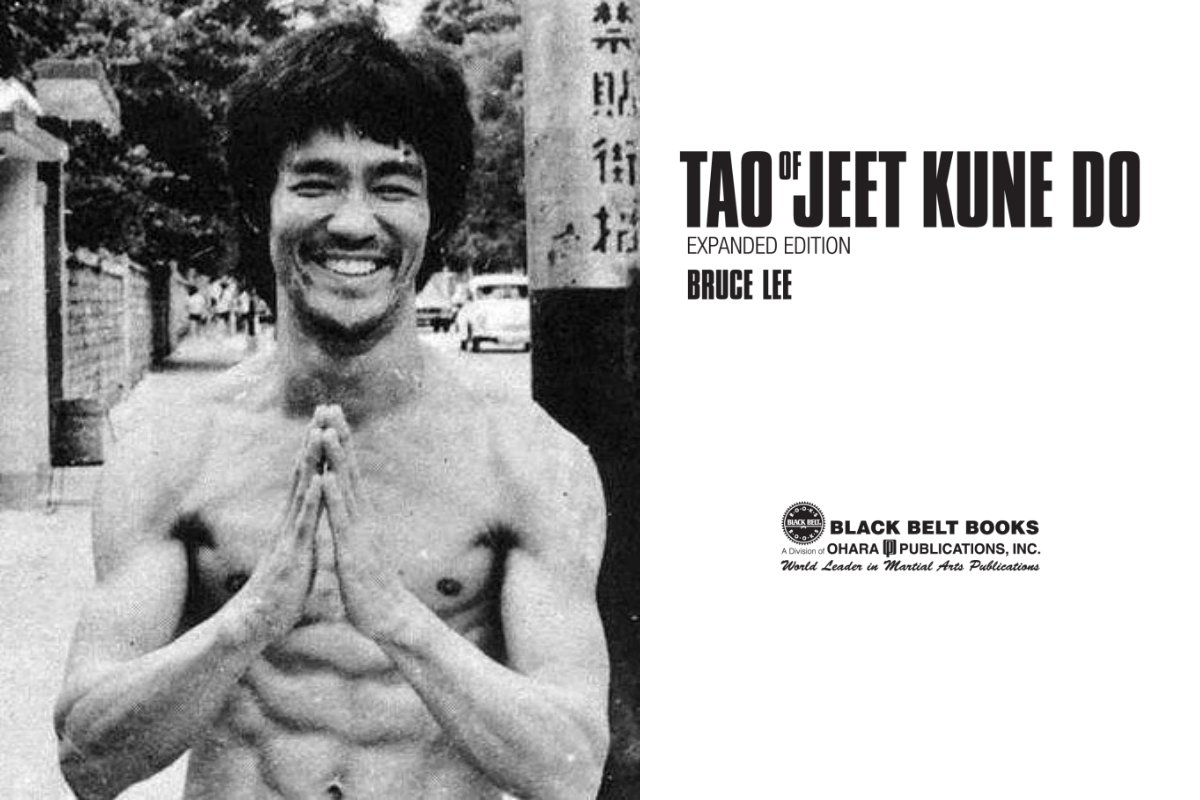
Bruce Lee spent the last 3 years of his life secretly writing a book that argued the entire system of martial arts he had built his fame on was a trap, and then died at 32 before he could decide whether the world was ready to read it.
The book is called Tao of Jeet Kune Do. It is the bestselling martial arts book in history. And almost nobody who quotes it has actually understood what Bruce Lee was warning them about.
The story most people know is the famous one. In 1970, at the peak of his career, Lee suffered a severe back injury during a training session. His doctors told him he might never walk normally again. They ordered him into bed for 6 months.
He was 30 years old, in the best shape of his life, and suddenly unable to throw a single punch.
What people miss is what he did with those 6 months.
He had a library of over 2,500 books in his home. He pulled them onto the bed and started reading. Lao Tzu. Krishnamurti. Alan Watts. Sun Tzu. Eric Hoffer. He filled 7 notebooks with quotes, diagrams, sketches, and his own arguments. He was not writing a fight manual. He was building a case against the entire concept of fight manuals.
The argument is the part almost everyone misses.
Lee had spent his early career mastering Wing Chun, then training in boxing, fencing, judo, and Western wrestling. He was a black belt in nothing because he refused to participate in the ranking systems.
He noticed something nobody around him was willing to say out loud. Every traditional style on earth teaches you a fixed set of responses to fixed situations. Block here. Strike there. Move this foot first. The styles were elegant. They were beautiful. And they were turning their students into robots.
A real fight does not run on a script. The opponent does not stand still while you execute your form. The moment you commit to a pre-rehearsed sequence, you have already lost, because you are responding to a situation that exists in your training instead of the one in front of you. Lee called this crystallization, and he believed it was the disease at the heart of every martial art ever taught.
He invented Jeet Kune Do as the antidote. The name means "way of the intercepting fist," and the central idea was formlessness. Use no way as way. Take what works for your specific body in this specific moment, reject what does not, and never let any of it harden into a system. He wrote the line that would define him. Be water.
Then he watched his own students start to crystallize it.
Within a few years, Jeet Kune Do had its own techniques, its own loyalists, its own dojos. His followers were learning Jeet Kune Do moves the same way the rest of the world learned Karate moves. The thing he had built specifically to destroy the idea of a fixed style was becoming a fixed style. He had created the cage all over again.
In 1970, he shut down his own schools.
Almost nobody talks about this. The man whose name is on the bestselling martial arts book in history closed the institutions teaching his own art, because he had decided that institutionalizing it was the betrayal of the entire point. He kept teaching privately. He stopped trying to make Jeet Kune Do scale.
The line from his notes that captures the whole project is four words long. Absorb what is useful. Reject what is useless. Add what is essentially your own. This is not a martial arts instruction. It is a learning method. It says do not copy a master. Do not pledge loyalty to a school. Do not let any single source own your development. Take what works for you, leave what does not, and make the rest yourself.
He hesitated to publish the book for exactly the reason you might guess. He was afraid people would treat his notes the same way they treated every other martial arts text. As gospel. As a sequence to memorize. As another style to crystallize around.
He died on July 20, 1973. He was 32 years old. The notebooks sat in a drawer for two years until his widow Linda Lee, his student Dan Inosanto, and editor Gilbert Johnson decided to publish them. They organized 7 volumes of unfinished thinking into a 200-page book and sent it to the world.
What happened next is the irony Bruce Lee saw coming.
A generation of fighters memorized Tao of Jeet Kune Do as if it were a manual. They quoted "be like water" without ever reading the chapter where he explained that water has no form precisely because it refuses to commit to one. They tattooed his face on their bodies. They built schools certifying Jeet Kune Do instructors. They turned the man who killed styles into a style.
The book is still the bestseller it has always been. The lesson inside it is still ignored by most of the people who buy it. He warned them on the first page. The truth in combat is that there is no truth in combat. The moment you think you have found the answer, you have lost.
The book is not a manual. It is a permission slip to throw away every manual you own.
Première mondiale ! Un robot a travaillé 200h non-stop, et trié plus de 249 000 colis à lui seul. Pas une seule panne, pas une seule pause et tout a été diffusé en live pour le prouver.
À la base c'était un défi de 8h. Le robot a tellement bien tourné qu'ils ne l'ont jamais coupé. 200 heures plus tard il tournait encore.
Le truc de fou, c'est qu'il y a quelques jours un stagiaire a fait un duel contre le robot sur un shift de 10h. Le gars a gagné. De justesse, 2.79 secondes par colis contre 2.83 pour la machine. Sauf que le stagiaire a fini avec l'avant-bras en vrac. Le robot lui il a continué 190 heures de plus sans broncher.
Et c'est là que je comprends pas. On a littéralement un robot humanoïde qui fait un boulot d'entrepôt en continu, sans supervision, tout est géré par son IA embarquée. Si le robot bug, il se reset tout seul et reprend. Si il a un souci hardware, il sort de la ligne et un autre prend le relais automatiquement.
Malgré tout ça, la majorité des gens ne voient pas ce qui arrive. On scrolle, on passe, on se dit "c'est cool" et on oublie. Mais c'est pas "cool". C'est un changement de civilisation. Les tâches physiques répétitives vont être automatisées.
La robotique humanoïde c'est le sujet dont personne ne parle assez. On commence à peine à parler d'IA avec bien du retard, sauf qu'il faut comprendre que l'étape d'après c'est l'IA incarnée, cad, les robots.
After four years full of challenges and hard work, it's time to move on.
I leave with the feeling that the mission is complete. 4 seasons, 3 championships.
I will never forget the love I received from the fans from my very first days.
Catalonia is my place on earth.
Thank you to everyone I met along the way during these beautiful four years.
A special thank you to President Laporta for giving me the chance to live the most incredible chapter of my career.
Barça is back where it belongs.
Visca el Barça. Visca Catalunya 💙❤️
@fcbarcelona
One of the reasons for the current rally is that there are many non-tech-savvy fund and asset managers sitting on trillions of dollars in assets that are slowly realising AI exists.
These people literally learned about Claude or agents in the last few weeks. And maybe even tried them.
And got an awakening.
To understand why that matters, you need to realise that the “average asset manager” in the UK or EU is barely able to turn on his computer. They have an “IT support guy” for that. They couldn’t tell you Windows from MacOS. Yet they manage $ trillions of pension assets on.
These people are always late to every trend. But every trend, they eventually join.
And they only now discovered that AI exists, and what it actually does. That “AI” is not just being an irritating chatbot in their “Windows” on “Outlook” on the big HP desktop in their office.
It’s also genuinely very hard for them to understand the growth rates, the incredibly high GAAP operating margins, and the relatively low P/E valuations in the semiconductor sector (low vs all other growth tech).
You see, in the past, every sector with dramatic growth had terrible, extremely negative margins (see SAAS, e-commerce, renewables, anything in the 2021 SPAC bubble, etc). Profits were always promised to “come later”, and usually, they never actually did.
Meanwhile, we now have a cloud and semiconductor sector that’s incredibly high growth, yet also has extraordinary margins and cash flows not seen anywhere else in the business world, anywhere. Ever.
In financial and economic terms, it’s simply unprecedented.
They’ve never seen numbers like this, so it’s mentally very hard for “the average asset manager” to grasp them.
Now, they’re seeing the use cases. The output. They’re seeing the numbers.
And they’re waking up.
Claude for Word is now in beta.
Draft, edit, and revise documents directly from the sidebar. Claude preserves your formatting, and edits appear as tracked changes.
Available on Team and Enterprise plans.
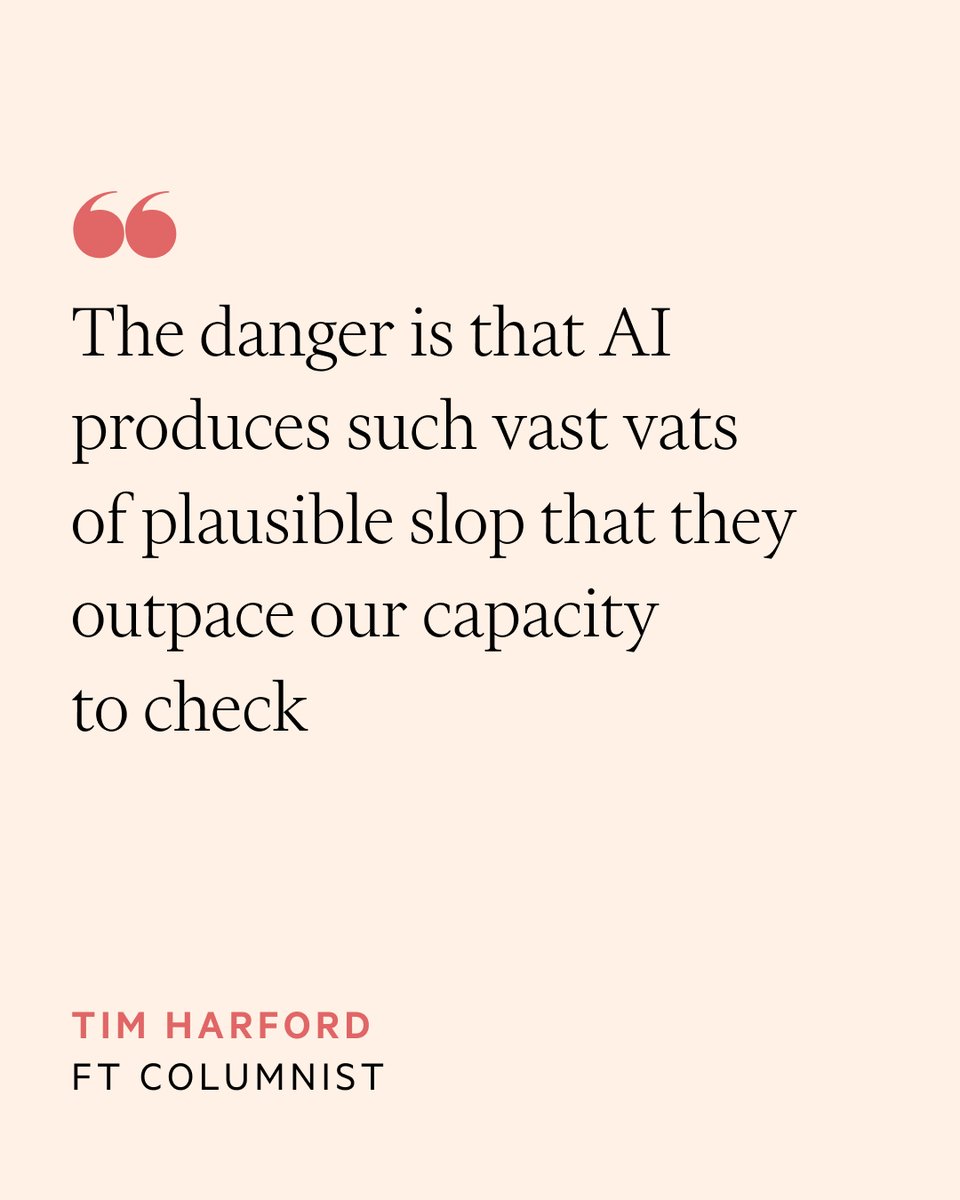
Create enough hallucinated legal arguments, flawed engineering calculations and backdoor-ridden code, and the slop vats fill faster than our capacity to tell good work from bad, writes Tim Harford.
Read his column on telling good AI from bad: https://t.co/vnqQUDjxGR