Robots can plan, but rarely improvise. How do we move beyond pick-and-place to multi-object, improvisational manipulation without giving up completeness guarantees?
We introduce Shortcut Learning for Abstract Planning (SLAP), a new method that uses reinforcement learning (RL) to discover shortcuts in the planning graphs induced by task and motion planning (TAMP) skill libraries. It is a plug-and-play module that can be trained on top of existing planners to speed up execution through learned shortcuts.
(1/5)
🚨New paper at #NeurIPS2024! We present Hydra, a mixture of neural fields 🐉🐉🐉 for ab initio cryo-EM reconstruction of complex mixtures.
Hydra is our attempt at pushing the boundaries for even more extreme forms of heterogeneity in cryo-EM 🤯.
This was joint work with an awesome team, led by @axlevy0@rishwanth_raghu & David Shustin.
Paper: https://t.co/uHeaOezyqU
Poster session happening now! Come by 👋
@SOPHONTSIMP@owl_posting It’s a figure from the CryoDRGN2 paper comparing simulated (synthetic) images through a cryo-electron microscope to images from a real cryo-electron microscope. https://t.co/VfhiKZVcCP
(1/2) Tired of your panoramas being turned into sad flat rectangles? Our latest #SIGGRAPHAsia2024 work "Neural Light Spheres" lets you turn panoramic captures into dynamic wide FOV renders (with real-time rendering!).
Code, data, and info: https://t.co/8MqR4F9PYd
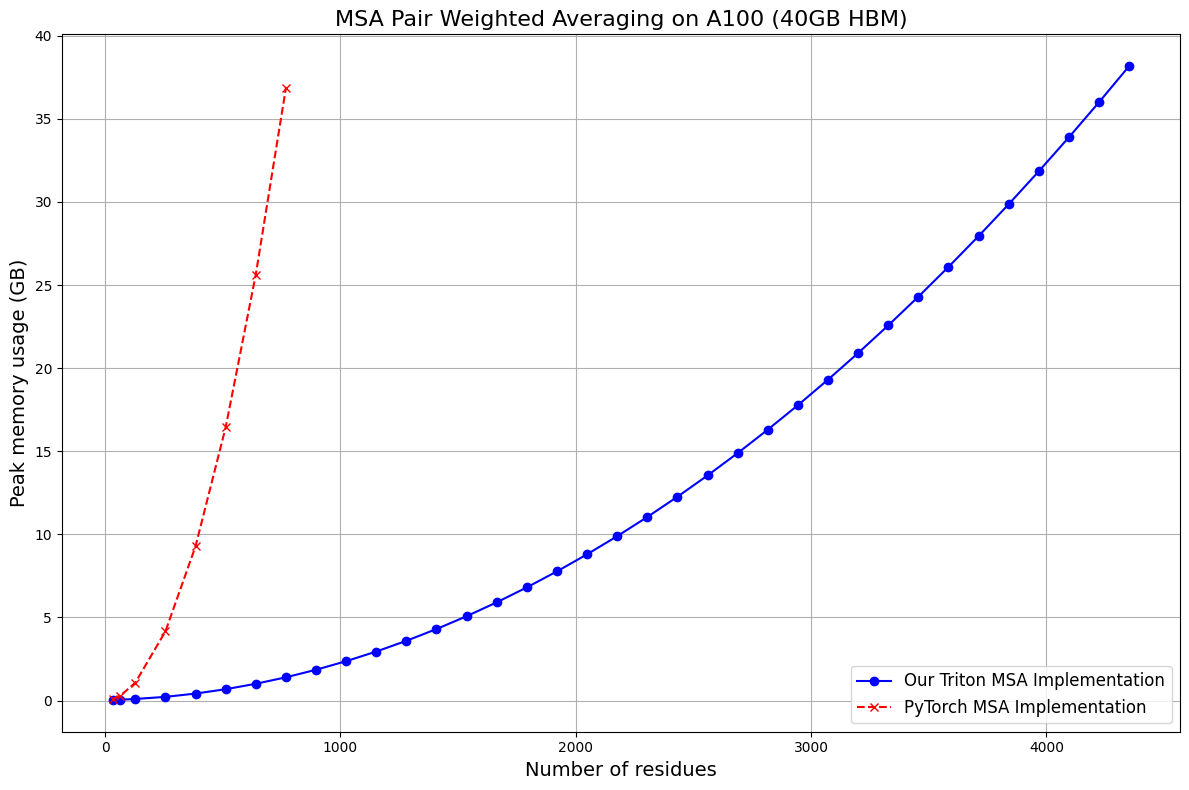
Had the pleasure of building an efficient Triton kernel to help scale @ArdaGoreci Ligo's open-source AlphaFold3 model!
A new component in AlphaFold3 is the MSA pair weighted averaging algo -- our Triton implementation is 3x faster with 10x less peak memory usage! (1/3)
We present DRGN-AI for fast, ab initio cryo-EM reconstruction!
* learns a neural field from unposed images,
* designed for single-shot reconstruction of unfiltered datasets,
* finds new states missed by prior approaches!
Teamwork led by @ZhongingAlong
https://t.co/WjPStRkrnI 1/
Are you interested in neural fields and computational photography? Or just really like splines and have no one to talk to about splines? Come chat with me @CVPR2024 next week on our latest spliney neural fieldy burst photography project:
https://t.co/c05fQ4rdM0
New coding benchmark! We introduce the USACO benchmark (https://t.co/RIV4tvyLLP), which tests the limits of LLM intelligence in creative, grounded, algorithmic scenarios. Key takeaways below 👇
Code for Neural Spline Fields is out! We use burst image fusion to see through occlusions and remove reflections.
We just released the code here: https://t.co/frpg3ex38K
Comes with a fun set of notebooks and tutorials!
Splines instead of Gaussians 😉 Introducing Neural Spline Fields, which can see through occlusions!
We learn to represent a stack of misaligned captures as a multi-layer image sandwich. Then you can extract your favorite layer to remove occlusions, reflections, or even your own shadows from the scene!
Paper and Code: https://t.co/7hToSxgqPu
Fun work by @_ilya_c , @DavidShustin , @RuyuYan00, and Chenyang Lei.
1/ For the past year, we’ve been building a new research organization:
Speculative Technologies (@spec__tech) exists to create an abundant, wonder-filled future by unlocking powerful materials and manufacturing technologies that don’t have a home in other institutions.
Applications for hackMHS V are now LIVE!
hackMHS is hosting its 5th annual hackathon!
Who: Everyone interested in learning how to code!
Where: Millburn High School
When: April 14th - 15th from 12pm to 12pm
What: A Hackathon!
Sign up at https://t.co/IB79mPVBZB !