Rarely post these days, but I've been working on a small project to help people find the cheapest fuel in their area in the fastest way possible, and so wanted to share it: https://t.co/kercBzOMbX - results within 1 second. No bloat, no confusing UI.
Watch a team of humanoid robots running a full 8-hr shift at human performance levels. This is fully autonomous running Helix-02 https://t.co/IdZR0T1F5I
Meta has lost $73 billion on Reality Labs since 2020. Wall Street calls it the most expensive money pit in tech history.
Then today, quietly, the FAIR team in Paris releases a model that predicts how your brain responds to anything you see, hear, or read. 70x higher resolution than v1. Zero-shot predictions for people it has never scanned.
The training data: 700+ volunteers watched movies and listened to podcasts inside fMRI machines for 1,115 total hours. The model learned how visual cortex, auditory cortex, and language centers fire simultaneously, then built a single architecture that maps all of it.
The competition results tell you how far ahead they are. TRIBE v1 already won first place in Algonauts 2025, beating 262 other teams. V2 is a 2-3x improvement on top of that, with 70x the spatial resolution.
Here's what nobody is connecting. Meta also builds Ray-Ban smart glasses with cameras and microphones. They're developing a neural interface wristband that reads EMG signals from your arm. They run the largest advertising platform on earth, one that generated $200 billion in revenue last year by predicting which content keeps you engaged.
TRIBE v2 tells them exactly which brain regions activate when you watch a 15-second Reel. Which neurons fire when an ad plays in your peripheral vision. How language processing changes when you're listening versus reading.
They open-sourced the model. That's the part that should make you pay closer attention. Meta open-sources things when the research advantage is already captured and the ecosystem benefit of external researchers improving the model exceeds the competitive risk. They did it with LLaMA. They're doing it again.
A company spending $135 billion in capex this year did not build a digital twin of the human brain for academic citations. They built the prediction layer for every piece of hardware and every ad impression they'll sell for the next decade.
The $73 billion was never about the metaverse. It was about understanding the 20-watt computer that decides what every human pays attention to.
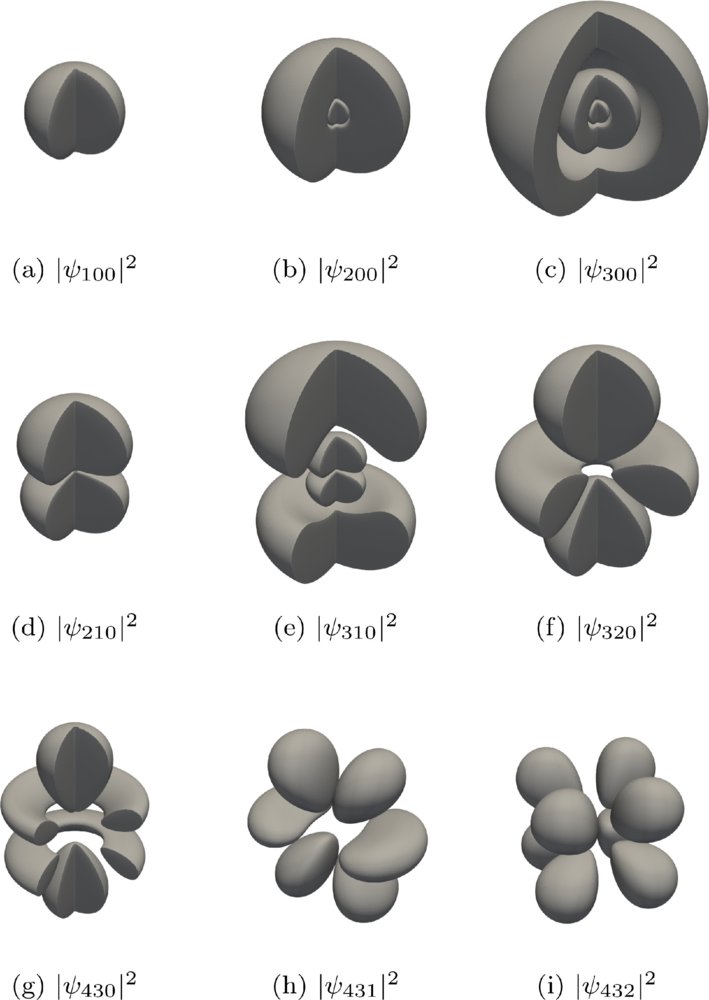
New paper accepted in Physical Review Research (APS):
“Emergent Quantization from a Dynamic Vacuum.”
We show the hydrogen spectrum emerges from dynamic vacuum physics, suggesting quantization may arise from a vacuum that varies in space and time.
https://t.co/KZrmfAph2b
#physics
This is what Apple should have done a year ago.
But instead Nothing is charging full-steam ahead.
If you been following along here, you know that through the last couple of years. I've been talking a lot about self-assembling apps. About how the future of software will look very different from today.
We are closing in on that future, at an accelerating speed. It's happening right now. There is no going back.
Anything you can imagine, will be made possible, any fringe and super personal app that only you would need. Could and will be built.
What happens to software at scale when everyone can make whatever their hearts desires?
The future is here right now. This implementation by nothing is so smart. They make sure the apps you build look on point, and they give you the tools (no need to be a techie) You just use plain language and they sort the rest.
This is so smooth. I hope others will follow.
This is a very mainstream approach.
I'm watching this over and over. It's so smart.
LAST CALL for submissions.... Can you help with XR technology or Indirect Vision Systems that protect aircrew from laser dazzle threats? More details here: https://t.co/xreiRfVuwp
Interested? Please contact me now. (Deadline is Friday!)
Gaussian Splatting is REALLY getting crazy 🥹
Arcturus Studios is showcasing their technology which is focused on capturing sports in full volumetric… so you can experience them at any angle
Insane!
After a 2 year hiatus, there are now FOUR more episodes of The Missing Cryptoqueen available!
Where is Dr Ruja? And can her victims finally get back some of what they lost?
Sorry it’s taken so long. It’s not easy hunting the world’s most wanted woman…
https://t.co/hlMenHtSEH
Spark 0.1.10 is available now! 🌟🎇✨
SOG v2 support, new delicious examples and bug fixes that will make you happy. Enjoy!
Full release notes: https://t.co/7E9vg0erWR
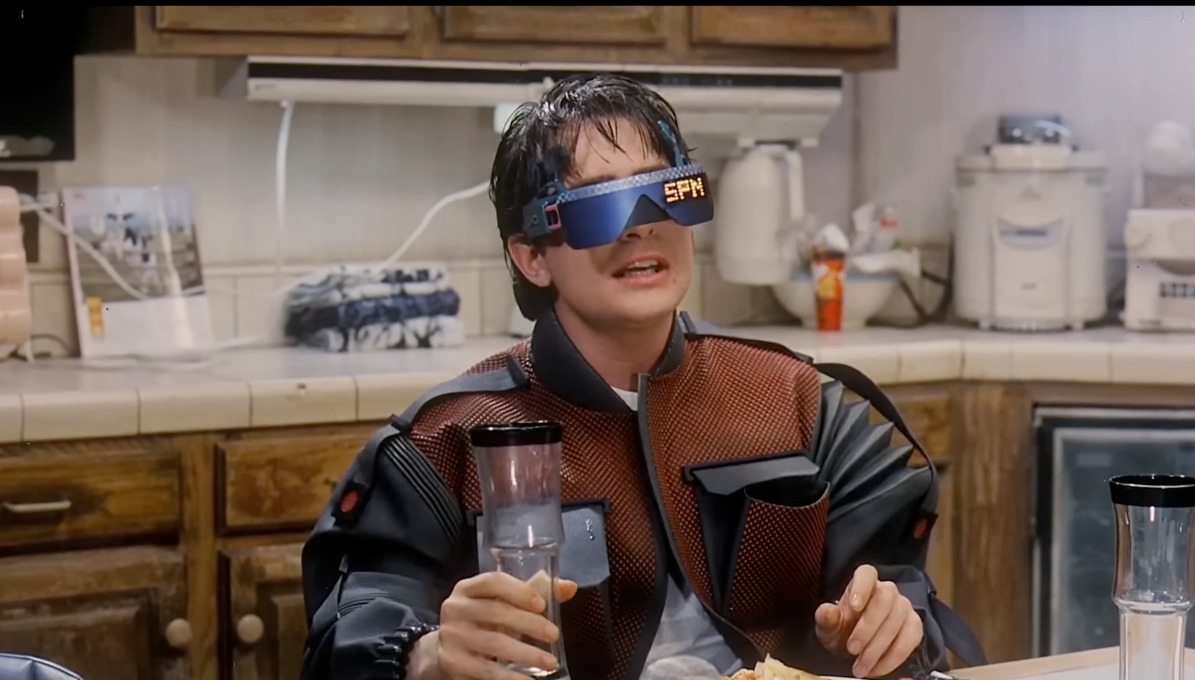
Since it is a 40th anniversary of Back To The Futre, I would like to remind everyone that this is how people imagined XR in 1985😅
I don't think we are too far away from that, but I hope this is NOT the way we use these devices when around family& friends😆(but we kinda do)
Yell magic spells at your friends 🔊
https://t.co/lWfYpz4dD7
Custom version of the Lasertag game for Purdue University's student orientation event. Inspired by Mage Arena (@jrsjams_) and Wand Duel (@_xulipa)
Meta just did the unthinkable.
They figured out how to train AI agents without rewards, human demos, or supervision and it actually works better than both.
It’s called 'Early Experience', and it quietly kills the two biggest pain points in agent training:
→ Human demonstrations that don’t scale
→ Reinforcement learning that’s expensive and unstable
Instead of copying experts or chasing reward signals, agents now:
- Take their own actions
- Observe what happens
- Learn directly from consequences — *no external rewards needed*
The numbers are wild:
✅ +18.4% on web navigation (WebShop)
✅ +15.0% on complex planning (TravelPlanner)
✅ +13.3% on scientific reasoning (ScienceWorld)
✅ Works across **8 environments**
And when you add RL afterward?
🔥 +6.4% better than traditional pipelines.
Two key ideas make it work:
1. Implicit World Modeling - agents predict what happens next, forming an internal world model.
2. Self-Reflection - they compare mistakes to experts and explain why the expert choice was better.
Both scale. Both are reward-free.
Efficiency is absurd:
1/8 of expert data
86.9% lower cost
Works from 3B → 70B models
This isn’t incremental.
It’s the bridge between imitation learning and true autonomous experience.
AI agents can now teach themselves - no human hand-holding required.
Simulon is here.
Studio-quality VFX, end-to-end, in one app for every skill level.
Watch Rexy go from 3D to reality in his first short film “Rexy to the Rescue!”
Made with Simulon on iPhone.
Available now on the iOS App Store.