Did you know that TB used to kill ~1% of the US population every 3 years?
Now it's <1/1000th of that.
A million American lives saved every year.
We saved those lives w research: from microscopes to medicines to health systems.
Please don't defund the American research system.
1. Standing up for what's right.
2. Teaching students whose parents sacrificed to give them a chance to learn.
3. Fighting diseases that kill the poorest people.
4. Caring for those around me.
5. Looking to God for hope.
Praying for strength to do these things, one day at a time
Returning after a long pause.
May be my only post.
Asking myself, "what is my 'north star' in these days?"
Answer: "Do what would make Dad proud."
My dad died of cancer 6 yrs ago.
He wouldn't want me to live angry.
He would want me to do good.
5 things that would make him proud:
After over a decade of amazing leadership by @dcelent1, we are searching for a new Chair of Epi here at JHU!
Will lead some of the most amazing scientists and colleagues imaginable.
Please RT, DM me if interested - excited for the next era of our Dept!
https://t.co/HqColt0GL1
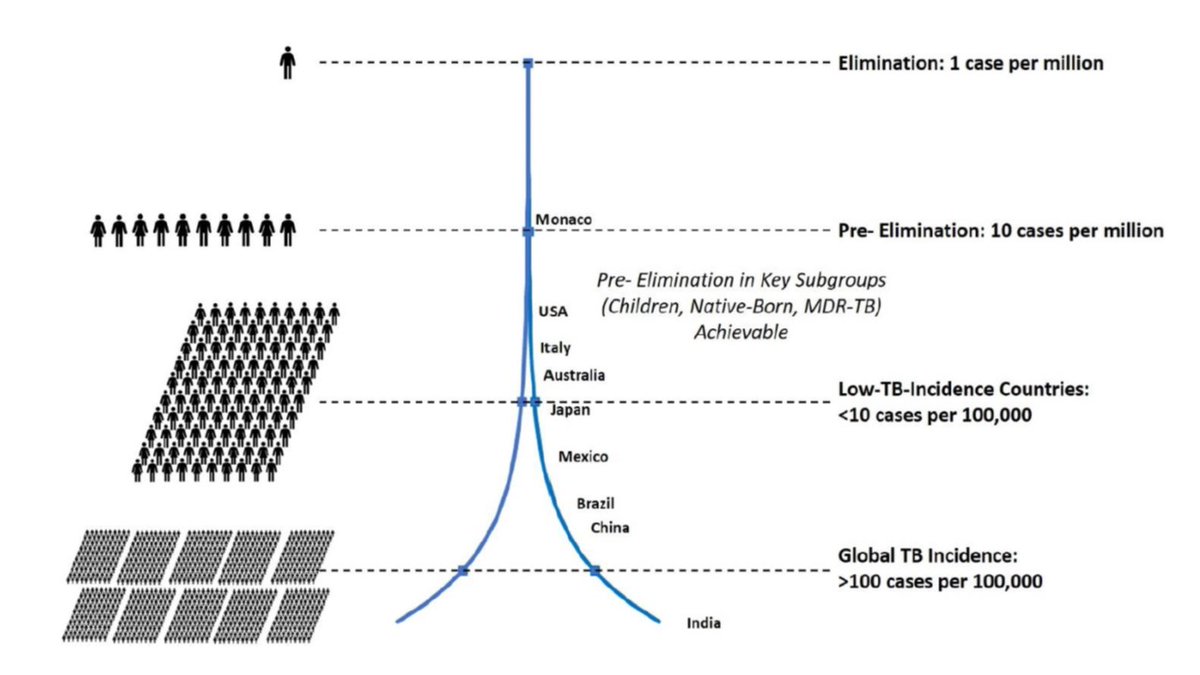
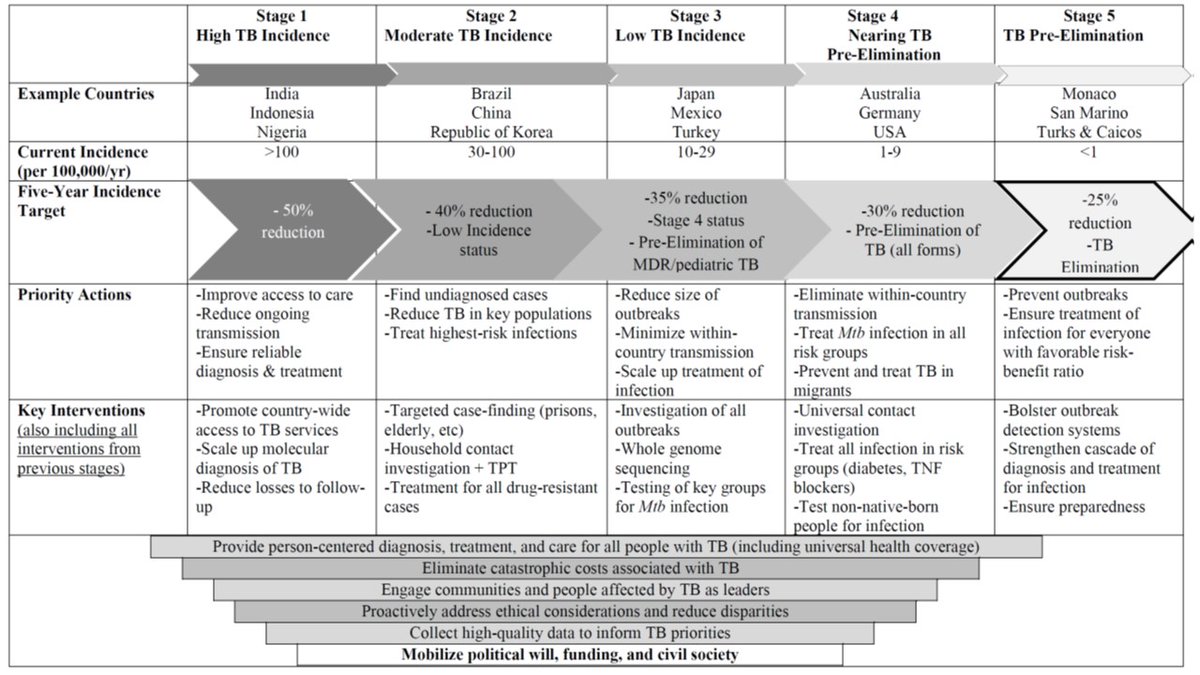
While the vision of TB elimination is laudable, this goal will not be met in an actionable time frame.
We argue: better to take stock of local epidemics, set ambitious 5-year targets to which govts can be held accountable.
Ambition + accountability = higher chance of success!
Achieving 2030 End TB Targets will require >20% year-on-year decline in incidence and mortality, for 8 years.
In the ERJ (@ERSpublications), we (@justin_denholm, GB Migliori & others) argue for a renewed vision of TB elimination, using a staged approach.
https://t.co/13xtGEFBgQ
COVID crushed health systems already straining to manage TB.
But @u_tirc performed 2 intensive case-finding campaigns in an urban Ugandan community, pre- & post-COVID.
TB prevalence fell 45% from 2019 to 2021.
We should frame COVID as a TB opportunity, not just a TB tragedy.
How much can intensive active case-finding change TB epidemics?
We did two rounds of sputum-based TB screening—both an intervention, and a tool for measuring its own impact (intertwined with that of COVID!)—in one community in Kampala, Uganda.
https://t.co/6cAgG1uey1
(1/10)
As w COVID, suggests a role for new tests for TB that are easy to use & able to detect those w high pathogen burden, even if not highly sensitive for all forms of TB.
Like a "home-based antigen RDT" - but for TB, not SARS-CoV-2.
Great work, Tess! Also led by @emilyakendall
ICYMI over the holidays:
New analysis on trajectories of TB disease
c/o @rycktessman in @PNASNews: https://t.co/mK53N8BkA5
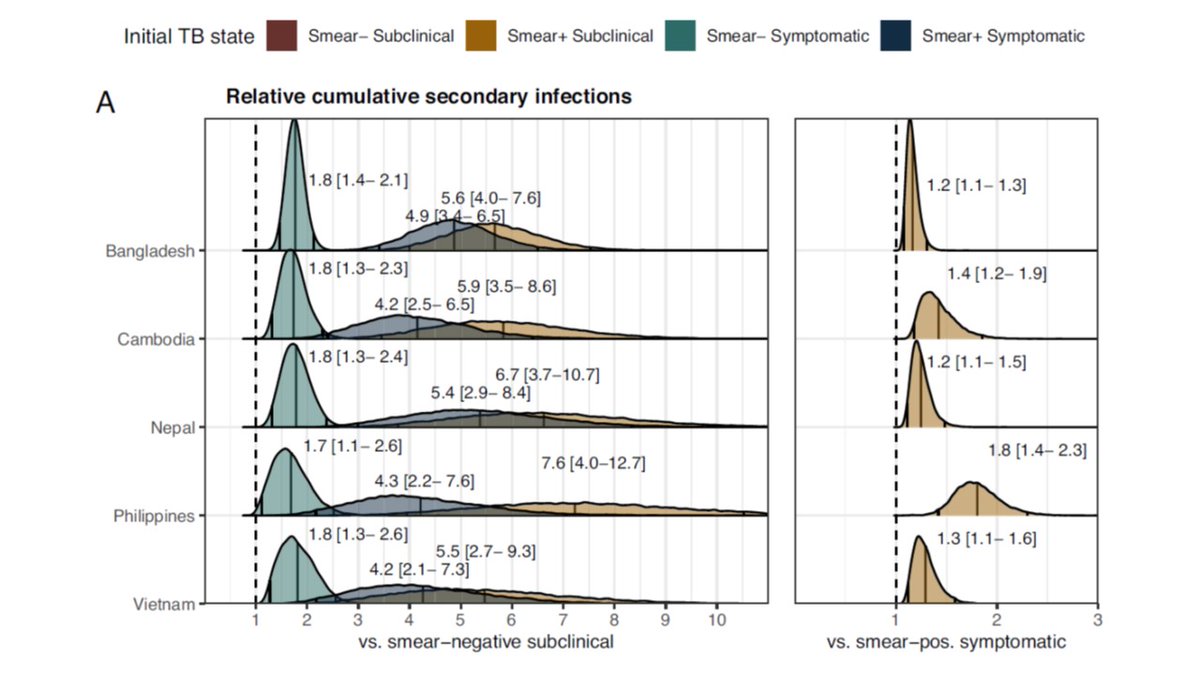
Bottom line: people with subclinical but highly infectious (smear-positive) TB account for only 11-19% of cases but likely 35-51% of future transmission.
This makes sense - as people w high bacillary burden are likely very infectious (and unlikely to get better quickly).
But if they don't have symptoms, they may not seek care.
Very similar to COVID-19. High transmission from people w high viral load but few symptoms.
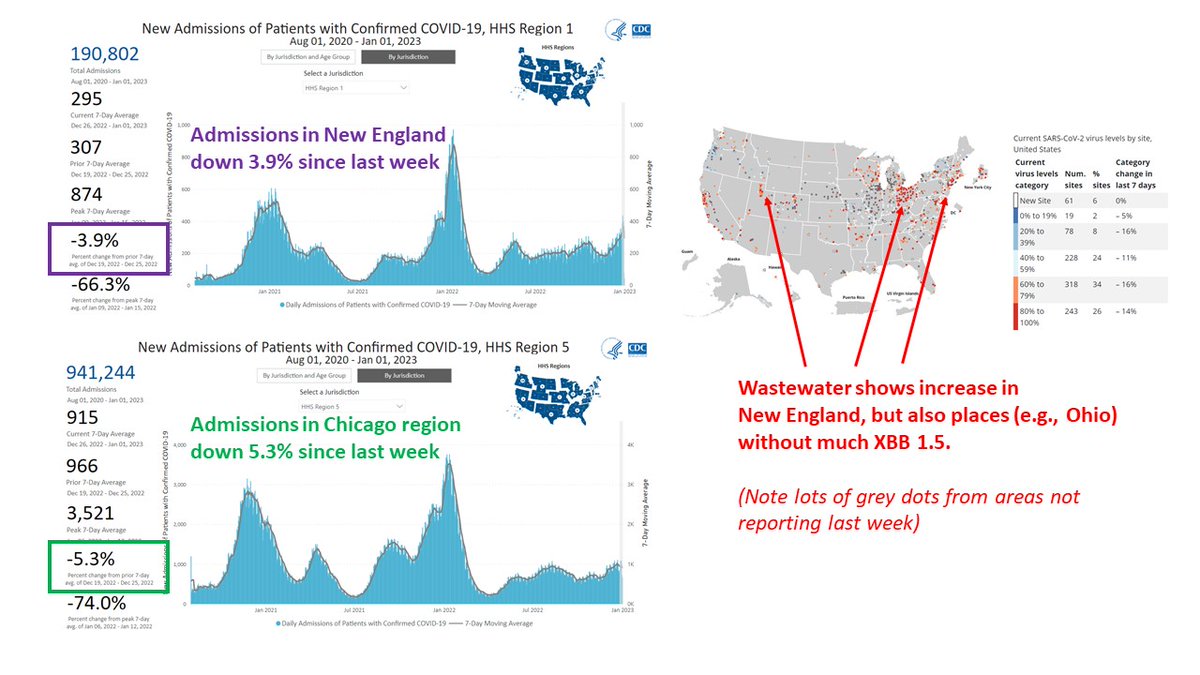
Admissions data also show similarity b/w regions - though admit this is too early to say confidently.
Wastewater data up in the Northeast - but also in other regions without a lot of XBB 1.5.
Nothing consistently worse in high-XBB 1.5 areas. Though still early to say for sure.
Worried about the new XBB 1.5 variant?
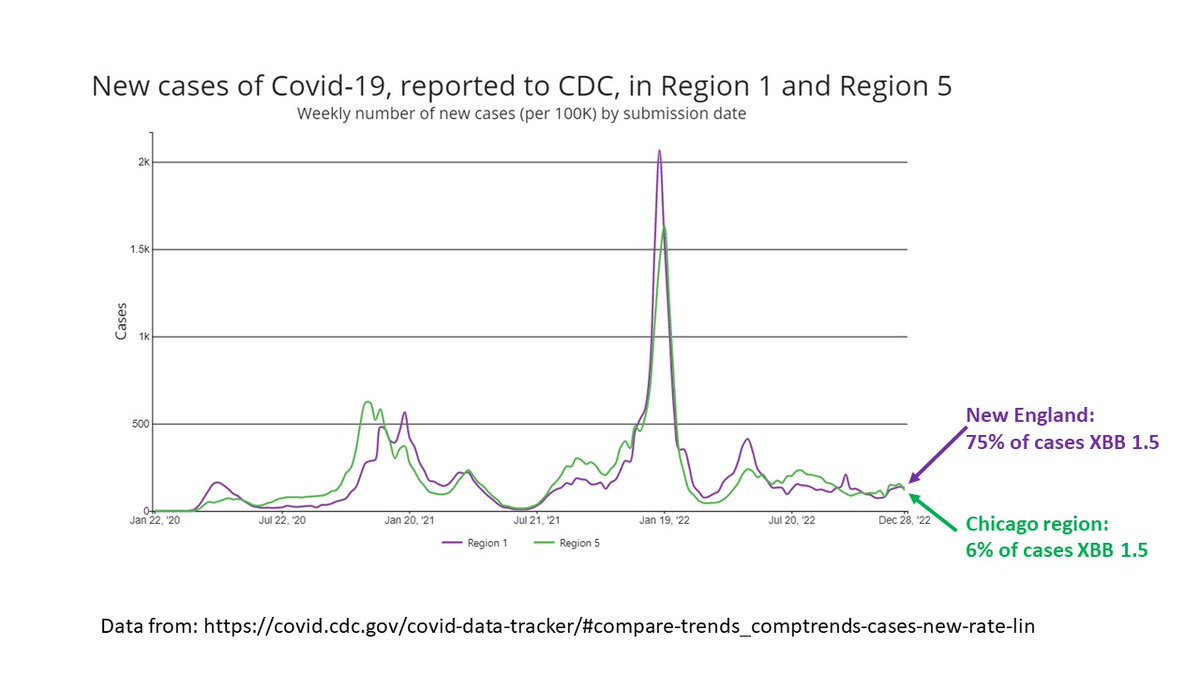
Before you panic, look at COVID rates in New England (75% XBB 1.5) - versus the Chicago area (6% XBB 1.5).
See the big wave of cases in New England? I don't either.
Just because we have a new variant doesn't mean a new surge is coming.
If we could all contribute as much to the world during our lifetimes as Grant did in his 48 years, the world would be a far more beautiful place.
Rest in peace, Grant...I hope those of us who knew you can find a way to carry your light forward. As I'm sure you would want us to.
Up late tonight remembering Grant Wahl...sadness works in unpredictable ways.
I can't claim to have known Grant that well - but I'm taking a stab at 3 lessons I think he would want me to take forward in my own life...
3. Find the good in the world.
Despite being one of the hardest-working people I've known, Grant always seemed to have a smile on his face. I think the only way he was able to maintain this sense of optimism was to focus on the light that exists in this world, not the darkness.
We're looking for great people to join our team!
We're combining 4 investigators & multiple funding sources to provide postdocs w a flexible experience tailored to their career goals.
If you're interested in policy-relevant modeling of HIV and/or TB, we'd love to hear from you!