Today, the @valoryag team is bringing a new product into Pearl that's poised to grow @autonolas agent economies!
What I like most about this new "Connect" agent is that it goes to where the users of AI agents already are: in coding agent sessions of Claude Code, Codex etc.
Those users can now have their coding agent access the specialised AI agents available on the @autonolas marketplace with a simple onchain micropayment, e.g. to purchase a prediction for a prediction market bet.
Every such micro transaction drives fees to ethereum:0x0001a500a6b18995b03f44bb040a5ffc28e45cb0.
Give it a spin and let us know what you make of it!
Introducing Pearl Connect: give the AI coding agent you already use a crypto wallet.
Ask it to trade on Polymarket or Omen, or buy a forecast from a specialized prediction agent. Research, predictions, and trades in one session.
🧵
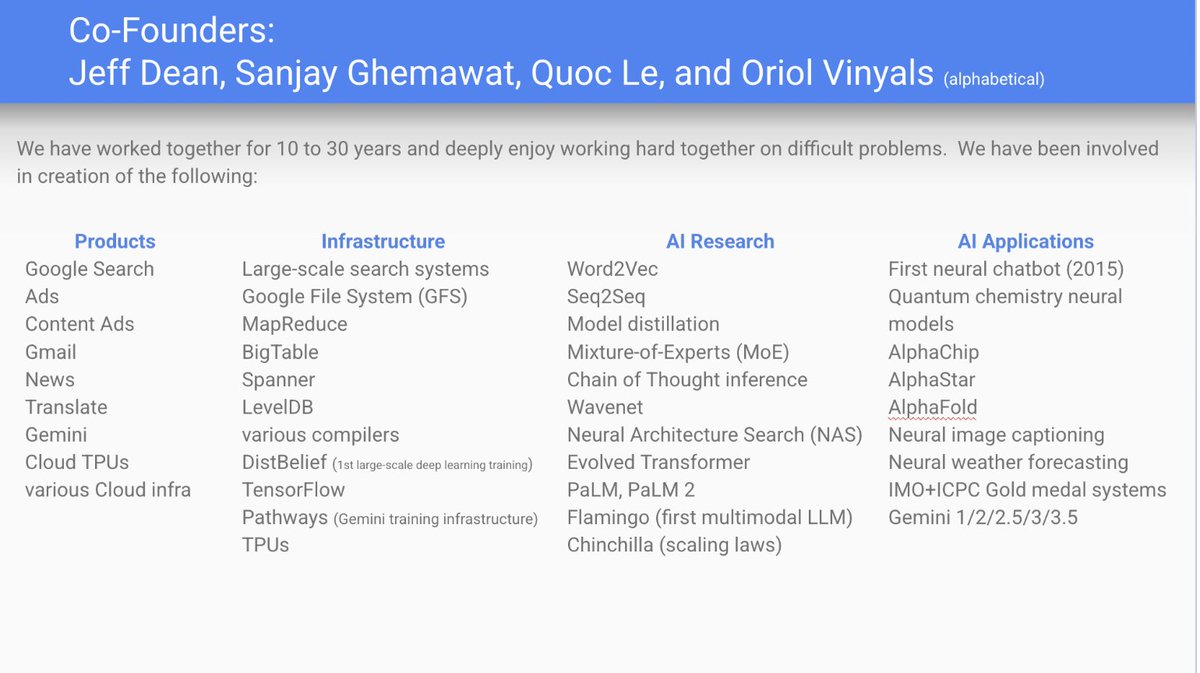
We created a pitch deck to tell a handful of VC firms about us and what we were up to (a fun experience!). Here’s a few slides about our background and some of the things we’ve worked on from the pitch deck (it was fun putting together the list of people in our teams who have gone on to found a whole range of exciting companies). We are delighted to have selected @radicalvcfund
and @khoslaventures to lead our initial funding round, along with participation from @lightspeedvp, @kleinerperkins, Doerr Capital (@johndoerr), and Alphabet (@Google). We’ll be working with them to close our seed round over the next few weeks.
@ZackD0x interesting that @autonolas was doing autonomous agent trading in 2023 before agentic wallets were a thing. Pearl brought it to consumers, Connect brought it to coding agents. The space is finally catching up 🤓
my take is that:
1) issuance is already very, very low for ETH. lower than BTC, lower than almost every other blockchain, and lower than the supply of new gold added to the market every year
2) issuance is not a primary driver of ETH price at these already low levels. demand to hold ETH as a speculative SoV and use ETH for exchange and productive purposes drives ETH price. and like it or not, staking yield has become a key factor for why people choose to buy and (crucially) hold ETH
3) consistency and predictability in ETH's issuance policy is more important to creating market confidence around ETH (and by extension, Ethereum) than perfectly optimizing issuance
4) solo/small stakers shouldn't be allowed to be priced out of the market, because if shit really ever hits the fan, you're going to need them
5) we should focus on scaling Ethereum as a network, drive much more use to the network, charge appropriate fees to use it, and allow fee burn to continue to offset some amount of the already low issuance
I rarely use auto-accept - I like to understand what's happening before I say yes 🧐 This is the kind of security in Connect by @autonolas I want to see more of in the agent space
Claude now has a crypto wallet, so what?!
Been playing around with Connect agent powered by @autonolas and it feels super engaging!
Going to continue exploring things I can delegate & monetize to my ai bro
I solved 6 open Erdős problems in 5 days, using @OpenAI GPT-5.6 Sol.
I have a math background, but the Codex workflow I used does not require deep mathematical knowledge.
Here’s exactly how I approached it, including my prompts 🧵
I've been playing with this all day. You get the sense that the possibilities are endless. I used it for trading on prediction markets and the experience is something else.
We kept asking "what if your coding agent could just… do things on-chain?" Now it can. Pearl Connect gives it a self-custodial wallet, guides it through getting predictions on the Olas Marketplace and trading on Polymarket and Omen, in just one session. Gonna try it 🤓
Working on AI for science is disorienting.
On the one hand top mathematicians and scientists say research will never be the same.
On the other hand many still don't know that deep technical reviews better than you get from 80% of RAs and referees are now near-instant to get.
☴ Olas Q2 2026 Roundup
This quarter, Olas AI agents crossed 18.2M+ lifetime transactions, 13.2M+ of them agent-to-agent.
The ecosystem scaled: the Marketplace fee & OLAS burn went live, the stack hardened, new tools were added, and more agents launched on Pearl!
Here's Q2 👇
The Agent Economy Explorer just got bigger - two economies are now live alongside Olas Predict.
BabyDegen: agents that manage your DeFi 24/7.
Mech: where agents trade digital services, paid per request.
Explore now: https://t.co/AmzoKCPZ26
The Agent Economy Explorer just got bigger - two economies are now live alongside Olas Predict.
BabyDegen: agents that manage your DeFi 24/7.
Mech: where agents trade digital services, paid per request.
Explore now: https://t.co/AmzoKCPZ26
Specs look silly & have no vibe
Can't see how this stands a chance as a consumer product in its own right in this iteration.
Here's a thought:
pivot this to "record-to-earn" with a token, sell data to AI/robot labs and you might have just unlocked a path to consumer with iteration 2 or 3
There is one thing Europe does better than the US and Asia.
Andy Yen built Proton from Switzerland because of it.
A global company. Built on that one edge.
What does Switzerland need to build more companies like it?
His answer is worth listening to.
In the age of AI, this may be Europe’s greatest advantage.
So I spent some time studying the new Twitter/X algorithm today since the latest version was published about a week ago on Github (https://t.co/3jzdav3Ywp).
My goal was to answer why so many people have seemingly seen such a dramatic drop in their posts' reach.
The first answer, which is actually somewhat unrelated to the ranking algorithm on Github, is the auto-translate feature, rolled out worldwide on April 7, 2026 (https://t.co/YtGomG9RGz).
Before that date, if you wrote in English about, say, the Trump-Xi Beijing summit, you were competing for attention with maybe 5,000 other English-language accounts writing on geopolitics.
After that date, your post is competing for attention with other posts on the same topic IN EVERY LANGUAGE ON EARTH. For some topics that do command global attention like geopolitics, that's a very brutal multiplier: you used to be one of 5,000, you're suddenly one of 50,000 (something of that order): MUCH more difficult to stand out.
Secondly, the number of followers you have matters far less than it used to: each post now has to earn its audience reader by reader, on the predicted engagement of the post, and how its topic matches what each reader has recently been engaging with.
Here is how the algorithm works, in simple terms: when you, as a reader, open your feed, the algorithm doesn't load "posts from accounts you follow." Instead it runs a 2-stage prediction of what posts you're likely to engage with in that very moment.
The first stage is the retrieval stage. The system narrows billions of posts on X/Twitter that day down to roughly 1,500 candidates by matching the semantic content of each post - what it's about - against what you as a reader have recently engaged with. Some candidate posts come from accounts you follow; others are pulled from across the platform by pure topic similarity to your recent interests.
You can test this retrieval stage easily: start disproportionally engaging with - say - Brad Pitt videos and you'll bit by bit see your timeline flooded with Brad Pitt content, most of it from accounts you've never followed and never heard of.
Then there's the ranking stage. Each of these candidate posts for your feed is fed through a Grok-based model that tries to understand if you'll engage with the post.
It looks at 15 engagement metrics:
1) P(favorite) — the reader likes the post
2) P(reply) — the reader replies to it
3) P(repost) — the reader reposts it
4) P(quote) — the reader quote-tweets it
5) P(click) — the reader clicks a link in it
6) P(profile_click) — the reader taps through to your profile
7) P(video_view) — the reader watches the video
8) P(photo_expand) — the reader expands an image
9) P(share) — the reader shares it (DM, off-platform, etc.)
10) P(dwell) — the reader stops scrolling and lingers on the post
11) P(follow_author) — the reader follows you after seeing it
12) P(not_interested) — the reader marks "not interested"
13) P(block_author) — the reader blocks you
14) P(mute_author) — the reader mutes you
15) P(report) — the reader reports the post
Fifteen predicted actions, each multiplied by a weight, summed: that sum is the score that determines in which priority a post will be seen among other candidates.
Please note that posting something with a video or an image can give your post an advantage as 2 actions are specifically for these: video_view and photo_expand. No video or photo and you don't get a score for these. Also, naturally, having a video maximizes the chance that a user will "dwell" on your post to watch it.
Also note that 4 of these actions carry negative weights (not_interested, block_author, mute_author and report): meaning that if the model expects a post to generate a lot of negativity, it'll get de-boosted quite dramatically.
But note, first and foremost, what's NOT in there: none of the things that, naively, one might think a serious information platform would weigh. There is no P(this post is true and well-sourced). No P(the author actually knows what they're talking about). No P(this person has spent a decade building a body of work that has held up). No P(this account has earned the right to be taken seriously on this topic). No P(the author has a large following from credible people). The model does not seem to care - at all - about any of that.
Every post starts from zero. You could have ten years of rigorous, well-sourced analysis behind you - or you could be just an uneducated rando who registered yesterday. To this algorithm, you're both just a bag of engagement probabilities.
Now, sure, to be fair, there is a "brand" effect that's not covered by the algorithm: someone who has in fact built a brand will naturally have better engagement metrics because people recognize their account. But that's an indirect, second-order effect. And crucially, it's legacy: those "brands" were built under earlier versions of the algorithm that gave followers and reputation more weight.
Lastly, several other features of the new algorithm compound the dilution, none of them visible from outside but all consequential.
The May 15 update added an "impression bloom filter," tightening the rule that once a reader has been served a post, the system won't serve it to them again. Before, a strong post could marinate in someone's feed across multiple refreshes and accumulate engagement on the second or third pass. Now it basically gets one shot.
Also, your own posts compete with each other. An "Author Diversity Scorer" inside the ranking stage attenuates the score of every subsequent post of yours that ends up in a reader's candidate pool. In plain terms: if multiple of your posts land in a reader's candidate pool, the system shows one at full strength and dampens the others. So don't post several times consecutively on the same topic.
And, last but not least, another huge impact on reach is that, in the old algorithm, when someone reposted or quote-tweeted you, your post was broadcast to their followers' timelines - a repost from an account with 100,000 followers was a huge boost.
In the new algorithm, that mechanism is vastly demoted: reposts - like every post - need to go through the retrieval and ranking stage mentioned above, so a repost from a big account is a long way from the boost it used to be.
This is especially brutal for low-effort quote tweets, which used to function as cheap amplification: now they often can't even clear the retrieval stage - they simply don't contain enough novel semantic content for the system to match them to anyone's interests.
So, putting it all together, the reach collapse comes from many forces stacking at once:
- Auto-translate makes your posts compete for attention against an order of magnitude more content
- The retrieval stage matches posts by topic, not by who follows you
- The ranking stage scores purely on predicted engagement with no weight for credibility, expertise, or track record
- The bloom filter narrows every post's window to one strong shot
- The diversity scorer penalizes prolific posting
- Reposts no longer carry much distribution power
Each of these alone would dent your reach. Combined, they amount to a complete reset: your audience that you built painstakingly over years basically doesn't matter much anymore, and it's much - much - harder to stand out even if you're a big account.
People structurally rewarded by this algorithm are folks who:
- Post visually (videos/images)
- Post on globally popular topics because they clear the retrieval stage easily
- Provoke strong emotional reactions - likes, replies, reposts
- Don't care about accuracy or seriousness because the algorithm doesn't measure it
- Don't care about their existing audience because every post is judged in isolation anyway
In short this new algorithm, like so many on social media, is all about maximizing whether people will engage with something - not about whether they should.
One under discussed topic with these massive AI investments is that it acts as a huge forcing function towards commoditisation (including in the most extreme case via illegal means like stealing model weights).
Would be an irony of history if an “AI bubble” lead to general availability of AGI as a utility.
Olas is being readied for a new phase.
If you follow the @autonolas account and blog (https://t.co/IZggtDtERg) you can see that there's continuous product and protocol development.
Here are some of the last outstanding items of the current phase from the perspective of @valoryag :
1) in Pearl (https://t.co/LPI1gepQzN):
-> Transaction history was shipped for Pearl Wallet, agent wallets are next!
-> Ongoing UX improvement based on Pearl Success Agent's work
2) in Pearl Mini (https://t.co/8tLWxlfKxO):
-> We're stuck with Chrome Web Store submission for a few weeks already. Help us get unstuck by using the current release candidate. Then we'll ship the final two features for v1.
3) Agents in Pearl:
-> New agent launching very soon!
-> Maintain and improve BabyDegens and Predict Agents
4) Marketplace (https://t.co/8upct8cj1q):
-> Fully move to off-chain request response with on-chain payment rails: lowers costs for users, brings privacy and enhanced latency
-> x402 and MPP compatibility
5) Protocol:
-> Update PoL fees capture (https://t.co/czV8Zfpxtg) so fees burn OLAS
-> Balance emissions with fees from marketplace & PoL
With these out of the way, at core contributor @valoryag we can finally attempt new advances to the protocol and its products. More on our plans for Olas this summer, once the above work is done!
📢 The Olas Marketplace protocol fee is now live!
A 15% fee now applies to agent-to-agent payments across supported EVM chains.
Fees collected in OLAS are burned on Ethereum. Fees in other tokens go to the Olas Treasury.