Folic acid is not an essential B vitamin. Folate is the essential B vitamin. Folic acid blocks receptors preventing folate from entering the cell. Cancers, neural tube defects and neurodegenerative disorders will follow.
A little more digging on the folic acid issue…
Flours outside the mandatory fortification requirement include wholemeal flour and flours made from grains other than common wheat. This ought to include rye, oats and buckwheat. Spelt and other wheat species are also outside the requirement.
And small mills producing under 500 tonnes a year can be exempt too.
So there ARE ways to avoid added folic acid.
Now, this is according to the regulations as they stand. I’m digging further into exactly what will be available on our shelves and I will try to report back once I find out more.
folic acid sits on folate receptors and stops folate entering, and the brain needs folate for:
making neurotransmitters
repairing DNA
keeping microglia able to switch from M1 to M2
maintaining the myelin that protects nerves
running methylation (your “stickers” system)
This year the Home Office moved to stop expert sheep shearers from Australia and New Zealand coming to shear British sheep.
The people who keep the animals comfortable were declared surplus to requirements.
For over a decade, around 75 of the best shearers on earth have flown in each spring on a simple visa concession. In a few brutal weeks they take the wool off up to two million sheep.
A top shearer clears a ewe in two or three minutes. Hundreds a day. Calm hands, no panic in the animal. It is a global trade and a young body's game, and Britain has never grown enough of its own.
The official line? Fourteen years to train Britons, so the door is closing.
Here is what that tidy sentence ignores. A sheep must be shorn every year or she overheats, cannot move properly, and gets eaten alive by flies and maggots. Shearing on time is welfare, plain and simple, written into law and into the animal's own skin.
So a government that lectures farmers without pause about welfare has quietly made the most basic welfare task harder to carry out. After the outcry they allowed one "final" year. Then the experts are gone for good.
A sector already losing money on every fleece, already burning wool it cannot sell, now told it cannot even get the people in to take the wool off.
You could be forgiven for thinking somebody wants the British sheep gone.
If you are old enough to have driven in Britain in the 1980s, you remember the windscreen.
By July you could barely see through it. A run from Leeds to London in August finished with a bumper that looked like it had been to war and a sheet of glass you scrubbed with a sponge at the services while the engine ticked as it cooled. Moths in the headlights. Flies in the wing mirrors. The grille packed solid. Nobody thought it remarkable. It was simply the price of moving through a country that was still, in living memory, heaving with flying things.
Drive that same road today. Stop at the same services. The windscreen is clean. Spotless. You could very nearly eat off it.
We have the numbers, for those who want them. The Bugs Matter survey, run by Kent Wildlife Trust and Buglife, has had volunteers counting the splats on their number plates since 2004. Britain's flying insects are down by roughly four fifths in twenty years. Gone in a single human lifetime, while the rest of us noticed nothing at all.
The birds went down with them, because the birds lived on them. A child born this year can grow up in the English countryside and never once hear a turtle dove, for the simple reason that there is almost nothing left to do the calling.
And none of it, not one acre of it, happened on the grass.
It happened in the arable fields, where the hedges were torn out for bigger machines and a single crop was sprayed over and over to keep it upright. The herb-rich meadow grazed by cattle still hums. The beetles, the pollinators, the ground-nesting birds, all still there, just about, on the pasture our ancestors never stopped grazing.
So when someone tells you your steak is emptying the British countryside, ask them what grew on that field before it was drained and ploughed and sprayed to raise the oats for the carton in their fridge.
It was grass, and there were cattle on it, and back then the windscreen needed cleaning.
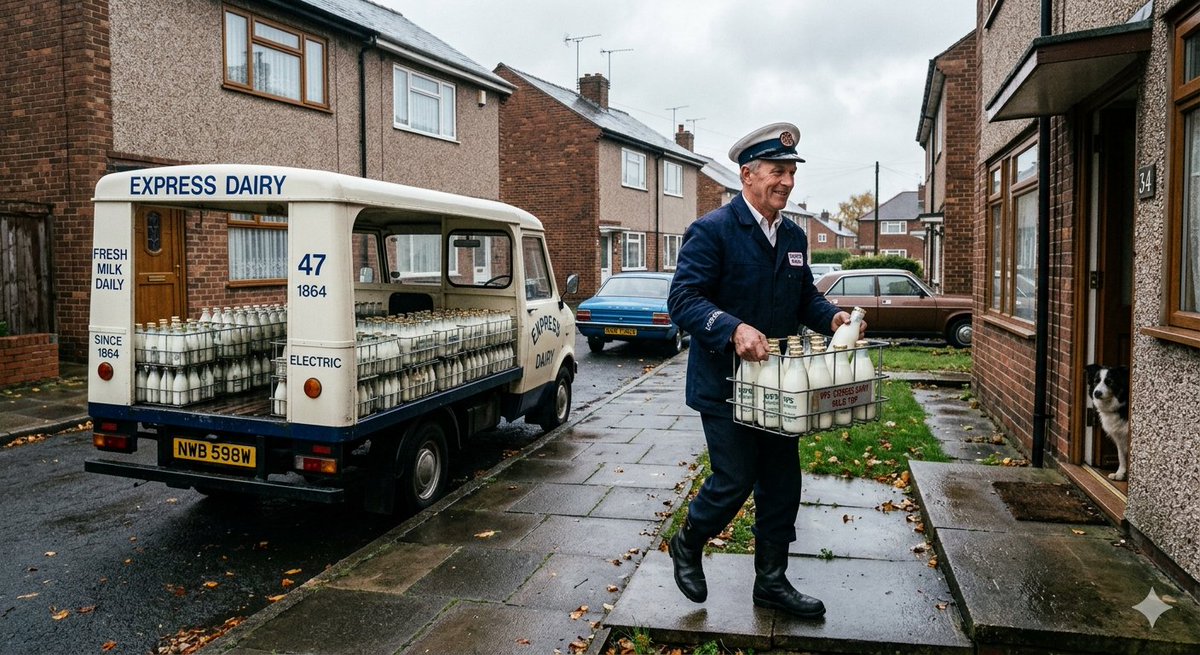
In 1975, more than 90% of milk in Britain was delivered to the doorstep by a milkman before seven in the morning. The float was electric. The bottles were glass. The pint left on the step was waiting for the kettle to go on.
By 2025, doorstep delivery had collapsed to under 3%.
The British milkman, at his peak, was one of the most visible faces of national life. He knew every customer on his round by name. He left bottles in the porch, on the wall, in the rack by the gate. He picked up the empties. The bottles made, on average, more than twenty round trips before being retired.
The milk came from a local dairy. The dairy was supplied by farms within a few miles. The milkman, the dairyman, the farmer, and the customer were, very often, on first-name terms.
Several things broke this between 1980 and 2000.
The fridge had arrived in nearly every British home by the late 1970s. Daily delivery became unnecessary.
The supermarkets moved into milk. Tesco, Asda, and Sainsbury's began undercutting the doorstep on price. The local dairy was bought out, consolidated, or closed.
The glass bottle was replaced by the plastic jug. Plastic doesn't get washed and reused. Each plastic container of milk now generates a piece of single-use waste that takes hundreds of years to break down.
What disappeared, with the milkman, was a piece of daily British life. The same person at your door every morning for twenty years. The clink of bottles at half past five while the rest of the street slept. The conversation when you were in. The note left under the bottle on the day of the funeral.
The milk is still being produced. It is just being produced further away, by fewer and larger farms, shipped further, sold in plastic, by people you will never meet.
A small British revival has been quietly building since around 2015. Milk & More now serves around half a million doorsteps. Independent dairies in Devon, Somerset, Yorkshire, and the Scottish Borders are running their own glass-bottle rounds. Slightly more expensive. Whole milk. Washed bottles. A man at the door who knows the dog's name.
If there is one in your area, sign up.
The system died because nobody fought for it.
It's coming back, in the same way, by the same people.
Very Important Message!!
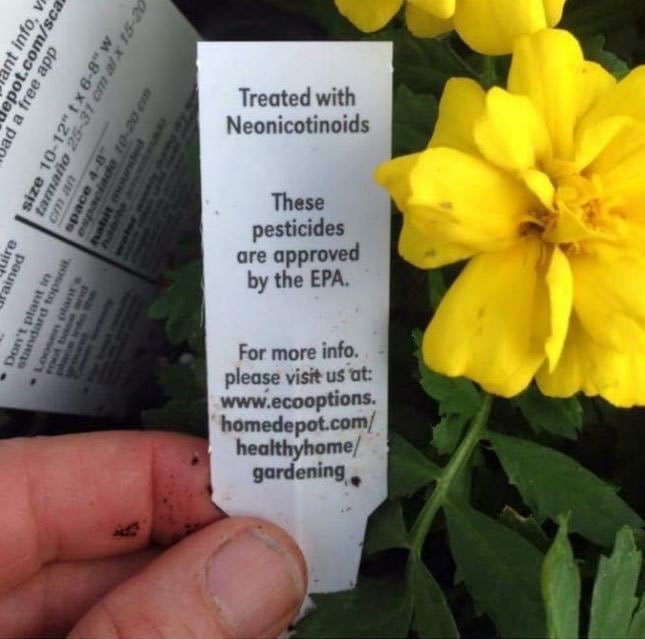
Do NOT, and I repeat do not buy plants treated with Neonicotinoids. Bees take the pollen back to the hive and feed it to the brood.
This is a number one cause of the colony collapse. It's important to NOT buy these plants!
Make sure to share this post!
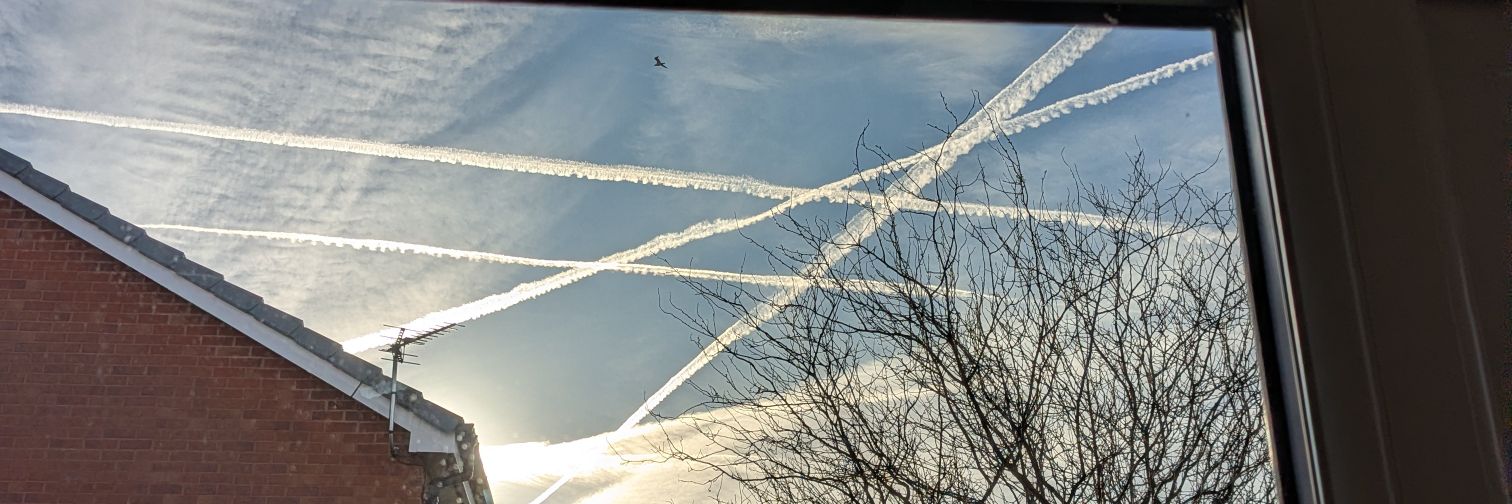
I've put an official question to the relevant minister on whether they'll conduct a full risk assessment regarding their experiments to 'dim the sun'.
Not a sentence I thought I'd be typing a few days ago...
Most people are unprepared for what's bearing down on us.
The food supply is in serious trouble and it's only going to get worse.
The weather in Europe has started hitting food prices. Expect prices to more than double on imports.
That's before factoring in oil prices and the increased cost of ttansport.
In addition to that, the World's fertiliser supply is down 30%.
That means farmers will be limited in the crops they can afford to plant, so less harvests later this year.
If you think things are getting bad now, just wait until August September, and that's hoping that the weather will be beneficial to crop growth, which is optimistic when geoengineering, and those behind it, are actively controlling our climate. 🤬
Spraying just one dandelion with roundup will kill 100+ pollinators.
The flower won't die right away and will be visited by dozens of bees and butterflies, poisoning them as well.
NEVER spray spring dandelions. Ever.
The lies are being exposed!
We never consented to having our air filled with toxicity! These programs must be stopped globally!
If our governments want to try to claim it's all harmless pixie dust...then prove it, but shut it down until you do!
Here is Andrew Bridgen @ABridgen
#GeoEngineering The whole crop failed ❗️🤬🤬the farmer has put the cows in the field to eat it now said it’s no good ❗️🤬🤬❗️this happening countrywide ❗️❗️❗️