@nextbigtrade If the Private bank called the Federal Reserve continues with rate hikes we are “deadheaded” in to a 1970s “style” environment.
That’s freakin nuts!
Remember the political affiliations of those that serve on the Fed board.
They are “not” our friends.
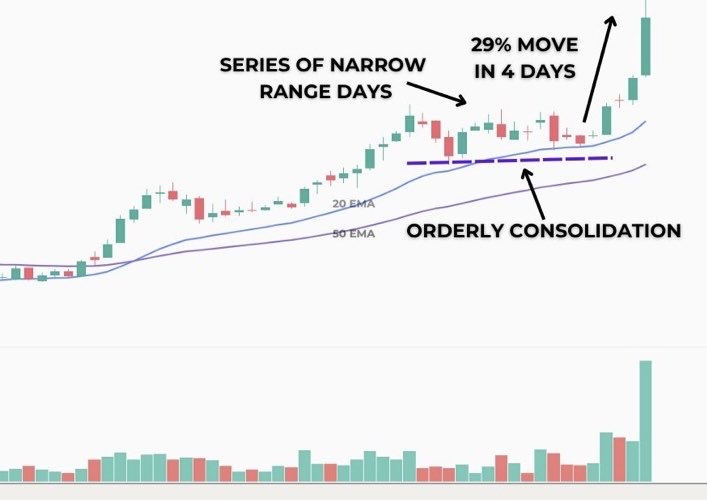
My entire trading framework boils down to 2 simple concepts (save this chart):
1) buy weakness in strength = a weak pullback in an uptrend can be an opportunity.
2) short strength in weakness = a weak bounce in a downtrend can be an opportunity.
That's the simple framework.
When I see massive institutional volume flooding into a stock, I do not chase the initial move on day one.
I wait for the Day-2 entry setup where the stock consolidates and offers a defined risk level. That volume accumulation tells me the big money is behind the move, so I let the first day play out and then step in when the reward-to-risk ratio aligns with my rules.
That patience is where my actual edge comes from.
Market Wizard Linda Raschke's 12 Technical Trading Rules
1. Buy the first pullback after a new high. Sell the first rally after a new low.
2. Afternoon strength or weakness should have follow‑through the next day.
3. The best trading reversals occur in the morning, not the afternoon.
4. The larger the market gaps, the greater the odds of continuation and a trend.
5. The way the market trades around the previous day’s high or low is a good indicator of the market’s technical strength or weakness.
6. The previous day’s high and low are two very important “pivot” points, for this was the definitive point where buyers or sellers came in the day before. Look for the market to either test and reverse off these points, or push through and show signs of continuation.
7. The last hour often tells the truth about how strong a trend truly is. “Smart money” shows their hand in the last hour, continuing to mark positions in their favor. As long as a market is having consecutive strong closes, look for the up‑trend to continue. The up‑trend is most likely to end when there is a morning rally first, followed by a weak close.
8. High volume on the close implies continuity the next morning in the direction of the last half‑hour. In a strongly trending market, look for resumption of the trend in the last hour.
9. The first hour’s range establishes the framework for the rest of the trading day.
10. A greater percentage of the day’s range occurs in the first hour than was the case in the past, and thus it has become increasingly important to trade aggressively if there are early signs of a strong trend for the day.
11. There are four basic principles of price behavior which have held up over time. Confidence that a type of price action is a true principle is what allows a trader to develop a systematic approach.
The following four principles can be modeled and quantified and hold true for all time frames, all markets. The majority of patterns or systems that have a demonstrable edge are based on one of these four enduring principles of price behavior. Charles Dow was one of the first to touch on them in his writings.
Principle One: A Trend Has a Higher Probability of Continuation than Reversal
Principle Two: Momentum Precedes Price
Principle Three: Trends End in a Climax
Principle Four: The Market Alternates between Range Expansion and Range Contraction
In the world of money, which is a world shaped by human behavior, nobody has the foggiest notion of what will happen in the future. Mark that word – Nobody! Thus the successful trader does not base moves on what supposedly will happen but reacts instead to what does happen.
Huge returns rarely come from a high win rate. They come from asymmetric position sizing.
Christian Flanders tiers his size based on setup quality, risking real capital only on A+ setups. Small trades protect the equity curve, while max-size positions drive the outsized gains.
Sizing creates the edge.
“Book of the Covenant, the Ethiopian Biblical text where Jesus keeps teaching his disciples after the resurrection, so this video opens the manuscripts behind that answer.
You'll hear what the risen Jesus says about church leaders who love money, the strange signs he lists before the end, and a description of the coming enemy so detailed it mentions his eyelashes.
We trace how Ethiopia kept these books for centuries;
why the popular Council of Nicaea story doesn't hold up, and how one bishop in Alexandria links the Western Bible to Ethiopia's……..”
https://t.co/rQaaPNBUaU
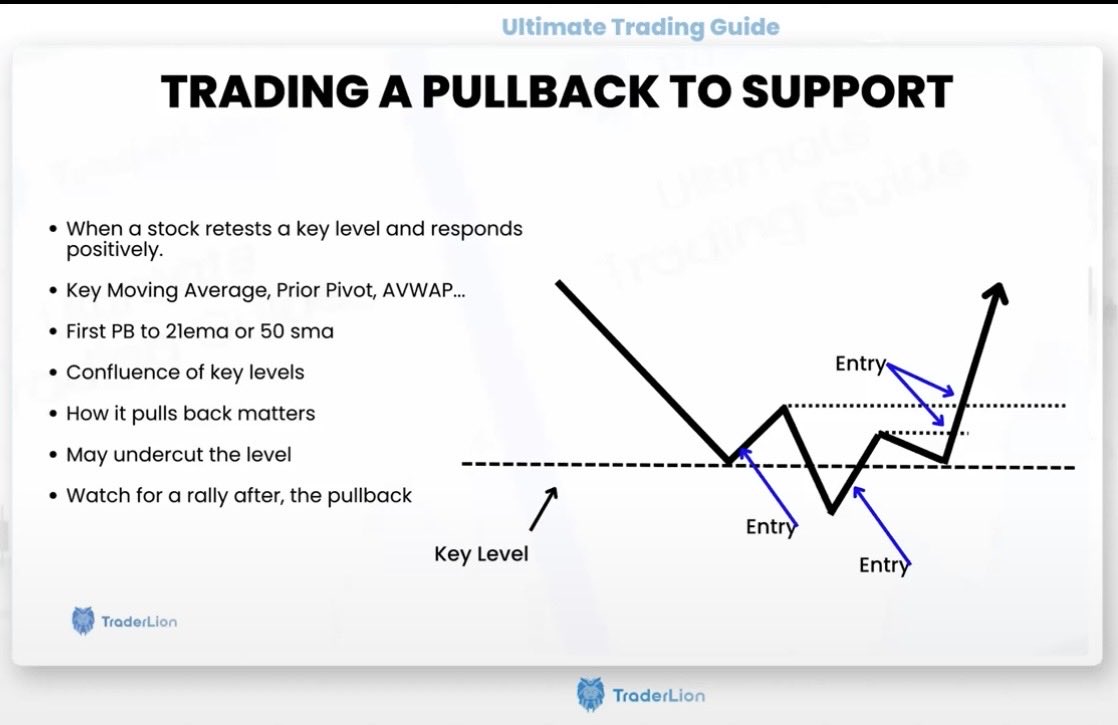
I only buy pullbacks when I see moving averages and key structural support line up at the exact same spot.
Single technical levels fail all the time, so I look for confluence before putting my capital at risk. When a key moving average sits right on top of prior horizontal support, my risk becomes clearly defined.
That intersection is where I get my best risk-to-reward entries.
I use Williams Oops reversals and opening range breakouts to catch trapped traders on liquid momentum names like TSLA and ABNB.
When a stock gaps down into support and immediately reclaims the previous day's low, the shorts get caught off guard. I take that reversal quickly or wait for the ORB to confirm the buyers are fully in control.
That gap-trap dynamic gives me an immediate, low-risk entry.
I look for the Undercut & Rally tactic right at the lower boundary of a range.
This setup triggers when price breaks below known support to clear out stops, then quickly reclaims that level. I enter as soon as the stock re-enters the range, letting the shakeout provide momentum as shorts are forced to cover.
It allows me to place a precise stop just under the recent undercut low.