From the factory floor to Nigeria’s power infrastructure transformation.
This video captures key moments from the Factory Acceptance Tests (FAT) conducted at Siemens Energy manufacturing facilities in China and Italy under the Presidential Power Initiative (PPI).
The FAT process is a critical milestone that verifies equipment quality, performance, and compliance with project specifications before approval for shipment to Nigeria. Following delivery to project sites, installation, pre-commissioning, and testing activities will commence as part of the next phase of implementation.
With preliminary engineering and site preparation works already underway across project locations, each milestone brings us closer to strengthening Nigeria’s transmission network and delivering more reliable power to businesses, industries, and households nationwide.
#PresidentialPowerInitiative #PPI #FGNPowerCompany #SiemensEnergy #PoweringNigeria #TransmissionInfrastructure #EnergyTransformation
Powering the future goes beyond infrastructure, it’s about people.
Today, at the New Abeokuta Transmission Substation, Ogun State, we officially launched the Siemens Energy Education & Development (SEED) Programme under Phase 1 of the Presidential Power Initiative (PPI).
SEED is a flagship capacity development initiative co-implemented by Siemens Energy, FGN Power Company, and GIZ under the Nigeria Energy Support Programme Phase III (NESP III), in collaboration with the Federal Ministry of Power, and co-funded by the European Union and the German Federal Ministry for Economic Cooperation and Development (BMZ).
Over the next five years, the programme will identify, train, certify, and place 6,000 skilled energy professionals across Nigeria equipping engineers and technicians with globally relevant expertise to support the nation’s expanding power infrastructure and long-term energy sustainability.
As the Presidential Power Initiative advances critical transmission projects across the country, SEED is ensuring that Nigeria is not only investing in infrastructure, but also in the people who will power, maintain, and sustain it for generations to come.
#FGNPC #PPI #SEEDProgramme #PoweringNigeria #SiemensEnergy
Powering the future goes beyond infrastructure, it’s about people.
Today, at the New Abeokuta Transmission Substation, Ogun State, we officially launched the Siemens Energy Education & Development (SEED) Programme under Phase 1 of the Presidential Power Initiative (PPI).
SEED is a flagship capacity development initiative co-implemented by Siemens Energy, FGN Power Company, and GIZ under the Nigeria Energy Support Programme Phase III (NESP III), in collaboration with the Federal Ministry of Power, and co-funded by the European Union and the German Federal Ministry for Economic Cooperation and Development (BMZ).
Over the next five years, the programme will identify, train, certify, and place 6,000 skilled energy professionals across Nigeria equipping engineers and technicians with globally relevant expertise to support the nation’s expanding power infrastructure and long-term energy sustainability.
As the Presidential Power Initiative advances critical transmission projects across the country, SEED is ensuring that Nigeria is not only investing in infrastructure, but also in the people who will power, maintain, and sustain it for generations to come.
#FGNPC #PPI #SEEDProgramme #PoweringNigeria #SiemensEnergy
Happy Birthday to an exceptional Director, @DayoOrolu
Today, we celebrate not just a leader, but a force of vision, wisdom, and quiet brilliance that continues to shape our journey.
Your guidance speaks volumes, your decisions drive impact.
From all of us at Utica Capital Limited, we appreciate the value you bring, the standards you uphold, and the inspiration you give.
Here’s to another year of bold moves, greater milestones, and lasting impact. Wishing you a truly remarkable celebration.
You've now become the data boy of NASS posting press releases at midnight. What a shame! What NASS did was to certify the disputed gazetted version of the law, instead of releasing the harmonised bill actually passed by both chambers and captured in the Votes and Proceedings, which cannot be altered and should have been the basis of any CTC!
Allow me do eduate you here @taiwoyedele, when a bill is passed by the National Assembly and assented to by the President, the responsibility for printing and publishing the gazetted copy lies with the Federal Government through the Federal Government Printer under the Ministry of Information and National Orientation. It is not the responsibility of the National Assembly to gazette a law, and the version published by the Ministry of Information materially differs from what NASS has now released as a CTC! Which tells me there's a cover up by thr government, because, where did Min of Info get the version it released earlier?
What we are witnessing under this government is a disturbing pattern of governance where due process is disregarded or treated as optional, institutions are bent to convenience, and the rule of law is pushed aside, instead of being upheld as the foundation of democratic governance!
Y'all are seeing what's happening to Malami. Continue doing whatever you like. One day you'll be out of office, and you'll never know how that will play out!
🚨 Man Utd submit opening offer to sign Bryan Mbeumo from Brentford. £45m + £10m add-ons; some way below level of fee needed for #BrentfordFC to consider sale. Talks ongoing as #MUFC work to agree deal. 25yo Cameroon forward keen on transfer @TheAthleticFC https://t.co/c80SqrwjUJ
Excited about the new TVET initiative. Essential in bridging the skills and unemployment gap. Providing financial incentives for feeding , accomodation and incidentals is an enabler. Next is the profiling, credentialing and certification to make them competitive and attractive.
Welcome to the Official page for the @NigEducation FME TVET Initiative!
Here’s a simple infographic to help you start your skills journey.
For more information visit https://t.co/vQSmzoO482
Not to disparage the research work quoted in this comment, however, in the days when we paid 50 Naira as school fees, 90 Naira for accomodation and 300 Naira for ID Card, all per session in UNILAG, nobody could have spent $21k to earn MBBS degree.
Dear @pastorpoju,
With due respect, your recent comments reflect a misunderstanding of the realities surrounding medical education and the healthcare system in Nigeria.
Contrary to your claim, no medical doctor is trained on N500,000. A peer-reviewed study by Osoba et al. (2021), published in the Pan African Medical Journal, estimates the cost of training a doctor in Nigeria to range between $21,000 and $51,000—this includes tuition, living expenses, and other associated costs.
Despite this investment, the average Nigerian doctor earns about N250,000 monthly (roughly $170), a stark contrast to their counterparts in the U.S., where training costs around $275,000, and the average monthly salary is about $16,000 (₦24 million).
For a Nigerian doctor to qualify and practice in the U.S., their family often spends over $10,000 to support the process.
This is not about ingratitude—Nigerian doctors are among the most hardworking and resilient globally. While the health system is in a state of crisis, many citizens cannot afford medical tourism. It is easy for Pastors with access to tithes and offerings to seek care abroad, but their average Nigerian church member cannot. We urge you to speak truth to power and advocate for a better health system; Nigeria currently ranks 142nd out of 195 globally.
As a final note, it may be worth considering the Apostles’ model—focusing on prayer, fasting, and the Word—rather than “serving tables.”
Wishing you a reflective and blessed Easter.
In preparation for the successful implementation of the #PPIPhase1 projects, FGNPC and Siemens Energy have commenced crucial feasibility studies, engineering designs, and site planning for the New Abeokuta Transmission Substation.
Olosunta Festival in Ikere-Ekiti is a centuries-old tradition that celebrates Ikere's protector deity, believed to safeguard Ikere community through its therapeutic and metaphysical powers. The sacred Olosunta Hill, where it is believed that the deity resides, is central to Ikere’s history and spirituality. This revered rock has long been associated with healing, curing barrenness, and providing security, making Ikere-Ekiti the only undefeated town during the early intra- and inter-tribal wars. Historically, Olosunta Hill served as a stronghold for the early warriors and inhabitants of Ikere, offering protection from enemy attacks, especially during wartime.
The Hill, worshipped annually during a nine-day festival, attracts tourists and pilgrims drawn to its spiritual significance. The festival also commemorates the warriors of Ikere who valiantly defended the town against the Oyo Kingdom. Rituals such as the Otifon, where palm fronds are set alight, highlight the rock’s sacred status, with only the Olu-Ikere permitted to perform sacrifices.
#ProudlyEkiti #OlosuntaFestival #CulturalHeritage #VisitEkiti
Esusu is my favourite character in the movie. He did justice to the role, enveloped the personality, his carriage, countenance and all the attributes of a deified entity. Next to Esusu is Ọmọ-Ọba Adeeyo, a stunning performance by Muyiwa Ademola. Good job @realfemiadebayo
The Kingdom of Ilara is enveloped in despair at the mere mention of his name Esusu the nemesis who has sworn to exact vengeance on the Royal House of Adekogbe, even beyond the mortal realm.
Witness @aliu_gafar deliver a stellar performance as Esusu in Seven Doors. He delves into his role and shares the journey of bringing Seven Doors to life.
Please subscribe to Netflix to see #SEVENDOORS in Africa, and for viewers in the diaspora, please stream #SEVENDOORS on https://t.co/ozsuHPAQzq
➡➡➡
https://t.co/Vae0VsdjfT
Congratulations @lagosstategov on this milestone. First, the State Electricity Policy, Integrated Resources Plan, and now the Electricity Bill. Lagos Electricity market has all the ingredients of viability; 🥂 to a stable and sustainable grid power supply and shared prosperity
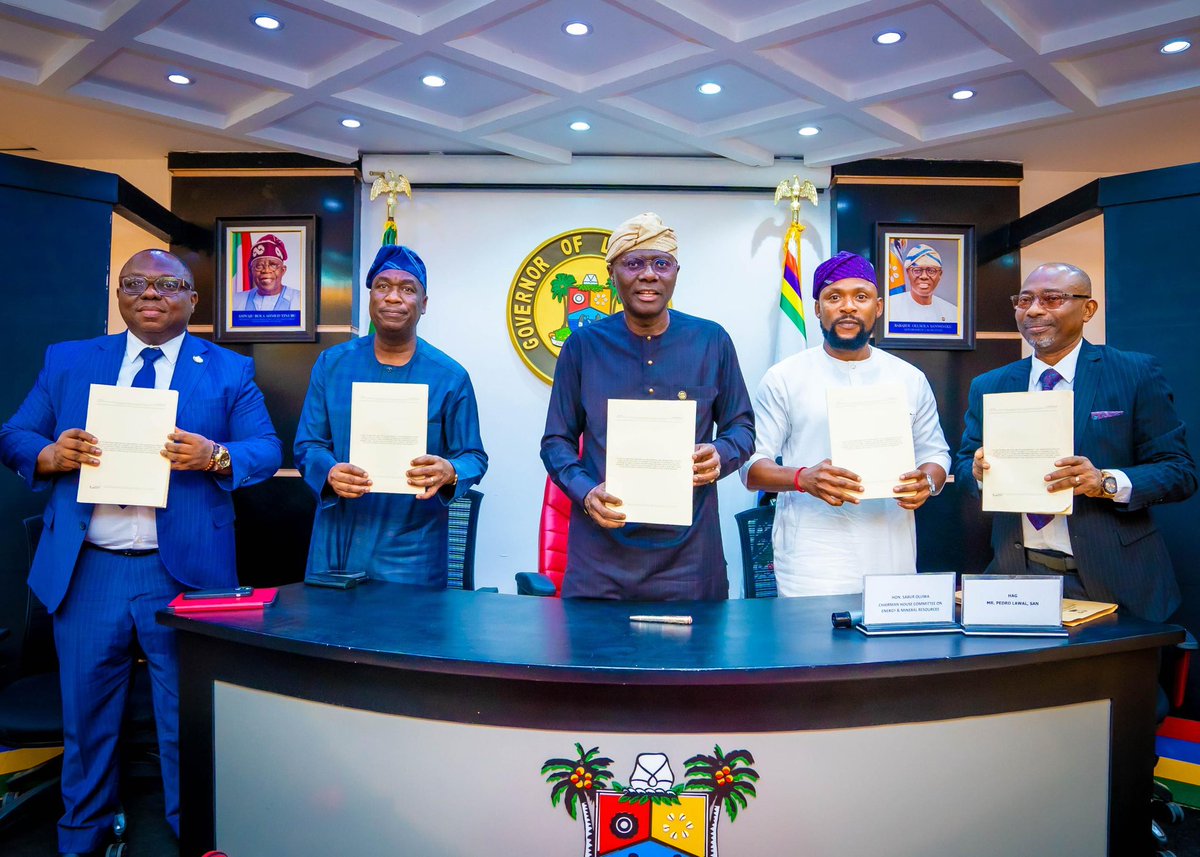
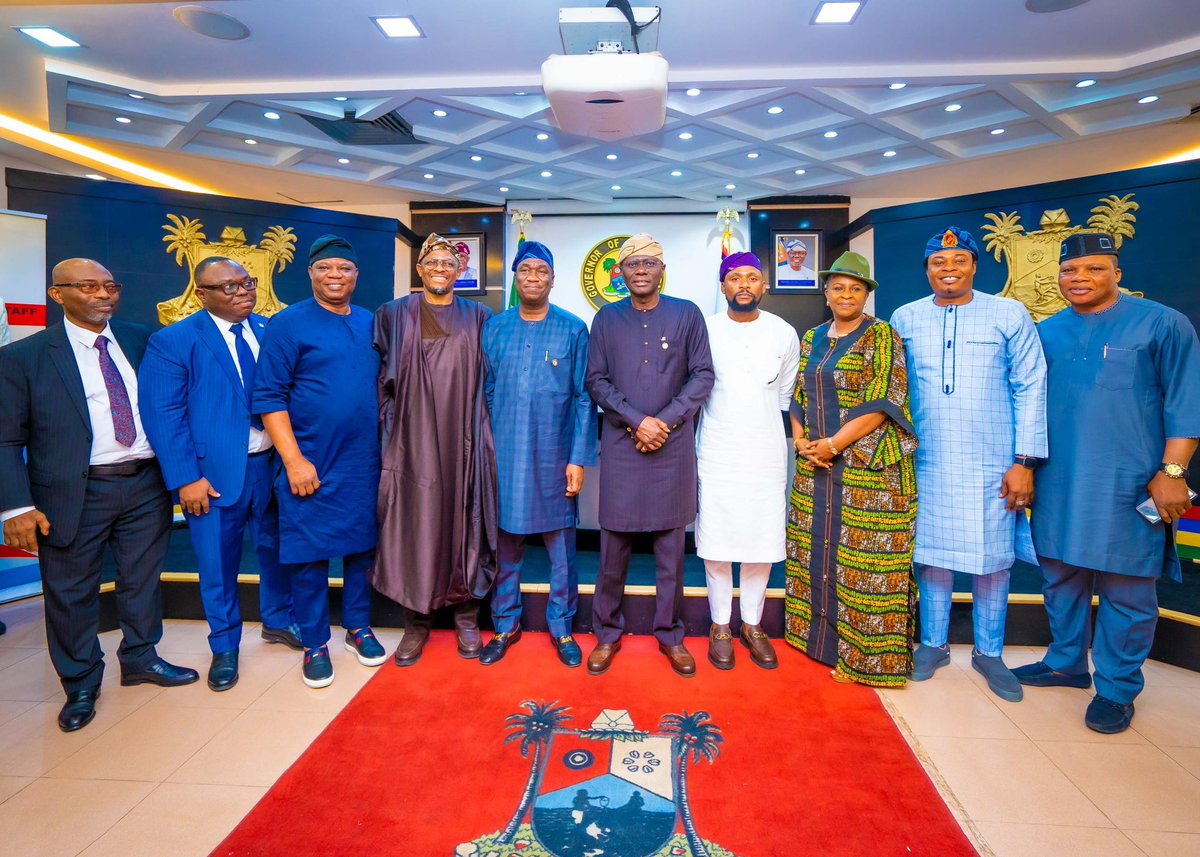
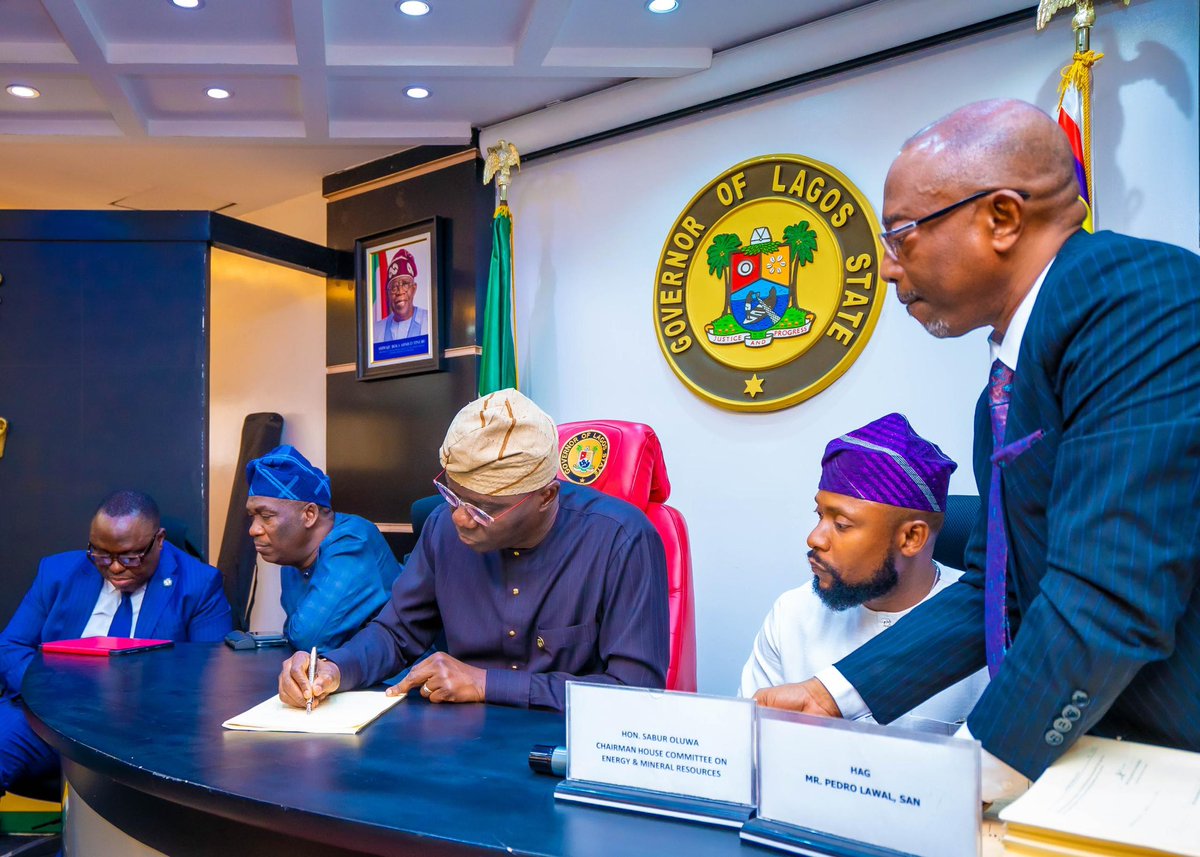
Today, I officially signed the Lagos Electricity Bill 2024 into law.
This new legislation tackles the ongoing challenges in our energy sector, aiming to promote economic growth, enhance quality of life, and ensure energy equity for all Lagosians.
The law establishes a regulated electricity market that will provide affordable, reliable, and sustainable power. It encourages the use of diverse energy sources, fosters investment and innovation, and focuses on electrifying underserved areas.
To support these goals, the law creates key institutions such as the Lagos State Electricity Regulatory Commission and the Lagos Independent System Operator. Special funds will be allocated for electrification projects and community development, while also protecting consumer interests and encouraging competition.
With this law, we take a significant step towards eliminating the electricity blackouts that have affected our state for too long. This journey began back in 2021 when we launched the Lagos State Electricity Policy in preparation for this moment. We took our time to avoid repeating past mistakes and developed a comprehensive law that addresses our electricity challenges more effectively.
Our aim is to ensure that every resident in Lagos has access to electricity that is reliable and affordable.
The good side is that by and large, there's increasing awareness about public finance which will lead to more accountability and transparency in our political and fiscal governance systems. End.
One of the many benefits of the ongoing tax reforms is the general awareness it has created among Nigerians about taxation and particularly VAT. It had generated and still generating interesting conversations in diverse forms and perspectives.
For Accounting and Finance professionals, (like myself) with practical knowledge of VAT for instance, some analysis and opinions are baseless and unfounded, making it necessary for subject matter experts in to support govt efforts through advocacy and information dissemination.